
Sinevibes has updated its Cluster,Hexonator, Multitude and Octagon Audio Unit plugins
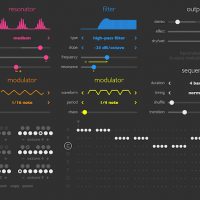
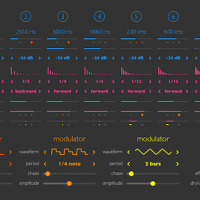
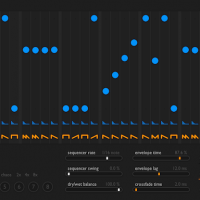
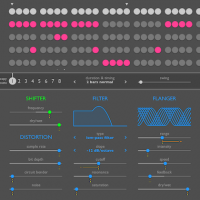
Sinevibes has updated its Cluster,Hexonator, Multitude and Octagon Audio Unit plugins for OS X.
Changes in Multitude v1.0.7:
- Multiple minor user interface enhancements.
- Improved user interface responsiveness.
- Fixed transport sync for hosts that hibernate plugins.
- Fixed validation issue on OS X 10.6.8.
Changes in Octagon 1.0.1:
- Command-click can now be used to reset sliders to default values.
- Fixes and enhancements in the plugin’s parameter interface.
- Fixed transport sync for hosts that hibernate plugins.
- New presets.
Changes in Hexonator 1.0.2:
- Command-click can now be used to reset sliders to default values.
- New presets.
Changes in Cluster 1.1.2:
- Fixed validation issue on OS X 10.6.8.
iVCS 3 for iPad a Demo and Tour Around This Amazing App
A Tour and Demo of this amazing simulation of the classic synth from EMS, the VCS 3.
https://itunes.apple.com/nz/app/ivcs3…
The VCS3 was created in 1969 by Peter Zinovieff’s EMS company. The electronics were largely designed by David Cockerell and the machine’s distinctive visual appearance was the work of electronic composer Tristram Cary. The VCS3 was more or less the first portable commercially available synthesizer—portable in the sense that the VCS 3 was housed entirely in a small, wooden case.
The VCS3 was quite popular among progressive rock bands and was used on recordings by The Alan Parsons Project, Jean Michel Jarre, Hawkwind, Brian Eno (with Roxy Music), King Crimson, The Who, Gong, and Pink Floyd, among many others. Well-known examples of its use are on The Who track “Won’t Get Fooled Again” (as an external sound processor, in this case with Pete Townshend running the signal of a Lowrey Organ through the VCS3’s filter and low frequency oscillators) on Who’s Next. Pink Floyd’s “On the Run” (from The Dark Side of the Moon) made use of its oscillators, filter and noise generator, as well as the sequencer. Their song Welcome to the Machine also used the VCS3. The bassy throb at the beginning of the recording formed the foundation of the song, with the other parts being recorded in response. The VCS3 was also a staple at the BBC’s Radiophonic Workshop, and was a regular (and most frightening) sound generator for the Dr Who TV series. Many fo the monsters and atmoshere;s created for the show came directly from the VCS3.
Description
The VCS3 has three oscillators (in reality, the first 2 oscillators are normal oscillators and the 3rd an LFO or Low Frequency Oscillator), a noise generator, two input amplifiers, a ring modulator, a 18dB/octave (pre-1974) or 24dB/octave (after 1974) voltage controlled low pass filter (VCF), a trapezoid envelope generator, joy-stick controller, voltage controlled spring reverb unit and 2 stereo output amplifiers. Unlike most modular synthesizer systems which use cables to link components together, the VCS3 uses a distinctive patch board matrix into which pins are inserted in order to connect its components together.
Keyboards controller
DK1 keyboard controller
Although the VCS3 is often used for generating sound effects due to lack of built-in keyboard, there were external keyboard controllers for melodic play. The DK1 in 1969 was an early velocity sensitive monophonic keyboard for VCS3 with an extra VCO and VCA. Later it was extended for duophonic play, as DK2, in 1972. Also in 1972, Synthi AKS was released, and its digital sequencer with a touch-sensitive flat keyboard, KS sequencer, and its mechanical keyboard version, DKS, were also released.
Moog Sub 37 Analog Synthesizer Demo
Adam Berzowski demonstrates the Moog Sub 37 analog synthesizer at Kraft Music.
The Moog SUB 37 Tribute Edition is a limited edition paraphonic analog synthesizer built on the award winning Sub Phatty sound engine, but specifically designed to meet the demands of synthesists, sound designers, and professional keyboard players. It is also the first Moog synthesizer released in over 30 years with the ability to play more than one note at a time. The SUB 37 panel is fitted with 40 knobs, 74 switches, and features a dedicated LCD display. Each critical sound creation element and live performance tool is quickly at your command
Intro to Synthesis 2014 – The Building Blocks the Sound
Background video description:
Learn how to make modern synthesizer music! Check out my channel and subscribe: http://www.youtube.com/subscription_c…
Electronic music is everywhere nowadays, so why not join the fun and maybe you’ll become the next synthesizer superstar! The 2014 School of Synthesis will show you how! Yeehaaaw!
Dr Blankenstein’s Circuit Bent “Pocket Calculator” Live Demo
More Dr Blankenstein: http://www.drBlankenstein.com
Twitter: https://twitter.com/Dr_Blankenstein
eBay: http://www.ebay.com/usr/dr_blankenstein
In this video we see a live demo / rehearsal for the Drew Blanke (Dr Blankenstein) for his presentation for MAKE magazine at Moogfest 2014. The jam is based loosely around the Kraftwerk classic “Pocket Calculator” off their “Computer World” album. Keep in mind this is live, and unedited…. just a raw jam on 4 circuit bent pieces.
The pieces include a Mattel Bee-Gee’s “Rhythm Machine” keyboard, Casio ML-831 Musical “Pocket Calculator”, a built from the ground up custom Stylophone and a prototype for the APC2600 V2.6. All pieces have the ILLUMIRINGER device modification kit installed in them, although most of the demo is featuring the pocket calculator in ILLUMIRINGER mode. Only reverb has been added to the mix via the mixer. The beat was made on an Electribe ER-1 and sampled into a Boss loop pedal.
Sorry about the slightly out of tune Stylophone in the beginning, it’s needs to be left on for a bit to warm up and get into tune (kinda like an old moog). Hey, that’s rock n’ roll. It’s worked into the jam nicely… so why not let it roll.
Stay tuned for individual demos of each piece in this video coming at you THIS MONTH (I promise, I know we have been slacking on the videos:) Thanks for watching, please remember to SUBSCRIBE and follow the twitter link up top to stay up to date on the newest Dr. Blankenstein creations.
Better Living Through Circuitry
Moog Minimoog “Underground”
Vintage synthesizer demo track featuring the Moog Minimoog
all synthesizer sounds: Moog Minimoog (1972)
strings: Logan String Melody II
choir: Roland VP-330 Vocoder Plus
recording: multi-tracking without midi
fx: a bit reverb and delay
February Ends by Sound of Science (feat Jayden Frost)
Available now on iTunes! http://tinyurl.com/mm2rjt9
CD BABY: http://www.cdbaby.com/Artist/SoundofS…
Sound of Science is a transatlantic duo comprising Tom and Jason of Analogue Solutions.
Tom has been building synthesisers for over 15 years. He has supplied synths to people such as Trent Reznor, Martin Gore, Vince Clarke, Phil Oakey, Daniel Miller, and many more. The designs are directly influenced by his love of electronic music.
Jason is an analogue synth wizard, composer and a lover of all things that make noise. He also produces the legendary Rezfilter videos (see YouTube) that highlight these excellent synthesizers.
Rezfilter: http://tinyurl.com/lctm7ra
Together they have pooled their years of combined experience in songwriting and sound design to produce real songs using real synthesisers.
February Ends vocals via Jayden Frost:
Jayden Frost electrified audiences across the U.S. and Mexico as the voice and face of When in Rome (replacing Clive Farrington and Andrew Mann) on their extensive tour bringing his positive energy to stage performance, radio interviews and television. When In Rome, who’s number one hit “The Promise” reached top ten on the pop charts, and #1 on the dance charts in 1989-1990 (and was the most recognized song in the blockbuster film Napoleon Dynamite).
Some of the acts that Jayden Frost has shared the stage with include: Devo (Whip It!), A Flock Of Seagulls (I Ran), Bow Wow Wow (I Want Candy),The Psychedlic Furs (Pretty In Pink), Animotion (Obsession), Deborah Gibson (Only In My Dreams/Foolish Beat), Gene Loves Jezebel (Desire), Dramarama (Anything, Anything), and Tommy Tutone (867-5309).
– See more at: http://www.jaydenfrost.com.hostbaby.c…
Lyrics via Robert Hawkins:
Robert, aka “Professor Sabiá”, is the founder of the United Capoeira Association — Santa Rosa. When he’s not kicking ass, he’s playing the piano, singing or otherwise enjoying great electronic music. Robert is a big fan of classic electronic acts such as Depeche Mode, Erasure, Pet Shop Boys and of course, Sound of Science. Robert writes from the heart, and he’s passionate about all things in life, music and career.
Remix artists featured on February Ends EP:
Semaj Foreman:
Semaj Foreman is an American music producer, recording artist, video director/editor, creative director, fashion/graphic designer, idealist, entrepreneur, inventor and Creator Of Future Union Company.
Semaj Foreman records and produces his own genre of music classified as “Astrotech” because of his fascination with robotics, astronomy, acoustics, and technology.
Semaj is an autodidact, and experiments with the drums, keyboard, synthesizer, vocoder, and is currently learning the acoustic and electric guitar, but a majority of his music is created digitally.
Achievements Semaj Foreman has won three consecutive contests held by the popular website Jamglue.com at the age of 18 Semaj, formerly known as “Hit’Em” produced two tracks “Say Goodbye” and “Hustlin” on Vanilla Ice’s 2005 “Platinum Underground” Album.
2012 Digitally internationally released his 1st 2 fully produced EP’s 1st released on
January 8,2012 Johnny Mark Jacob 1st official EP titled “Starting All Over Again” & his on EP titled “War With Love” Released on February 14, 2012 Valentines Day.
January 15, 2013 his production titled “Its Star Time In Brooklyn” was selected by Converse from Indaba Contest to be on the title screen for all of Converse Rubber Tracks web videos & Converse web properties.
Semaj is currently in the studio, producing with various Indie & Major Artists.
Follow Semaj: https://www.facebook.com/semajforeman2u
Steve Stoll:
Steve Stoll is an American electronic music producer who has remixed/collabed with artists from Gary Numan to Front 242, and has produced for numerous labels over the past 25 years, and is the owner of Techno Imprint Proper N.Y.C.
Interview with Steve: http://www.elektraxmusic.com/steve-st…
“Perception” short by V. Avseeva Designs
http://tinyurl.com/n7axxqw
Learn more:
http://www.soundofscience.org
info@soundofscience.org
Sequencing 4 voices out of the CZ101 using Genome
“A bit of experimentation with the CZ101 using Genome to access 4 voices in mono.”
Musicians can start tearing it up in the studio with Genome MIDI Sequencer (GMS), a powerful pattern based MIDI sequencer for the iPad. With GMS you can control all of your MIDI gear and apps* – sequence single patterns or an entire 16 track song.
Features:
– CoreMIDI, Line6 Mobilizer Mk I & II compatible
– Network MIDI for sending MIDI to other iOS devices and Macs***
– Sends and Receives MIDI Clock Sync, Start and Stop events
– Also sends Note On, Note Off, Pitch Bend, Aftertouch, Channel Pressure and CC’s
– Pattern Based, pattern changes occur on bar boundaries so song stays in sync
– On screen keyboard interface
– Up to 16 simultaneous tracks, unlimited number of patterns
– Song / live modes
– Scales
– Supports background operation for multitasking
– Record incoming CC’s and Notes
– Undo / redo for most actions
FFS02 // Convolution Processing // INTRODUCTION
This is the introduction to FFS02 // Convolution Processing, the second advanced sound design technique from my Feedforward Sounds video series: http://gum.co/FFS02
Convolution Processing is a technique that allows the real-time creation of musically related ambiences, accents and transition elements from an instrumental or vocal part.
In this video you’ll see/hear how this technique can enrich a simple percussive part and a synth part into a full sounding track.
Video Workflow ▸ concept behind the technique ▸ recording and editing of custom impulse responses ▸ recording of initial instrumental part ▸ setup of the rhythmic-oriented processing ▸ detailed function of each individual plugin chain ▸ rhythmic part performance ▸ setup of the tonal-oriented processing ▸ detailed function of each individual plugin chain ▸ final performance ▸ final notes.
// Here you can find “Rhythmic Processing” http://gum.co/FFS01, the first advanced sound design technique of this series, read reviews and comments from fellow producers and musicians.
Weekend morning with Goldfrapp

Music video by Goldfrapp performing Number 1. (C) 2005 Mute Records Ltd
Enjoy
DATAMASKIN

