
Vintage sequencer exploration – Triadex Muse
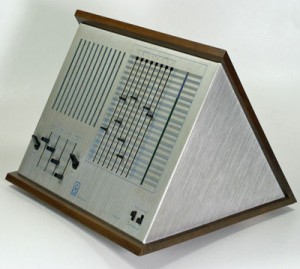
The Triadex Muse is a sequencer based synthesizer. It was produced in 1972. It was a deterministic event generator that used early digital integrated circuits to generate an audio output that could sound very musical. It was designed by Edward Fredkin and Marvin Minsky at MIT. It is an algorithmic music generator: it uses logic circuits to produce a sequence of notes based on the settings of various parameters. It has four small sliders that control Volume, Tempo, Pitch, and Fine Pitch. It is not known how many were made, but they are considered very collectable.
It was known to be used by the first wave of electronic musicians in the Philadelphia area in the late 70s. Users included: Charles Cohen, Lenny Seidman, Jeff Caine, George Keutemeyer, Rex X Ray and Stephan Spera, Paul Wozniki and the groups: Heavenside Layer, Ghostwriters, Watersports and The Orchestra of Philadelphia Electronic Musicians. Muse was also used during the WXPN radio show Stars End by host Gino Wong in the fall of 1977.
For years, the Muse was a featured exhibit at the Museum of Science, Boston. The signage explained the device’s algorithmic (and deterministic) approach to the creation of its seemingly-random music. Far from being random, its preset “song” played continuously — and was even given a name, “Museum Musings,” by the staff.
The front panel sliders, which control the melodies that are generated, allow for the possibility of 14 trillion musical note combinations. The four small sliders in the lower-left control Volume, Tempo, Pitch, and Fine Pitch. The switches to either side of the sliders are used to start and stop the sequence, or to step through it note-by-note. Of the eight larger sliders on the right, four control the musical intervals used (labeled A, B, C, and D), and four control the theme (labeled W, X, Y, and Z). There is also a “Rest” toggle switch at the lower right which acts as a “lowest note”.
Comments
DATAMASKIN

