
Patching on Arturia’s Moog Modular V
James Patrick is delivering a couple of nice demos and tutorials on synthesizer programming on his Vimeo site, here are some that he has recently produced
here is a basic overview of how to get started programming a patch on Arturia’s Moog Modular V plug in synthesizer.
Here is an overview of how to get started programming patches in the Aalto synthesizer. For part 3, we focus on Aalto’s unique polyphonic modulation capabilities.
Moog Little Phatty in action
Experimenting with the iPad with POLYSTEPARP. This time I sent the sequence live to a MOOG Little Phatty thats running thru a Freqbox, Ringmod, and a Bass Murf which in turn is passing thru the DAWs Direct monitor live with a u-he Filter with some delays and verb. Access Virus TI Polar is playing some pads in the back
I didn’t expect this to work at all but thought I’d try it anyway just for fun…
I’m running the midi out from the Phatty through a simple Midi to CV converter which is then connected to the cv and gate inputs on the Rogue. Tracking is not the best as you can hear. I made the two synths sound almost the same in order to avoid more tracking/patch weirdness.
The Moog Filatron is shipping
So the new Moog app is now shipping, if you have tried we´d love to here what you think of it. Filtatron is a digitally modeled Moog ladder filter, effects engine, and sample player.

Moog Ladder Filter – Four pole resonant Moog Ladder Filter, with Lowpass and Highpass modes and adjustable cutoff and resonance parameters.
Oscillator – A high-resolution, alias-free DSP oscillator with sawtooth and square waveforms, adjustable frequency from 0.3 Hz to 2kHz.
LFO – Five waveforms: sine, ramp, sawtooth, square, sample & hold, with crossfade and morph between adjacent LFO shapes.
Envelope Follower – Uses the volume envelope of sound inputs to sweep the filter, with controls for amount and speed.
Amp and Delay FX Modules – Amp provides warm, smooth overdrive with feedback control. Delay can be modulated by its own LFO (with rate and depth controls) and delay time is smoothly interpolated for analog-style delay time tweaks.
File Sharing – Easily move audio files back and forth between the Filtatron and your computer. Audio Copy and Audio Paste enables sharing audio between the Filtatron and other compatible apps. Built-in email function allows sharing presets with other Filtatron users.
Record and Playback – All audio processed in stereo, 16bit, 44.1kHz resolution. Filtatron will record samples up to 10MB. Tap and Drag sets start and end points for seamless looping. Playback control can be adjusted from double-speed playback all the way down through zero to double-speed reverse. “


Just 100% Moog
http://www.youtube.com/watch?v=XKSRImsbExo&feature=player_embedded
this track was fully composed with a Moog Little Phatty as a sound design and performance instrument, entire drum set and synths were created with this amazing musical instrument!
in this case the powerfull world-wide-knew Minimoog Voyager have done the work of a docen!.. i have composed/designed this track 100% with this amazing musical instrument!
done by luCho mOlinari
Moog circuit bending contest

Moog Music has announced a new circuit bending contest:
Moog Music was born when a young Bob Moog, who considered himself a geeky, socially awkward kid with a passion for electronics and music started tinkering with electronic circuitry. As a boy, Moog built small radios, amps and three note organs in his basement workshop with his father & the rest is history. In celebration of this creative curiosity, Moog and Moogfest 2010 are sponsoring a circuit bending challenge, to honor all those that lick and stick, modify signals and jump traces.
Finalists get a free pass to Moogfest. Grand prize is a pedalboard of Moogerfoogers. Contest details below.
Note: Entries are due by midnight, Eastern time, on Monday October 18th, 2010.
How to Enter:
- Procure a battery-powered sound-making device
- Bend it by any means necessary.
- Document the bend process and outcome with video with audio (required). The better you document, the better we can judge. All videos must be uploaded by midnight eastern time on Monday October 18th, 2010.
- Upload the video to YouTube and tag with “moog circuit bending competition 2010” and “Moogfest 2010”.
- Send an email with the subject Moog Circuit Bending Challenge 2010 to info@moogmusic.com with the YouTube links to your entry.
Finals:
The top 3 contestants will be chosen as finalists on Friday, October 22, 2010 and win weekend passes to Moogfest 2010 as well as a Moog merch package. At Moogfest the 3 finalists will be given a workstation in the Moogaplex, the same toy and the same bag of tools (which includes a soldering iron, wire, switches, potentiometers of varying degrees, resistors, capacitors, heat shrink, bread boards, diodes, plus more surprises). Each finalist will have from 8 a.m. – 4 p.m. on Saturday, October 30 & Sunday, October 31 to bend the toy at their workstations. Grand prize winner will be chosen by a Moog Music Engineer at 5 p.m. on Sunday, October 31.
Grand Prize:
Grand Prize winner receives a Moog Pedal Board which includes one of each Moogerfooger (MF-101 Low Pass Filter, MF-102 Ring Mod, MF-103 Phaser, MF-104Z Analog Delay, MF-105M Midi MuRF, MF-107 ) and a Multi-Pedal (MP-201).
Nice pics of the new Moog “Slim Phatty”
Rumours on the new Moog has been circling for some days now, but now more information starts to appear, here are some nice pictures of it, along with some brief specifications:
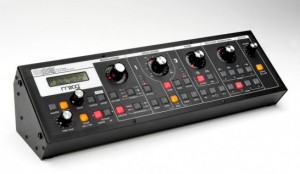
Features of the Slim Phatty include:
- Two VCO’s
- USB MIDI
- Arpeggiator
- Updated sound bank
- Voltage Controlled Moog Ladder Filter
- Two ADSR envelopes
- Modulation section with LFO with 4 waveforms
- MIDI In/Out
- CV inputs for Pitch, Gate, Filter, Velocity
Check out the photos and leave your comments 
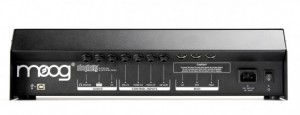
The images come via hispasonic, along with these specifications:
Características de Slim Phatty
- Dos osciladores
- Fuente de alimentación universal interna
- Entrada de audio externo
- MIDI por USB
- Arpegiador
- Banco de sonidos renovado respecto al Little Phatty
- Filtro Moog Ladder de 24 dB/octava con control overload y salida VCA
- Sección de generador de envolvente con dos generadores ADSR
- Sección de modulación con LFO de 4 formas de onda y bus 1×2 con 8 fuentes de modulación posibles y 4 destinos
- Control de volumen master, interruptor de salida on/off y salida de cascos
En la parte trasera de Slim Phatty encontramos:
- Conector de alimentación (100-250VAC, 50-60 Hz)
- Interruptor on/off
- Entrada de audio externo (acepta señales de nivel de línea +4dBu)
- Entradas Pitch CV (1 V/Oct), Filter CV y Keyboard Gate
- MIDI in y MIDI out
- Conector USB
Still no official word at the Moog site…..
It’s official the Moog iPhone launches next week
Ms Tara Busch has confirmed it, after all, she’s a Moog endorsee, so she would know.
Then this video shows up on with Richard Devine and the Filtatron….
Turns out the speculation was correct – the iOS application FilterTron features several modules with a distinctly Phatty look. These are:
- Moog Ladder Filter – 4 pole resonant Moog Ladder Filter, with Lowpass and Highpass modes
- and adjustable cutoff and resonance parameters.
- Oscillator – a high-resolution, alias-free DSP oscillator with sawtooth and square waveforms,
- adjustable frequency from 0.3 Hz to 2kHz.
- LFO – five waveforms: sine, ramp, sawtooth, square, sample & hold, with crossfade and morph between adjacent LFO shapes.
- Envelope Follower – uses the volume envelope of sound inputs to sweep the filter, with
- controls for amount and speed.
- Amp and Delay FX Modules – Amp provides warm, smooth overdrive with feedback control. Delay can be modulated by its own LFO (with rate and depth controls) and delay time is smoothly interpolated for analog-style delay time tweaks.
- File Sharing – Easily move audio files back and forth between the Filtatron and your computer.
- Audio Copy and Audio Paste enables sharing audio between the Filtatron and other compatible apps. Built-in email function allows sharing presets with other Filtatron users.
- Record and Playback – All audio processed in stereo, 16bit, 44.1kHz resolution. Filtatron will record samples up to 10MB. Tap and Drag sets start and end points for seamless looping. Playback control can be adjusted from double-speed playback all the way down through zero to double-speed reverse.
Available October 18th in the Apple App Store $4.99
- More Information
- MoogMusic.com
Moog is working on an iOS app

Moog Music is working on a new iOS app, the Moog Filtatron, that combines filtering, effects and sampling.
Moog Filtatron features include:
- Filter + LFO
- Amp (drive) + feedback for distortion
- Adjustable, time-syncable delay
- Sampler with adjustable playback speed, loop points, and live recording
- X/Y pads for tweaking and performance, plus preset sharing.
The Moog Filtatron lets you combine several sound sources and apply effects to them in realtime. Sound sources include line or mic input, looping sample playback, and an internal oscillator. Audio input should work via any adapter.
It’s Moog, it sounds good and it’s on the iPhone.
Via CDM
Audio input will work via any adapter. You can use the headphone/mic jack directly (though to get audio out, you’ll need to use a 3-prong minijack – more on that as I test my camcorder cable with this and other apps). You can also use third-party devices like the Blue Mikey (good if you need a mic) or IK Multimedia iRIG (good for mono instrument/guitar input). I’m also testing the iRIG.
Via an internal design documentation, I’ve got the details on the internal specs for the app. The goal, says the document: “filtatron allows you to combine several sound sources and apply effects to them in realtime. Sound sources include line or mic input, looping sample playback, and an internal oscillator.”
Audio engine: 16-bit, 44.1 kHz. (Some apps, like RjDj, actually use less, so that’s worth noting.)
Filter: modeled 4-pole resonant filter, which Moog intended to be matched to their analog filters. Lowpass, highpass, cutoff, resonance, self-oscillation at high resonance – you know, the usual.
LFO, Envelope Filter: Routed to filter cutoff. LFO: sine, ramp, sawtooth, square, sample&hold. Crossfade/morph between LFO shapes. Bipolar LFO (sweep up or down). Free-tuned LFOs, sync to tap tempo.
Envelope Follower: Route sound inputs to sweep the filter, with adjustable reaction speed.
Tap tempo, separation, mix.
Amp (overdrive) effect with feedback. Also can self-oscillate.
Delay effect. Delay with its own LFO. Adjustable from a short flange to longer delays.
Pads. X-Y pads controlled by multi-touch control parameters for live performance/tweaking. Assignments:
VCF pad controls filter cutoff and resonance, LFO pad controls LFO Rate and Amount, Delay pad controls delay time and feedback. VCO pad controls oscillator frequency and level (amplitude) – if the VCO “Release” parameter is engaged (ENABLE button on VCO panel, main page), then the VCO x-y pad also controls the VCO volume gate — the VCO is silent when you are not touching the pad and sounds a note on each touch. ENV pad controls envelope follower amount and speed, and AMP pad controls amp drive and feedback.
Sampler: Play included loops, record your own samples, or bring in your own loops using either the AudioCopy/AudioPaste API or an FTP connection. Sampler includes play controls, playback speed (-2x to +2x), and tap-and-drag controls for loop start and stop on the waveform.
Record audio into the sampler dry, or record with effects for resampling capability. Recording is limited only by available storage, but playback is limited to 10MB each (ca. 2 minutes).
Preset recall and storage. Includes a number of presets, allows you to save your own, and provides onboard email sharing of presets.”
New virtual recreation of the Bode Frequency Shifter
WOK has announced the release of BFS-1, a virtual recreation of the Bode Frequency Shifter. The original unit was available as an expensive module for the Moog modular system.

Wok’s frequency shifter is not a pitch shifter, which changes frequencies by a multiplication. Instead it shifts all frequencies/harmonics by adding a fixed amount. Unlike a ring modulator, the frequency shifter is capable of changing the signal by a low amount, e.g. 1 Hz, to obtain effects known as “Barberpole flanging”.
This plugin has some additional features like delays for each section, an LFO (all host synced), an envelope with MIDI trigger and an envelope follower to modulate shift and/or volume.
BFS-1 is available now, as a Windows VST, for 33 EUR.
Experimenting with OTO Bisquit
We ran a Moog Etherwave Theremin through the OTO Biscuit and noticed a nice heartbeat occurred when the Theremin hit a very low note with a fast attack. The OTO Biscuit crushed the tone to bits which was also aided in the effect.
If you are listening through cheap computer speakers, this will not sound like much of anything. You really need some serious woofers or high end headphones to hear the low frequencies that are in this video.
Thanks to Josh Flynn for shooting the video!
DATAMASKIN

