
Korg Poly 800 “Reverse Keys” HD Sound – Rare – Analog Programmable Synth / Keytar – Fast demo
The Korg Poly-800 is a synthesizer released by Korg in 1983. Its initial list price of $795 made it the first fully programmable synthesizer that sold for less than $1000. It featured a 49 key non-velocity sensitive keyboard, two buttons for data entry, and a joystick controller, which could modulate the DCO pitch or the VCF. Though the Poly-800 had MIDI, it did not feature MIDI sysex functionality, and patches had to be backed up to cassette tape. It had 8-voice polyphony (paraphony) with one DCO per voice. It could be switched into double mode which stacks two DCOs for a fuller sound, but reduces the polyphony to 4 voices. It featured one analog resonant low-pass VCF with 24dB/oct which was shared for all voices. Like a monophonic synthesizer, the filter was switchable between single or multiple modes. In single mode, the first key pressed triggers the filter envelope, and unless all keys are released, the filter does not re-trigger. In multi mode, each key pressed in turn triggers the filter envelope, even if other keys are still pressed down.
Further it had three digital envelope generators, a noise generator, an LFO, and a chorus effect. It also sported a simple built in sequencer. The Poly-800 could be run off batteries and had guitar strap pegs, allowing a performer to wear it like a guitar. It was also available with reversed-colored keys, which gave an appearance similar to a Vox Continental organ.
About a year after the Poly-800 was introduced, a keyboardless, rackmount/tabletop version, called the EX-800, was released, adding limited MIDI sysex capability. After production of the original keyboard ended in 1985, the enhanced Poly-800 MkII was released. It featured a digital delay instead of a chorus effect, and included limited MIDI sysex functionality. It was produced until 1987.
Siel produced an almost identical synthesizer, the DK-70 around the same time period.
Modifications[
The low price for a used unit (in the 1990s it fell to under $200) and partial analog design of the Poly-800 made it perfect for modification by hobbyists. There is a modification that adds two knobs to the VCF, increasing the filter’s range and expressiveness, known as the Moog-Slayer filter modification; the FM-800 filter modification which adds a pseudo FM control to the filter; a modification for external audio input; and some users have added a switch to control the filter slope, adjusting it from a 4 pole (24db/oct) to a 2 pole (12db/oct).
The most recent modification to the Poly-800 family is the Hawk-800 Firmware upgrade which is both a hardware & firmware modification, radically updating the features and capabilities of the synthesizer.[1] There is also the AtomaHawk-800 which adds software & MIDI control to the more popular hardware modifications.

Electro act deadbeat is out with new material (The Girl & The Robot, Code) – Listen here
New material from deadbeat – listen here
The guy behind the popular act The Girl & The Robot (featuring Frl Plastique ex. Welle: Erdball) is out with a new solo album, and it is all in Swedish 
Henning Baer – In Pursuit Of Myself [Sonic Groove Records]
The head of Grounded Theory Berlin returns to Sonic Groove with his strongest outing on the label to date. Henning Baer brings forth a rough and tough diverse four cut EP of chunky rhythmatic techno. Recording the songs during live jams and using a previously decided pool of hardware this EP has a nice old school vibe. The sound production however is very much in the modern day with it’s well crafted mix downs. This release has strong mass appeal for the purist techno connoisseur!
New material coming from EBM pioneers Die Krupps
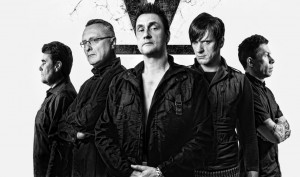
The German EBM and industrial-pioneers of Die Krupps have announced that a new album will be released in September 2015 via SPV Records. The title of the album will be “V – Metal Machine Music”. The band also underwent some line-up changes, recently 2 members were added: permanent drummer Volker Borchert (who played in Die Krupps already before) and live-guitarist Steve Roemhild (ex-Warpath).
The band also announced a European tour in september 2015, supported by Red Paintings and Janosch Moldau. During this tour a live CD/DVD of the previous “The Machineries Of Joy” tour will be available.
Kratos 2 Maximizer – new version of the limiter/loudness maximizer effect plug-in for Windows and Mac
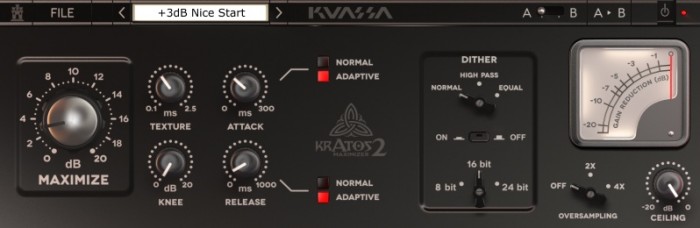
Kuassa has announced the release of Kratos 2 Maximizer, an updated version of the limiter/loudness maximizer effect plug-in for Windows and Mac.
The purpose of the original Kratos Maximizer VST / AU plugin was to make your mixes immediately LOUD.
In addition, the new Kratos 2 Maximizer also serves as a solid mix finalizer; aside from offering additional methods to manage your mixes’ dynamics with Adaptive Mode, you can now push further than before without fear: Crank the Maximize knob, tune the unique Texture knob to taste, tweak Attack and Release for tighter or loose response, then adjust the Knee for harder / smoother limiting action.
Throughout, the signature Kuassa no-nonsense design will guide your hands, eyes, and ears, giving you the freedom to create your maximum sound.
Kratos 2 Maximizer features
- Transparent, precision limiting / loudness maximizing.
- Unique Texture knob for smooth or harder character.
- Attack and Release parameter with the new adaptive option.
- 3 dithering options with 3 modes of bit depth to accommodate wide range of mastering needs.
- Up to 4x oversampling mode.
- CV Control Inputs.
- Compact user interface, straightforward workflow.
Kratos 2 Maximizer for Windows and Mac (VST/AU/AAX) is available for purchase for $69 USD. Owners of Kratos Maximizer V1 can upgrade for $15 USD via the Member Area. A free upgrade is available for those who purchased the plug-in in March 2015 and after.
The Rack Extension Version is available via the Propellerhead Shop.
New material from a-ha – “Under The Make-Up”
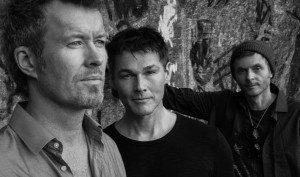
Exactly five years after a-ha released their last single, a new one will be released on 3 July: “Under The Make-Up”. It’s the first single taken from the band’s upcoming album “Cast In Steel”.
The new single is written by Paul Savoy and produced in collaboration with Erik Ljunggren who also did production on a-ha’s last album “Foot of the Mountain”. Ljunggren has also a background in that other famous Norwegian band Seigmen in case you didn’t know. Producer and musician Lars Horntveth did the orchestral arrangement on “Under The Make-Up”.
Note that some of the work on “Cast In Steel” will also involve British producer Alan Tarney who worked on the band’s first 3 albums.
Vintage Digital Synthesizer 1977
The Bell Labs Digital Synthesizer, better known as the Alles Machine or Alice, was an experimental additive synthesizer designed by Hal Alles at Bell Labs during the 1970s. The Alles Machine used 72 computer controlled oscillators whose output was mixed to produce a number of discrete “voices” for output. The Alles Machine has been called the first true digital additive synthesizer,following on earlier Bell experiments that were partially or wholly implemented as software on large computers. Only one full-length composition was recorded for the machine, before it was disassembled and donated to Oberlin Conservatory’s TIMARA department in 1981. Several commercial synthesizers based on the Alles design were released during the 1980s, including the Atari AMY sound chip.
This 1977 tape is one of the earliest examples of purely digital realtime audio synthesis. It manages to achieve an analog synth sounding quality, but it is entirely digital synthesis and signal processing.
The interactive software I wrote and am playing in this video recycles my keyboard input into an accompaniment to my continued playing, which is why I called it a “concerto generator”. I use part of one of the keyboards for control data entry, and the small switches upper right to access pre-entered numerical patterns. The sliders are mainly pre-Yamaha FM synthesis parameter controls, for the number of harmonics and amplitude and frequency of the FM modulator and carrier that constituted each musical voice.
KORG’s Tatsuya Takahashi breaks down the re-issue of the ARP ODYSSEY
KORG’s Manager and Chief Engineer of Analog Synth Development Tatsuya Takahasi, served as the product planner for the re-issue of the legendary ARP ODYSSEY. In this video, Tatsuya provides insight into the revival of this iconic synth by answering questions about the challenges the team faced during development and the historic information that helped guide key decisions; such as choice of cosmetic designs and internal components.
More Details:
– Tatsuya Takahashi | INTERVIEWS | EXPERIENCE | ARP
http://www.arpsynth.com/experience/in…
– KORG Developer | INTERVIEWS | EXPERIENCE | ARP
http://www.arpsynth.com/experience/in…
Like/Follow us:
https://www.facebook.com/ARPsynthesizer
http://twitter.com/ARPsynthesizer
http://instagram.com/ARPsynthesizer
Now you can hear a full range of the sound capabilities of the new ARP Odyssey (by Korg), brought to you by an accomplished keyboardist and synthesizer programmer, Moot Booxlé. No EQ has been applied to the direct signal, just a bit of compression via LA-2A, and a light reverb.
If you were on the fence about buying one of these because you hadn’t heard any actual musical sounds being created on it, maybe this will help!
Thank you for watching!
Sights and sounds (c) 2015 Moot Booxlé Studios. All Rights Reserved.
Tangerine Dream – Le Parc (L.A. – Streethawk), performed live by Kebu @ Sthlm Italo Disco Party 2015
Kebu’s all-analog synth cover of Tangerine Dream’s Le Parc (L.A. – Streethawk), performed live at the Sthlm Italo Disco Party 2015 at Nalen, Stockholm, 16.5.2015.
http://kebu.fi
https://www.facebook.com/kebunator
Thanks to Heidi Väisänen, Tuulikki Väisänen, and Renaud Guérin for operating the cameras!
The song was performed using only analog synthesizers, either played live or sequenced. The performance was recorded directly from the mixer to a stereo track and later mixed together with the ambience from the room. A few mistakes have been cut out and replaced with the audio from a rehearsal take.
Equipment used in this song: Roland TR-808, JX8P, Juno 60, Alpha Juno 1&2; Korg Polysix, Poly 61, Mono/Poly, Moog Source, DSI Tetra, Jomox AirBase99, Touched-by-sound DRM1, Oberheim Matrix 1000, Marion Prosynth, Akai MPC2500 (only for MIDI sequencing), M-Audio Trigger Finger, Yamaha 01v96, Lexicon MPX500 & MPX550, as well as a midi patchbay and additional preamps for my mixer.
http://kebu.fi
https://www.facebook.com/kebunator
My debut album, “To Jupiter and Back”, and latest single “Deep Blue” can be bought here: http://www.kebu.fi/
iTunes: https://itunes.apple.com/us/artist/ke…
Spotify: http://open.spotify.com/album/2OPOjHa…
Soundcloud: https://soundcloud.com/kebu
Daft Punk BBC Radio1 Minimix by Introducinglive
Recorded live @BBCMaidaVale by ‘Introducinglive’.
http://facebook.com/introducinglive
http://twitter.com/introducinglive
http://soundcloud.com/introducinglive
http://www.introducinglive.com
Introducing are a unique live prospect. Playing Daft Punks ‘Discovery’ album from 2001, live from start-to-finish, this six piece band stage whole albums previously thought unperformable. Their first project was DJ Shadow’s sample based classic ‘Endtroducing’, and now they have done their homework to nail every last robotic detail of the French duo’s massive album live on Radio 1.
The band consists of a range of world class sessions musicians, sound engineers and actors in order to make it all happen, spending months to perfect sounds, and tackle this seemingly impossible feat.
Continually selling out London’s JazzCafe, venues up and down the country, and Big Top Stage slots at Bestival, Introducing grabbed the attention of Rob da Bank, now a big supporter of the band, who subsequently booked them for a Maida Vale session at BBC Radio 1, August 17th.
Tracklist:
Robot Rock
One More Time
Aerodynamic
Digital Love
Harder, Better, Faster, Stronger
Crescendolls
Daftendirekt
Revolution 909
Phoenix
Teachers
Fresh
High Fidelity
Oh Yeah
Around the World
Da Funk
Burnin’
Rock ‘n Roll
Rollin’ ‘& Scratchin’
High Life
Superheroes
Veridis Quo
Voyager
Face to Face
Too Long
Technologic
Human After all
Give Life Back to Music
Beyond
Instant Crush
Loose Yourself to Dance
Giorgio by Moroder
Get Lucky
Fragments of Time
Contact
Derezzed
DATAMASKIN

