
Creating a full song on the Teenage Engineering OP-1
Nice attempt to make an entire song just using the OP-1:
Decided to try and sit down and actually create a full song on the OP-1 for once. The result is… OK. I had fun while making it at least! I tried to listen to other music and narrow down how they are composed, for example how long an intro is and where the drum kicks in and how the sounds repeat in a certain way etc. Song is in 140 bpm. All 4 tracks are used to various degree. The pattern for the synths are really really simple but they make a nice effect together. The whole song have the Spring FX on it which I like but I really should use the effect on different sounds instead. Everything you hear is directly from the output of the OP-1.
DJ Thomas White rocks the OP-1
Thomas White Rocking Kolony SF Oct 8th 2011
Teenage Engineering OP-1 8-bit sound test
“Trying out a drum sample and synthesizer to get that 8-bit music feeling sort of. Kind of works.  I’m going to do some more test on this. All sounds are directly from the OP-1”
OP-1 is the all-in-one portable Synthesizer, Sampler and Controller. With additional features like the FM Radio and an assignable G-Force sensor for motion controlled effects. With OP-1’s built-in Tape feature you are able to record everything you do on to the 4 tracks, with overdubbing, reverse recording. 8 built-in synthesizer engines, multiple effects and LFO’s. And some really unique sequencers ready to explore.
Connect it to your computer and control your DAW with the common play, stop, rec, forward and rewind. Use the 4 rotary encoders and 8 x 2 dedicated quick keys for fast selections.
Image below? Just a bonus
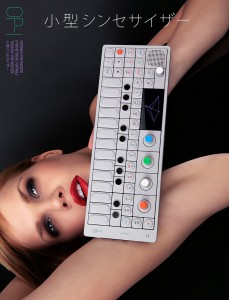
Kill Everybody Drum Loop featuring the OP-1
Always nice to here the OP-1 in action:
Decided to try and add 12 seconds from “Scrillex – Kill Everybody” to an drum in the OP-1. Looped one of the sounds in the drum pattern section and that is basically what is playing through the whole beat. Using Spring as effect. I wanted to do some more creative stuff here but … this is just a test.
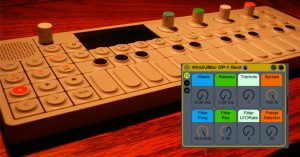
Teenage Engineering OP-1 Ableton Live Rack
Here’s a new Live rack featuring the OP-1 (price is set to 3USD)
“I have created and sampled ten different presets on my OP-1 synthesizer and placed them into an Ableton Live Instrument Rack. The OP-1 is an amazing synthesizer/workstation and this rack is intended to give a sampling of some of its potential. ”
Download @ http://afrodjmac.blogspot.com
The meaning of my “Life”
Headphones recommended.
Recorded on a hill near Siena, Tuscany, Italy.
Music composed and played by Gianni Proietti a.k.a. Gattobus using Teenage Engineering OP-1 and Curtis for iPad
THE MANKIND – Wilderness (feat. Teenage Engineering OP-1)
Debaser Slussen 12/8/2011. The OP-1:s sequencers were used extensively throughout the show.
Teenage Engineering’s OP-1 – Full Review
Here’s a nice review of the OP-1:
Firstly, you’ll be surprised at how well built this is – CNC machined case (think unibody) massively over specified buttons and four, rotary encoders (industrial grade avionics quality) and a gorgeous AMOLED 360×120 LCD display.
The 24-key keyboard is just switches (think well built nanoKey) and does not transmit velocity, but the synth will respond to it via MIDI over USB. A tiny but surprisingly loud built-in speaker as well as stereo output, built in mic and line in complete the connections. The unit is battery powered, with up 16hrs from this non user removable Li-ion cell. Charging is handled via USB.What Is It?
So the Teenage Engineering OP-1 (Operator 1) is a synth wirth up to 6 voices, with eight synthesis engines which can played one at a time – its monotimbral.
Synth Engines:Cluster – Multi layered oscillator cluster
Digital – True digital synthesis
String – Waveguide String Model
Pulse – Dual Pulsetrain Oscillator
FM – Four operator FM synthesis
Phase – Phase Distortion
Dr Wave – Frequency Domain Synthesis
Synthesizer Sampler Engine – Teenage Sample PlayerEach engine has a single VCA envelope ADSR, single effect and an LFO for routing and modulation – sources include – LFO, FM radio – yes there is one built in, and G sensor – that’s gravity – shake it and modulate baby.
Polyoptics: FantasticleWorld – Teenage Engineering Op-1
Tiny OP-1 review (kind of):
The Op-1 arrived a couple of days ago, I wanted to experiment a lot more, but I ended up getting caught making a track straight off the bat. Great fun! The voice was sampled from the internal radio.
Goods:
Easily playable, intuitive, great interface, recording, looping, fm radio for sampling, super fun and addictive, amazing tech squeezed in (that’s why its so heavy I guess).
Not so good:
No midi clock sync, crashes a _TON_ when doing tape edits (although it boots back up with no loss, just takes time and funks up the workflow), faint but audible high pitch noises.
Verdict:
I love it!
Swedish House Mafia – Casio Tone VL-5 vs. Teenage Engineering OP-1
http://youtu.be/z1zj4Vy56eg
Casio tone vl-5 (1982) vs. Teenage Engineering op-1 (2010)
Featured hardware:

This quite rare keyboard was the polyphonic successor of the famous Casio VL-Tone 1. Unfortunately it is missing the great built-in synthesizer, the octave switch and even the natural violin sound of the VL-1. Instead it has only 10 simple preset sounds. The rhythms are more complex but awkward to select. By an optical barcode reader pen (Casio MS-1) songs can be scanned from special barcode song books into the internal sequencer memory. The sequencer is only monophonic, but at least you can manually play to it.
The hardware of this thing contains a lot of hand- rewired complex component mess that looks rather like a prototype. It also has odd sequencer bugs those are mentioned in the manual.
main features:
- 37 button keys
- built-in small speaker (thin sounding, mounted in a resonance pot)
- polyphony 4 notes (2 notes during sequencer playback)
- 10 preset sounds {flute, bagpipe, clarinet, violin, trumpet, pipe organ, harpsichord, piano, pretty, funny}
- “tone memory” 4 step switch to assign 4 of the preset sounds for quick access
- 8 preset rhythms {waltz, march, rock, swing, samba, rhumba, slow rock, metronome}
- sustain button
- volume and “rhythm/ melody balance” sliders
- tempo slider
- LCD (displays numbers of preset sound & rhythm and sequencer note numbers)
- semi- analogue sound generator. The digital envelopes (with audible zipper noise) are linear and thus sounds unrealistic because they fade silent too soon.
- percussion consist of shift register noise for snare/ hihat and for the drums squarewave blips those have 3 pitches and 2 lengths. One sound is a long blip layered with noise. All percussion employ digital decay envelopes with much zipper noise.
- complex multi- chip hardware:
- CPU1= “NEC D910G 011, K2106K” (80 pin SMD)
- CPU2= “HD43191A07, 2A 25” (80 pin SMD)
- SRAM?= “NEC A19046-140, D444C, Japan” (20 pin DIL)
- 2x IC “LB1100, 1M3” (20 pin DIL)
- IC “LB1100, 1M4” (20 pin DIL)
- simple monophonic sequencer (240 notes, editor (insert & delete, rhythm start point), “one key play” to change note duration)
- optional barcode reader pen to load songs from special song books into the sequencer
- tuning trimmer at case bottom
- jacks for AC- adapter, headphone, line out & barcode pen
DATAMASKIN

