
Voltage Influence in action
A quick video showing the Voltage Influence in action. The VILFO on the left is sent to the volt/octave input of a dot com oscillator playing a triangle wave. A second VILFO (on the right) is routed to the “Influence Control Voltage” input of the VILFO on the left. Only the VILFO on the left is controlling the oscillator.
http://www.youtube.com/watch?v=o1locKQDdnQ&feature=player_embedded

The first public showing of the Pittsburgh Modular Confluence Voltage Influenced LFO was Wednesday. Soy Sos came over and ran the module through it’s paces. He had a few great suggestions and pointed out a few necessary improvements. I spent last evening modifying the module and feel pretty good about it.
After updating the schematic to match the prototype, I built a 2nd module to confirm the schematic is correct. Can’t wait to patch both of these up.
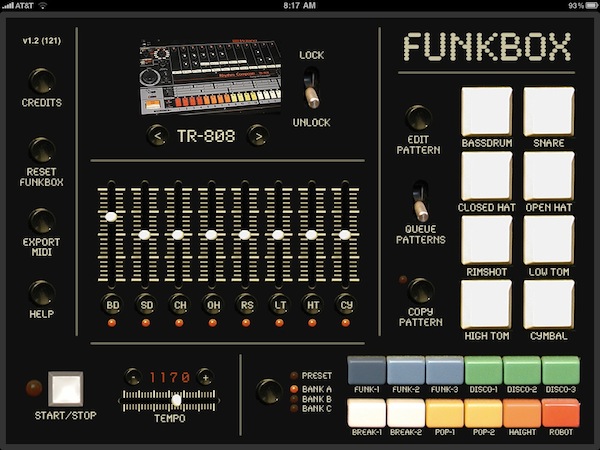
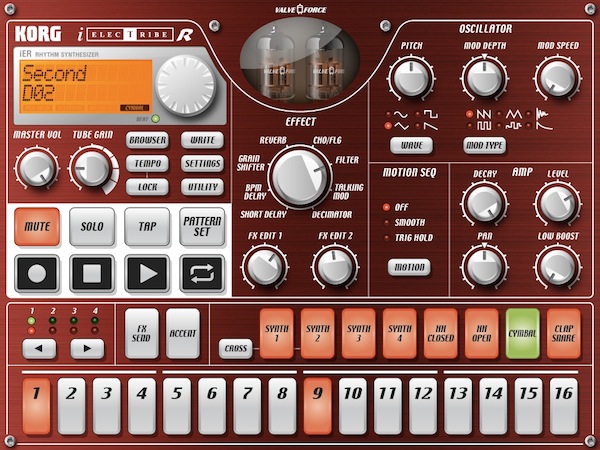
Two of the most popular instruments for iPad…
…right now
Funkbox on the iPhone is ok but I never really used it past a novelty show off item. On the iPad I can sit comfortably and knock out loops with pleasure. The iElectribe really knocks you out. It feels like hardware.
Future tech music
This is a pretty nice piece of recap on the progression of next gen musical instruments.
The intersection of music and technology is a wild, fascinating frontier. Ever since the first computer-synthesized sounds were created, people have struggled and succeeded — to varying degrees — to reshape how we think about musical instruments.
Today, thanks to innovators such as Ray Kurzweil and Robert Moog, we have a wider range of digital music machines than the inventors of keyboard instruments could have ever dreamed.
But innovation didn’t stop there. Drum machines, music-making software and even mobile phones now compose melodies, thanks in a large part to the men in this video. One of the creations included in these demos is the LinnStrument
Check out this showcase of futuristic instruments and the philosophies of those who make them, and let us know what you think about the future of musical instruments in the comments.
So what is Master Linn up to?
Roger Linn posted this sneak preview of an amazing new musical instrument prototype – the LinnStrument – that features a multi-touch pressure sensitive control surface:
My particular interest is in a new instrument that while capable of entirely new sounds and playing techniques, is also able to reproduce the sounds, virtuosic performance capabilities and subtleties that we’ve come to know and love from traditional musical instruments, but without all their problems and limitations.
I’ve come up with a prototype of an instrument design that I like.
The prototype consists of a multi-touch, pressure-sensitive, high-resolution USB touch surface from a company called TouchCo (details below), plus a Max/MSP patch written by me and my wife Ingrid, and an OSC/TUIO driver written by a friend and fellow music/art/technology enthusiast named Tim Thompson.
Linn writes:
I came up with this design in 2006 and development has been slow because my small company has limited resources to develop such a complex product. (Any interested investors?)
Also, there aren’t many musicians who see anything wrong with current instruments, so not too many people would buy it anyway. A key expense is in developing a multi-touch, pressure-sensitive, high-resolution, fast-response, low cost touch surface technology.
Then in 2009, a new company called TouchCo introduced a technology for a multi-touch, pressure-sensitive, high-resolution input surface that’s also very low cost, quoting $10 per square foot in high volume. In fact, I’m using one of their technology evaluation units for the input surface in the video above. Unfortunately, Amazon bought them in January 2010 in order to add touchscreen technology to Kindle, then immediately shut them down and took their product off the market.
Alas, until someone else comes up with a similar touch technology or Amazon decides to make the TouchCo technology available, development of our product will be limited to refining our Max/MSP patch. One promising new technology we’ve evaluated is a touchscreen from Stantum (same company as JazzMutant, makers of the Lemur) that senses surface area of your fingers, which is not a bad alternative to sensing pressure because your finger surface area increases as you increase pressure. However, I found that their current resolution wasn’t high enough for what I’m trying to do, plus true pressure sensing is better for musical control.
So given this situation, I decided to call this a research project and publish what I’ve done so far in an effort to get more people interested in and thinking about new musical instruments. Maybe even Jeff Bezos will read this and see that in the grand war between Kindles, iPads and Android tablets, it wouldn’t be such a bad thing to permit some sort of controlled usage of the TouchCo technology.
Note that the demo above is a prototype – see the image below for an idea of what a finished LinnStrument might look like:

Monomachinen und machinedrumen – tutotial
Elektron has released two sets of video tutorials, covering the Machinedrum & the Monomachine synthesizer.
The first of the Elektron Monomachine tutorials is embedded above. See Elektron’s vimeo page to watch all the videos.
Elektron has also announced a “Christmas Lottery”. People that buy a Machinedrum or Monomachine before January 10th are eligible to win a free Machinedrum or Monomachine.
Link:
The Largo synth soon to be revealed
In May, what many of us have been waiting for, is soon to be revealed the Largo Synthesizer. Largo is the first pure software synthesizer with Waldorf DNA
Largos sound engine was injected with all the notorious wavetables of the Microwave, the legendary Wave and also the Q series. The LFO is already rehearsing very complex steps and the filter drive screams as loud as only our little baby can. So be prepared!
Largo offers three fat oscillators, two of them with sub oscillators. These oscillators include models of classic analog waveforms as well as a selection of waves from the PPG and Waldorf Wave stored in two Wavetables. All these run through two Waldorf multimode filters with steep cutoff, resonance up to self-oscillation and a drive stage to add even more punch and grainyness to the sound. Ultra-fast envelope generators and flexible LFOs as well as an easy to understand, yet extremely versatile modulation matrix make for a sound designer’s dream.
The filters have always been a core part of any Waldorf instrument. With outstanding expertise in both analog and digital synthesis, our developers took utmost care in developing the filters. And you can hear a significant difference when working with a Waldorf filter – they just sound right! Use the comb filters for plucked, stringed or blown sounds. Band pass, high pass, low pass and notch filters are all available with 12 dB and 24 dB slope. All of them sound extremely accurate and add pure sonic quality to the sound of your music.
Largo contains a flexible arpeggiator with 16 freely programmable steps as known from the exclusive Q synthesizer line plus an array of high quality effects such as Chorus, Flanger, Phaser, Overdrive, Delay and Reverb.
Play with Rubik´s Cube
This is not all that new, some of you have probably seen this before, but I still think its worthwhile promoting again and again and again…. 
American/Frenchman Douglas Edric Stanley is professor of digital arts at Aix-en-Provence school of art, where he gets to build things like this sequencer controlled by a rubiks cube and there’s a playable online version. This is Douglas’ point: Most electronic instruments have a more-or-less obscure interface (lots of knobs and buttons), which can be intimidating. However, once you know what the knobs do, they’re often very simple to use, with limited possibilities. With this thing, the interface is very immediate (everyone knows how to manipulate a rubiks cube) but it’s phenomenally difficult and complicated to actually play – because every move messes up another side.

DATAMASKIN

