
Propellerhead is looking for BETA-testers
Remember Reason Adapted, Reason’s smaller sibling that used to be included with various products? We’d like to introduce a new, tiny family member who’s getting ready to step into those shoes: Reason Limited. This is a compact version of the Reason+Record Duo, that will eventually be included free with products from other manufacturers. Can you help us beta test it?
https://www.propellerheads.se/betatest/sign-up/
Making of the song “Control Frequencies” in Reason – snapshots
Here are some snapshots from Reason 5 and the units used to make this song. Wanted to show in pictures an overview of how many tracks, effects, synths and stuff that goes into making an ambient track, like this one. Of course you wont see everything in these screenshots but hopefully it will provide a pretty good idea on how to set your own electronic track. On this track I have not used blocks, which of course could be a good complement in the music making process.
Steelberry Clones – Control frequencies by Stereoklang Produktion
Sequencer overview:
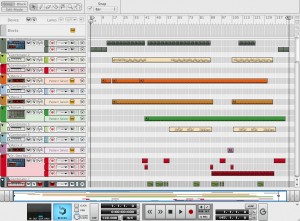
Loading the rack:
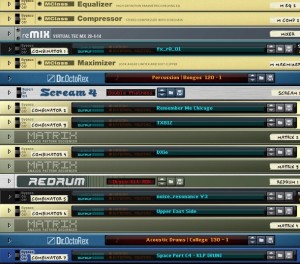
Adding FX for the intro:
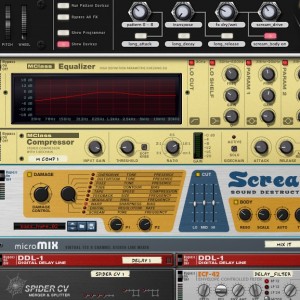
Creating the bass:
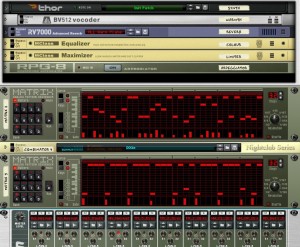
Adding the punch:
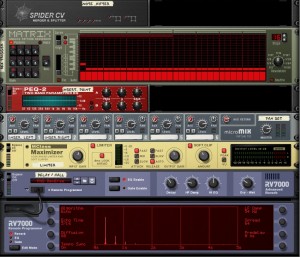
Perfecting the lead synths:
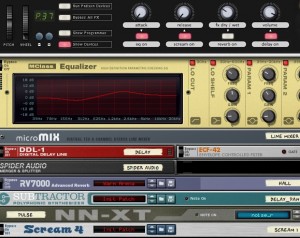
Wrapping it up with mastering and compressions:
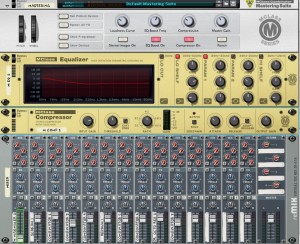
Done 
Make sure to let us know if you would like to have more details on any of these steps
Propellerhead Software – Keyboard Drumming for Beginners
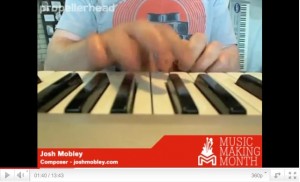
In this live session for Music Making Month, Josh Mobley (joshmobley.com) walks us through his technique for playing drums live on his controller keyboard in one take instead of programming beats with a pencil tool. The result is a human groove that feels more natural than programming ever will. Propellerhead has a unique approach in May’s “Music Making Month.” Hands-on how-to videos appear first as live webcasts, then on-demand YouTube clips, showing how to get into some real music making. Reason and Record are featured, of course, but the series is as much about production and performance as those tools. Check out the start of the terrific series by Josh Mobley on keyboard finger-drumming, for instance.
May Music Making Month – Propellerhead
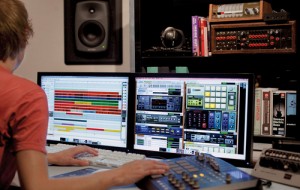
Propellerheads Software is making May Music Making Month with planned events and activities online. The first one being live on UStream on May 2, 2011 with guest Josh Mobley who is going to show you some very simple but very effective patterns you can play from your controller keyboard. Follow along live as he walks you through the process of teaching your hands how to get funky! Check out the event schedule and visit Propellerheads at http://www.propellerheads.se…
Testing ReBirth – Propellerheads drum machine on iPhone
Testing rebirth iphone version in box the original rebirth … lol rss
Thor’s Modulation Bus and Step Sequencer
It’s hard to believe it’s been 52 Tips already but now we’ve all got the Reason/Record chops to prove it! For those of you who have been with me since week one, I’m so proud you came all this way with me. For those of you just coming into the series, boy do you have more goodies to find in our past episodes!
In this final week’s Tip I’m going to show you around Thor’s final sections: The Modulation Bus and Step Sequencer. With these sections under your belt you’ll have completed my multi-week “Synth School” series and hopefully be able to approach custom synth sound design with a whole new bag of tricks.
Now there’s nothing else to do but to get out there, use this knowledge, and start making more music than ever before!!!
Propellerhead Software in the Classroom
For the past 10 years music producers, beat-makers, sound designers, and game composers have made Reason’s highly creative environment a mainstay of their toolbox. All the while Reason has become a mainstay of the education process as well.
To see how Propellerhead Software’s Reason 5, Record 1.5, and Recycle are being taught in the classroom, we visited some top institutions around the world. These educators let us into their classrooms and studios to discuss how they’re leveraging the power of the Reason rack to teach not only in-the-box desktop audio production, but hardware-based studio production and even studio wiring/design as well.
Thor Filters, Shaper, Envelope, LFO, and Mod Matrix
With a solid foundation of synth theory and even Thor’s fundamentals under your belt, this week we’ll be diving deeper into the filter types in Thor – looking at the State Variable Filter, the Comb Filter, and the Formant Filter. You’ll also learn about the self-oscillator included with some of these filters. From there we’ll move through Thor’s semi-modular signal path to see how you can tap into the sound-bending power of the shaper, the mod envelope, and the Modulation Matrix.
As with all of these Synth School videos, the knowledge in here builds heavily off of previous tutorials so if you’re jumping in to this one first I can highly recommend looking at past weeks to get a better understanding of the advanced concepts we’re covering here.
Also: Don’t forget to get your cap and gown measurements to the principle’s office because graduation from Synth School is next week!
Thor’s Multi-Osc, Noise Osc, and Filters
Yet another video from the Prop guys featuring the Thor synth:
If you’ve made it this far into Synth School without dropping out or changing your major to something less technical, then congratulations. You’re nearly ready for graduation day. Today we’ll be picking up where we left off with Thor’s oscillator types, namely the multi-oscillator and the noise oscillator. There’s a lot to these simple looking modules! From there we’ll move over and take a look at the filter sections in Thor and I’ll introduce you to the semi-modular routing buttons which help move signals through Thor.
Thor Oscillator Types
Synth School enters its final and most advanced device starting this week. Strap in and get ready because we’re about to tackle the Thor Polysonic Synthesizer. Thor is called “polysonic” because it offers a smorgasbord of various oscillator types, filter types, and signal routing options.
This week we’ll be focusing on the first major oscillator types in Thor. Each oscillator has a specific synth technology behind it and each one has a particular sound that will be suitable for different uses. If you’ve found yourself relying on presets for Thor or if you tend to go straight to the analog oscillator because it’s familiar to you, you’ll definitely want to get to know these other oscillators. They’ll expand your sonic palette and ramp up your sound design chops.
DATAMASKIN

