
DSP-3 – new dynamics processor

MaxSynths has announced the release of DSP-3, a dynamics processor specifically designed to be used on the main bus.
The main purpose of DSP-3 is to increase the perceived loudness of the track and make the mix more compact without introducing any distortion or audible artifacts.
Unlike other compressors DSP-3 is incredibly simple and intuitive: thanks to the internal IDP (Intelligent Dynamic Processor) circuit all the key parameters, necessary to have an adequate compression, are set automatically.
DSP3 includes four different dynamics processing models, selectable via a XY crossfade pad, which allows to crossfade the signal processed by the different algorithms.
DSP-3 features
- Intelligent Dynamic Processor (IDP).
- Four different automatic dynamic processor models.
- Transparent increment of the perceived volume level.
- High precision input/output VU-meter.
- Easy to operate.
- Low CPU usage.
DSP-3 for Windows (VST) is available to purchase for 19.90 EUR.
The Story Behind Arturia BeatStep
BeatStep co-creator Glen Darcey chats to Source about the inspiration behind the design, his first experiences with synthesizers and also how he’ll be using BeatStep in his own analogue-heavy synth studio.
BeatStep is also a 16-step analog sequencer for creating all kinds of musical phrases to be sent to analog synthesizers, MIDI drum machines, MIDI keyboard devices, or computer programs. Its connectivity options let you interface BeatStep with a computer or iPAD using USB, a drum module using MIDI or an analog synthesizer equipped with CV/GATE.
It’s priced at US $129 / EURO 99, and is expected to be available in March.
Hot news on The Cure
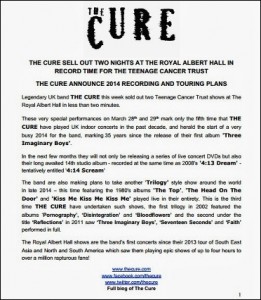
The Cure fan website Chain of Flowers has one hell of a scoop. The site received a press release from the band in which they announce the release a series of live concert DVDs in the next few months. The same press release also announces the band’s 14th studio album, with working title “4:14 Scream”. Apparently the album will be a collection of songs recorded at the same time as “4:13 Dream”. Expect the material to be much darker than what was released on “4:13 Dream”.
And that’s not all, The Cure is preparing for another Trilogy-style tour, this time featuring full performances of the 3 albums released between 1984 and 1987. Those who witnessed the band’s 4 hour and a half gig in Mexico in October 2013 (like we did) already have an idea what to expect.
Let’s see if all this will effectively be concretized because we are still waiting for a couple of other previously announced The Cure releases: DVD reissues of “The Cure in Orange”, the BBC recordings boxset “Show” and the follow-up to the 1990 remix collection “Mixed Up”.
More info as we get it.
Via SL Mag
OP-1 “DSynth” Beta Preview – Post NAMM 2014 Demo
Background video description:
I wrote a major explanation for this video but YouTube dumped it somehow. Must have been my error. I discuss much of what I wrote in the video, but one thing must be made clear. This is an in-development OS version and all content is subject to change. The new engine is shaping up rather nicely and since I was not able to make a video at NAMM due to the volume of interested people in the booth I made this. I do hope you enjoy?
I-OP, DO-U? Still on the fence? Grab one of these amazing machines. You’ll thank me later.
Let’s discuss in the comments. Thanks to TE for being awesome!
BLOW YOUR MIND – brain controlled synth module
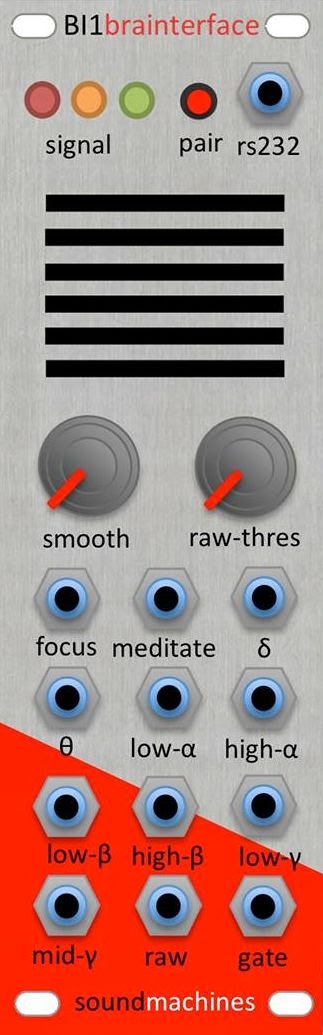
The next module by the Italian company Soundmachines might BLOW YOUR MIND in multiple kinds of ways…
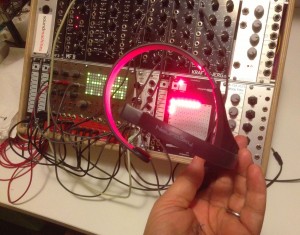
With their latest announced module you will be able to control your modular (or your synth) with your brain.
The Mindwave Mobile was chosen for its low cost and rather good EEG capabilities.
The headset is connected to the module via a Bluetooth link, so that NO wires are running from the modular to your head.
Soundmachines is expecting to release this module around June 2014.
Ototo: Make Music from Anything
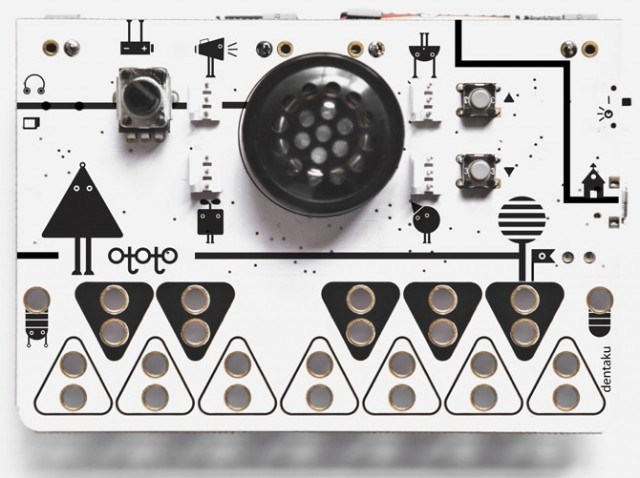
The Ototo is an experimental PCB-based synthesizer, created by design and invention studio Dentaku.
Ototo allows you to combine sensors, inputs and touchpads to create your own electronic musical instrument. Ototo is designed to let anyone unpack a kit and interact with sound however they want to, no soldering or coding required.
Features:
- 12 key capacitive touch keyboard (1 octave) with connectors
- 4 sensor inputs, 5V analog input
- Onboard speaker and 3.5mm headphone output
- Powered by 2 x AA batteries or micro USB
- No coding required
- 128 Mbit Flash memory
Manikin Schrittmacher DEMO track
Second attempt on using the Manikin Schrittmacher step sequencer.
I created (very easy, without reading the user manual lol) 4 sequences and assigned to each one a MIDI channel to send it to Virus Ti2 2 in multi mode. Easy to remove or to silent the steps.
Many thanks to Dragos Manea (owner of the Schrittmacher).
More on http://www.albaecstasy.ro
Studio Electronics BoomStar synths at NAMM 2014
Gino Robair, tech editor, checks out the all-discrete analog BoomStar boxes from boutique analog synth maker Studio Electronics.
Vintage gear demo: E-MU Emax
all synth sounds: E-MU Emax SE Sampling Synthesizer (1986)
drums: LinnDrum (1982)
recording: multi-tracking including the Emax internal sequencer
fx: reverb and delay
The Emax is a classic sampler workstation from E-mu. It is sort of a next generation Emulator II, it’s not as good as an Emulator III but it’s more powerful than previous EII’s. The Emax can be found in several forms: the Emax, the Emax Rack, the Emax HD (built-in 20MB hard disk), the Emax HD Rack and the Emax SE (Synthesis Enhanced) with a built-in synthesizer section. The Emax’s editing system will be familiar to users of E-mu’s excellent ESI series.
The Emax has an extensive library collection of samples that can be loaded via the built-in 3.5″ hard drive. Or you can sample your own sounds. The Sampler is powerful, but lo-fi. It samples at 12-bit resolution with variable sample-rates up to 42kHz. The built-in memory is 512K which only gives you a few good seconds really. Sampling and editing is easy, complete and intuitive with auto sample placement, auto-looping, truncating, reversing, velocity cross-fade, etc. The Emax also features individual channel outputs and stereo outputs and extensive MIDI implementation.
The Emax features many common analog synth-type controls for easily shaping your samples. Tune, filter and shape the envelope or use LFO’s and chorus to liven up your samples. There’s also an on-board sequencer section. A real-time only 16-track, non-quantizable sequencer for basic scratch-pad use or simple arpeggios or patterns. The SE and SE Plus models, the most advanced of the 12-bit Emax’s, add a synthesizer section, newer advanced digital signal processors for sample editing and a SCSI port (standard on the SE Plus). The Emax instruments were the most advanced of the classic keyboard samplers of the late 1980’s.
The Emax II which was released in 1989 brought the Emax series up to modern specs with 16-bit sampling, 16-voice polyphony, 16 MIDI channels, stereo samples, 1MB RAM expandable to 8MB, SCSI, 8 assignable outputs and the SE’s synthesis functions. And finally, the Emax II Turbo came with 4MB RAM standard and a 4MB hard disk. Whichever Emax you choose, they’re all classic machines still capable of professional quality results when used in making the music of today.
Korg Gadget – a deeper investigation
Right from the beginning, KORG Gadget gives you 15 compact synthesizers and drum machines. Each Gadget possesses an irresistible presence and can function as the core of your electronic music productions. The parameters are carefully constructed to take you right to the sound that you want, and they’re ideal for producing all forms of electronic music. Even if you don’t play a musical instrument, no worries! Each synth offers a keyboard featuring a Scale function that makes it impossible to play wrong notes, combined with a sequencer that supports the function, Just download KORG Gadget to your iPad, and start exploring 15 Gadgets.
Background video description:
Here I take another look at the brand new app from Korg and attempt to unravel some of its hidden or less obvious functionality. You can read more about this app and me at my website www.gazwilliams.me
DATAMASKIN

