
Synesthesia
Time for another fascinating expreimental video – called syn·es·the·sia syn·aes·the·sia (sĭn’ĭs-thē’zhə)
A condition in which one type of stimulation evokes the sensation of another, as when the hearing of a sound produces the visualization of a color. A sensation felt in one part of the body as a result of stimulus applied to another, as in referred pain. The description of one kind of sense impression by using words that normally describe another.
Experimental stuff: The Infinite Music Machine
An immersive digital journey into the analog world of Juju & Jordash.
On the 24th of February 2012 at Berlin’s Feed Soundspace, Juju and Jordash gave a live improvised performance, accompanied by artist Paul Skawinski’s liquid projections. The application takes their muliple layers of analog recordings and randomly combines them to produce an infinite music machine. An experiment on continuing randomness in the analog and digital domains.
Features
– Randomly auto generates music derived from Juju & Jordash’s live performance.
– Liquid visuals by Paul Skawinski.
– Randomize the audio and visuals using the randomize button.
– Set the length of time the machine generates audio and visuals: one minute to ∞
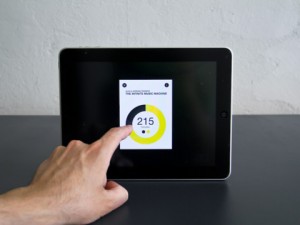
New interesting iOS app – theresAHoleInThePan
Worth checking out I think 
theresAHoleInThePan: Polyphonic sinusoidal synthesizer glitchy sonic glissandi instrument. Soothing sonic frequencies make space and time. Submerge your ears in the hole. Touching casts 0’s into musical space, dragging glisses bliss time. Visualize the sonic space you make. Warning: there is a hole in the pan.
ios universal app.+@ s373.net/x/theresAHoleInThePan/
thank you paul harrington for playing this first part of video! i hope to get the droid version up and running soon.
ゼノンさん
Wednesday, 2012/05/16 at Wednesday, 09:52
どのように片手で拍手の音を生成するでしょうか? (動詞=アクション=時間と空間)が垂直に向かって過去の貫通孔。astronaut-at-s373.net
Saturday, 2012/05/19 at Saturday, 10:07astronaut report, spacedate #uunnii-time: 7446.8896
#theresAHoleInThePan
a couple of very nice 5 star reviews in the app store:
itunes.apple.com/us/app/theresaholeinthepan/id524291999?ls=1&mt=8Customer Reviews
Strange, wonderful, weird.by McMugwump
Truly bizarre. Like some freakazoid thing found at an alien crash site. You keep it under your bed. Away from others. It whispers to you to touch it after you turn the lights off.White Love Monkee
by vurnt22
Couldn’t agree with the first reviewer more. Like a Strange Agency App, yet stranger still. What does this have to do with either primatology or The Last Train To Clarksville? Absolutely Nothing.
Indeed.
Theremin controlled Phonogene
Experiment with controlling Make Noise Phonogene with Doepfer Theremin modules.
Left antenna control cutoff on doepfer A-106-6 filter and gates from antenna switches filter type on A-106-6 via A-152.
Right antenna control Vari-speed on phonoene .
Steely Dan III by Beat Frequency – experimental theremin music with effects
Just watching this vintage movie is worth the posting
Recorded in one take. Effects chain: ModTone BuzzBoy in etherwave standard theremin w/ ESPE01 mod and effects loop, to Marshall Echohead Delay, to Electro Harmonix Talking Machine w/ expression pedal. Some dynamic compression and reverb added in post-production.
Investigating the relationship between light and sound
This performance investigates the relationship between light and sound, it also comments on the interconnectivity between instrument construction, musical composition and performance.
The instruments used are built using the Optical Analogue Pianola circuit by Jim Frize. Constructed, composed and performed by The Dirty Electronics Ensemble -Adam, Ayden, James, Jim, Laura, Max, Nasia, Neal, Rick, Simon & Stu
Performed at the PACE building in Leicester on the 30th of May 2012.
Here is a link to the pattern used on the giant hand cranked pianola (Crankotron)
The pattern was composed and cut by Stuart (A.S.M.O) Smith –
http://www.flickr.com/photos/asmo23/7310900456/in/photostream/lightbox/
Science off the Sphere: Space Soundwaves II- Electric Didgeridoo
In his off-duty time, NASA Astronaut Don Pettit likes to explore scientific curiosities of his own design. Sometimes that means cutting his shirt up and playing the space station vacuum cleaner like a didgeridoo. Answer the challenge question at www.physicscentral.com/sots for a chance to have your name read from space!
Using A Power Drill As A Synthesizer Control Device
Time to bring out your tool box from the garage and start making some sounds:
This video is a quick test and proof of concept. The Idea is to use a continuous rotation potentiometer as an input connection for drills, in this case the drill is used to control the pitch of a square wave oscillator.
NOTE: I would not recommend you try this out! but If you do intend to try this yourself, please take great care, you could easily hurt yourself or damage your equipment. Also I’d highly recommend using goggles.
Tuned Cave Stalactites
normal noises processed by tuned cave stalactites
Enjoy
Can anyone make music on a synth – monkeys for example?
Monkeys + Synthesizers is a project where 6 different spieces of monkeys (and some others) were given different synthesizers. Do monkeys like music and do they enjoy creating music?
Humans is the only species on earth that actually compose music. Most birds and some mammals make beautiful sounds, but primarily to scare others away — or to get laid. The project explores if other primates can make music.
In the 60s, the Chimpanzee Congo became famous when he painted abstract paintings that got pretty good reviews by art critics. He had a distinct style in some sort of abstract expressionistic tradition. He liked red a lot but didn’t he like blue. Today, some of his paintings are worth up to 20.000 €.
Since the synthesizers was invented, the musicians have been asked “Is this really making music? You just press a button and out comes music, right?” Well… you do press buttons, twist knobs and faders, but there are endless ways of doing this. That is why the synthesizer probably is the greatest musical instrument in history. A great example of human ingenuity and engineering — something that makes us different from the monkeys.
Dwarf Monkey (Callithrix pygmaea)
Habitat: The Upper Amazonas. Colombia, Peru, Ecuador, north Bolivia and west Brazil.
Length: 13 cm, tail 19 cm.
Weight: 120 — 150 g
Age: 5-10 years.
Diet: Tree gum, fruit, insects and spiders.
World’s smallest monkey
+
Bleeptronic 5000 (Thinkgeek.com)
64 LED button matrix synthesizer.
Origin: USA
Weight: 400 g
Dimensions: 15 x 15 cm.
Production year: 2010
Lion tamarin (Leontopithecus rosalia rosalia)
Habitat: Close to river Sao Joao and in the Poco d´Anta nature reserve, south west of Rio de Janeiro.
Length: 34-40 cm, tail 26-38 cm
Weight: 630-710 g
Age: Up to 20 years
Diet: Fruit, flowers, insects, frogs, lizards and bird’s eggs.
One of world’s most rare monkeys.
+
TR-909 (Roland Corporation)
Analog, partially sample based drum machine
Origin: Japan
Dimensions: 48 x 10 x 30 cm
Weight: 4500 g
Production year: 1984
Hamadryas Baboon (Papio Hamadryas)
Habitat: North east Africa and the Arabian Peninsula.
Length: Max 76 cm, tail max 61 cm
Weight: Female 10-13 kg, male 17-25 kg.
Age: Up to 35 years
Diet: Grass, roots, fruit, seeds, insects, lizards and sometimes small mammals
Their red ass make them look sexy and also serves as a pillow
+
Casiotone CT-360 (Casio)
Incredibly crappy digital synthesizer
Origin: Japan
Dimensions: 59 x 24 x 9 cm
Weight: 4.2 kg
Production year: 1987
Ring Tailed Lemur (Lemur Catta)
Habitat: South west Madagaskar.
Length: 50 cm
Weight:
Age: 25-30 years
Diet: 70% fruit, 30% leafs
+
Yamaha DX7 (Yamaha)
16 voice FM Digital Synthesizer
Origin: Japan
Dimensions: 101 x 10 x 33 cm
Weight: 14500 g
Production year: 1983
6 sine wave operators per voice, 32 Algorithms
Suricate (Suricata suricatta)
Habitat: Semi-deserts in southern Africa.
Length: 25 cm.
Weight: 900 g
Age: 10-15 years.
Diet: Insects, lizards, scorpions, small birds, eggs, rodents and other small mammals.
Suricates can survive bites from poisonous scorpions and snakes that would kill a human.
+
Mirage EPS16 (Ensonic)
Sampler Workstation
Origin: USA
Dimensions: 102 x 11 x 31 cm
Weight: 13000 g
Production year: 1988
8 note polyphonic, 8 bit, 32 khz sample rate, analog filters
Two-toed Sloth (Choloepus hoffmanni)
Habitat: Central America from Nicaragua and south to Venezuela, north east Brazil and nothern Peru.
Length: 58-70 cm.
Weight: 4-12 kg.
Age: 12 years, (up to 30 years in zoo).
Diet: Leaves, sprouts and fruit.
Sloths have the lowest and most varied body temperature of all mammals. It varies between 24° and 33°.
+
Yamaha SHS-10 (Yamaha)
Keytar FM synthesizer
Origin: Japan
Dimensions: 67 x 28 x 6 cm
Weight: 3.4 kg
Production year: 1987
Camera operators: Andreas Tilliander, Mats Almegård and Johan Östman. Concept by Håkan Lidbo.
Thanks to Bosse Johnsson and Jonas Wahlström at Skansenakvariet, Jörgen Berggren at Berggren Media, Jon Nensén and Daniel Sällstedt.
Voltfestivalen — The place to go to experience the best new electronic music and art
Skansenakvariet — The place to go to experience unique wildlife in Stockholm
DATAMASKIN

