
Let’s Play with ReBirth: Song Composition
Background video description:
I’ve gotten a lot of requests to describe my process for developing bass lines and Acid lead lines. In this video I attempt to do that! ReBirth is an excellent app to demonstrate both. I even throw in some details on working out drum patterns. Along with tips for playing Acid live. I tried to keep this as Squelch-lite as possible so as to avoid driving non-acid fans crazy. If you enjoyed this please consider supporting this series by sponsoring them on Patreon:http://www.patreon.com/user?u=107612
Be sure to visit http://discchord.com for this and other music app news!
Resampling Reason’s Output into Kong for Jamming
Resample the rack with Kong to make your old music or ideas into new beats. Speo shows you how in this tutorial video!
Background video description:
What’s up guys! I’m back after a downtime due to exam stuff, and here’s a quick and simple tutorial on how to resample Reason’s master output into your Kong to create a jamming set up. More in-depth tutorials are on the way.
Cheers, have a good one of whatever you’re having,
-Speo.
Links:
Download theVoiceOfReason Refill: http://goo.gl/2vGXf
Music: http://www.youtube.com/speomusic
Twitter: http://www.twitter.com/speomusic
Facebook: http://www.facebook.com/speomusic
Soundcloud: http://www.soundcloud.com/speomusic
James Blake “Retrograde” – Synth Tutorial
Watch Joe Hanley, the creator of Syntorial, as he recreates the chorus track from James Blake’s “Retrograde”. Download the presets and MIDI files used in this video by going to www.syntorial.com/tutorial_retrograde.ph
While you’re there, check out Syntorial: video game-like training software that will teach you how to program synth patches by ear. With almost 200 lessons, combining video demonstrations with interactive challenges, you’ll get hands on experience programming patches on a built-in soft synth, and learn everything you need to know to start making your own sounds with ease.
Free demo, containing 22 lessons is available at www.syntorial.com/?ims=igxcb
And for you Z3TA+ 2 users, Syntorial now comes with the Z3TA+ 2 Lesson Pack, which contains 37 videos, running over 3 hours, that go over every inch of Z3TA+ 2. Try the special Syntorial Z3TA+ 2 demo which contains 18 Syntorial lessons and four Z3TA+ 2 videos now at www.syntorial.com/lessonPacks.php#z3ta?i
Reason Rack Extensions explored by Erik Hawkins
Erik Hawkins (a.k.a. Erik Hawk) of Berklee Online reviews a few of his favorite Rack Extensions for Reason. Learn more about Erik’s Berklee Online Reason production courses:
Producing Music with Reason: http://bit.ly/1lXBef9
Remixing: http://bit.ly/1jHTxUW
Berkleemusic Blog: http://erikhawkins.berkleemusicblogs.com
Facebook: http://www.facebook.com/erikhawkmusic
Twitter: https://twitter.com/erikhawk
Pulse/Frequency Division With a Sequencer – Serge Synthesizer Tutorial
Use a sequencer to create polyrhythms and pitch divisions.
Though this is illustrated on a Serge the concepts apply to many modular synthesizers. Let me know how you apply this on your modular synthesizer.
To see the modules used in this patch in detail see the Mystery Serge at http://www.serge.synth.net/gallery/dl….
Doug’s website is http://www.neatnetnoise.com.
Interact with Doug:
http://www.youtube.com/channel/UC1LRX…
https://soundcloud.com/doug-4
https://www.facebook.com/doug.lynner
Tutorial: the process of remixing Jean Michel Jarre’s famouse “Oxygene” track
John ’00’ Fleming sits in for a Computer Music Producer Masterclass session. This entire series discusses the process of remixing Jean Michel Jarre’s famouse “Oxygene” track. Part one, John discusses how he worked with his partner sharing files due to long distance, how he prefers to design his own pad sounds versus flipping through pre-sets and the benefits there-of.
Follow John 00 Fleming and JOOF Recordings:
http://www.john00fleming.com/
http://www.facebook.com/pages/John-00…
http://twitter.com/John00fleming
http://soundcloud.com/john00fleming
A Simple Patch for Complex Melodies – Serge Modular Synthesizer Tutorial
Using a sequencer, a sample and hold and two clocks you can create complex melodies, more info below:
Though this is illustrated on a Serge the concepts apply to many modular synthesizers. Let me know how you apply this on your modular synthesizer.
To see the modules used in this patch in detail see the Mystery Serge at http://www.serge.synth.net/gallery/dl….
Doug’s website is http://www.neatnetnoise.com.
Interact with Doug:
http://www.youtube.com/channel/UC1LRX…
https://soundcloud.com/doug-4
https://www.facebook.com/doug.lynner
Use iPad effects apps in Ableton and Logic
Tutorial: How to integrate iPad effects apps such as Echo Pad and Swoopster in your productions using the iConnectMidi2+ with Audio passThru, allowing you to route audio and MIDI to and from the iPad with a single cable.
Resources Mentioned:
- Echo Pad FX app
- Swoopster FX app
- iConnectMidi2+ audio/midi interface with Audio passThru
Tutorial: EDM Automation Tricks in Reason
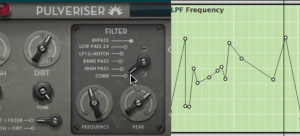
ASK Audio has a nice tutorial out focusing on automation, read the scope below and if of interest head over to their site for the full version:
With groundbreaking plug-ins coming out, like BreakTweaker and Ultraloop, that utilize automation, LFOs, pitching and effects automation for percussive, melodic and rhythmic creation, it’s easy to want to blow some serious money. However, if you think about it and understand the basics of what’s taking place in some of these amazing new plug-ins, it won’t take you long to remember that all of those, and sometimes more options, are available in DAWs, right now!
Reason is one of those DAWs that is perfectly capable of dishing out the same slick effects and editing oddities, especially with its awesome automation lanes and Parallel Channels. In this tutorial, we’re going to go through some of these features with an emphasis on building an arrangement for electronic music from a single tone, similarly to the Alligator in Reason, but on a bigger scale. Let me show you what I mean! Go ahead and set your tempo to 150, and let’s get going!
Step 1 – Lay the Ground Work
Before we do anything crazy, we need some tone to build from. I’m going to use a Thor that’s bumping a basic square wave oscillator. To achieve this tone, make sure to turn the Pulse Width knob to the square symbol. I would also suggest turning the Octave down, once, or twice. Working with a deeper tone will ensure some bigger overall results. >>>>>
KORG Gadget Automation Control Tutorial
Clear steps about recording,locating automated parameter,automating
pan and level in mixer,copying 1 bar to 2.
DATAMASKIN

