
The virtual studio for iPad – Rhythm Studio – is being updated
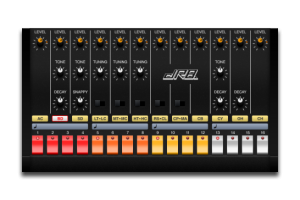
Pulse Code has announced plans for the next version of Rhythm Studio – a virtual studio for the iPad.
New Features in R3:
- Optimized Mixer that fits on one screen. The mixer has been optimized to fit on one screen which allows for better control but also gives us more workspace.
- 4 Audio Devices! That is right, with the smaller mixer the XYP Control Pad mkii has been moved which gives us one more slot to add a device!
- User selectable devices. In SETTINGS view you can change out the devices for your song. Do you want 4 x TB3 synthesizers just because? Well you can!
- Paste your song to the Intua Audio Paste clipboard to share between other apps! I exported the demo songs and sucessfully imported it into Garage Band of the iPad. http://support.apple.com/kb/HT4622
- Linear Control. In SETTINGS view you can change from Rotation control to Linear control. Thanks everyone for your feedback!
- Email Support. A button within the app will email us directly to give us feedback or ask for help.
- Email Song Session File. Share your masterpiece with your friends! (Audio in a future update)
- Song File Lock. This will prevent your song from being deleted or modified. Great for songs you want to share or just jam over.
New Devices in R3:
- Improved 4 Channel Mixer with controls that fit on one screen. The Effect Units have also been combined to make it more streamlined and simple to use.
- Improved XYP Control Pad. The new Control Pad mkii has a wider control surface that makes it easier to use.
- DR-9 Drum Machine. Perfect Four on the Floor drum machine to make those banging beats! Also includes flam to hit those 32nd notes.
- Gate Audio Insert Effect. The Gate Effect slices up the audio and takes it to another dimension.
“The only thing we need to do is build our new virtual analog subtractive synthesizer called: “The Hornet”. The Hornet will be a ribbon style synth. We’ll post the specs as soon as they are set.”
Checking out some new Moduls
Checking out some new Moduls, like the 4 ms Shuffling Clock Multplier and the Synthesis Technology E-580 Delay. The synthesis technology e580 resampling mini-delay emulates the classic sounds of digital, bbd and tape-based delays with 4 parameters under voltage control. the 14hp wide euro module accepts either +-12v euro standard power or +-15v motm/frac power. using a 40mhz dsp and 24-bit codec, the e580 recreates the pitch-shift modulating of bbds with the variable bandwidth and noise floor without costly bbd ics. in tape mode, wow& flutter, tape saturation and non-linear distortion model classic tape units without the bulk and maintenance. there are 2 simultaneous audio outputs: a straight delay and a variable tapped delay. the tap position is a percentage of the main delay time. this allows very short delays (<350us) as well as long delays (750ms). both tap position (‘offset’) and main delay time are voltage-controlled over a -5v to +5v range.
feedback is jumper-selectable from either the tapped position or the main delay. this flexibility can generate standard ‘rhythmic’ delays (feedback from main delay) or a series of ‘pre-delay reflections’ (tapped delay) which sound very different from each other.
Audio visual synthesis experiments
Realtime visual system for the album ‘Martes’ by Murcof.
Featured tracks: Mir, Memoria, Maiz & Mo.
This project explores the possibility of synesthesia in the format of audiovisual performance. The audio triggers the mechanism of lines that flows according to the frequency spectrum.
Made with TouchDesigner
For better quality please download the movie.
merma.tv
derivative.ca
murcof.com
Just to show the shape I used in the previous clip, with a (massive) track from Alva Noto, “R-re-repeat (+i-sound)”.
As you can notice, it’s asymmetrical: left and right audio channels. I love things that appear to be similar, but are not.
Machinedrum live techno
Machinedrum in action: The range of different synthesis methods serves as the foundation of the sound generation possibilities of the Machinedrum SPS-1 MKII. These methods cater for an impressive range of sounds, but it doesn’t stop there. Add the track effects, the resonant multi mode filters and the LFO’s and you will be able to come up with any percussive sound imaginable.
Use the sequencer to both control and shape sounds in great detail. It is one of the most flexible ever made. Thanks to the customizable nature of the Machinedrum you can also use it to sequence external gear. It can function as the brains of any MIDI based studio or live setup.
The Machinedrum can also be used as an extremely potent effects unit. The two audio inputs will let you process, twist and bend external sounds until they sound like nothing else. This will for sure breathe new life in your other equipment.
The Machinedrum SPS-1 MKII has a bigger brother, the Machinedrum SPS-1UW+ MKII. They are almost identical, but the SPS-1UW+ MKII also features a sampling engine and a +Drive. The +Drive greatly expands the storage capabilities. If you require more storage, the SPS-1 MKII can be upgraded with a +Drive.
Frequencies from the Serge
The Serge synthesizers are the creation of French electronic/synth designer Serge Tcherepnin. They are analog modular systems that began production in 1974, and continue to be produced to this day. The Serge concept was that a powerful, musical and great sounding analog modular system could, unlike the Buchlas, Moogs and ARPs of the time, be smaller, more compact and most importantly: cost less, making them far more accessible to musicians looking to jump into the bold new world of electronic music and sound design.
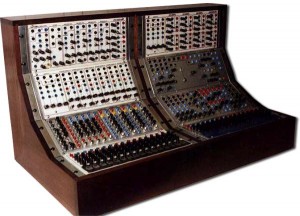
Although Serge was French, the modular systems that bore his name were orignally designed and produced in Los Angeles, CA. Initially designed in 1974 (in Serge’s home), mass production of the systems began in 1975 and continued until 1986. There was a rough period between 1986 to 1993 where modules were still produced to special order (slowly), but full production resumed again in 1993 after Serge’s circuit designs were sold to Rex Probe (an early collaborator) who went on to found Sound Transform Systems, who continue to produce many of the original Serge modules, plus a few new one’s of their own design.
Influences of the Buchla can be seen in Serge systems, such as touch sensitive keyboards & sequencers, random voltage generators, function generators, and matrix mixers. Yet the Serge has many unique designs of its own such as the Wave Multiplier module and the use of banana plugs in lieu of traditional patch cords. Its filters are unqiue sounding but it may be the Wave Multiplier module that truly sets a Serge apart as it is a totally unique synthesizer section that sits between the Oscillator and Filter sections and allowed for external audio or control voltage signals to be used to modulate the timbre of the oscillator’s tones.
Originally, Serge systems were custom built to order. Like any modular system a buyer would pick and choose individual modules they want and assemble them into a cabinet. However, to reduce the price tag and make them more accessible to musicians not interested in building a modular synth from scratch, Sound Transform Systems sells Serge systems in pre-configured systems: Shop Panels and the M-Class.
Really weird drum machine architecture
Drum Toy uses an admittedly weird drum machine architecture and concept. You create basic loops using Drum Toy’s Every and Offset knobs, and then feather in the secret ingredient: Probability!
In a way, Drum Toy ‘thinks’ the way drummers do. Find the pocket, lay down the main groove and sprinkle lightly with a few tasty fills or variations here and there to keep things fresh. Drum Toy is set up to force certain beats while leaving others to just the right amount of chance. This simple mechanism yields a surprising array of personality.
Drum Toy – the world’s funkiest practice metronome.
Experimental looping: Donut™ has an appointment with Thich Nhat Hanh
We reported about the Donut looper a couple of days ago and now the Strange Agency has released a new inspiring video using the Donut:
Donut™ lets you record loops in two dimensions.
You can use it like a phrase looper, by recording horizontally while using the step controls to step through vertical recording position. You can use it as a realtime processor by using ThruRecord mode. You can record and playback at completely differently speeds. You can even record backwards! You can record and playback diagonally across the Donut™ surface, creating glitchy staccato sounds. You can record and playback with multiple heads, recording or playing multiple positions at once. You can spread the heads vertically to access different portions of the Donut™, or you can spread them horizontally to create an echo effect.
Imagine two dimensional time! Now on the App Store.
itunes.apple.com/app/donut/id451057730?mt=8
Joerg Schaaf – Flyday ’99
Background information: “Flyday” is a 1999 remix of a song, I made in 1989. It was originally planned as a bonus track on my album “sonar eXperience” but I decided against it as it was too different from the rest of the album. The following equipment has been used: MiniMOOG, DX7II, MKS50, D550, ESI 32 Sampler.
Profile:
Jörg Schaaf arbeitet seit 1985 erfolgreich in verschiedensten Bereichen der Synthesizer-Technik und Musikproduktion. Vom Sound-Design für Theater, Film und Industrie, Durchführung von Messepräsentationen bis zur kompletten CD-Produktion reicht sein Aufgaben-Spektrum.
Außerdem hat Jörg Schaaf an der konzeptionellen Entwicklung elektronischer Musikinstrumente mitgewirkt und sich dabei intensiv mit dem Design interaktiver, musikalischer Bedienoberflächen beschäftigt. Bei der Erstellung von Werksprogrammen und Samples für alle Arten elektronischer Musikinstrumente können Sie auf einen erfahrenen Sound-Programmierer zählen.
New Reason Refill: “Missing Pieces – Feedback Echo”

“Missing Pieces – Feedback Echo” is a first from entire series of new Refills.
It contains unique collection of Feedback Echo effect combinators.
There is one important big difference between normal and feedback based echo.
Inside those effects audio signal is processed with each echo repetition, so with time it gets more distorted
and depends on feedback amount, it may vanish or transform in to completely new sound.
For example signal can be processed by Neptune, so with each repetition it will be pitched up, until it reach selected filter frequency. Combining with short delay time it can generate unique filter sweep sounds.
Details:
- Total 203 combinator patches for Reason 5+Record, Reason 6 or above.
- 3 Main combinator feedback echo FX combinator devices.
- 85 Clasic feedback “Echo” combinator presets
- 65 Neptuned feedback “Ncho” combinator presets
- 50 Vocoded feedback “Vcho” combinator presets
- 2 Template songs for creating own unique analog echo sounds.
- 19 Combinator skins in reason clip colors.
- Reason/Record .rps Demo songs
- PDF Documentation with useful tips.
Price : 15$
Links:
Site: naviretlav.com/refill
Live Acid Jam on RE-Birth
ReBirth faithfully emulates dance music’s three backbone devices: The Roland TB-303 Bass synth and the Roland TR-808 and 909 drum machines. Combine these with FX units, fully featured pattern sequencers and a gorgeous-looking interface and you’re ready to make killer tracks on your iPad. Share your music with friends on Facebook, Twitter and more using the built in sharing features.
ReBirth for iPhone and iPad has its home on rebirthapp.com
DATAMASKIN

