
Interview: Dave Gahan – An Inside Look at His Very Personal Studio
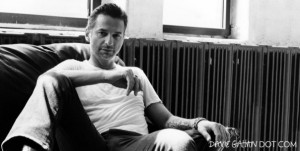
Sonic Scoop has a new interview out featuring Dave Gahan of Depeche Mode – taking a closer look at his studio in NYC:
New York City and rock stars were made for each other.
Depeche Mode’s Dave Gahan has many good reasons to settle in NYC.
Wherever in the world these musical success stories – and we’re talking the multi-multi-multi-multi platinum variety here – come from, NYC still has the power to go from tour stop to adopted hometown for waves of them.
Rock stars move to NYC not to stand out, but to get swallowed up among the teeming millions. But they also continue to create — and with the well-deserved financial windfall that often comes with recording global smash hits, they can take personalized approaches to their creative spaces.
Today’s case in point: Dave Gahan, whose unmistakable voice has been central to the sound of Depeche Mode since that landmark band bowed in 1980. A group with an unmatched ability to produce timeless electronic dance music, Depeche Mode’s shockingly original songs are permeated with intellectual depth, elegance, and artistic devotion.
Little wonder this is one of the most successful bands of all time. They can claim over 100 million in record sales, and their members have collectively faced 30 million audience members in concert – thanks to a parade of huge hit singles including “Enjoy the Silence”, “Just Can’t Get Enough,” and “People are People”.
The band’s 13th album is on the way now, due for release coincident with a tour in 2013. And expectations will be high. Dave Gahan, Martin Gore, and Andy Fletcher earned a GRAMMY nomination for their last album, 2009’s Sounds of the Universe. While his Depeche Mode bandmates transfix with their musicianship on that engrossing record, Gahan’s voice comes through with increased agility – wiser while still somehow sounding younger and more athletic.
Even more recently, Gahan got a turn as lead vocalist for the famed production duo of Rich Machin and Ian Glover AKA Soulsavers. Their just-released collaboration, The Light the Dead See hears Gahan’s vocals grow even more cinematic in scope, in emotionally massive songs like “Gone Too Far” and “Bitterman”. The thought that Gahan could come completely uncaged on the next Depeche Mode album is tantalizing.
Personal Studio, Personal Choice
Gahan has acquired a beautiful vehicle for getting there via his innovative private studio here in New York City. Built into a residential apartment separate from his own home, Studio Blanco has been constructed with a clear mission: capture one of modern music’s most iconic voices.
Kurt Uenala engineers all at Blanco Studio. (all studio photos in article by David Weiss)
The pilot flying this plane is Kurt Uenala. A Swiss-born engineer/producer with sharp engineering skills, deep production experience, programming and songwriting abilities, and an amiable personality, Uenala is a versatile presence at Studio Blanco, helping Gahan to get where he wants to go – as quickly and easily as possible.
Even though Gahan can – and does – make ample use of NYC’s world-class suite of commercial recording studios, Uenala points out that a personal facility is essential for an artist on this level to write, demo new tracks, and also record final vocals – as was done here for many of the Soulsavers and upcoming Depeche Mode songs.
“Money is not necessarily a big issue with successful bands, but still at $2500 a day in a commercial studio, you can’t be as experimental as you can be at home,” he says. “You can work at a personal studio any day and any time, and that can be a big part of the creative process. The mindset becomes, ‘We arranged and finished a song a certain way, but can redo it from scratch if we feel like exploring further.’
“The end result is better than a big room with all of the drama gear. We can book a studio like that for a month, but when that time is up, Beyonce is coming in – so you have to go. At that point money doesn’t help: It’s booked. Not having a deadline is wonderful, and so is knowing the room in and out.”
An Unusual Recording Home
“The room”, in this case, is a personal studio operating on a high very level. The obvious centerpiece of the sun-kissed residential space is a space-age white hut which occupies a large portion of the main living room, without engulfing it – plenty of space remains in the room and the rest of the apartment to provide headroom for writing and relaxing.
The acoustically isolated structure is made by the Barcelona-based company Studio Bricks. A “self-assembly cabin system” that can be constructed by one person in a short amount of time with minimal tools, Studio Bricks are acoustic solutions made specifically with artists, engineers and producers in mind.
According to Uenala, Studio Blanco’s big white box represents the first Studio Bricks deployment in the US. “They’re modules that are really Legos – they snap into each other, but they’re made of sandwich wood and rubber,” he notes. “It’s been here since September, and it really works sonically and in terms of providing acoustic isolation. It reigns in the sound not just of the vocals being recorded, but also of productions and mixes – we have to be able to turn it up.
From The Vaults : Depeche Mode: A Conversation with Mr. Gambaccini from 1993
Radio DJ Paul Gambaccini interviews the members of Depeche Mode at home and in the studio in this exclusive documentary footage from 1993 for From The Vaults on The Warner Sound.
From The Vaults is the weekly unveiling of the documentaries, interviews, and performances unearthed from the Warner library.
Subscribe to The Warner Sound:
http://goo.gl/8LzoM
Depeche Mode Studio Setup…
In The Studio 2012
http://www.facebook.com/depechemode
Node returns after 15 years – here’s the trailer
Analogue Synth masters Node are set to return in 2012 after a 15 year break with brand new material. The group are made up of world famous producers Flood and Ed Buller, who between them have worked with the likes of Nine Inch Nails, Depeche Mode, Pulp, U2 and Suede. Alongside them is acclaimed musician, composer and professor of music Dave Bessell and film score extraordinaire Mel Wesson.
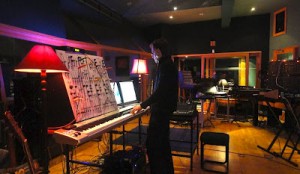
The group will release their first album in 17 years, following up from their self titled debut album in 1995. Alongside this they will run a Pledge Music campaign where fans will be given the unique opportunity to be part of the creative process as well as having the chance to purchase exclusive merchandise and content and receive the album before anyone else.
Click on the link below to visit the Node website where you can keep up to date with all the latest news, listen to music and be the first to hear about the launch of the pledge campaign.
Just Can’t Get Enough – The Making of Depeche Mode
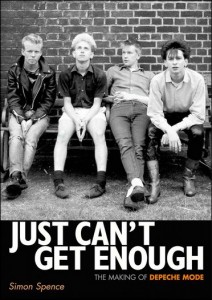
New biography of Depeche Mode has hit the stores: “Just Can’t Get Enough – The Making of Depeche Mode”. This one was penned by Simon Spence who collaborated with Rolling Stones manager Andrew Loog Oldham on the memoirs “Stoned” and “2Stoned”. He also wrote a book about Loog Oldham’s Immediate Records. As a journalist Simon has written features on popular culture for many publications, including the NME, The Face, i-D, Dazed and Confused, The Independent, The Japan Times and International Herald Tribune.
This book is another unofficial Depeche Mode biography and while the awful cover – featuring a funny early photo of the band – could make you think that it’s pointless and not very interesting, it is actually rather interesting. This is probably the best biography charting the very early days of the band up to the Black Celebration era.
NME journalist Simon Spence draws on first hand interviews with people close to the band such as friends, lovers, club runners, support acts, pluggers, producers and even church elders, such as Alison Moyet, Robert Marlow, Gareth Jones, Neil Ferris, Adrian Sherwood, Martyn Atkins, Brian Griffin, Robert Gorl etc..
The first chapter deals with Basildon, because it’s important to understand this new post war experimental city to really understand Depeche Mode. Then we learn how the boys arrived there, how they met, their previous bands and how they created one of the ten best-selling bands in music history. Don’t expect gossip and trivia facts, you’ll get the real story about Dave, Martin, Alan, Fletch and Vince and experience their journey to world superstardom! Part musical odyssey, part cultural history, this book traces the story of Depeche Mode from the front rooms and school halls to the Bridgehouse and from their very first appearance on Top of The Pops to Black Celebration tour arenas.
You can order the book at Amazon US, Amazon UK and Amazon DE.
DEPECHE MODE – SEE YOU
HIGH QUALITY 1982 PERFORMANCE (ROLAND JUPITER 8, MOOG)
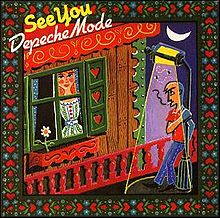
“See You” is the fourth UK single by Depeche Mode and the first written by Martin Gore. The single was released on 29 January 1982 and was later included on the band’s second album A Broken Frame. The single launched a small world tour, with extra band member Alan Wilder, although he did not contribute to the song or the album. There are two versions of “See You” — the single version, and an extended version with a longer intro. This became the album version.
The B-side to “See You” is “Now, This Is Fun”. The extended version has a bigger bridge in the middle and a longer ending, with David Gahan sometimes shouting “This is funny!” instead of “This is real fun!”.
The video for “See You” was directed by Julien Temple. It was also the first video with Alan Wilder. He can be seen briefly playing the keyboards, and he also appears in several photo booth strips. At the beginning of the video there is a speakerphone, much like the one on the cover of Music for the Masses, released five years later. The band did not like the video, and it did not show up on the 1985 video compilation Some Great Videos, which included the band’s videos up to 1985 except the A Broken Frame singles and “Get the Balance Right”.
Fun stuff: Family playing Depeche Mode :-)
Dicken Schrader: 80’s keyboard, xylophone, kazoo, tambourine, Coke bottle and voice.
Milah Schrader: Recorder, rattle, windchime and voice.
Korben Schrader: Toy keyboard, maraca, cheese grater and voice.
Music and lyrics by Martin L. Gore (Depeche Mode)
And here’s another one:
Enjoy
Classic concert from 1982 with Depeche Mode now on DVD
Depeche Mode’s classic concert at the Hammersmith Odeon (October 25, 1982) has been circulating on the Internet for a long time and various versions of bootlegs has also been available. The concert, or at least parts of it have also been sent in several TV channels around the world.
Now the production company Headliner imprint, which previously released live DVD’s, including U2, The Cure, Devo, Peter Gabriel and Massive Attack, has decided to release the concert on DVD titled “Feel You”.
The DVD will be released in NTSC (all regions) in 4:3 aspect ratio and audio tracks in Doly Digital 5.1 and 2.0. Setlist from the evening includes a selection of classic songs from the band’s first two albums’ Speak & Spell “(1981) and” A Broken Frame “(1982).

Whether the release of the factors is a pure bootleg remains to be seen, but many people have placed themselves puzzled as to why the release is not via the band’s record label Mute Records, where managers also contacted, as well as the distributor.
“Feel You”, released January 27 by Headliner Imprint.
Tracks on the DVD:
- My Secret Garden
- See You
- Satellite
- New Life
- Boys say Go!
- Tora! Tora! Tora!
- Nothing to fear
- Leave in Silence
- Shouldn’t have done that
- The Meaning of Love
- Just can’t get enough
- A Photograph of You
- The Sun and the Rainfall
Enjoy 
DX5 playing DM “Shake the Disease” 101 version
Background data:
Happy 2012 everyone. Updated “Shake the Disease” version, more 101 oriented. Yes, I used Alan original samples in my EMAX II The sample allocation is the same alan used on tour.
You can find some mistakes as this was recorded at the first take, first time I played the whole track (once assigned samples and levels).
More covers coming soon, also my next new album with original tracks (reworking on some demos these days).
Gear Used:
Upper: Emu EMAX II HD
Mid: Emu Emax I
Low: Kurzweil PC1x
Backtrack recorded in Pro Tools. Grid metal effect was recorded hitting a pipe on a grid door.
Composed by Martin L. Gore.
Chaos All Stars – Enjoy The Silence
Swedish electro/EBM/alternative music act Chaos All Stars are to release of a cover album that is neverending: “Neverending Coverage”. Indeed, this is an album that has no limit of tracks but will instead be growing as time goes by and whenever they feel like doing a new cover. The album contains covers chosen, performed and produced by Chaos All Stars of some of their favourite songs.

The album is released on a distribution license for almost anyone to redistribute for free (as long as they take responsibility for the distribution, meaning that the covered artists get mechanical royalties). Any profits are to be donated by the distributors to charity. Chaos All Stars explain: “We want to offer these cover songs to the widest possible audience! We cannot of course do this with any release we do but we feel that we as artists have the rights to choose how we wish to distribute our recordings and this time we wanted to try a new angle.”
DATAMASKIN

