
A few Roland JD-990 pads, plucks, pianos, and strings
The Roland JD-990 is a classic module featuring great waveforms in ROM, and deep editing capabilities (it was known as a “programmer’s dream” when it came out). These are a few examples of its classy, beautiful, lush sounds.
The JD-990 is an enhanced version of the JD-800 and was the top o’ the line JD-synth. Its rack-mount design and impressive power and functionality within the studio paved way for the hugely successful JV-series rack modules which lead, ultimately, to the XV-series monster-modules! The JD-990 is a digital synth with 6MB of ROM sounds with “analog-like” edit parameters and features. These include lowpass filtering, ring modulation, osc. sync, frequency cross-mod, etc. The JD-990 is also compatible with JV80 and JD800 expansion boards.
The JD-990 has a large LCD display which makes editing very easy and intuitive, you can actually see the envelopes and LFO rates. There’s an on-board multi-effects processor with Delay, Reverb, Phaser, Distortion, Chorus, and EQ. For the studio, the JD-990 has MIDI IN/OUT/THRU and eight outputs in four stereo pairs. The JD-990 can hold one internal expansion board and the best choice is to put the Vintage expansion in it because that gives you about 512 patches (Only 255 from JV-series!) of which 256 are specially programmed for the JD-990.
Roland MC-202 Vintage Synthesizer Overview
This is an analog synthesizer/sequencer. It sounds very much like the TB-303 and SH-101 bass synths. Sometimes considered the “poor man’s 303”. It has a very evolved form of TB-303 like programming (more like the MC-4) and SH-101 like controls of the VCO, VCF, VCA, LFO, Envelope and Mixer sections. The LCD display is a great feature too.
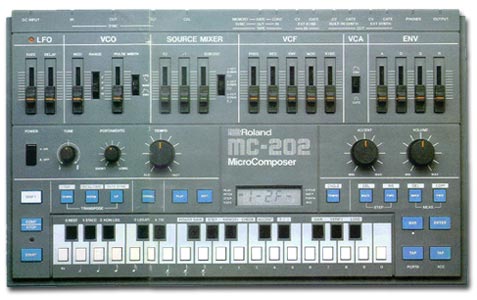
The MC-202 was sort of a next-generation TB-303. So the idea was to program sequence/patterns into it internally which would give you those 303 basslines that we’ve come to love. But programming the MC-202 is a bit too intense and over done for the simple monophonic bass line. However you can control it externally by hooking up a MID-CV/Gate converter. Then you basically have yourself an SH-101!
The sequencer is actually a 2-channel CV/gate sequencer, with both channels being capable of driving a separate external synth. It’s a very useful unit, also, for its DINsync capabilities; it can receive on one port, and send over two, and also can ‘split’ DINsync to branch a sync signal out to multiple devices.
NAMM 2013: Moog Sub Phatty in-depth demo and preview
An exclusive in-room demo of the new Moog Sub Phatty. Hear the sounds, learn it’s features and get a deep insight in to all of the sonic possibilities of the new Moog, including driving drums through the brand new multi-drive filter.
Korg KingKORG Modeling Synthesizer Product Overview
Korg’s new KingKORG modeling synthesizer delivers the sound and excitement of vintage analog synthesis, with next-generation power and flexibility that could only come from Korg. It’s optimized for live performance, and its easy, knob-driven interface also makes deep sound creation a breeze.
Learn more about KingKORG at http://www.korg.com/kingkorg.
Ready for live performance.
KingKORG is the full-fledged analog modeling synthesizer you’ve been waiting for. It carries on the design philosophy of classic Korg analog synthesizers such as the MS-20 and the Mono/Poly, which gave rise to the Prophecy, the Z1, the MS2000, and the RADIAS. This exciting new instrument delivers the unique characteristics of a dedicated synthesizer, especially the fun of transforming the sound by tweaking an impressive array of knobs. While technologically impressive, KingKORG is approachable even to players who are new to synthesizers. And it particularly shines on stage, not only with its great sound, but also literally with a gorgeous champagne gold finish, befitting its royal name – KingKORG.
Product Highlights:
- A full-fledged, 61-key analog modeling synthesizer designed for live performance
- Powerful oscillators that are understandable to the beginner, yet satisfying for the expert
- Modeling filters that reproduce the sound of classic instruments
- Three master effect sections (each with six effect types) add the finishing touch to your sound
- Vacuum tube driver circuit adds rich overtones and powerful distortion
- New panel layout designed for intuitive operation
- CV/GATE OUT jack lets you control a Korg monotribe or MS-20
- Support for librarian software that lets you manage programs
Press release:
Korg USA announces the King Korg analog modeling synth. Focused on live performance, it features Korg’s new XMT (Xpanded Modeling Technology) engine, with many types of oscillators and filters that can accurately model sought-after vintage analog synths. With its controls laid out in easily identifiable sections, King Korg delivers the unique characteristics of a dedicated synthesizer, while remaining approachable to players who are new to synthesizers. It not only shines on stage with high quality sound, but also with a champagne gold finish befitting its royal name.
A 3-oscillator, 2-timbre design allows players to generate thick and rich sounds. In addition to essential waveform choices such as sawtooth, square, sine, triangle, and noise, King Korg provides pre-set algorithms that contain various combinations of oscillator numbers and types, for easily and quickly sculpting stage-ready sounds. The oscillator algorithms also include numerous PCM/DWGS algorithms for creating highly personal sounds.
The filter section is crucial to a synthesizer’s character, and King Korg’s filters add unparalleled flexibility. In addition to a variety of essential analog modeling filter types, there are faithful filter models from analog monophonic synths that were used for lead and bass sounds in the ’70s, as well as the polyphonic synths used in new wave music of the ’80s, plus the filters of Korg’s classic MS-20 analog synth. These filters can also be made to self-oscillate by raising the resonance setting- a unique capability of analog synthesizers.
A selection of 200 stage-ready preset programs includes many familiar and authentic sounds for playing classic and modern songs, plus fresh, inspiring sounds for new musical creations. An assortment of live performance staple sounds includes PCM-based piano, electric piano, organ, and clavinet. Users can store their own creations in 100 onboard user sound locations.
Each of three master effect sections offers a choice of six effect types: PRE FX such as distortion and amp simulator; MOD FX, including phaser, chorus, and tremolo; and REV/DELAY such as hall reverb and modulation delay. A full-analog vacuum tube driver circuit is also included as a mastering effect. It can be used to add warm fullness, a powerful overdrive, or anything in between. In addition, a built-in, full-featured vocoder uses audio from the onboard mic input to create a talking effect.
Many classic synthesizers used patch cables to physically reconfigure the signal flow. King Korg’s intuitive Virtual Patch system reproduces this function. With six Virtual Patch assignments per timbre, control signals such as EG, LFO, or joystick movement can be virtually connected to sound parameters such as pitch or cutoff, allowing users to modulate a parameter for even greater sound-shaping possibilities.
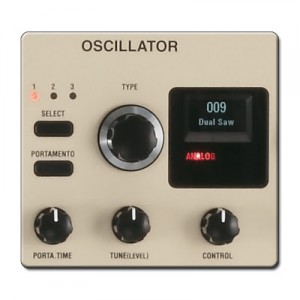
King Korg’s design makes it easy to create and modify sounds. The oscillator section has its own dedicated display, and the control knobs are assigned to the most important parameters for each oscillator. There are also dedicated dials for each of the three master effects, making it easy to audition different effects to hear how they modify the sound. Self-luminous organic EL displays are used for excellent visibility, even on a dimly lit stage.
King Korg features five octaves of velocity-sensitive keys, with adjustable response (Normal, Shallow, or Deep) to mimic that of classic instruments. Below the dedicated octave shift buttons, a backlit X/Y joystick is ready to control important live performance tweaks.
A CV/GATE OUT jack enables players to use an analog signal to control a KORG monotribe or MS-20. A dedicated cable is included to use the keyboard of King Korg to play the monotribe.
The King Korg will be available February 2013 for a U.S. Street price of $1299. Additional product information and sound demos are available at korg.com
Rumors were true – KORG will announce the KingKORG at NAMM 2013

There were rumors and they are true: Korg will announce a new synth at NAMM 2013: The KingKORG.
Korg.de has all the info, here is a translation by Google:
KingKORG is the standalone analog modeling synthesizer with a huge potential! KingKORG embodies the seamless continuation of the design philosophy of classic KORG analogsynths like the MS-20 and Mono / Poly, from which the Prophecy have originated Z1, MS2000, and RADIAS.
This fascinating new instrument has the unique characteristics typical synthesizer and an arsenal of practical controls for a perfect sound design. Despite its impressive technology and synth beginners become familiar with KingKORG quickly. On stage, he offers not only his great sound, but also literally, with its magnificent champagne-gold finish that emphasizes its royal name – KingKORG.
- Full featured analog modeling synth with 61 keys – optimized for live performance
- Powerful oscillators – understandable for beginners, fascinating for experts
- Modeling Filters for the reproduction of classical instruments
- 3 effect sections (each with 6 types of effects) to the perfect design of the sound
- Vacuum Tube Driver for brilliant overtones fat Distortion
- New panel layout for intuitive operation
- CV / GATE OUT jack mono tribe or to control a Korg MS-20 (mini)
- Free Librarian software for program management to download
Additional details:
KingKORG | synthesizer
The king of the analog modeling synth – a terrific live performance
KingKORG is de r independent analog modeling synthesizer with a huge potential! KingKORG embodies the seamless continuation of the design philosophy of classic KORG analogsynths like the MS-20 and Mono / Poly, from which the Prophecy have originated Z1, MS2000, and RADIAS. This fascinating new instrument has the unique characteristics typical synthesizer and an arsenal of practical controls for a perfect sound design. Despite its impressive technology and synth beginners become familiar with KingKORG quickly. On stage, he offers not only his great sound, but also literally, with its magnificent champagne-gold finish that emphasizes its royal name – KingKORG.
Highlights
Full featured analog modeling synth with 61 keys – optimized for live performance
Powerful oscillators – understandable for beginners, fascinating for experts
Modeling Filters for the reproduction of classical instruments
3 effect sections (each with 6 types of effects) to the perfect design of the sound
Vacuum Tube Driver for brilliant overtones fat Distortion
New panel layout for intuitive operation
CV / GATE OUT jack mono tribe or to control a Korg MS-20 (mini)
Free Librarian software for program management to download


“Powerful oscillators – understandable for beginners, fascinating for experts
In addition to a complex “3-oscillator x 2-timbre” technique to generate richer and more detailed sounds KingKORG features a newly developed XMT modeling sound engine. XMT (Xpanded Modeling Technology) is a proprietary Korg technology that allows easy operation in producing diverse sounds.
In conventional synthesizers, the individual oscillators while the sound creation only sequentially adjustable, the overall picture is hard to overlook. In contrast, offers KingKORG preset algorithms with various combinations of oscillators, which differ in type and number, and allow easy, fast creation of cool sounds.
The wide range of oscillator algorithms including not only the usual analogsynths sawtooth and square waves or noise generators, but also numerous PCM / DWGS algorithms that open up an entirely new field for a very custom sounds.
“Modeling Filters reproduce the sound of vintage instruments
Since the filter section on the characteristics of a synthesizer decides significantly, they found during the development of KingKORG special attention. The already large variety of analog modeling filter is significantly extended by the extremely flexible filtering of KingKORG.
In addition to the wide range of indispensable analog modeling filter types get realistic filter models to reproduce the analog monophonic lead and bass synths of the 70s, the New Wave typical polyphonic synths of the 80 and the filter of the classic Korg MS-20 analog synth.
Furthermore, can the setting of the filter resonance up to self increase – an existing analogsynths only real feature!”
“3 effect sections with 6 types of effect for a perfect make-up sound
KingKORG offers three effect sections with six types of effects: PRE FX with effects such as distortion and amp simulator FX MOD with classic effects such as phaser, chorus and tremolo, and REV / DELAY with spatial effects such as reverb and delay effects and different Plate. Each effect processor has it own dial to select the desired effect type. With the arranged underneath FX controls can precisely fine-tune the effect.”
“Vacuum Tube Driver for brilliant overtones fat Distortion
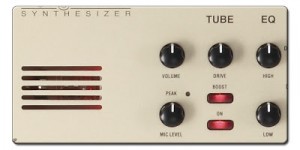
Based on decades of experience in analog technology, a fully developed KORG analog vacuum tube driver circuit as a mastering effect for KingKORG. It produces the entire range between warm sonority and intense overdrive.”
“Vocoding
The built-in vocoder uses the input of the Board held on microphone input for sound processing and brings the synth seems to speak.
His Formant Shift function causes dramatic sound modifications, while the Formant Hold function a vowel is “frozen”, which can then play with the keyboard.
Thanks KingKORGs Doppeltimbre architecture can combine the vocoder even with a different timbre and use it as additional sound or modulation source.
Virtual Patch function
With many classic synthesizers (such as the MS-20) could configure the signal flow with patch cables to physically connect one element to another. KingKORG forms this function by using an intuitive virtual patch system. Over six Virtual Patch assignments per timbre can be joint control signals such as EG, LFO, or virtual joystick movement with sound parameters like pitch or cutoff and modulate these creative.”
“Step Arpeggiator function
The Step Arpeggiator automatically generated from a sustained chord a tone sequence (arpeggio). You can choose among six Arpeggio and set duration, interval and on / off status of each Steps to arpeggios exactly to your own performance.
New panel layout for intuitive operation
The newly designed control panel is divided into logical blocks that direct the attention to the things that are for the processing of sounds important. Although KingKORG reflects the signal flow of a analogsynths in its construction, to its control panel is the most modern technology. For example, the oscillator section shows on its own display the name of the currently selected algorithm.
By turning the selector dial to appear adjacent to it are descriptive names, and by pressing the wheel to jump to the beginning of categories such as ANALOG or DWGS. The knobs are the most effective and most important parameters assigned to each oscillator and provide access to the unique features of an analog synthesizer sound design — by turning knob. Also for each of the three effects, a separate controller is available to easily experiment with different effect settings and test their effect on the sound. A self-luminous organic EL display (Organic Light-Emitting Diode) provides on dimly lit stages for excellent readability.”
“On the CV / GATE OUT jack allows an analog signal for controlling a mono tribe or KORG MS-20 output. With the included cable you can then eg play the mono tribe on KingKORG keyboard!
Home made theremin: Optical synth + KORG Emx + Kaoss pad
A home made theremin by Gavin Howe, description below:
Made my first “synth theremin” yesterday, sending it through the audio in+comb on the emx with flanger pitch shift (-12) and some short delay, then into kp3 for stereo delay, just playing around with different capacitors and korg effects. All sounds originate from the optical synth.
Synthesizers – KORG Z1
A voyage into the heart of the KORG Z1 MOSS Synthesizer from the year 1997.
Exploration by Marko Ettlich (RetroSound)
12 voices
2 oscillators per voice (13 osc types) 1sub-osc, noise
resonant filter LP, HP, BP, Notch
61 keys (velocity and aftertouch)
arpeggiator
used by Gary Numan, Orbital and many more
The Z1 is like a polyphonic Prophecy in a workstation! It does all the analog sounds and more. This is a great analog modeling synth with 12-voice polyphony, thirteen waveforms, four LFOs, two resonant filters, two effects units and more. The ability to create unique sounds is endless. The factory patches could use some help, but overall the sound is very nice! It has a fully polyphonic arpeggiator that blows all others away. It has five preset arpeggio patterns and fifteen user patterns. Unfortunately there is no on-board sequencer. There is incredible real-time control available with knobs to control the two resonant filters, and a touch controlled ‘XY’ pad for tweaking patches in real-time.
NAMM 2013: The most powerful synth Casio have ever built…
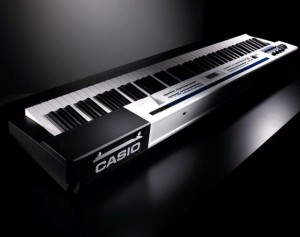
It looks like Casio has a new synth to introduce at the 2013 NAMM Show!
This image has leaked out of a new full-size Casio keyboard that looks a bit like one of their digital pianos crossed with the XW-P1 synthesizer, introduced at the 2012 NAMM Show.
The new Casio synth is also rumored to be ‘the most powerful synth” that they’ve ever built.
PPG WaveMapper – second next-generation iOS synth by Wolfgang

Wolfgang Palm has announced PPG WaveMapper, the second next-generation iOS based synthesizer by Wolfgang, which allows the user the opportunity to create limitless sounds from a unique and powerful new technology.
PPG WaveMapper features the Sound Map, which maps the various sounds in a way to easily access and experiment with them, more importantly the PPG WaveMapper features a new synthesis system which maps the waveforms of a sound into a new kind of wavetable which preserves the sound characteristics better than classic Wavetable synthesis and at the same time allows for the manipulations which make WT synthesis so unique.
PPG WaveMapper features
- New Sound map concept – create new sounds playful and experimental.
- 3 types of synthesis – the optimal type for kind of each sounds.
- Classic wavetables – for the typical PPG sounds.
- Time compressed samples – more authentic sounds, allowing analysis of user samples.
- Pure samples – classic sample playback Analyzer – convert your own samples into the new format or into wavetables.
- 3 oscillators capable for totally independent sound sources.
- 90 sound resources – a huge sound palette, from real instruments to abstract wavetables.
- 4 parameter editor pages – comfortable and detailed access to all the parameters.
- 3 Noise generators, for audio and modulations.
- Ringmodulator.
- Classic 24 dB Lowpass Filter, combined with an overdrive simulation.
- Dual amplifier, for versatile control of 2 audio signals as well as panning.
- 13 Envelopes, for independent control of pitch, waveform, filter and noise.
- gain and panning.
- 4 LFOs – with 5 waveforms.
- Delay/Reverb effect.
- Flexible Step Sequencer / Arpeggiator combination.
- Schematic touch keyboard – Build your own keyboard, with the keys you prefer for your music.
- Powerful sound browser – sorting by category, bank management.
- Virtual and Hard-MIDI in/out – sending/receiving keys and controllers.
The app is scheduled for release in February 2013, priced at $19.99 USD.
PPG Synth: J.S. Bach – Two Part Inventions No. 8
An extremely rare PPG 1020 Synthesizer recently repaired by The Analog Lab in NYC. This little beast was released in 1976 and was very ahead of its time by having 2 DCOs! You would almost think its an 8-bit machine at times if you have the square waves set just right. It also has a Ring Modulator.
A monphonic synth, the 1002 had analogue oscillators, the 1020 had digital oscillators, other than that, there’s no difference between the two!
We thought Bach would be appropriate for a quick little demo. Enjoy!
www.theanaloglab.com
DATAMASKIN

