
Casio XW-P1 with GSi Burn
We took a very quick test using the Casio XW-P1 with the Burn from GSi.
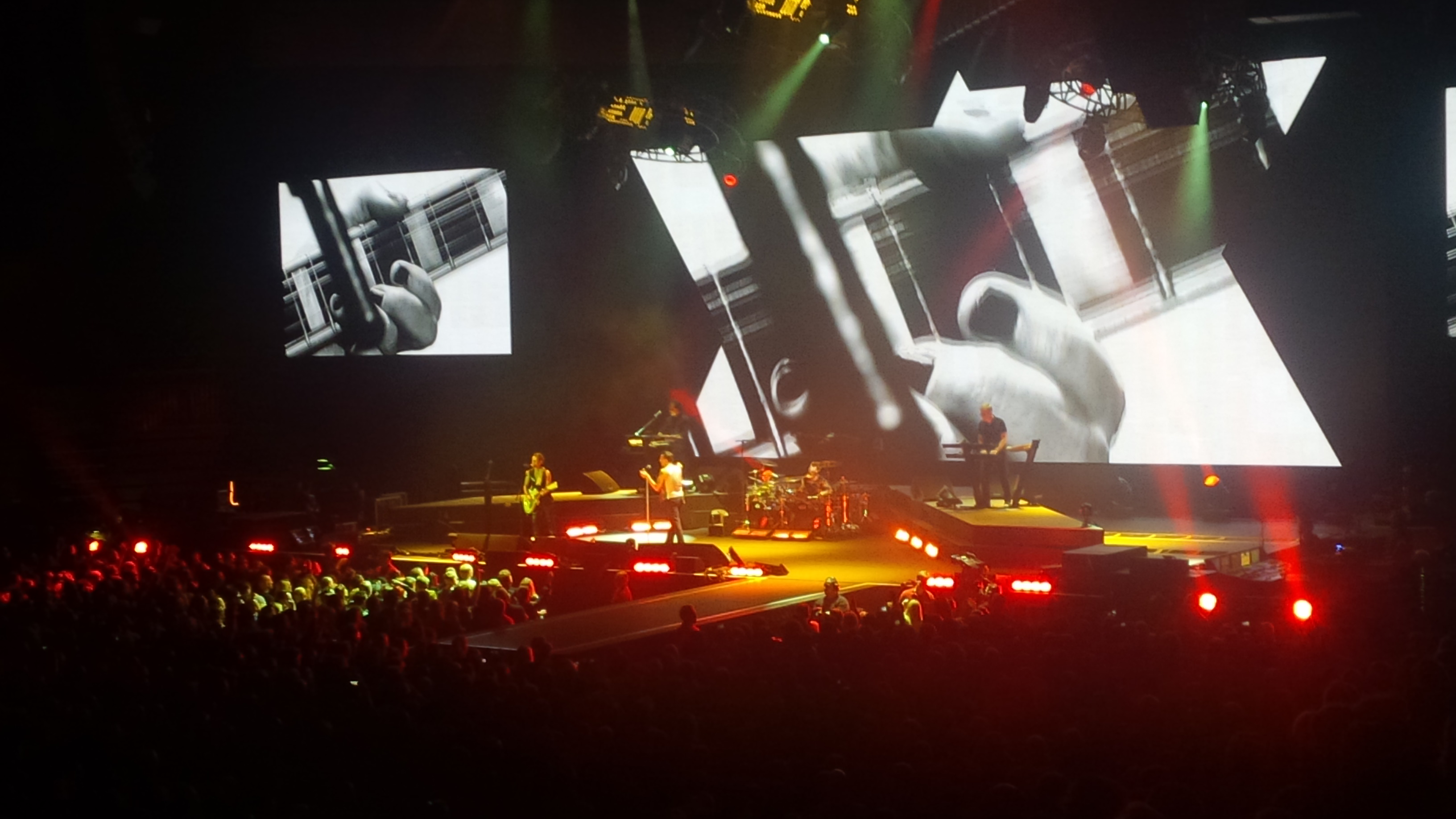
Snaps from Depeche Mode’s live performance in Sweden yesterday



Synth Demo – Installing Kilpatrick Format Modules
This video explains how modules are installed and removed from the Kilpatrick Format system. The unique chassis design makes rearranging modules quick and easy. You will also learn how to power a module outside the chassis for calibration purposes.
Exploring the sounds of Moog Source
Moog’s Source was their first to offer patch memory storage as well as some other new features. It boasted 16 memory locations so you could finally save and recall your synth patches. A casette-tape jack was also implemented to transfer your patches to and from an external tape and free up the on-board memory for additional new patches. But in an effort to modernize with the eighties, the Moog had replaced all buttons, knobs and sliders with flat-panel membrane buttons and a single data-wheel assignment format. At the time, this may have seemed far-out, but in all actuality it is the Source’s downfall.
Parameters are edited not with hands-on sliders and knobs but by assigning a selected parameter to the dedicated data wheel. This is very tedious and does not allow for true hands-on tweaking during performances nor can you adjust different parameters simultaneously or while playing. These days, the membrane buttons don’t always seem to work quite right either. However, those famous monophonic Moog sounds are still inside this synth which has two fat analog oscillators and the legendary 24 dB Moog filter.
The Heineken Scenthesizer
Heineken are using scent with music to improve the experience of dance. With the Scenthesizer, the two claim to be ‘pushing boundaries in music and scent’.
In a nutshell, the system allows on-the-fly mixing of scents, which are then delivered on cue into the audience. The idea is to take DJing, which already incorporates sound and light, and add controlled scents to the experience.
Circuit bent Casio PT-50
Hand built framework and additional panel design for the modifications.
This was the only Casio keyboard with ROM-Pack slot but no key lighting; instead it can load the ROM-Pack musics into an internal sequencer, and with the optional Casio TA-1 module it can even save them on audio cassettes. Even a RAM-Pack cartridge Casio RA-1 was made for this thing to save sequencer data – I never saw any other Casio keyboard designed for using it.
Despite this keyboard looks almost like a twin of the Casio PT-30, there are many small differences. 3 of the 8 preset sounds are changed, the chords and bass timbre is different and also the rhythm set is completely different and includes fill-in. Even the LCD has different segments and shows e.g. a “J” for major chords. Also the sequencer of this thing was changed and is horribly awkward like with Casio MT-70, because it apparently neither can record note lengths in realtime nor melody and chord together, thus everything has to be entered in different modes step by step. But by the general similarities I only explain here the differences to the PT-30.
Main features:
- 8 OBS preset sounds {piano, harpsichord, organ, violin, flute, clarinet, trumpet, celesta}.
- 16 preset rhythms {rock, rock’n’roll, disco, 16 beat, samba, latin rock, bossa-nova, beguine, tango, march, waltz, rock waltz, slow rock, ballad, swing 2beat, swing 4beat} made of analogue percussion + bass & piano accompaniment (contains no arpeggio).
- tempo +/- buttons (19 steps, counts 1..20)
- different editable sequencer (no realtime recording, terribly awkward!)
- transpose buttons (12 semitone steps)
- different LCD display shows pressed keys and chords (only important for the sequencer)
- ROM-/ RAM- Pack slot (but no key lighting/ melody guide feature)
- demo button (plays musics from the inserted ROM-Pack when present)
- multi-chip hardware:
- CPU= “NEC D1868G 004, 8314EK, Japan” (80 pin SMD)
- 2x SRAM= “HD B, 61914, 3D, 23” (44 pin SMD)
DIY MIDI CONTROLLERS
Just a quick rundown of some MIDI controllers ‘otemrellik’ has built recently for ios music making fun.
Here are some helpful links:
https://github.com/unsymbol/teensy-mi…
http://little-scale.blogspot.com/2012…
I use the 2.0 Teensy board for all my projects:
http://www.pjrc.com/teensy/
Cross DJ – the ‘first pro DJ app’ for Android
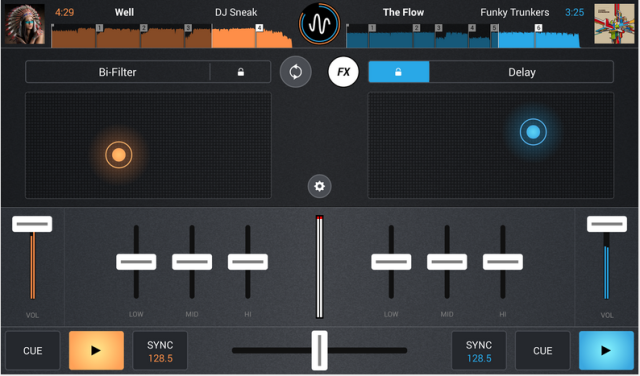
MixVibes has released Cross DJ for Android, an app they call the ‘first pro DJ app’ for the platform.
Features:
- Mix in Sync
- Accurate BPM detection, right down to the last decimal.
- Sync button: one-press, and the 2 tracks never go out of phase.
- Manual pitch & pitch bend.
- Beat-grid editing, to sync your old tracks correctly.
- Parallel waveforms: to visually check if your tracks are synced.
- Quantize mode: set hot cues & loops automatically on the beat.
- Smart-seek: Tap on the waveform to fast-forward & get a seamless jump.
- Audio Performance
- Low latency: music reacts instantly to your actions.
- Extremely realistic scratch sound.
- 15 effects (Bi-filter, Low-pass, Hi-Pass, Delay, Echo, Phaser, Flanger, Cut, Crush, Bliss, Brake, Roll, etc.)
- No loading time when starting-up the app.
- Interface
- 1 crossfader, 2 turntables, 3-band EQ mixer.
- Direct access to your device’s music( MP3s, AAC & more.)
- Multiple music sorting options: title, artist, album, BPM or length.
- Large control pads: XY effect pad, 16 hot-cues pads.
- HQ live recording of your mixes.
- Optimized for display on 4″, 7″ & 10″ devices.
- Minimum Configuration
- Android 4.1
- Android 4.3 for recording
- 4″ screen
- RAM: 1GB
- Dual-core processor
Cross DJ for Android is $4.99 – Get it here >>
Hyperdrive – first Reason ReFill created specifically for Parsec
The first additive synth for Propellerhead Reason is now available – the Parsec Spectral Synthesizer. Now, Nucleus SoundLab has released Hyperdrive, the first Reason ReFill created specifically for Parsec.
Here’s what they have to say about it:
Hyperdrive contains a full palette of new sounds for Parsec, suitable for a variety of electronic music genres – such as ambient, IDM, trance, or filmscore. Nucleus SoundLab has employed five experienced sound designers to produce a ReFill of truly varied scope. Inside Hyperdrive you’ll find their work has produced Blade Runner-esque FX, piercing psychedelic leads, glassy sweeping pads, hybrid Parsec/Thor duets as well deep sci-fi atmospheres.
The same quality customers have come to expect from Nucleus SoundLab is well-represented in Hyperdrive: Unique Combinators with unique Combinator controls; Parsec patches that make up each Combinator are individually available; full categorization of both Combinators and device patches; careful volume-balancing for every single patch. Together, Parsec and Hyperdrive are the perfect combination to propel your electronic music productions to vast new aural galaxies!
Features:
- 128 unique Combinators across eight categories
- 178 Parsec device patches
- 2 demo songs packed inside the ReFill
- All Combinator rotaries/buttons/modwheel uniquely mapped.
- Patches designed by veteran Reason sound designers – Adam Fielding, Shaun Wallace, Lewis Osborne, Navi Retlav, James Miles and Jeremy Janzen.
- Requires: Parsec Rack Extension.
Having Fun with Electrix Filter Factory and MoFX
Background video description:
Almost finished setting up my “electro rig” which features these classic, but inexpensive effect units from Electrix. One fun thing to do with the MoFX is turning the delay feedback to 100% and “sampling” a measure of a beat and manipulating that sample with the delay time. Be sure to listen with headphones if you’ve got them handy and hear the “ping pong” delay!
DATAMASKIN

