
ARP Quartet Multi-Timbral Polyphonic Vintage Analog Synthesizer 1979
http://youtu.be/_UMQjNU0Ins
“Brass, Strings, Organ and Piano sounds can be played individually or layered on top of each other in any combination (although, I can’t hear Brass when added to Piano)”
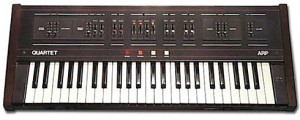
The ARP Quartet is identical to the Italian made Siel Orchestra. In fact, it is the Orchestra! ARP bought, relabeled and sold it as the Quartet without changing it much. It’s a 4-part orchestral synthesizer with 4 sections: Brass, Strings, Organ and Piano. These 4 tone color families can be played individually or two can be simultaneously played. They are also individually tweakable. Selected presets will light up LEDs to show you which sliders and buttons can be used to modify the current section. The synth itself is very limited however, and there’s no external control, no pitch/mod wheel and few edit parameters. But it sounds very good and it is, after all, a classic analog synth.
The Brass section creates Trumpet and Trombone sounds with independent attack and sustain controls. The String section creates Cello and Violin sounds with independent attack and sustain controls. The Organ section is 2-voice and has a Celeste sound available as well. The Piano section offers two types, traditional or Honky Tonk.
Korg MS-20 + ARP Odyssey MK2 = Analog Improv
A little improve with two vintage synths. The MS-20 is also run through an mf-104z and mf-103 moogerfoogers.
Hardware:
Korg MS-20
ARP Odyssey MK 2
Moogerfooger MF-104z Analog Delay
Moogerfooger MF-103 Phaser
Software:
Valhalla DSP Room
PSP Vintage Warmer 2
Review of UVI String Machines – Extended Video
“Russ takes a look at UVI String Machines with a full show and tell and gives his opinion on it. Don’t forget to check out all our news at http://www.pro-tools-expert.com”
String Machines, a new UVI product that brings back vintage analog string synthesizers. String Machines is a digital hybrid instrument, forged with the analog imprint of the 11 most musical string synths ever built.
• Instant access to tons of presets and preset layers; find sounds you love and get inspired quickly!
• Authentic sound and character reproduces the analog grunge and warmth of yesteryear
• No loading time when switching machines and sounds.
• Dual layers. Select the machine and the associated sounds.
• Experiment with the step modulator and take your sound out of this world!
• Shape your sounds using authentic analog-modeled filters, envelopes, and LFOs
Gakken SX-150 Mark II (Analog Synthesizer)
Making sounds with the new Gakken SX-150 MARK II analog synthesizer and testing its powerful low-pass filter
Available worldwide in noiseandroid.com/67-gakken-sx-150-mark-ii.html
For those who don’t know, synthesizers require a lot of skill and patience to learn how to play them properly. Once you learn, you can make all the awesome you want! This mini synthesizer is the perfect starter kit for the aspiring synthesist!
This little device is packed with functions!
The Mark II is packed with features that come with any real synthesizer. This being the updated version, the VCF and LFO functions have only recently been added. There’s not much music you can’t make with this machine!
Time machine: KORG POLYSIX Analog Synthesizer 1981
This video shows what someone can do with a Polysix who knows it very well. The audio signal was recorded straight from the Polysix’ output, without any additional effects or dynamics. The Korg Polysix is a classic analogue polyphonic synth. It was the best sold analog synthesizer. Roland answered one year later with the Juno-60.
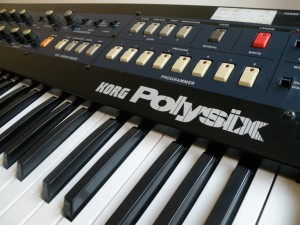
The Korg Polysix has per voice:
1 VCO + suboscillator (PWM possible), 24 dB lowpass filter, 1 ADSR envelope, 1 LFO (sine waveform only). It also has an very useful FX section, which lets you forget that you have 1 VCO per voice. ENSEMBLE, CHORUS and PHASE effects are possible. The Polysix has the same useful ARPEGGIATOR like the Mono/Poly. It is synchronisable with drum machines, sequencers,…
The Polysix has 32 RAM memories for your patches. With the tape interface, the whole RAM memory can be stored on tape/cassette. Of course you can save the memory data as WAV files as well. The Korg Polysix was inspired by the Sequential Circuits Prophet-5 – in fact, the Polysix has SSM chips like the early Prophets. For this reason, it has a warm, “american” analog sound…
The Polysix can produce fat pads with the “ensemble” effect, which reminds me on old string machines. It also can produce great bass and lead sounds in unisono mode. Weird sounds are possible with the arpeggiator in combination with filter resonance.
The hardware is solid, well made – except the original internal battery, which tends to leak. Especially when the Polysix is not turned on for a long time.
THE SOUND PROGRAMS IN THIS MOVIE:
Do you have a Polysix and want to play with the powerful sounds heard in the video? You can buy the “ANALOGAUDIO1 PATCH BANK” with 64 patches (2 banks with 32 patches) for 12,99 Euros. After payment through PayPal you will get a WAV file with sound data for the tape interface of your Polysix via email. You will also get a patch list with names of the patches (PDF), to find the right sounds quickly. The details about the functionality of the tape interface are described in the manual of the Polysix, which you can download for free.
The bank contains all the sounds you are hearing in this video and some more. The included patch list (PDF) is very useful to find the needed sounds quickly. As an experienced synth player / programmer I programmed these special sounds carefully to get the most out of the Polysix – these sounds are not available anywhere else!
If you want to buy the “ANALOGAUDIO1 PATCHBANK” for your Polysix, please drop me a mail:
ceramic-man@gmx.de
The Analog Session – Trailer
The Analog Session – featuring Alexander Robotnick & Ludus Pinsky. This is the trailer of our new work. New videos and a new album are coming soon! Stay tuned.
On Alexander Robotnick’s channel: www.youtube.com/mauriziodami
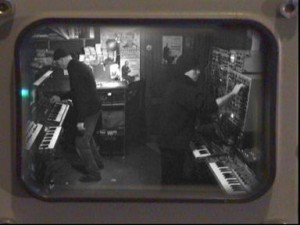
In February 2009, Alexander Robotnick and Ludus Pinsky put together their personal analog synths to organise and perform an Analog Session. The idea was to recreate the purely analog sound of the 70s and early 80s, which the two artists consider being the true “electronic sound”. The Session lasted 5 days , 3 of which to set up and connect pieces of equipment and to fix sync problems and VAM malfunctioning.
Moog Minitaur Analog Bass Synthesizer
Alex from source gives us a comprehensive run down on the almighty, Minitaur analogue synthesizer – featuring 2 oscillators, the classic Moog ladder Taurus filter, MIDI and CV. Perfect for stage or studio.
Check the product specs here:
http://www.dv247.com/keyboards-and-midi/moog-minitaur-analog-bass-synthesizer…
AudioCubes and Saurus: Perfect Pairing
Mark Mosher has delivered a new video featuring the AudioCubes:
Screencast on how to use the AudioCubes together with Saurus, the new Virtual Analog synthesizer of Tone2.
Roland Jupiter 8 “Wicked”
The Jupiter-8 is an eight-voice polyphonic analog subtractive synthesizer introduced by Roland Corporation in early 1981.
The Jupiter-8, or JP-8, was Roland’s flagship synthesizer for the first half of the 1980s. Although it lacked the soon-to-be standard of MIDI control, later model Jupiter-8s did include Roland’s proprietary DCB interface, and all of them sported advanced features such as “Four on Four” and the ability to split the keyboard into two zones, with a separate patch active on each zone.
Novation BassStation with modifications
This is a short video demo of the Novation BassStation analogue mono synth. A run through of the standard functionality followed by demonstrations of the modifications and then a quick Jam session using Ableton suite 8’s Looper to build a track from the Bass station’s sounds.
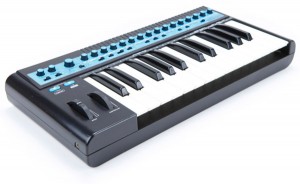
Before the famous Novation Bass Station Rack module came the small and portable Bass Station Keyboard! This synthesizer uses digitally synchronized analog oscillators (DCO’s) to reproduce the sounds of a monophonic dual-osc analog synthesizer with simple and intuitive controls via 17 knobs, 10 switches and 2 Moog-style pitch/mod wheels. Think EDP Wasp and ARP Odyssey.
The Bass Station can faithfully reproduce analog bass sounds similar to a TB-303, Micromoog or Pro One synthesizer. The small keyboard and monophonic architecture set this keyboard up for strict bassline, lead synth lines, and synth fx. It also transmits MIDI continuous controller data from its pitch/mod wheels, frequency cutoff, resonance, filter modulation depth, env1 attack, decay and env2 attack and decay.
DATAMASKIN

