
NI REAKTOR’s Fast FX Demystified
Access Part 2 of the Fast FX series and the free “How to Build a Sampler in REAKTOR” video course here: http://www.bluewatervst.com/ni-reakto…
NI REAKTOR’s Fast FX is a powerful multieffects unit optimized for performance. It’s also a bit overwhelming at first blush. Let’s crack the case…
Madrona Labs Aalto – A Synth REAKTOR Users Will Love
Brent Kallmer explores the Madrona Labs Aalto synth, details below:
Aalto is a synth lover’s synth, one that brings together extraordinarily expressive (and powerful) sound with a spirit of sonic adventure. This turns out to be an addictive combination. Check out this overview—I think you’ll agree.
REAKTOR and MACHINE: Next-Level FX
http://www.bluewatervst.com/reaktor-a…
With all the sonic firepower REAKTOR has to offer in the sound creation department, it can be easy to forget all of the stunning effects that it includes in addition. In this tutorial, we explore three useful applications for REAKTOR FX inside MASCHINE.
Reaktor: The Reverser – new delay that reverses the sound
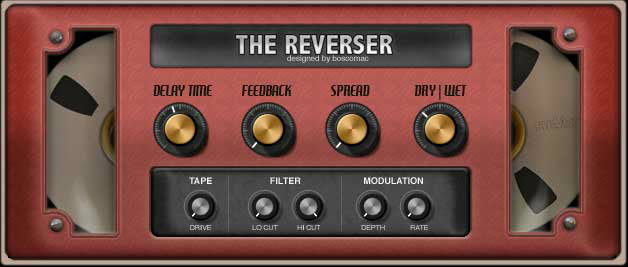
Boscomac tells us that The Reverser is a delay that reverses the sound.
A spokesperson had this to say, “Originally, we recorded a sound and then we returned the tape to play it backwards, it was pretty perilous. Today, we are far from the mechanics, but the principle remains the same except that the sound is processed in real time. Here you can set the delay time of the signal which will be read backwards, the feedback, stereo offset (spread) and mix the processed signal. In terms of Vintage, you can saturate the tape, cut of frequencies and modulate the sound reversed.”
Full version of Reaktor 5.8 needed.
ArcWave Reaktor Ensemble
ArcWave is a granular re-synthesiser for Native Instruments Reaktor that uses samples in place of oscillators allowing very diverse waveform generation from virtually any conceivable sound source.
The Demo Track “UnderWater ArcLight” was improvised live using ArcWave, no other synths, effects or sounds have been used.
The track was recorded in Logic on a MacBook Pro and uses only 9 patches.
Each part was independently bounced down before playing the next, leaving 9 recorded audio tracks at the mixing stage, two of the tracks had a small amount of EQ cut at about 500 Hz to remove some of the energy, plus a bit of automation was then used to control the track levels.
The finished mix was then bounced through a 5 band compressor in Logic to produce the 24bit master, no post processing has been added.
MASCHINE, Aerobic, and the Astounding Groove
Native Instruments REAKTOR’s Aerobic just begs to be used inside MASCHINE. There are any number of ways to use Aerobic inside Maschine, but let’s look at two specifically: 1) as a drum synth whose individual hits can be triggered by MASCHINE’s Pads, and 2) as a DJ-style loop-mixing setup.
ArcWave – new granular re-synthesiser ensemble for Reaktor
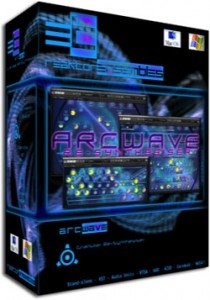
EverythingTurns has released ArcWave, a granular re-synthesiser ensemble for Native Instruments Reaktor.
ArcWave is a granular re-synthesiser that uses samples in place of oscillators allowing very diverse waveform generation from virtually any conceivable sound source.
An independent multipoint envelope generator bidirectionally scans the sample without affecting pitch, producing an ever changing waveform output feed to the filters.
The scan cycle, flow, motion, start point and length along with gain, pan, pitch and fine tune are all definable, plus the scan cycle can be disabled and set to static mode.
ArcWave is available to purchase for £12 GBP. It includes a separate ensemble of the Atmospheara effect processor included in ArcWave.
MSMAX – new Maximizer effect and Mid/Side Matrix for Reaktor
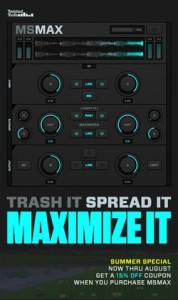
Twisted Tools has announced the release of MSMAX, a Maximizer effect and Mid/Side Matrix plugin for Reaktor.
As a Maximizer, MSMAX can be used for anything from subtle to extreme loudness maximization to get individual tracks or mixes sounding loud and finalized. As a Mid/Side matrix, MSMAX can be used to encode, decode and process Mid/Side signals to add width or create stereo imaging effects. With near-zero latency and CPU efficient code, you can use it on any type of track and run multiple instances without bogging down your system.
MSMAX also features a flexible and easy to use insert effects path, that allows you to insert your own effects to be applied to either the Left/Right or Mid/Side signals. To get you started, MSMAX includes an example effect called Nanoverb, which allows you to apply EQ and/or Reverb to any channel.
Lastly, MSMAX has a Sidechain Ducker at the output stage for some classic volume ducking or pumping effects. There are several modes to choose from to achieve instant results. For example, setting the Sidechain Ducker to auto mode will produce a 1/4 note pumping effect. Set it to ‘Self’ mode and you can duck a delay on a vocal track using the vocal itself as the sidechain input.
Whether you use MSMAX to slam your drum bus, apply creative M/S techniques within Reaktor or squeeze some more volume out of your master, MSMAX is a versatile production tool with several tricks up its sleeve.
MSMAX comes with a Lemur template by Antonio Blanca to control MSMAX remotely using an iPad and Liine’s Lemur application.
MSMAX features
- Stereo Maximizer.
- Flexible Mid/Side Matrix (Encode/Decode Input and Output).
- Sidechain Volume Ducker (Sidechain using: Audio, MIDI, Auto, Self).
- Insert effects path (Pre/Post Maximizer).
- Use your own effects.
- Output Limiter.
- Mono Summing.
- Dry/Wet Mix with internal latency compensation.
- Near-zero Latency (1 sample).
- Low CPU.
- Phase flip (Standard or Pre-Decode M/S for 180 degree flip).
- Nanoverb Example Insert Effect (Reverb and EQ).
- Switchless switching for instant A/B’ing settings without clicks or pauses.
- Lemur template by Antonio Blanca.
- Free incremental updates.
MSMAX for Reaktor costs $39 USD. MSMAX comes with an additional 15% OFF coupon when you buy it before August 1st, 2013. All other Twisted Tools products are available at a 15% discount in the Summer Special Savings sale.
NI Reaktor: Spektrumsynth 2.0 Intro
This is the first in a series of video tutorials about Spektrumsynth, which is available at www.dongarbutt.com/spektrumsynth . The Reaktor setup, presets, audio sections, signal path and preliminary patching are discussed. Detailed descriptions of synthesis technology, signal processing and modulation routing will follow..
Native Instruments Monark – Review
Monark is Native Instruments latest Reaktor built synth aims to emulate thew classic Mini Moog Model D.
MONARK captures the pure organic sound of the undisputed king of monophonic analog synthesizers. Years of meticulous research capture every nuance of the synth at the center of four decades of popular music. The first choice for bass and lead sounds from electronic and hip hop to indie rock and beyond, no other synth comes close to this combination of power, richness, and musical tone. Delivering the true sound of a synth as famous as the artists who used it, MONARK is the holy grail of analog modeling.
Model-A Prototype – Built in 1969. This version more closely resembles the modular Moog’s but in a very compact form. In its wood case, six Moog designed modules were internally hard-wired together and connected to a small keyboard. Many labels were typed out on paper and taped on to the front panel above the knobs.
Model-B Prototype – Built in 1970. In this version, the modular look was eliminated as the components were brought together by a pupose built front panel lay out. The three identical VCO sections were stacked on top of each other on the left. The right side held the Amplitude and Filter contour controls. The middle section held the Noise, Filter (cutoff, res) and master tuning controls. There was even a power switch on the front.
Model-C Prototype – Built in 1970. This version really begins to look like a Minimoog. The familiar left-to-right layout of Controllers, Oscillator Bank, Mixer, Modifiers and Output sections and the signature pop-up front panel had come to exist. The Model-C was photographed for the original Sales Flyer introducing the Minimoog, although in that flyer it was referred to as the Model-D.
Model-D Prototype – Built in 1970 almost immediately after the Model-C. A few more cosmetic tweaks to the front panel design brought about the last few final touches before readying for commercial production of the official Model-D.
Model-D – Built in 1971. A few more design tweaks (like adding some red rocker-switches and proper pitch-bend and mod wheels) and the Model-D was the Minimoog sold to the public. Interestingly, there are three versions of the Model-D, with some very minor and mainly cosmetic variations to each. Fortunately they can be distinguished from their name-plates.
DATAMASKIN

