
Casio XW-P1 Synth Workshop at Musikmesse 2012
CASIO demonstrator Ralph Maten explains the features of the CASIO Perfomance Synthesizer XW-P1
Time machine: Roland Juno-60 “March1982”
30 years back – March 1982 – one of the greatest analog synths was born – the Roland Juno-60
Among the first in Roland’s amazing JUNO family! Six analog voices of polyphony and patch memory storage!! The JUNO-60 sounds great, however, like the JUNO-6 it lacks MIDI control. The JUNO-60 includes 56 patches of memory storage. The JUNO-60 is still popular due in part to opinions that it sounds better (punchier) than the JUNO-106. The JUNO-6 and 60 are very rich sounding synthesizers and are great analog machines as long as you can withstand the absence of MIDI control. The JSQ-60 sequencer is an external sequencer controller for the JUNO-60 and is usually worth acquiring. Of course nobody can deny that the wooden side panel look is a true sign of Vintage status!
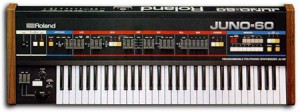
all sounds: Roland Juno-60
arpeggiator triggered by the TR-808
recording: multi-track without midi
fx: a bit delay
drums: Roland TR-808
CASIO XW-P1 – Directly from the MusikMesse 2012
CASIO XW-P1 Musik Messe 2012 by Rock oN Report
The XW-P1 is a synthesizer particularly designed for creating sounds and playing expressively in live performances. This model features 620 preset tones, including Solo Synthesizer presets that reproduce vintage analog synthesizer sounds, Hex Layer ensemble sounds that comprise as many as six tones, and Drawbar Organ presets that can be controlled using nine sliders functioning as drawbars. A wide array of sounds can be created using the preset tones and a wide range of internal waves. Moreover, the XW-P1 is loaded with various functions to give discerning performers more power of expression, including the Performance function that allows performance setups to be independently assigned for up to four designated keyboard zones.
the evosizer – sound examples
Sit back and listen to some of the most interesting new sound examples of the evosizer, the synthesizer especially designed for the evo and its magic keys. In this video we will give you a short introduction followed by some sound examples. Basiclly it’s all about what the evosizer sounds like and how an evo affects your way of making music with the keys. For more information check out other Videos about the evosizer or just take a look at endeavour.de
Musikmesse 2012: Roland Jupiter 50 Synthesizer
Roland demonstrate their new Jupiter 50 Synthesizer at Musikmesse 2012.
As was announced yesterday – here’s a video of the Jupiter 50 in action
SpaceLab – new iOS synth app
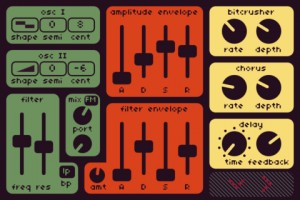
SpaceLab is a monophonic synthesizer. It has four ways to play: keyboard, graph, guitar, and wind controller. Underneath those interfaces is a fully programmable subtractive synth with oscillators, filters, envelopes, effects, FM, presets, an arpeggiator, full MIDI control, and much more!
Review of the Ensoniq ESQ-1 Synthesizer
Ensoniq ESQ-1 is a hybrid digital-analog synthesizer released by Ensoniq in 1986. The ESQ-1 featured 8 voices with 3 digital oscillators per voice. Each oscillator could be set to one of 32 different waveforms. Some of these were standard simple waveforms such as sawtooth and pulse, while others were samples such as piano and voice. Each oscillator also had an associated DCA (not VCA) to control its volume in 256 steps. In addition to that, an ESQ1’s voice featured 3 LFOs, 4 envelope generators, a 4-pole resonant analog lowpass filter (VCF), and a final VCA with left/right panning. It also sported a 61-key velocity-sensitive keyboard, full MIDI implementation, memory for 40 patches, a memory cartridge slot, and an 8-track sequencer. A rackmount version called the ESQ-M was also released circa 1987, with exactly the same specification minus the sequencer. The ESQ-1 was produced until 1988.
MusikMesse teaser: Eowave’s Magma synth is here

Synth manufacturer Eowave has announced plans to release the Magma analogue bassline synthesizer at Musikmesse 2012.
According to the developer, the Eowave Magma analogue bassline synthesizer was inspired by classic synths from the 1980s.
Key features include:
- Mix four different waveforms (saw, square, sub, noise);
- 24 dB low-pass filter; and
- A 16 step sequencer.
The Eowave Magma is priced at €599 and is expected to be available ‘soon’.
Features:
- Oscillator section
- analog VCO with square saw sub (sub can be 1 or 2 octaves below the master freq), noise.
- VCO can be modulated by LFO and PW
- Variable glide
- mixer to mix the 4 waveforms
- Filter section
- Full analogue VCO, filter & VCA
- external audio with a trimmer to feed the filter
- 24dB low pass filter (Roland style for a classical 80s sound)
- filter can be modulated by ENV2, KB, LFO
- VCA section
- VCA is affected to ENV1
- 2 envelopes ADSR modulate respectively the amplitude and the filter.
- Attack goes from 2ms to 10s.
- LFO section
- LFO with 8 waveforms (triangle, ramp up, ramp down, square, random, digital noise, staircase up, staircase down)
- Connections
- audio in
- audio out
- MIDI in
- USB (for software update and MIDI in/out)
- Sequencer
- 16 steps sequencer with LED
- 4 rows: 1 row controls gates and notes.
- 3 other rows are freely assignable to any parameter of the front panel.
- You can transpose the sequencer with an external MIDI keyboard.
Here’s an older demo of the Magma when it was still in prototype mode:
Bleep’ – new free synth plugin
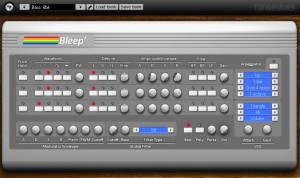
ToneBytes has announced Bleep’, a free synthesizer instrument for Windows.
Bleep’ — is a free VSTi synthesizer plug-in for Windows which inspired by the sound of MOS Technology SID. At the same time Bleep’ is not emulator of this chipset but only partially similar to its architecture.
Bleep’ features
- 3 oscillators with four waveforms: sawtooth, triangle, pulse (with PW) and noise.
- Each oscillator has own detuner, ADSR envelope and multimode LP/BP/HP filter.
- Multimode LFO synced with BPM.
- Modulator Envelope Generator.
- Pseudo arpeggiator.
- Overall multimode filter.
- Built-in preset manager with ability to patch name editing.
- VST automation and full MIDI Learning are supported.
Bleep’ is available to download as a freeware VST instrument plug-in for Windows PC.
Time machine: Roland JV-1080 “Early 90s”
all synth sounds and drums:
Roland JV-1080 Digital Synthesizer (1994)
recording: multi-track
more info: http://www.retrosound.de
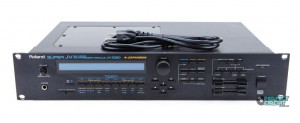
The Roland JV-1080 was one of the hottest and most popular digital synthesizers ever to come from Roland. Incredible sound quality capable of emulating any instrument imaginable plus totally fat analog synth type sounds and loads of percussion! It has 64 voices of polyphony and 16 part multitimbral, it’s no wonder this is part of almost every Film Score Composers set-up as well as many more artists and hobbyists!
It has 8MB of sounds and it also offers a lot of expandability with 4 expansion slots and 2 data card memory slots. You can get up to 42MB of sounds by adding any of the popular JV-80 expansion cards suited for Techno, World Instruments, Orchestral or Synthesizers. The 1080 has a large LCD screen, lots of effects and filters for creative flexibility, motion control and extensive MIDI implementation. Editing is intense but enhanced and simplified by external editors like MOTU’s Unisyn.
DATAMASKIN

