
Taking iPad synths to the next level
Horizon synth for iPad – playing with some presets by Jarek J
Horizon synth is a virtual analog synthesizer that takes the definition of iOs synthesizer to the next level.
Thanks to carefully designed architecture and heavy usage of coprocessor it blurs the boundaries between iOs and hardware synthesizers.
Horizon was built to perform and works perfectly with any MIDI keyboard or sequencer. A lot of research has been done in order to achieve unheard warmth and clarity.
HIGHLIGHTS
· True SuperSaw sound emulation, first found in the legendary Roland JP-8000 synthesizer. SuperSaw is a layered waveform consisting of multiple saw waves which are detuned to create an extremely full and epic sound. It’s possible to use 2 supersaw oscillators per voice * 7 polyphony = 98 saw oscillators playing the same time!
· Two independent filters per voice with configurable routing. You can select between various filter types including classic resonant LP,HP,BP,Notch and less common like Comb and Formant.
· The Morph Group function lets you continuously morph of up to 30 parameters in a sound (including effects), using only the modulation wheel.
Horizon synth-hardsync-test by Jarek J
Horizon Synth for iPad – alpha demo by Jarek J
marble & Radio
Video featuring the Buchla 200e.

“The Buchla 200e is a 21st century rebirth of the 70’s classic 200 series analog modular systems from Buchla. It is still an analog synthesizer, but with some 21st century improvements, most notably the addition of MIDI control, patch memory storage and digital hybridization. Other improvements include internal MIDI buses, more voltage controlled parameters, a router for signals and control voltages, velocity sensitivity, and a redesigned output section of the complex oscillator module. A few new modules have also been added including a duophonic pitch class generator and a triple morphing filter.
The 200e may be new but it is still a classic modular system. That means potential customers must start with an empty cabinet, and select the synthesis modules from the 200e series to design the system to their personal needs. It is even possible to add some of the original classic 200 series modules to it, and to add the new 200e series modules to an original 200 system. With five cabinet sizes to choose from (from 2 panels to 18 panels), no two systems may look alike, and they can range from just a module or two to the complex analog beast pictured above.
The 200e series is not exactly analog either (nor digital). The 200e series is truly an analog-digital hybrid modular system with an analog user-interface but a state-of-the art underlying electronic system designed to provide stable, dynamic musical sounds with exceptional sonic quality. Buchla’s engineers sought the best possible designs for their modules which meant that in some cases the signal path may be truly analog, while in other cases they may in fact be digital. Almost all analog signals are also controlled by digital componentry for maintaining stability or to enable patch storage, for example. Speaking of patch storage, the 200e will only store knob settings and switch position but not patch cable routings.”
What reverb should I use?
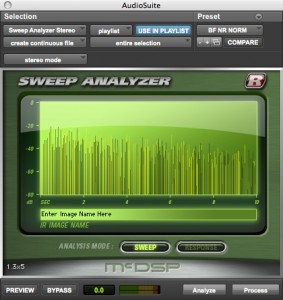
Sound designer Varun Nair has published a comparison of the sound of multiple convolution reverb plugins, including:
- AudioEase Altiverb
- McDSP Revolver
- TL Space
- Waves IR1
- Logic’s Space Designer
- Voxengo Deconvolver
Here is a summary of his findings;
The results are definitely interesting! Each plugin seems to be treating the IR very differently. Altiverb & TL Space sound closest to the source and also sound similar. Revolver seems to have some sort of smearing again. Waves IR1 sounds more “wet”. Space Designer has a lopsided image again in addition to having a little more depth (not as upfront as Altiverb and TL Space). It’s also interesting to compare these results with the ones above.
Details on Nair’s experiments and audio examples at the Re-Sounding site.
Tips: Understanding the impact of New York (parallel) compression
Parallel compression is also known as New York compression, and is a very popular technique for getting drums louder whilst retaining most of the energy of the original envelope.
Basically, what you do is mix two versions of the drum track together – one track being treated with quite severe compression, and the other being uncompressed. The compressed track brings up the ‘oomph’ whilst the original ensures that the dynamic interest of the beat is maintained.
Of course, this technique is not exclusively for drums – it can be very effective on vocals too, or any other instrument that needs to be tightly controlled.
Here is an example of parallel compression that I have used:
Put a compressor on a return track in Ableton (or any other DAW)
Make sure you use a compressor that can be set to 100% wet and has a ‘look ahead’ feature
put the threshold deep, like -50 db
Ratio about 2:1 – 2.5:1
Attack as fast as possible 1ms or faster
Release set to 250ms-350ms
Now you can mix in your compression on any track you want to beef up using your sends without affecting the original signal. It’s like the best of both worlds, a combination of compressed and uncompressed signal. This way you get the transients of your uncompressed sounds (the peak you see on a snare or kick drum for example).
The transients give your sound bite and helps things stick out better in your mix. The compression gives your sounds more body and more punch and brings out hidden frequencies for a fuller sound. If you don’t want to use a return track, you can simply copy your track and apply these compression settings on the copy and then mix to taste. Give it a shot and let me know how it goes for you.
Attack of the quads
A-148 as an ASR
The two S&H of the A-148 are cascaded. The first one keep it’s state slightly longer than the second one thanks to a trigger delay (here the end of Attack of a quad ADSR A-143-2).
Watch out for the Foxx, Budd and Travis get together
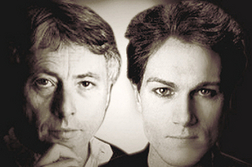
Fresh of the press room at Metamatic:
The John Foxx HQ have revealed some details on various new collaboration releases, the first being “Torn Sunset” which is a collaboration album between John Foxx and Theo Travis. This album holds 7 tracks and will be out via Demon / Edsel Records on 27th of June, 2011. Order it right here and you will already get a track for free download.
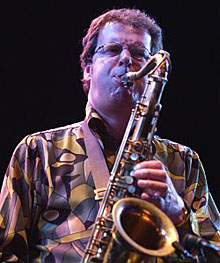
Next is an album by John Foxx and Harold Budd, featuring Ruben Garcia: “Nighthawks”. This three disc set includes a brand new album recorded by John Foxx, Harold Budd and Ruben Garcia, together with the two previous John Foxx and Harold Budd albums (“Translucence” and “Drift Music”) both of which have been remastered. The artwork features new photographs by John Foxx.
Also this release is out on Demon / Edsel Records on 27th of June, 2011. Also here, if you oder it right here, you will get a track for free download.
More info as usual at www.metamatic.com
Video: New song from Erasure – Save me
From the 10 June 2011 show in Thetford Forest, this was played mid-set and is the only new song they played.
U2 and Spiderman — aahhh I think not !!
U2 doing the music for the Spiderman musical, is perhaps not the best idea these pop maestros have had. Sorry guys stick to your arena rock from now on please.
“Rise Above 1” by Reeve Carney feat. Bono & The Edge from the hit Broadway show Spider-Man: Turn Off the Dark as performed live on the American Idol finale.
General Overview of the Beat Thang
http://youtu.be/kQEWT4zuaDs
Beat Kangz Electronics’ Cool Rev gives you a general overview of the Beat Thang. Learn about the basics including the various sections and modes. Available for pre-order on BestBuy.com now! http://ow.ly/5gzub
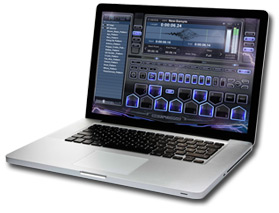
BEAT THANG VIRTUAL combines sampling, sequencing with an easy to use performance interface into one portable, powerful weapon of mass creation. Over 3000 original sounds and chops were custom created for this extraordinary library. It doesn’t matter if your style is Hip-Hop, Reggaeton, Soul, Funk, Electronica, Rock, or Alien, Beat Thang has the sounds you need to create bangin’ tracks. The Beat Kangz lived in the studio for two years painstakingly recording and tweaking the sickest sounds from classic drum kits, vintage instruments, rare electronics, exotic percussion, and many improvised sound sources. All were performed and recorded through a menagerie of high-end digital and analog devices, meticulously preserving each sample’s warmth and character. The Beat Kangz mastered each sample so you have trunk bangin’ drop, aggressive kicks and snares, rich strings, chunky guitars, tripped out synths and tons of grit, depth, and low end to create with. You can also load or record your own samples to create custom kits and unique instruments of your own.
Live beats with UltraNova and Launchpad
Novation’s resident Controllerist jamming on UltraNova and Launchpad with Ableton Live.
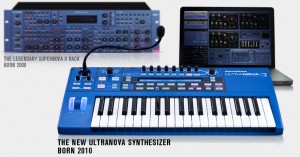
UltraNova is a ‘Nova’ series analogue-modelling synthesizer with a powerful effects processor. It is a single-part synth taking the legendary Supernova II synth engine as a starting point and packing it with the latest technology. It now has brand new features including wavetable synthesis, even more powerful filters, a software editor and a revolutionary new touch-sense performance mode.
The ‘Nova’ family was born in 1998 with the Supernova, which was the first of a series of powerful synthesisers. These quickly became industry standard ‘big-synths’ which are still used by countless artists and sound designers.
DATAMASKIN

