
Moog Source goes to Berlin School
A demo of my Moog Source (old Berlin school)
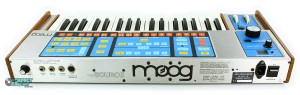
Moog’s Source was their first to offer patch memory storage as well as some other new features. It boasted 16 memory locations so you could finally save and recall your synth patches. A casette-tape jack was also implemented to transfer your patches to and from an external tape and free up the on-board memory for additional new patches. But in an effort to modernize with the eighties, the Moog had replaced all buttons, knobs and sliders with flat-panel membrane buttons and a single data-wheel assignment format. At the time, this may have seemed far-out, but in all actuality it is the Source’s downfall.
Parameters are edited not with hands-on sliders and knobs but by assigning a selected parameter to the dedicated data wheel. This is very tedious and does not allow for true hands-on tweaking during performances nor can you adjust different parameters simultaneously or while playing. These days, the membrane buttons don’t always seem to work quite right either. However, those famous monophonic Moog sounds are still inside this synth which has two fat analog oscillators and the legendary 24 dB Moog filter.
Synth Magic Polychrome basic demo of some of the sounds
Instrument based on the Farfisa Polychrome-Lots of extra features added such as LFO’s on all sections, full effects section,autopanners, velocity to vibrato,filter, tremolo etc.
Available at www.synthmagic.co.uk
Instrument based on the rare Farfisa Polychrome analogue synthesiser for Native Instruments kontakt 4.2.4 or higher(including Kontakt 5). Custom designed GUI to allow for easy tweeking of sounds. Over 200 presets included and thanks to the custom designed user interface it is childs play to design your own sounds. Many existing users say our instruments sound and feel like your playing with real hardware. Easily create the fantastic sounds of this beautiful classic synthesiser. Lots of extra features added such as extra LFO’s,independent autopanners for each synth section,lots of effects and a master effects plus lots of expression controls for aftertouch,modwheel etc.
Having fun with Suonoio and Buchla Skylab
Background info:
I have the Suonoio going in to the 207e preamp with the envelope follower driving the sequencer and the 292e. Fun combo.
DSI Poly Evolver vs Alesis Micron
This is a comparison of Dave Smith’s Poly Evolver keyboard ($2,700) and Alesis’ Micron ($399). The Synths sound remarkably similar. The DSI has a brassy character while the Micron is more subdued and plastic but these differences are very subtle. You will notice immediately that the Poly Evolver lacks low end and cannot re-trigger its envelopes like the digital Alesis. The differences were more apparent to me while watching this video. Overall the sounds are practically identical which was pretty surprising to me.
Moog Taurus 1 + Roland VP330 “Beauty & Beast”
Vintage synth demo track by RetroSound:
bass & lead sounds: Moog Taurus 1 bass pedal synthesizer (1976)
analog strings & choir sounds: Roland VP330 Vocoder Plus (1979)
drums: Roland TR-808 (1981)
recording: multi-track
fx: a little bit delay and reverb
I used in the demo the legendary BASS and TAURUS presets and some self-made sounds (reso-bass and lead sounds).
more info: http://www.retrosound.de and
http://www.facebook.com/pages/RetroSound-Marko-Ettlich/265713782347
Reason 6.5 – Pulsar audio demo
http://youtu.be/n1ZX5XphTSI
“Here’s a short audio demo that I did using the Beta version of the new pulsar Rack Extension that will be available in Propellerheads Reason 6.5”
tform – modular synth experimentation
Transformation, reproduction, mutation , decay. Animation processed through a lzx analogue modular system using rutt-etzra based transformation. Additional modulation via a eurorack modular.
Can anyone make music on a synth – monkeys for example?
Monkeys + Synthesizers is a project where 6 different spieces of monkeys (and some others) were given different synthesizers. Do monkeys like music and do they enjoy creating music?
Humans is the only species on earth that actually compose music. Most birds and some mammals make beautiful sounds, but primarily to scare others away — or to get laid. The project explores if other primates can make music.
In the 60s, the Chimpanzee Congo became famous when he painted abstract paintings that got pretty good reviews by art critics. He had a distinct style in some sort of abstract expressionistic tradition. He liked red a lot but didn’t he like blue. Today, some of his paintings are worth up to 20.000 €.
Since the synthesizers was invented, the musicians have been asked “Is this really making music? You just press a button and out comes music, right?” Well… you do press buttons, twist knobs and faders, but there are endless ways of doing this. That is why the synthesizer probably is the greatest musical instrument in history. A great example of human ingenuity and engineering — something that makes us different from the monkeys.
Dwarf Monkey (Callithrix pygmaea)
Habitat: The Upper Amazonas. Colombia, Peru, Ecuador, north Bolivia and west Brazil.
Length: 13 cm, tail 19 cm.
Weight: 120 — 150 g
Age: 5-10 years.
Diet: Tree gum, fruit, insects and spiders.
World’s smallest monkey
+
Bleeptronic 5000 (Thinkgeek.com)
64 LED button matrix synthesizer.
Origin: USA
Weight: 400 g
Dimensions: 15 x 15 cm.
Production year: 2010
Lion tamarin (Leontopithecus rosalia rosalia)
Habitat: Close to river Sao Joao and in the Poco d´Anta nature reserve, south west of Rio de Janeiro.
Length: 34-40 cm, tail 26-38 cm
Weight: 630-710 g
Age: Up to 20 years
Diet: Fruit, flowers, insects, frogs, lizards and bird’s eggs.
One of world’s most rare monkeys.
+
TR-909 (Roland Corporation)
Analog, partially sample based drum machine
Origin: Japan
Dimensions: 48 x 10 x 30 cm
Weight: 4500 g
Production year: 1984
Hamadryas Baboon (Papio Hamadryas)
Habitat: North east Africa and the Arabian Peninsula.
Length: Max 76 cm, tail max 61 cm
Weight: Female 10-13 kg, male 17-25 kg.
Age: Up to 35 years
Diet: Grass, roots, fruit, seeds, insects, lizards and sometimes small mammals
Their red ass make them look sexy and also serves as a pillow
+
Casiotone CT-360 (Casio)
Incredibly crappy digital synthesizer
Origin: Japan
Dimensions: 59 x 24 x 9 cm
Weight: 4.2 kg
Production year: 1987
Ring Tailed Lemur (Lemur Catta)
Habitat: South west Madagaskar.
Length: 50 cm
Weight:
Age: 25-30 years
Diet: 70% fruit, 30% leafs
+
Yamaha DX7 (Yamaha)
16 voice FM Digital Synthesizer
Origin: Japan
Dimensions: 101 x 10 x 33 cm
Weight: 14500 g
Production year: 1983
6 sine wave operators per voice, 32 Algorithms
Suricate (Suricata suricatta)
Habitat: Semi-deserts in southern Africa.
Length: 25 cm.
Weight: 900 g
Age: 10-15 years.
Diet: Insects, lizards, scorpions, small birds, eggs, rodents and other small mammals.
Suricates can survive bites from poisonous scorpions and snakes that would kill a human.
+
Mirage EPS16 (Ensonic)
Sampler Workstation
Origin: USA
Dimensions: 102 x 11 x 31 cm
Weight: 13000 g
Production year: 1988
8 note polyphonic, 8 bit, 32 khz sample rate, analog filters
Two-toed Sloth (Choloepus hoffmanni)
Habitat: Central America from Nicaragua and south to Venezuela, north east Brazil and nothern Peru.
Length: 58-70 cm.
Weight: 4-12 kg.
Age: 12 years, (up to 30 years in zoo).
Diet: Leaves, sprouts and fruit.
Sloths have the lowest and most varied body temperature of all mammals. It varies between 24° and 33°.
+
Yamaha SHS-10 (Yamaha)
Keytar FM synthesizer
Origin: Japan
Dimensions: 67 x 28 x 6 cm
Weight: 3.4 kg
Production year: 1987
Camera operators: Andreas Tilliander, Mats Almegård and Johan Östman. Concept by Håkan Lidbo.
Thanks to Bosse Johnsson and Jonas Wahlström at Skansenakvariet, Jörgen Berggren at Berggren Media, Jon Nensén and Daniel Sällstedt.
Voltfestivalen — The place to go to experience the best new electronic music and art
Skansenakvariet — The place to go to experience unique wildlife in Stockholm
Roland RS-202 demo
“The wonderful string chorus ensemble sound of the Roland RS-202, a classic string synth of the 1970s.”
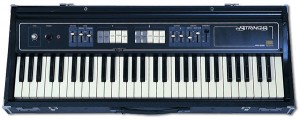
The RS-202 is a string and brass synthesizer released in 1976 that followed the lackluster RS-101. Oddly the RS-202 wasn’t much different than its 101 predecessor. The RS-202 had two new features: a user-controlled delay for the vibrato, and an Ensemble/Chorus effect (that would be seen on dozens of future Roland analog synths for years, including the Junos and Jupiters). It makes the ultimate “disco” string sound.
The RS-202 is fully polyphonic (all 61 keys can play simultaneously). Basically three sound presets are in the RS-202: Strings I, Strings II and Brass. Forget the brass, however, because this machine is all about the strings, and for a time it was considered Roland’s finest string machine. Strings I covers low cello & bass type sounds and Strings II is thinner and in the higher registers for Viola and Violin type sounds.
The keyboard is permanently split into two separate sections, the lower 2 octaves and the upper 3 octaves. Each section has it’s own set of identical controls. These include three white On/Off buttons for each of the three sound presets. This means you can assign any sound to each section, and any combination; For example, set the lower section to Strings II and set the upper section to Strings I+II+Brass if you like. There are also two grey buttons in each section for “Slow Attack” and “Volume Soft”. Each section also has its own sustain slider and there are global brilliance sliders for the brass and string sections independently.
Basic effects included the Ensemble (chorus) effect and Vibrato. A switching-slider is used to select Ensemble I, Ensemble II or Off. The Vibrato effect section had just two sliders: Delay and Speed (depth could not be changed). The Ensemble section did wonders for the sound of this machine; the ‘Ensemble II’ setting introduced a rich chorus, whereas the ‘Ensemble I’ produced the faster, deeper ensemble effect that became an instant classic. Sadly, like most vintage synthesizers the RS-202 is mono (high/low output jacks on back) and provides only a trigger output for an external synthesizer. It’s built-in to a suit-case style housing which made it easily portable.
The RS-202 is a truly vintage and classic machine. Historically, it launched Roland’s signature Ensemble effect. It also sounded fantastic – with or without the ensemble effect engaged. It easily stood up against many competing synths of its time such as the Arp Solina.
Sweden wins the Eurovision Song Contest
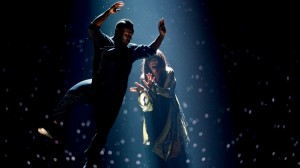
Slightly off topic in the sense that this song does not really fit the type of music we are writing about. But hey! we are based out of Sweden so of course we must congratulate our winner Loreen 
This was the fifth time Sweden has won ESC – most notable was Abba winning in 1974, in the sense that very few of any bands/acts participating in ESC makes it to the big scene following their success at this show, but who knows “Euphoria” is not all that bad – below the song is performed at the semi-finals:
Congratulations Loreen and congratulations Sweden !!
DATAMASKIN

