
Moog – The Fundamentals of Synthesizer Programming Pt. 4
Moog Music Inc. is proud to present Dr. Joseph Akins’ five part series on the fundamentals of synthesizer programming. Dr. Akins is an associate professor at Middle Tennessee State University and strives to teach his students a complete understanding of synthesizers and computers as tools for modern music production. In this five part series Dr. Akins uses a Voyager to teach the process through which a synthesizer’s sound is generated and the techniques needed to program your own sounds and sonic experiments. In part four of this five part series Dr. Akins gives an in depth lesson on the envelope generator.
Moog “Big Phatty” Ableton Live Pack
Ableton Live Pack created using the Moog Slim Phatty Analog Synthesizer. This video takes you through the AfroDJMac Big Phatty Pack, which contains 33 Ableton Live Instruments.
Available here: http://afrodjmac.spinshop.com
Each instrument has its own unique effects and macro knob settings. I programmed each sound on my Slim Phatty and sampled them into Ableton Live from there, I added a ton of functionality to each instrument. Guaranteed to inspire!
Moog Animoog – Advanced Modulation + Routing
Here’s a nice video to get a little deeper into the core of the Animoog:
More info – http://bit.ly/xKwZEj
In part two of a three-part tutorial on Moog’s Animoog iPad app, Dubspot Instructor Matt Cellitti shows you how to creatively use Animoog’s modulation parameters to achieve complex sounds.
Now that we have looked at how to break down Animoog into a basic initial state, I would like to examine the instrument’s creative options to make more complex sounds. Animoog has a clearly labeled and easy to use modulation area, allowing us to add several modulation parameters to the sound at the same time. We are able to use traditional modulation sources like mod envelopes, filter envelopes, and low frequency oscillators, but there are some hidden gems in here as well. For instance, take control of the Touch Keys to manipulate sounds in ways a traditional keyboard is incapable of. By using the the modulation control of “poly-pressure” to manipulate a destination of filter frequency, the areas of the touch key will activate modulation of the filter’s cutoff frequency. So you can create filter sweeps just by moving your fingers up and down a single touch key. Furthermore, as if the path and origin controls of the X/Y pad weren’t enough, you can use mod controls to effect these parameters even further. It never ceases to amaze me how much flexible control this app has. – Matt Celetti
The Fundamentals of Synthesizer Programming Pt. 3
Moog continues its highly appreciated series in synth programming, here’s part 3:
Moog Music Inc. is proud to present Dr. Joseph Akins’ five part series on the fundamentals of synthesizer programming. Dr. Akins is an associate professor at Middle Tennessee State University and strives to teach his students a complete understanding of synthesizers and computers as tools for modern music production. In this five part series Dr. Akins uses a Voyager to teach the process through which a synthesizer’s sound is generated and the techniques needed to program your own sounds and sonic experiments. In part three of this five part series Dr. Akins goes over signal modifiers and filters.
The Mavericks Of Sound Design
At the Moogfest in Asheville, North Carolina, four of the top Sound Designers in the world discuss their craft, philosophies, techniques and swap entertaining stories about their sound design experiences in a live panel discussion. Features Eric Persing, Diego Stocco, Richard Devine and Scott Gershin.
Exclusive interview with Harald Karla – the Reason Refill maestro at Soundcells
Steelberry Clones got an exclusive talk with the critically acclaimed Reason Refill producer Harald Karla at Soundcells. Soundcells has been active for a long time in developing quality Refills for Propellerhead’s DAW Reason, many of which has been featured and reviewed on this blog. Soundcells’ Reason Refills covers most angles of electronic music – featuring everything from 8-bit / chip tune type sounds to high quality emulations of classic analog hardware synthesizers like Moog Source to the KORG MS-20, but also a vast amount of very complex ambient pads that would fit any sci-fi movie on the planet. We at Steelberry Clones are happy users ourselves of Soundcells ever growing library of Reason Refills and therefore we thought it about time to dive a little bit deeper into the minds of Soundcells by asking Harald Karla who founded the company in 2008 all those questions that make up the unique sounds of the Soundcells’ Refills. Harald Karla have worked as a successful freelance sound designer for quite some time but is now focusing on Soundcells full time.
You can visit Soundcells webshop via this link to find out more about the various Reason Refills of Soundcells or simply use the Soundcells banner in the right hand side column to explore further >>>>
You have been active making Reason Refills for a long time – where do you find your inspiration
First and foremost, Soundcells ReFills are products that meet my personal taste. And that is an inspiration and first of all motivation – not just to create a product that the market demands immediately, but to follow your own preferences. Since I prefer to be within Reason, I’m trying to do everything possible there, of course. Also this is the reason for the content of the ReFills. The more I can put in a single environment – the more energy, concentration and creativity remains for the music …
When producing the Refills you often stay true to the original analog synths, for example the MS-20, how do you go about re-creating these sounds
Well – actually that is not my intention to emulate certain classics – it’s more the intention to preserve the typical sound characteristics. “Analog Signature” for example is a ReFill, essential to sample those classics – which thus serve as a sound basis and shaping the sound of the ReFills. In this ReFill the analog sound-feeling is in the foreground, and therefore the sampling here was comparatively expensive: In order to have vibrant aesthetics of sound each individual note is played three times and recorded. The capabilities of the NNXT sampler can be heard by repeating a note played on the same sample twice in a row …
The result is a vivid sound that raises a very analog feeling. One should not forget that real analog sounds are not only created by “fluctuating” oscillators, but also generated by other components such as filters, envelopes, modulations of various kinds. And here some analog synthesizer sounds incredibly strong, which can not be done simply by multi-sampling individual notes … At this point, it simply ends the emulation. If you wanted to create the typical sound with all its inaccuracies of the original, it would ultimately imply sampling note for note – very expensive and a different topic …
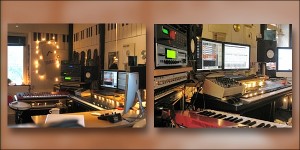
The Soundcells studio
We know of you as a high-end producer of Reason Refills and more, but can you tell us a little more about your musical background
A story of many – I had a very early interest in the creation of sounds, and in the beginning I did experiment with various instruments, but very early on I ended up focusing only on electronic instruments. From the time of the summer jobs I put all my money in (initially) keyboards, then synthesizers, drum machines, mixers, effects, etc.
I have never taken any lessons. The keyboard I’ve taught myself and I have always played by ear. Over the years I have dealt extensively with many types of music and electronic sounds, later on I started to create backing tracks to produce dance music with DJs, etc. … – And then finally spent all my time in music. Basically, the years were something of a “full study,” which continues to this day … : 0)
Read the full interview here >>
Doepfer Dark Time sequencing
Here’s a new Doepfer video from Skoulaman, enjoy:
My next upload of the Relastic Concertmate MG-1 shows the connection with the Doefper Dark Time, a realy nice combination because teh DT does have CV and gate connections for (old) analog synths and Midi. Conneting the Moog Little Phatty with the MIDI out of the DT was the next step. I had to tune the Realistic with the Moog LP because the CV signal is not callibrated. It is just a demo, so musical the quality is not high. In the end I put some other synth sounds to it (and about the stereo effect, you can here sweeping the roland 106 when I open the filter cutoff). I found the Electrix for a fancy price because it is a very nice effect, at most for live situations.
The Fundamentals of Synthesizer Programming Pt. 2
Moog Music Inc. is proud to present Dr. Joseph Akins’ five part series on the fundamentals of synthesizer programming. Dr. Akins is an associate professor at Middle Tennessee State University and strives to teach his students a complete understanding of synthesizers and computers as tools for modern music production. In this five part series Dr. Akins uses a Voyager to teach the process through which a synthesizer’s sound is generated and the techniques needed to program your own sounds and sonic experiments. In part two of this five part series Dr. Akins goes over operation of a synthesizer’s two main sound sources the oscillators and the noise generator
So what are we listening to – Tempest or Moog?
“I bought a Voyager to get that typical Moog sound. I really like a certain Moog Bass. After some fiddling on the Tempest I couldn’t believe my ears. Anyone in for a brand new Voyager?”
Enjoy!
Serge Modular ADSR pitch modulation
Serge Modular synthesizer doing crazy pitch slides and controlling a Moog Voyager through CV.
DATAMASKIN

