
Future Loops goes to India

Take an audio trip to India with the new Future Loops sample library, Vox India – Vol 2. This collection includes more than 600 Indian vocal loops (recorded in Chennai, Calcutta, and Mumbai) taken from the original Future Loops Total India collection.
Featuring just the vocal samples in the Total India collection and nothing else, Vox India – Vol 2 includes the sounds of both female and male voices, in classical music styles (Carnatic and Hindustani) we well as Indian folk genres (Boul, Qawwali, Konnakol, and Rabindra Sangeeth.
This collection is ideal for musicians, DJs, and producers who want original and authentic Indian vocal loops that fit into any music style, from world music and chill-out to drum n’ bass, house, hip-hop, trance, and more.
Owners of the Total India collection should know that the vocal content of Vox India – Vol 2 is exactly the same as Total India, that purchasing this new loop pack is not necessary if they already have Total India.
Vox India – Vol 2 includes the following:
- 616 Vocal WAV loops
- 39 Female Boul Vocals at 90 BPM
- 60 Female Carnatic Vocals 1 at 70, 90,120 BPM
- 77 Female Carnatic Vocals 2 at 70, 90, 100, 120 BPM
- 39 Female Hindustani Vocals 1 at 100 BPM
- 40 Female Hindustani Vocals 2 at 70, 90, 100, 120 BPM
- 61 Female Hindustani Vocals 3 at 70, 90, 100, 120 BPM
- 44 Male Boul Vocals at 85 and 95 BPM
- 56 Male Hindustani Vocals at 70, 90, 100, 120 BPM
- 62 Male Konnakol Vocals at 65, 90, 100, 120 BPM
- 56 Male Qawwali Vocals 1 at 70, 90, 100, 120 BPM
- 68 Male Qawwali Vocals 2 at 70, 90, 100, 120 BPM
- 14 Male Rabindra Sangeeth Vocals at 90 BPM
Vox India – Vol 2 works with MOTU Digital Performer, Akai MPC2500, Apple Logic, Sony Acid, Adobe Audition, Akai MPC1000 Akai MPC2000, Akai MPC4000, Steinberg Cubase, Submersible Music Drumcore, Image-Line FL Studio, Ableton Live, Steinberg Nuendo, Avid Pro Tools, Propellerhead Reason, Cakewalk Sonar, Digidesign / Avid Transfuser, Native Instruments Kontakt, EXS24, and more.
For more details, visit futureloops.com.
Broken – New Kontakt 4 instrument
A quick demo of Hollow Sun’s new addition to the Music Laboratory Machines series. ‘Broken’ is a Kontakt 4 instrument plays the sounds of valve audio machinery in pain and on the threshold of dying.
http://www.hollowsun.com/HS2/sli/broken
FEATURES
* 48kHz/24-bit
* From a rare, valve Hammond Solovox
• Unique user interface featuring…
— Homebuilt looking GUI
— Low and High Pass filters
— Multi-wave LFO
— Bit cruncher
— Distortion, phase shifter and echo
— Convolved reverb featuring vintage spring reverbs
Mood Cube CIRCUIT BENT delay nonsense
Description below:
Inside the mood cube is a circuit from an echo microphone toy. It makes some lovely lofi delays. I obviously bent the crap out of it. I had to really.
Here’s the things that the bits do:
Delay rate.
Feedback/decay.
Echo/delay switch.
High-pass filter.
Feedback/swell.
Overdrive w/ on-off switch.
Echo on-off switch.
Red power LED
Mood Cube intensity.
Mood Cube rate.
Line in.
Line out.
all that and a 9v battery box fitted into the underside of the cube.
I’m using my baby doll crap-o-matic for the first half and then my Casio SK-1 for the latter portion of the vid.
Introducing the Synergist synth
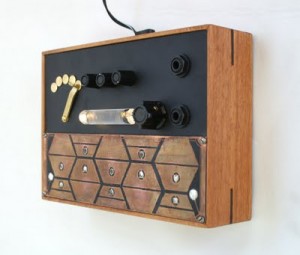
The Synergist is a touch synth with 8 osc. and an 8 note polyphony – each tuned in correspondence to one another to create a full body of notes in addition to touch-based noise and time control. The oscillators tie into a delay, the timing of which controls the global pitch of the oscillation (when the time on the delay is lowered or raised, the frequency of all 8 oscillators are lowered or raised accordingly). The delay ranges from extremely tight to a longer approx. 2 seconds (getting gradualy dirty and grimier toward the lower end)
The oscillators can be feedback driven to create decay and the level of all touch points can be lowered or raised to either overload the delay completely or create more subtle background drone. This all helps to mix the level with any incoming sound as the an input signal can be sent into the 1/4″ in jack allowing for processing of external sources. The selector switch switches between a variety of clean feedback and altered feedback (altered feedback being a more compressed droning sound)
The result is a piece capable of drone or synth lines, very nasty noise and dub massacre. The layout of the touch plate is designed to make it easily playable in a percussive manner. It’s also laid out so that metal pieces (coins work well) can be placed between points to acts as switches for drone or connect points to alter the delay signal.
More info on the site and more to come: [link]”
New single from ambient synth act – BEARS in NIPPON :: NARITA
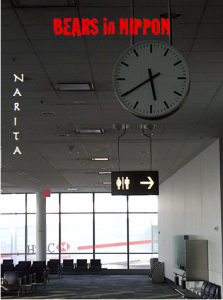
Today we received this new single from a band called BEARS in NIPPON, judging from their name we might guess they are based out of Japan 
It´s a very nice ambient electronic piece with influences from Brian Eno, Aphex Twin, Kenny Larkin and more, we hope you enjoy it and have a great Easter.
Make sure to leave your comments if you like the track, “BiN” has promised to send us more music if we like this one, we sure do.
BEARS in NIPPON – Narita by Stereoklang Produktion
Koma synthesizer – a new analogue bassline synthesizer
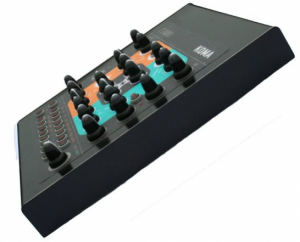
Eowave has introduced the Koma synthesizer – a new analogue bassline synthesizer, inspired by classic synths from the 80s.
Features include 4 different waveforms (saw, square, sub, noise), a 24 dB low-pass filter and a 16-step sequencer. The 16 steps sequencer has 4 rows: 1 for the notes and 3 that are freely assignable to a parameter of your choice.
The Eowave Koma is expected to be available Fall 2011, for 599 € excl. VAT. Details below.
Oscillator section
- analogue VCO with square saw sub (sub can be 1 or 2 octaves below the master freq), noise.
- VCO can be modulated by LFO and PW
- Variable glide
- mixer to mix the 4 waveforms
Filter section
- external audio with a trimmer to feed the filter
- 24dB low pass filter roland style for a classical 80s sound
- filter can be modulated by env2, KB, lfo.
VCA section
- VCA is affected to env1
- 2 envelopes ADSR modulate respectively the amplitude and the filter.
- Attack goes from 2ms to 10s.
LFO section
- LFO with 8 waveforms (triangle, ramp up, ramp down, square, random, digital noise, staircase up, staircase down)
Connections
- audio in
- audio out
- MIDI in
- Usb (for software update and MIDI in&out)
Sequencer
- 16 steps sequencer with LED
- 4 rows: 1 row controls gates and notes.
- 3 other rows are freely assignable to any parameter of the front panel.
- You can transpose the sequencer with an external MIDI keyboard.
Isle of Tune iPad app
Some footage of the upcoming Isle of Tune app for iPad, iPhone and iPod Touch!
features new to iOS version:
– super crisp retina graphics
– add up to 8 cars
– change car speeds (2x, 4x, 8x)
– ‘traffic lights’ for pausing cars
– view all islands created with the online version
– create and share your island for people to view
Android version coming soon after!
visit www.isleofune.com to play online now!
A music score is, in essence, a way of making space into time: traversing notation from left to right and top to bottom, you move through a series of events. So, why not make that spatial map an actual map, as in the familiar, isometric interactive cityscape popularized by Will Wright’s classic game Sim City?
Isle of Tune does just that: lay out trees, houses, and city streets, and you sequence musical patterns as virtual islands. It’s available right now on the Web, powered by Flash – Chrome users can even get a one-click install via the Chrome Web Store. If you prefer to use a phone or tablet, mobile versions are coming, too, beginning with an imminent iPad release, seen in a video below.
New limiting tube compressor effect
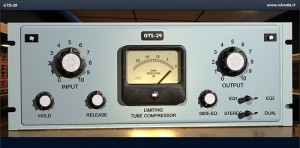
SKnote unveils GTS-39, a limiting tube compressor effect for both Windows and Mac.
“GTS-39 has been developed by measuring and testing a very old limiting tube compressor with a great vintage sound.”
Features:
- mono/stereo or dual mono modes (dual mono enhances stereo image)
- additional “hold” control for envelope shaping
- 8x oversampling for nice saturation
- internal sidechain equalizer (enhance compression on bass frequencies)
- simple 3D interface
- from transparent limiting to extreme compression and creative distortion
- full and rich sound
Price: 19.99$ (introductory price, normal price: $29.99)
The Early Days of Software Sequencers
KVR’s Chris Halaby is a skilled writer and in this editorial he takes on the early days of sequencers, enjoy:
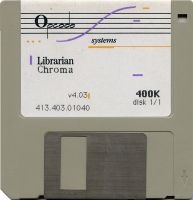
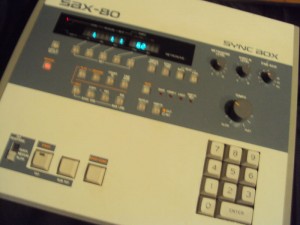
This is the second part of my perspectives and it’s about the beginning of the transition from tape and hardware devices to computers.
Technology drives music. Once a talented individual gets a hold of a new technology and makes beautiful music with it the technology will evolve quickly. This was certainly the case with the computer. There was clearly a need for these software products. Sequencing musical events was taking off and the new technologies allowed music that couldn’t have been created without these new tools. In fact computers can make mediocre musicians sound good, good musicians sound great, and great musicians incredibly productive.
Everything changed for musicians and recording engineers in 1982 and 1984 with the standardization of MIDI and the introduction of the Macintosh computer. It also started a sea change for the musical instruments industry. MIDI allowed a standardized way to send musical data between devices. The Mac had a Graphic User Interface by initial design and the 512 x 342 screen of the Mac could display significantly more information than any LCD display at the time.
There were already some MIDI sequencing software products available for the PC running DOS in 1984, but the lack of a PC graphic user interface made them unusable by the faint of heart. Windows didn’t appear until later and wasn’t useable by musicians in any kind of professional environment until Windows 2.0. Always an innovator under the guidance of Ikutaro Kakehashi Roland had an early software sequencer application, but its interface was one step above command line, making it very cumbersome.
One Silicon Valley engineer who noticed the potential of MIDI and the Mac immediately was Dave Oppenheim, who had recently stopped working for Androbot (an early venture capital backed personal robotics company), and was thinking about what to do next. Dave and I had been housemates while we both attended Stanford University in Palo Alto, CA. Dave was a Music/EE major (also a classically trained pianist with perfect pitch!) and I was an Music/Art Major (Hunh! No really. I’m not joking).
Dave had been messing around with synthesizers as long as I had known him. In fact he had created his own interface to play an Oberheim SEM from the keyboard of a Vox Continental organ in the late ’70s. (An unfortunate side effect was the voiding of his warranty.) A later project was a hardware device that intercepted the keyboard connector inside an Oberheim OBXa. His box had several buttons, each of which would record or play back a small sequence.
Dave’s idea was to use the Mac to replace the dedicated hardware that people like me were using in recording sessions. In November of 1984, he bought a Macintosh, and after learning to program in a GUI environment, wrote the first version of ‘Sequencer’ (a software version of the aforementioned box) in six months. I loaned him my DSX for a couple of weeks so he could make sure that his software would be able to everything the DSX could do.
In order to connect to the Mac he designed a simple MIDI interface that could be connected to the printer and modem ports (RS-422) and in a stroke of brilliance made the package narrow enough so that one could screw two separate interfaces to the ports on back of their Mac and get a total of 32 MIDI channels.
In 1985 he hooked up with Gary Briber, a friend from high school, and formed Opcode Systems. Though he asked me to get involved at the beginning I was too busy trying to be a rock star, and opted instead to help once a week with tech support and writing user manuals. Briber lost interest after about a year so Dave asked me to be fully involved. It was an easy decision given the momentum the company had generated. A new category within the musical instrument industry was growing very rapidly and Opcode was part of it.
Elektrokosmos Kosmonaut and more
musik messe 2011 – analog synths II
DATAMASKIN

