
Master Record – new full recording application for iPad
Igor Vasiliev has released Master Record, a recording application for iPad.
Master Record can use any external audio source for record or used as Effect or Output in Audiobus. Also the user can upload audio files to this application for final processing or before mixing.
After recording the user can cut any part of track, make fade-in and fade-out and dubbing track by applying built-in effects. Tracks can be sent to other audio applications thru “Open in” option or using AudioCopy / AudioPaste. Built-in web access service allows files to be shared on a WiFi network.
Audio processing features:
- Tape recorder effect with three types of frequency response and controlled wow / flutter.
- Classic High / Low shelf EQ for accurate input signal correction.
- Tape saturation effect with three types similar to the different equipment modes.
- Noise effect with four types of noise for more natural sounds.
- Separate level control for each channel with link option and channel selection.
- High quality limiter prevents clipping.
- Highly visible level meters, time counter, free space and battery meters.
More features:
- Includes predefined presets – ability to create user presets.
- Compare two different preset or effects settings in real time.
- All effects settings are stored for each file and recording mode.
- Dubbing recorded or uploaded tracks using effects.
- Cut part of track and make Fade In and Fade Out with three types of envelope.
- Supports Audiobus in Effect or Output position.
- Compatible with AudioCopy / AudioPaste.
- Option “Open in” sends file to another audio application.
- Supports sharing files thru internal Web service in WiFi network.
- Supports iTunes file share.
Price: $9.99.
New album from Gary Numan – “Splinter (Songs From A Broken Mind)”
Out on October 14th on Mortal Records is the brand new Gary Numan album “Splinter (Songs From A Broken Mind)”. The album features guitarist Robin Finck (Nine Inch Nails, Guns N Roses) and was produced by Ade Fenton, and will be followed by a full national headline tour in November. Although Numan released a straight-to-the-fanbase album “Dead Son Rising” in 2011, this is his first self-penned full album since “Jagged” was released in 2006.
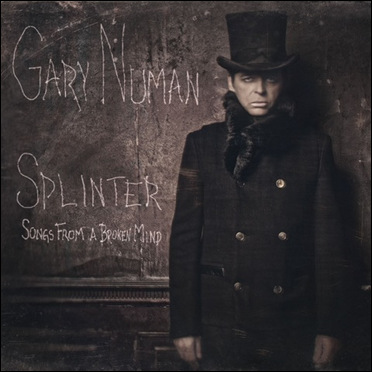
Gary Numan will tour the UK in November 2013. Here are the confirmed dates:
- 7th Bristol 02 Academy
- 8th Ireland Dublin Button Factory
- 11th Sheffield 02 Academy
- 12th Newcastle 02 Academy
- 13th Glasgow 02 ABC
- 14th Manchester Academy
- 15th Oxford 02 Academy
- 16th London Roundhouse
- 18th Brighton The Dome
- 19 Wolverhampton Wulfrun Hall
Back to the 80’s – Force Legato – System (v.1.0)
This 80sObscurities was founded by DJ Rexx Arkana to showcase old, often unknown or forgotten acts and tracks from the decade when electronic music was truly the new wave. Rexx Arkana has been a club/radio DJ and promoter since the mid-80s and headlined festivals on several continents and currently holds a residency at DEFCON, NYC’s current longest-running weekly scene party. He is also the founder and lyricist of Brudershaft and one half of harsh electro act FGFC820.
Hump day here at 80sObscurities and I’m hoping that today’s selection will crank things up and get us closer to the weekend, faster. Force Legato only ever released one song, 1989’s “System”, but that doesn’t mean they didn’t leave their mark. This 12” has the distinction of being the first record released by legendary Frankfurt DJ/producer Oliver Lieb. Not only that, but it’s also notable for the fact that Lieb’s partner in the project was none other than equally legendary German producer and Dorian Gray night club resident DJ Torsten Fenslau (R.I.P.).
“System” was an audio documentation of the shift occurring in electronic music at the turn of the decade, where the “traditional” EBM and industrial beats that had dominated dance floors were beginning to morph into new styles and sounds. New Beat was already coming to fashion and it wouldn’t be long before techno would totally take over. This track, however, has one foot firmly in both camps, which might explain why it resonated so well with so many and nearly hit the official German pop charts at the time.
Lieb would go on to achieve international acclaim for his trance projects LSG and Paragliders and today has over 250 production credits to his name. Fenslau, for his part, was even more successful in a sense. While outside of the Frankfurt scene he might not have gotten the same name recognition as Lieb, his “group” Culture Beat (really Fenslau and production partner Peter Zweier, with guest vocalists Tania Evans and Jay Supreme) topped charts around the globe with their 1993 hit “Mr. Vain.” Sadly, Fenslau would be killed in a car accident later that year, but Oliver Lieb continues to be a major presence in electronic music. The more you know… from 80sObs.
Inear Display – Tkapik (beta) Demo
Inear Display describes Tkapik as an amplitude controlled generative sampler plugin. They say that you ad it to a track, then load a sound file and Tkapik will trigger the sample with random settings every time an amplitude peak is detected in the input signal. The sample can either be mixed with the input according to its amplitude envelope or completely replace the signal using the “solo” mode.
“Don’t get fooled by the minimalist interface : being sample-based, Tkapik opens a wide array of sonic possibilities. You can use it to simply layer a kick drum with some field recordings or in a more extreme way to replace a whole part by a chaos of random drills and glitches. When the sample is triggered, its start offset, loop points and optionally pitch are randomized, giving you surprising results every time.”
Additional features include the ability to resize the plugin interface to fit your display (Windows and Os X only), and map your MIDI controller easily using the built-in MIDI learn system. By its very nature, Tkapik has no preset system, but its state will be properly recalled when re-opening a project in your DAW.
Tkapik is available for Windows, Mac Os X and Linux, as VST (32/64 bit) and AU (32/64 bit, Mac only).
Features:
- Sampler supporting wav and aiff audio files
- Sample triggering based on input signal amplitude
- Combine the sample and the input signal using the envelope follower
- Replace the input signal using the solo mode
- Random start offset, loop points and optionally pitch on every trigger
- User defined range for pitch random
- Sample reverse
- MIDI learn
- Vector based resizable user interface (Windows and Os X only)
- Lifetime free updates for registered users
10€ – introductory price until 08/03/2013 (regular price: 20€)
ARP Quartet Demo
The magic of the ARP Quartet lies in layering its four sounds (Brass, Organ, Piano, and Strings) together in interesting ways to create some huge analog sounds. Here are a couple short demos of the huge analog walls of sound that can be created by combining Brass & Strings, and Strings & Organ together.
More on the ARP:
The ARP Quartet is identical to the Italian made Siel Orchestra. In fact, it is the Orchestra! ARP bought, relabeled and sold it as the Quartet without changing it much. It’s a 4-part orchestral synthesizer with 4 sections: Brass, Strings, Organ and Piano. These 4 tone color families can be played individually or two can be simultaneously played. They are also individually tweakable. Selected presets will light up LEDs to show you which sliders and buttons can be used to modify the current section. The synth itself is very limited however, and there’s no external control, no pitch/mod wheel and few edit parameters. But it sounds very good and it is, after all, a classic analog synth.
The Brass section creates Trumpet and Trombone sounds with independent attack and sustain controls. The String section creates Cello and Violin sounds with independent attack and sustain controls. The Organ section is 2-voice and has a Celeste sound available as well. The Piano section offers two types, traditional or Honky Tonk.
Time machine: LinnDrum Drummachine 1982
Vintage gear demo by RetroSound
LinnDrum drummachine from the year 1982
12 sampled 8bit sounds: bass, snare, rimshot, hihat, 3 toms, crash, ride, cabasa, tambourine, high and low congas, cowbell, claps
15 individual outs
trigger out; tape sync and clock
the 80s hit drummachine 😉
more info: http://www.retrosound.de
MKS 80 Overview
Another video featuring the Super Jupiter
Waldorf Zarenbourg First Impression
Waldorf Zarenbourg is a pretty, chunky, digital piano. It has a certain amount of internal sounds (physically modeled, sampled and fm synthesized). On this video, a quick run on the internal preset. Audio out goes straight into digital recorder.
Another quick run on the internal presets (Tine, Bars, Reeds, Clavi, CP Piano, FM Piano, Grand Piano…) contained into Waldorf Zarenbourg digital piano. Audio goes straight into digital recorder.
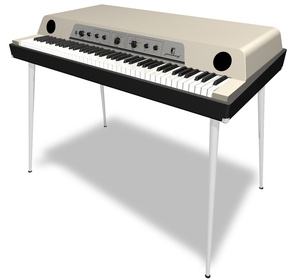
When Waldorf introduced the Zarenbourg in 2006, this piano was one of a very small minority. It had dawned on us that few contemporary instruments offered electric pianists and keyboardists that elusive quality called soul. Reduced to the essentials, this rare breed of instrument does one thing so well that it grows on the player, becoming an extension of body and mind. It has that magical touch of purism that all-in-one devices lack. So we aimed high, achieving a sound nothing short of sublime. And we conjured a look that blends the hallmarks of classic designs with a more contemporary clean and cool vibe.
Handling is intuitive, not inquisitive. No more fussing with cords for this and that; simply power up, play, and possess instantly satisfying sound for player and audience alike. Its aluminum hood offers a sturdy perch for your other favorite instrument, and its integrated speaker system can render the piggybacked device’s signal. Let your laptop roost on this tower of power, and you can control plug-ins via USB and monitor the results via the Zarenbourg’s audio input.
DATAMASKIN

