
Hawkeye – Analog Mind
Background video information below:
An analog session with the Alesis Andromeda in four-voice unison mode, accompanied only by the Yamaha FS1R FM Synth and an Elektron Machinedrum for percussion and samples.
All pattern changes and filter actions are performed live, this would have been impossible without the incredible MIDIbox Sequencer. Many thanks to TK. for his work!
Filmed in Fuerteventura with a quadcopter and a GoPro Hero3.
Hope you enjoyed the flight  – thanks for watching and listening!
Hawkeye/Maelstroem Records
Introducing the Nord Lead A1R…
Introducing the Nord Lead A1R rack mountable tabletop version of the Nord Lead A1 analog modeling synthesizer!
Be the first to check it out at Booth B90, Hall 5.1 at the Frankfurt Musikmesse March 12-15th 2014!
nordkeyboards.com/a1
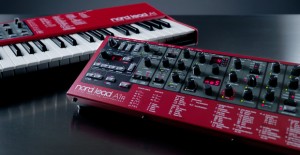
ANALOG MODELING
The Lead A1 and A1r are equipped with an all new analog modeling sound engine. As the original inventors of virtual analog, this is our next-generation analog modeling, capable of reproducing the character and nuances of the vintage synths of your dreams with breathtaking accuracy. 24-voice polyphonic and four part multi-timbral, the Lead A1 and Lead A1r are flexible choices for either stage or studio, delivering a stunningly rich and versatile palette of sounds.
THE NEED FOR SPEED
The Lead A1 and A1R also introduce an innovative new front-panel user interface designed by Clavia to make programming quick and easy, while retaining hands on flexibility.
“We’ve been thinking about and honing this interface for a number of years in response to what we hear from many professional players regarding the ever-increasing time pressures in creating sounds for stage or studio.” says Hans Nordelius, CEO and head designer at Clavia.
One of the main features of the new interface is the Oscillator section, where Oscillator configuration shortcuts allow patches to be created and edited far quicker than is usually possible for synthesis of this complexity. The new waveform engine generates 47 different waveforms from classic analog to digital harmonic and inharmonic waves.
Using a single LFO and simplified Modulation Envelope with intuitive controls on the front panel, it is also very quick to experiment with modulations, always with a clear overview of the structure of the patch.
FILTERS
The on-board filters include Low Pass, High Pass and Band Pass, along with new stunningly accurate modeled Ladder M and Ladder TB filters introduced in the Lead 4.
EFFECTS
The A1’s effects section introduces two new impressive vintage Chorus and Ensemble models. Delay, Reverb, Drive, Phaser and Flanger complete the effects line-up, all with independent settings for each of the four slots.
Nord’s acclaimed Morph function via Velocity or the Mod Wheel (Mod Wheel Morph via MIDI cc on A1R) is also included, allowing multiple parameters to be morphed in real time and with exceptionally easy control.
Additional functions include an independent arpeggiator for each of the four slots, Master Clock sync of the LFO, delay and Arpeggiator, MIDI over USB, and four independent outputs. The Lead A1 and A1R are compatible with the Nord Sound Manager software patch librarian.
Like all Nord products, the Lead A1 and A1R are handmade in Sweden with meticulous attention to detail and quality control.
AVAILABILITY
Nord Lead A1: April 2014 priced at 1459€
Nord Lead A1R: June 2014 priced at 1259€
For more information please visit www.nordkeyboards.com/a1.
Akai releases Rhythm Wolf drum machine and bass synth
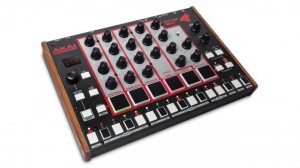
Akai is the latest brand to get in on the vintage-inspired groovebox action with the announcement of the Rhythm Wolf – an analogue unit combining a five-voice drum machine and single-ocsillator bass synth.
The drum machine section of the Rhythm Wolf comprises kick, snare, metallic percussion, and open and closed hi-hat sounds, all of which are tuneable. The bass synth, meanwhile, can be switched between saw and square waveshapes, and features a filter with resonance control and a basic envelope shaper. Akai describes Rhythm Wolf as having an “authentic analog design that references classic rhythm machines and synthesizers” – no prizes for guessing which instruments the company is alluding to.
The whole unit is built around a 32-step sequencer, and also features six MPC pads for live performance. There’s also a ‘Howl’ distortion circuit for adding a bit of dirt to the sounds. Additionally, the Rhythm Wolf features a USB MIDI connection and has both MIDI and gate in and out ports, so can be triggered via a DAW or external hardware. It packs a swing control on its front panel, and the unit also appears to have a built-in preset bank.
Arguably the most interesting aspect of the Rhythm Wolf, however, is its price. At an estimated street price of $199, the unit comes in at slightly cheaper than the combined price of the Volca Beats and Bass, and cheaper than either the Roland TR-8 or TB-3.
The Rhythm Wolf is due to arrive summer 2014. Visit Akai Professional for more details.
Rhythm Wolf highlights (from the official press release)
- 5-voice analog drum machine and synth—authentic analog design that references classic rhythm machines and synthesizers
- Legendary analog drum sounds—kick, snare, open & closed hi-hat, and metallic percussion
- Synth-bass module—selectable square or sawtooth wave with classic filter design for warm, deep basses and squelchy leads.
- Onboard 32-step sequencer—classic drum machine workflow for quickly laying down grooves and melodies
- Six genuine MPC pads—responsive controls for sequencing and finger drumming
- Howl knob—custom distortion circuit for additional sound design
- USB-MIDI and MIDI In/Out—flexible MIDI connectivity for easy integration into modern studios
- Gate Trigger—triggering via modular synths, vintage sequencers, or external sound sources
- Independent audio outputs—dedicated outputs for the drum machine and synth-bass module for precise mixing
New from Akai: MPX16 – advanced sample player with onboard sound recording
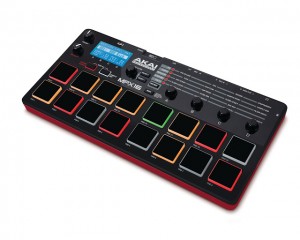
Akai launches playable, practical solution for sample-based performers.
Innovator of audio sampling technology for music production and performance, announces the MPX16, an advanced sample player with onboard sound recording.
The portable MPX16 plays and records .WAV samples using SD cards for powerful, reliable performance in live and studio situations. Like the popular MPX8, samples are triggered internally from the highly responsive MPC-style pads or an external MIDI device via USB-MIDI and 3.5mm (1/4-inch) MIDI inputs. Also a feature-packed MIDI pad controller, the MPX16 is equally capable of launching clips or adding trigger pads to a producer’s studio.
Samples are captured at CD-quality via dual 6.3mm (1/4-inch) inputs or the on-board stereo microphone and saved to an SD card. The user may assign audio clips to the pads and apply tuning, filters, envelopes and “choke” grouping for creative, dynamic performances. An LCD screen and illuminated trigger pads provide visual feedback during use, and the MPX16 may be powered from a USB port or the included power supply. Naturally, users may load existing sound files onto an SD card or use the MPX16 as an SD card reader for drag-and-drop convenience on a Mac or PC. A software tool for even easier sample management is included via download.
Highlights:
• Plays and records stereo samples using easily accessible and reliable SD cards
• 16 velocity sensitive, illuminated pads let the user play back samples in real-time
• Balanced 6.3mm (1/4-inch) inputs let you capture audio from a wide variety of sources
• Built-in stereo microphone lets you capture sounds on-the-fly
• USB-MIDI as well as MIDI Input and MIDI Output jacks for integration into virtually any
MIDI setup for use as a pad controller, sample bank or both
• Onboard sound processing–tune samples, adjust ADSR envelopes and filters
• USB or wall powered (adapter included) for use virtually anywhere
“The versatility and capability of the MPX16 will make it a workhorse for performers of all types,” notes Akai Professional Product Manager Dan Gill. “We knew that an affordable sample player

with Akai Professional’s practical MIDI integration would fit the needs of people wanting a no- nonsense way to access samples without computer dependency.”
The MPX16 will be available in Summer 2014, distributed worldwide with a $199.99 USD street price. Akai Professional will unveil the MPX16 at Musikmesse, Hall 5.1, Booth B45, March 12-15 in Frankfurt, Germany. For more information, visit: akaipro.com/messe2014.
Roland TR-8 Rhythm Performer Demo and Review
A look at the new Roland Aira TR-8 Rhythm Performer, their new drum machine, modeled on the classic Roland TR-808 and TR-909 drum machines, video details below:
A review and demonstration of Roland’s new Aira TR-8 Rhythm Performer. www.SonicSense.com
For more information, visit our resource center: http://bit.ly/1fklpfv
Preorder AIRA now: http://bit.ly/1d5wjlb
Browse our website: http://www.SonicSense.com
Joakim Montelius (Covenant) forms a new band – Amusik

Joakim Montelius (Covenant) has launched a new project, called Amusik. Today the very first sounds from the project were posted online. The project so far prepped 4 tracks of which the first one is now online.
Says Joakim: “Since Amusik is a bunch of people who don’t like doing things the conventional way, we decided not to do the usual ‘studio recording, airplay, video routine’. Instead we made a lo-fi live recording and enlisted our great friends Allan Bank and Petter Duvander to make a video documentation of our first ever live show. That video is now ready. It was recorded at Babel in Malmö on January 25, 2014 when Amusik supported Covenant on stage.”
Amusik consists of the members Ulrika Mild, Joakim Montelius, Richard Hansson and Khyber Westlund
Vintage Drum Machines Sampled For Geist

Geist Expander: Vintage DrumBox is a collection of synthesized analogue drum samples for FXpansion’s Geist. Created by Mr Hoodie from The Groove Criminals, Vintage DrumBox is the result of obsessively sampling a set of strange, esoteric and crusty old machines. FXpansion says that the included sounds are warm, rounded and perfect as an antidote or accompaniment to more modern timbres. The pack also features a bonus selection of riffs and arps from some classic analogue synths.
Some highlights of Vintage DrumBox include early preset accompaniment and organ-top boxes like the Hammond AutoVari and Watford Rhythm Generator, Amdek and Electro Harmonix percussion tone generators and rare drum machines such as the Vermona DRM-1. Legendary analogue BBD delay, tape echoes and spring reverbs are judiciously used to add further textures and flavours.
Vintage DrumBox features loops, kits and presets for FXpansion’s Geist software. Samples are supplied in 24-bit 44.1kHz WAV and RX2 formats and can be loaded into any software or hardware that supports them.
Content:
- Geist Expander with analogue drum samples
- Over 1200 WAV samples
- Over 500 RX2 loops
- Kit, Engine and full Presets
- 5 Pattern Banks
Pricing and Availability:
Pricing is USD $29.00, EUR €25.00, GBP £22.00 inc VAT for all registered Geist owners.
Roland Aira System 1 Synthesizer Demonstration and Review
Sonic Sense takes a look at an early prototype of the Roland Aira System 1 Plug-Out Synthesizer.
Features:
- Four oscillators
- Oscillator colors create continuous waveform changes from simple to complex
- All parameters can be controlled with physical knobs and sliders with LED indicators
- Advanced arpeggiator with Scatter function
- Scatter jog dial offers 10 different phrase variations with dynamic, real-time control over 10 stages of depth
- -12 dB and -24 dB filter types with independent high-pass filters
- Tone knob for easy tonal balancing
- Crusher knob for modern edge
- Integrated delay and reverb effects
- Tempo syncing for LFO and delay
- Innovative thin keyboard with 25 normal-sized keys
The Roland AIRA System-1 is priced at US $599
Rob Papen has announced Blue II
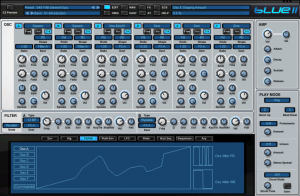
Rob Papen has announced Blue II – an update to his Blue ‘cross-fusion’ synthesizer.
First released in 2005, BLUE offered FM and subtractive synthesis, combined with Phase Distortion and wave shaping synthesis. Papen called it ‘Cross-fusion synthesis’, since it covered so much musical ground.
BLUE-II offers even more options, starting with six oscillators. These can be connected in various ways, together with two analogue-style modeled stereo filters with 27 different filter types, an enormous range of processing and modulation options, sequencer, and an incredibly powerful arpeggiator.
A new range of specially selected waveforms based on samples have been fashioned for creating ‘fresh-sounding’ synth sounds.
BLUE-II takes the XY pad features from its virtual instrument sibling Blade, perfect for time-based sound movements and vector pad-type sounds. All this is complemented by four FX processors, each offering 35 FX types,
Blue II is scheduled for release Monday 10 March 2014.
SEQUENTIAL CIRCUITS SIX-TRAK Analog Synthesizer 1984
Youtube alias ‘AnalogAudio1’, takes a look at the vintage Sequential Circuits Six-Trak analog synthesizer, details below:
Synthesizer demo of the analog synthesizer SCI Six-Trak from 1984. It was the first multitimbral MIDI synth on the market (it came before Oberheim Xpander). The Six-Trak has that typical SCI and DSI hardware design – great, classic look with massive wooden end cheeks.
In this movie I play some of my own sounds – on some sounds I used a digital delay (Roland DEP-5) and reverb (Lexicon MPX-500). In the intro I used the sequencer of the Six-Trak.
The Six-Trak has 1 VCO per voice (6 voice polyphonic). It also has PWM, 3 ADSRs, 24 dB VCF, noise generator, LFO with different waveforms. It has a sort of “slimmed down polymodulation”: VCF modulation by VCO for dirty and metallic timbres. Unison mode for fat, monophonic sounds. Great “stack mode” allows layering of six different patches. The Six-Trak also has a little 6 track sequencer and an arpeggiator built in.
I like the Six-Trak very much. I would wish it had multiple outputs and a chorus effect.
DATAMASKIN

