3-minute Preview: Official DEVO Documentary

August 22, 2012 · Posted in Uncategorized · Comment 

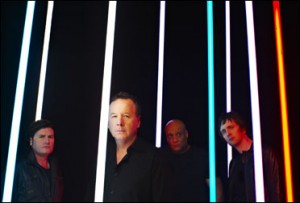
This 3-minute preview is the perfect bite-sized length to de-evolve the uninitiated. Produced in cooperation with DEVO, this authorized feature-length documentary has been in development for 3 years. Although the band has been notoriously secretive for nearly 4 decades, they granted us unprecedented full-access to their personal inner-workings and daily lives while on the road, backstage, and at home. Featuring new interviews with contemporaries (Iggy Pop), and fans (Dave Grohl, Tony Hawk), the official film reveals the truth about this important and misunderstood band. From their mysterious origins during the 1970 Kent State shootings to their latest album and tours, this film tells the funny and fascinating story of de-evolution.

OMD is on the move
August 16, 2012 · Posted in Uncategorized · Comment 

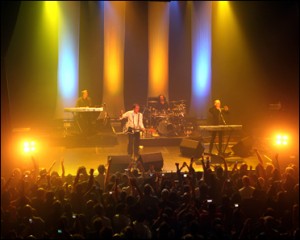
Orchestral Manoeuvres in the Dark have posted an update on the recording progress for their new upcoming studio album “English Electric”.

Here’s what singer Andy McCluskey had to say: “After a few weeks concentrating on rehearsals and concerts, we shall be focussing exclusively on spending September and October finishing English Electric. Many of the tracks are ready to mix and 3 need vocals finally recording.”

OMD’s previous (11th) studio album, “History of Modern”, was released on 20 September 2010 selling well over 100,000 copies in Europe. McCluskey also appeared at a round table panel discussion on electronic music recently as part of EMI’s ‘Electrospective’ campaign.

Mojo ask Daniel Miller, Andy McCluskey, Martyn Ware, Mark Jones, Trevor Jackson, Matthew Herbert and Bill Brewster their thoughts on electronic music.
Visit: http://www.electrospective.com

You may also check out Andy’s favorite tracks on Spotify:

Vangelis in the Studio

August 13, 2012 · Posted in Uncategorized · Comment 

Vangelis Papathanassiou in a studio in Paris preparing material for his album “See You Later”. In this clip he is warming up (improvising?) and warming the singers and drummers who are assembling for the session. Clip 2 will be material from that recording session. More information about Videoheads’ activities and their collection available at http://videoheads.info

Martyn Ware – founder of The Human League and Heaven 17 – celebrates the 2012 Olympics

August 3, 2012 · Posted in Uncategorized · Comment 

Tales From The Bridge is a 3D soundscape collaboration covering the length of the Millennium Bridge in London. The piece was commissioned by the Mayor of London to launch at the start of the London 2012 Olympics, and will run until the end of September.

“We’ve been working for quite a few months now on creating the most amazing installation, which is going to be on the Millenium Bridge during the Olympics,” explains Ware.  ”It’s called Tales From The Bridge, which is a combination of ambient sound and an electronic soundscape which we composed together with a fantastic poetic kind of magic realist overlay of spoken word in three dimensions, which is going to be drifting across the bridge.”

The video features an interview with Ware about the piece and a behind the scenes look at its creation:

Ware: We did a piece called Timepiece for the Mexico City installation that we did, Sound Oasis. This was composed of very slowly-drifting chords that changed almost imperceptibly in related keys, over an hour-long loop.

I thought it would be quite nice to use a similar structure, but change the sounds and make it more adapted to the kind of environment here. So that’s the basic musical element, plus some additional, inspirational kind of almost like Blade Runner-ish synth, virtual synths. So we used a lot of Omnisphere.

We used a lot of virtual synths including Arturia’s Moog Modular synth, Korg MS-20, and some Roland System 100 as well.

That’s the basic template of what we did, and it’s slowly drifting, additional kind of Vangelis-type melody lines that weave in space and time around the piece as well. Then we overlaid the fantastic script that Mario Petrucci has written, and performed by a couple of actors with beautiful voices,  Mia Austen and Steven Alexander.

The idea was to relate the lyrical content at this end of the bridge to the City and the Church and government, and on the other side to the theatre and the playground of the rich, even though it was a poor area historically, and the arts, and recreation. And the central section of the bridge, compositionally, is about the history of the Thames itself.

More info here>> Kitmonsters.com.

Interview: Five questions to Vince Clarke
August 2, 2012 · Posted in Uncategorized · Comment 

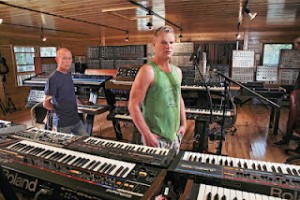
Astronata Pinguim has released a short interview, based on five questions, with synth maestro Vince Clarke:

ASTRONAUTA – Vince, I watched a video on youtube in which the interviewer asked you if you’re a “synthesizers hunter” and you told him that you’re not anymore but you was one in the past. When was your most obsessed period in the hunt for analog equipment? Is there any equipment of your dreams that you do not have yet? And what are your preferred instruments and/or the ones you use most nowadays?

VINCE – I think I seriously started collecting synths in the early 90′s. And then, having run out of space, I stopped. I realized, the only keyboards worth owning were the one’s that would be useful to my music making process, and that is still true today. I try to incorporate as many different synths as possible into my music, rather than favor one particular keyboard over another.
ASTRONAUTA – In the first albums recorded by you, especially on Depeche Mode’s “Speak & Spell” you used only analog synthesizers (not ONLY by your choice but also because the digital technology was just emerging in the music world). How was the recording process on that time, how did you synchonized your equipment, especially those that were made by different manufacturers?
VINCE – The early Depeche stuff was recorded onto a 16 track Studer machine. Lot’s of tracks had to be bounced together, decisions had to be made there and then. The engineer, Eric Radcliffe, devised a way of recording a rudimentary click track onto track 16 which enabled us to run an Arp sequencer in sync.
ASTRONAUTA – In some tours (especially on the Erasure’s 1991/1992 tour, in which you had a “tank” with multiple keyboards inside), you traveled with many analog keyboards. How was the maintenance of this analog equipment, did you traveled with an electronic technician specialized in analog instruments to repair your synths on the road or did you (or do you) know how to repair your own instruments?
VINCE – All of the gear was serviced prior to the tour and required very little maintenance over the course of the tour..(just some TLC). My own knowledge of synth repair was, and still is limited. In the case of a breakdown we would usually find an engineer in whatever city we were performing.
ASTRONAUTA – How is your method of composition, do you write a song on the guitar first and then go to synthesizers or do you already compose direct on the analog synths, sequencers and drum machines?
VINCE – The songs are composed on either guitar or piano. That way, we can concentrate purely on the melody and lyrics, and not get distracted by the limitless world of sound sculpture.
ASTRONAUTA – I suppose that you have a lot of solo stuff, demos of several songs that you wrote for your bands and projects. If you have, do you want to release this material someday? And how about a Vince Clarke solo album, can we expect that you release a complete solo album someday?

VINCE – I doubt I’ll ever release a solo record. I really get a kick out of ‘collaboration’.

To read more from Astronata Pinguim go here >>

Gary Numan / Touring Principle Concert (1979)

July 20, 2012 · Posted in Uncategorized · Comment 

A recently uploaded video featuring the synth maestro Gary Numan in a live performance dating back to 1979

Enjoy

Contribute to the world’s first DEVO documentary

July 4, 2012 · Posted in Uncategorized · Comment 

Produced in cooperation with DEVO, this feature-length documentary has been in development for 3 years. Although the band has been notoriously secretive for nearly 4 decades, they have granted us unprecedented full-access to their personal inner-workings and daily lives while on the road, backstage, and at home. The film is now in post-production, and we need your help to meet our September 2012 goal for Sundance and other festivals.
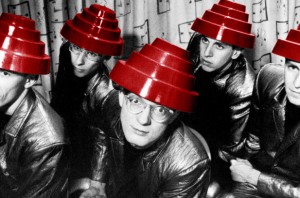
The ARE WE NOT MEN? film delves into the brains — and the souls — behind the concept, music, and spectacle of Devo. Sculpting its music, lyrics and visuals are two men whose personalities seem different but whose worldviews are the same: introspective Mark Mothersbaugh and outspoken Gerald Casale. It is Mark and Jerry’s cataclysmic, sometimes contentious, collaboration that birthed what we know as Devo. Rounding out the group are two more members whose position cements the group as a literal band of brothers — Bob Mothersbaugh and Bob Casale. Yes, behind the curtain of this art-school façade are two fascinating and sometimes fractious families, led by Akron, Ohio’s twisted version of Lennon & McCartney — with all the genius and precariousness that would imply. It is the stories of these men — together and apart — that drive the engine that is ARE WE NOT MEN?

This is your chance to be a part of the definitive Devo documentary:

 • WHY KICKSTARTER? We’re in the process of making the film, but need your help to complete it. That’s why we’re reaching out to all DEVO fans to lend a hand. In return for your support, we’ve created some really cool rewards that we think reflects your help in breathing life into this film.

 • STATUS - 95% shot and currently editing. Estimated release date Spring 2013. Help us get this film edited, mixed, and to the festivals!

More info here about the film and how you can contribute >>

New material from synth legend Ryuichi Sakamoto, check it out

June 15, 2012 · Posted in Uncategorized · Comment 

Sakamoto has always been a hero of ours and will always be up their amongst the other synth giants, although recent years (read 10+ minimum) his focus has been more to the classical side of things, apart from his worldwide reunion tour with YMO. This is a new collaboration with Willis, almost give me some Sylvian/Japan type flash backs, check it out

Find it in The Ghostly Store: http://www.theghostlystore.com/products/willits-sakamoto-ancient-future

Tracklist:
01. Reticent Reminiscence
02. Abandoned Silence
03. I Don’t Want To Understand
04. Levitation
05. Releasing
06. Completion

Ancient Future, available August 6th (EU/UK) and 7th (worldwide), is the second collaboration between composer and visionary pianist Ryuichi Sakamoto and electronic pioneer Christopher Willits. Built around a series of piano pieces that Sakamoto sent to Willits after the release of the duo’s first record together, 2008′s Ocean Fire, the six tracks that make up Ancient Future are entirely instrumental—and yet, they speak about the very essence of what it means to be human.

As a whole, Ancient Future functions as a piece about the creation, acceptance and completion of one’s fate and all of life’s experiences, following a trajectory through inner conflict, resolution and, ultimately, acceptance. The six-song cycle moves through a narrative of sorts, each piece with a story to tell and an aspect of life to explore.

The album opens with the restless energy of “Reticent Reminiscence”, an energy that subsides into the introversion of “Abandoned Silence” and “I Don’t Want to Understand” and, eventually, the cold disassociation of “Levitation”. A certain warmth returns with “Releasing”, its guitar arpeggios like washes of sunlight, and the album’s journey finally resolves into closing track “Completion”, a piece that’s full of quiescent tranquility, perhaps reflecting the experience of finally coming to know oneself.

Despite its conceptual coherency, contradictions lie at the heart of Ancient Future, as the album title might suggest. Even within the confines of each track, opposing forces are at play—loops of static and feedback provide the backing for delicate melodies that develop and evolve like ripples on a placid lake. And yet the contradictions never feel like conflicts—instead, the diverging elements come together to create something with its own internal logic, perhaps reflecting the way that we are all the sum of our experiences, both light and dark, positive and negative.

http://christopherwillits.com/
http://www.sitesakamoto.com/

New series – Legends of electronic music

June 7, 2012 · Posted in Uncategorized · Comment 

Created in 1963, Tod Dockstader’s Water Music appears on Starkland’s first CD (Quatermass ST-201). Sound sources include: water, toy gong-rattles, finger bells, sheet metal, test generators, water glasses, Coke bottle, metal garbage can, a nail.

Wired Magazine has started a new series on their online website called “Legends of Electronic Music”, well worth checking out, here’s how they describe it:

Wired’s new series Legends of Electronic Music explores the history of electronic music through in-depth interviews with some of the field’s pioneers. The series kicks off with a rare interview with trailblazing American electronic composer Tod Dockstader.

In the 1940s, before magnetic tape was widely available in the United States, electronic music pioneer Tod Dockstader made low-fi recordings on steel wire.

“I loved the idea of the wire singing,” Dockstader said in a recent interview with Wired. As a high school student in the ’40s, he used the end of a lit cigarette to make splices in the thin wire, in a painstaking and risky process.

“You had to tie the wire, which was very fine, in a perfect square knot,” he explained. He would hold the wire up to his nose, with the cigarette perched in his mouth. A single wrong move and the edit could be destroyed.

“I became very adept at editing,” he said. “I really liked editing; I understood it. To me, it was really basic stuff. You could make decisions — take things out, put things in. I liked that you were building something.”

Born in 1932, Dockstader was part of the first wave of electronic musicians, who, before the advent of synthesizers in the early 1960s, worked with whatever hardware they could find: reel-to-reel tape machines, sine wave generators and a wild array of homemade circuits and military surplus gear. In the process, they created a universe of electronic music that still sounds unique and prescient today.

The wire recorder Dockstader used to create electronic music was a piece of used military equipment. “A lot of this [electronic music] happened because, after the war, a lot of the stuff was available,” Dockstader said. “Normally a person, a civilian … wouldn’t be able to get that tube, this device or that device. That fascinated me.”

In the late 1950s, Dockstader worked as a sound engineer at Gotham Recording Studios in New York. At night, he worked on his own music, which eventually led to a series of impressive albums of electronic music, including Apocalypse (1961), Quatermass (1963) and Omniphony (1966).

“I was always working at night — deep night,” Dockstader said. “And I’d be very careful. If they found me in a studio — just me — I would have lost my job.”

Full story here >>

Interview – Synth-Aesthesia: Jean-Michel Jarre’s Favorite Keys

May 5, 2012 · Posted in Uncategorized · Comment 

RedBull Music Academy has made an interview with Jean Michel Jarre where he in detail talks about his ten favorite synthesizers:

Ahead of his Academy lecture at the Les Nuits Sonores festival May 16 in Lyon, the synth pioneer Jean-Michel Jarre recounts ten of his favourite pieces of gear.

While, of course, numerous parties are to be praised for introducing synthetic music to the masses, it can be argued that the French composer and musician Jean-Michel Jarre was the first to really foment the electronic music revolution. Though the early successful pioneers like Wendy Carlos, Mort Garson, and Hot Butter primed the public’s ears, their output was mostly either novelty arrangements of pre-existing hits or just plain novelty. Jarre took a different tack and began composing original pop material to be played solely on synths. Selling over 80 million albums and singles thus far during his four decade career, he not only brought oscillators out of the realm of nerdery, his music also served as a late-night soundtrack of the future for music lovers the world over – and spawned a countless number of imitators as well (oftentimes poor). From his first collaborations with Patrick Juvet and Christophe to his epic synth solo albums like Oxygène and Equinoxe, Jarre’s sounds now show up as ghosts in the works of contemporary electronic experimenters as varied as Sébastien Tellier, Oneohtrix Point Never, Emeralds, and Daft Punk, to name a few.

And here is the complete list:

E.M.S VCS 3 (1969)

My first synth, Europe’s answer to the American Moog: a Mini versus a Cadillac. Post-war technology had led us to an European electronic sound which was very different to the American sound. The VCS3 was one of the first real synths to be developed from modular research, a technique with which I was already familiar, as it had resulted directly from the equipment that I was working with at the GRM (Le Groupe de Recherches Musicales or, in English, Musical Research Group) with Pierre Schaeffer. I’ve composed a lot of music with this synth, most notably on Oxygène and Equinoxe, although I’d already tried it out on Deserted Palace [one of Jarre’s first projects] and the music that I composed for the Parisian Opera.

ARP 2600 (1971)

This is an American synth which quickly became the best modular/semi-modular synth on the market – different to Moogs, which didn’t have pre-set sounds. When we switched the ARP 2600 on for the first time, we could instantly start to play and shift potentiometers. It cost much less than a Moog, but it was much bigger with an extremely rich sound. I used it a lot on Oxygène and Equinoxe as well as on the albums I made with Christophe such as Les Paradis Perdues (Lost Paradises) and Les Mots Bleus (Blue Words). ARPs are like the Stradivarius or the Steinways of electronic music. They were invented by craftsmen who, today, we’d place on the same level as the luthiers that built violins, clavichords, pianos – all of the acoustic instruments.

ARP 2500 (1969)

This is the big brother of the ARP 2600, created to compete with the modular Moog. Pete Townshend of The Who was one of the first musicians to use it in Europe. The ARP 2500 is the huge machine that we can hear in “Baba O’Reilly” playing that well-known sequence which would become so essential to The Who’s sound. It’s an electronic sound, not the sound of a guitar! I try to approach people with a similar rapport with synthesizers to my own, such as Pete Townshend or Peter Gabriel, both of whom were amongst the first musicians to possess a Fairlight, along with myself.

FAIRLIGHT CMI (1979)

The Fairlight was the first instrument that I worked with which was directly linked to the training I’d received at GRM under Pierre Schaeffer, electroacoustic music, or what we’d later call ‘sampling’. With the Fairlight, we could record and sample any sound – a natural, urban or domestic noise – play it on a piano and create percussion, a choir, the sounds of chords, a constructive element of music, improbable sounds of which we didn’t know the origin. It’s an instrument with a very lo-fi sound and with a lot of charm and warmth, a graininess that makes us think of the compositions of Bernard Herrmann or of the aesthetic that we find in films from the 30s like Metropolis. It was significant in determining the sound of Peter Gabriel and the sound of the Real World label, as well as my own. It can be heard throughout my back catalogue, on Champs Magnetiques (Magnetic Fields) but especially on Zoolook, which was made entirely on the Fairlight. Oxygène and Zoolook are two very different albums on the sonic map, because as we know, it’s the tool that defines the style and not the other way around.

Roland JD-800 (1991)

This was the next synth to follow the DX7 philosophy and the approach initiated by Japanese synths, which was going to financially sink all of the American makers. I included it in my list because it was one of the first polyphonic Japanese synths that managed to resemble an analogue synth, although what I hated about the DX7 was that it left you thinking that electronic music only aimed to imitate the sounds of acoustic instruments. With the JD-800, you could modify the sound, as you can on an ARP or a Moog, but with a Japanese sound quality, which in some respects, is more refined. I used this synth a lot on Chronology and Revolution. These are the albums which spoke to people the least, but which were important in my career as they marked a period of flux where I still had a foot in analogue and another in what would go on to become digital.

MEMORY MOOG (1982)

The first analogue polyphonic synth. Until then, modular synths such as the VCS3 and the ARP were monophonic. If you wanted a polyphonic effect, you had to play four different sounds at the same time. It’s a practice that’s lost today, which is a shame because it meant you had to compose in the same way that we’d write for a string quartet: violin, alto, cello, double bass. With the Memorymoog, and other synths that came out around the same time, in one fell swoop, we could make complete chords, and that changed everything. For better and for worse. As a result, we ceased to compose electronic music the classic way, as Wendy Carlos did. The Memorymoog was the 8 Moog in the same form but with a new and different attraction: we could store the sounds we created. Before, we had to get our pencil and paper out and write down all of the operations required to produce a sound, but it was never really possible to reproduce the original sound again from the notes we’d made. From this point onwards, you could re-find the sound in its original state, even a year after you’d made it.

RMI Keyboard Computer (1974)

This is an instrument that was created in the 70s and which was revolutionary as it was the first digital synth in a period where everything was analogue. In the electronic music world of the 70s, digital had no place at all. The RMI functioned according to the principle of additive synthesis, whereas the analogue synths were based on subtractive synthesis. To simplify, additive synthesis is like an organ, meaning that you can add frequencies to each other and add layers in the same way that on an organ, you can add 32 pedals, then 16, then 8, then 4, which are actually octaves, or thirds of octaves or quintets. It’s a technique that was used heavily on Deserted Palace and on the track “Oxygène 5”, where the entire sequence is made using the RMI. It created a very different sound to anything else that could be heard at the time, precisely because the digital edge added a certain coolness. This synth was to music what the film Tron was to cinema at the time.

EMINENT 310 (1970)

This synth defines my sound, from Les Mots Bleus by Christophe and the songs of Patrick Juvet, right up to Oxygène and Equinoxe, where I used it heavily. To this day, I still use it frequently. Along with the VCS3, this is one of the fundamental instruments of my music. It’s an organ developed by the Dutch who were the first to figure out how to create chords from electronic sounds. It was from this first string ensemble that the Solina emerged, which is nowadays better known than the Eminent, even if the Eminent is three Solinas together with a notably richer sound. The Eminent can be heard on Oxygène and Equinoxe, adding that gliding, phased feel. The background story to this sound is that it’s the VCS3 and the Eminent passed through a Smalltone, a phase pedal for guitars, which created this very opulent sound similar to that of chords, but of course much more electro.

Teenage Engineering OP-1 (2011)

A little new one that came out less than a year ago and was invented in Sweden [by Teenage Engineering, a company founded by 2003 Academy pariticpant David Eriksson]. It’s a synth which doesn’t even seem like a synth at all – it’s tiny and looks like a Casio toy, but hidden inside is a very sophisticated machine, created using military technology. It’s 100% digital, but defines something completely new in its size and transportability. It’s been a long time since I’ve seen something as interesting, flexible and creative as this. And importantly, its inventors have reintroduced a notion which had been desperately lacking: humour. We have to remember that Moogs, ARPs and all of the first synths had been created by raging madmen, who created completely unreasonable and financially hazardous instruments. The inventors of this synth sold their OP-1 in drips and drabs on the internet, and the instructions are in Japanese to throw us off the scent. I met them after my tour in Sweden – the whole team came backstage and we jammed together. I chose this synth to show that any instrument, from no matter what time, can have a completely timeless value. I’m sure that musicians will still be using the OP-1 in 50 years.

MELLOTRON (1963)

This is another mythical instrument from the electroacoustic scene, since it was one of the first samplers well ahead of the Fairlight. What was interesting with the Mellotron was that it was conceived at a time (the 60s) when the philosophy of sampling wasn’t on the agenda at all. It was, once again, the idea of a luminary who asked himself how to play chords electronically. The principal is to record a choir in a studio onto tape and then to install all sorts of little tape recorders with tapes that last seven seconds to create the notes on a piano. The Mellotron is a kind of small piano which, when you press a key, places the stylus against the tape, releasing a tape which will be read by the head during the seven seconds. That allows you to have a whole range of sounds. When you play a Mellotron, you feel like you’re listening to soundtracks from silent films from the 30s, as there’s this whining contortion that would go on to define the sound of loads of Beatles, Moody Blues and Procol Harum tracks. In fact, pop and rock in the 60s would use this instrument to record choirs with a vintage, retro feel. It’s the sound of the 40s adapted for the music of the 60s.

The original RedBull article can be found here >>

« Previous PageNext Page »

  • New stuff


    LISTEN TO THE NEW STEELBERRY CLONES SINGLES ON SOUNDCLOUD (click the images below)


    LISTEN TO THE NEW ELECTRONICALLY YOURS ALBUM ON SPOTIFY (click the image below)

    MUSIC FROM OUR READERS
    Promote your electronic music at Stereoklang by Stereoklang Produktion
    Send us your sounds
  • STEREOKLANG HOME


  • Playlist

    New and recommended by Stereoklang Latest entries first.

    • Covenant: “Last Dance EP”
    • Nine Inch Nails: “Came Back Haunted”
    • Marnie: “The Hunter”
    • Jenn Vix and Dirk Ivens: “Burn”
    • Chvrches: “Gun”
    • Front Line Assembly: “Echogentic”
    • Download: “LingAM”
    • Thyx: “Below the City”
    • Visage: “Hearts and Knives”
    • Alison Moyet: “Filigree”
    • Noblesse Oblige: “Runaway”
    • Pet Shop Boys: “Electric”
    • Zynic: “Dead End (Club Mix by Olaf Wollschläger”
    • Informatik: “World of Wonder”
    • Skinny Puppy: “Weapon”
    • Displacer: “Curse of the Black Lotus”
    • Marsheaux: “Inhale”
    • Pouppée Fabrikk: “The Dirt”
    • OMD: “English Electric”
    • Chvrches: “Recover”
    • Pouppée Fabrikk: “Bring Back the Days of Old”
    • IAMX: “The Unified Field”
    • M83 feat. Susanne Sundfør: “Oblivion”
    • Code 64: “Accelerate EP”
    • Depeche Mode: “Delta Machine”
    • Kite: “The Rhythm” (song) • How to Destroy Angels: “Welcome Oblivion”
    • Hurts “Exile”
    • DSX: “Anonymous EP”
    • KMFDM: “Kunst”
    • Klinik: “Eat Your Heart out”
    • Diorama: “Even the Devil Doesn’t Care”
    • OMD: “Metroland”
    • Interdiction: “Novus Ordo Seclorum”
    • Mesh: “Automation Baby”
    • Trakktor: “Halo of Lies”
    • Depeche Mode: “Heaven”
    • The Knife: “Full of Fire”
    • Röyksopp feat Susanne Sundfør: “Running to the Sea”
    • Titans: “My Sorrow”
    • Lindstrøm: “Fāār-i-kāāl”
    • CHVRCHES: “The Mother We Share”
    • IAMX: “The Unified Field – Radio Edit”
    • Mesh: “Born to Lie”
    • Ohm: “Car Crash”
    • Syntax: “Tripolar”
    • Iamamiwhoami: “Kin”
    • Die Krupps: “Risikofaktor”
    • Legend: “Fearless”
    • The Prodigy: “The Fat of the Land
    • Dead When I Found Her: “Ragdoll Blues”
    • Hocico: “Vile Whispers”
    • Front Line Assembly: “AirMech”
    • Velvet Acid Christ: “Maldire”
    • Rome: “Hell Money”
    • “Bleep – A Guide To Electronic Music”
    • The Birthday Massacre: “Hide and Seek”
    • Karin Park: “Highwire Poetry”
    • X Marks the Pedwalk: “The Sun, The Cold and My Underwater Fear”
    • Delerium: “Music Box Opera”
    • Not Lars: “Worry”
    • Katatonia: “Dead End Kings”
    • Bossa Machine: “The Fat and Ugly Man EP”
    • Marlow: “No Heart”
    • Mr Meeble: “Liar”
    • Grendel: “Epr // Edp”
    • In Strict Confidence: “Morpheus (Heqc Remix)”
  • Loops and more

  • Recommended free SW stuff


    Camel Audio – Alchemy Player


    U-He – TyrellN6


    U-He – Zebralette


    Applied Acoustics Systems – Swatches


    IK Media – AmpliTube 3 Free


    Reaper DAW


  • Partners

  • Magazines


  • Sponsors

Get Adobe Flash player