
Time machine: Yamaha RX8 Drum Machine
Yamaha RX8 drum machine. Yamaha launched the RX8 in 1989 as a replacement for the RX7 and to be Yamaha’s first drum machine using 16 bit PCM samples. In the late eighties there were several successful 16 bit drum machines available, the Alesis HR16 and HR16B as well as the Roland R8 and R5 to name a few, but the RX8 was still able to carve out a niche in the market of the time.
“Shaped like a plastic doorstop. Not one of the best drum machines ever but still has its charms. Not as boring as the RX17 and RX21. Clearly a budget drum machine, it boasted 16 bit samples and it would have gone head to head with the Alesis HR16, which had better samples.”
A Quick Run on Yamaha MX61
Yamaha MX61 Synthesizer is heavily focused on performance; there isn’t the MOTIF in deept editing and you can only modify the very very main synth parameters of sounds. You can play two different parts in Split or Layer; the remaining 14 parts are available for composing/arranging/performing thru MIDI/USB with bundled Cubase.
Yamaha SY20 Sounddemo – Rare Yamaha Monophonic Analog synthesizer of 1982
Yamaha SY20 Sounddemo (springreverb effect)
Copyrights Volker Hein – 2013
More information visit www.tastronauten.de
The SY20 was Yamaha’s last analog synthesizer model before committing to digital FM synthesis with products like the DX-series. It is an all-analog mono-synth that came out in 1982 but was never commercially sold outside of Japan, making it very rare. In fact, it was originally intended to be an “educational” synth to help students learn about synthesis. However, as most of the controls are labeled in Japanese characters, you will already need to be familiar with analog synthesizers (or Japanese) to grasp the SY20.
Despite being a rather simplistic looking mono-synth, the SY20 is a surprisingly refined and expressive synth. There are 20 preset sounds, arranged in two banks of ten. They include all the customary attempts at emulating the acoustic sounds of piano, woodwinds, stringed and brass instruments. The presets can be combined with the manual synthesizer control sections, which are very simply and logically laid out: VCO, VCF, and VCA, and each section can be individually switched on or off. There is an LFO to modulate each of these three sections for pitch, filter and tremolo effects. There is also Portamento and a one-octave Transpose knob that is notched in half-tone steps (it can be used to quickly transpose what you are playing to different keys).
The VCO section offers one oscillator with Square and Saw waveforms. A slider is used to mix between the two waveforms. The oscillator pitch can be set from 2′ to 32′. There is also Pulse-Width modulation and White Noise. The VCF offers three filter modes: low pass, and two band pass modes. The filter sounds really good, though it is not self-oscillating. The typical cutoff and resonance controls are accompanied by ADSR envelope controls for a nice contoured filter effect. The VCA section offers the standard ADSR controls as well.
While the main synthesis sections are all nicely laid out and straight forward, the real expressive potential comes from a few other simple but effective features. The 44-note keyboard supports after touch, which can be sent to the VCF, the VCA and the LFO for adding filter, volume and modulation effects using keyboard pressure. They can be combined in any way and with as much (or little) depth as needed for the desired effect. There are also three global effects: Portamento, Sustain and Brilliance.
The SY20 has a mono audio output, headphone jacks in the front and rear, and a built-in speaker! Unfortunately there is no CV/Gate and the MIDI specification was still a year away from being published, so it can not be hooked up to any sequencing equipment—you’re gonna have to play this one the old-fashioned way.
The SY20 has a lot to offer. It sounds really good—warm, pure, expressive and wholly analog. It is incredibly rare. It is the last analog synthesizer Yamaha designed before going digital. And it is covered mostly in Japanese characters. All these qualities combine to make it an historic and unique piece in any collection and it will definitely get used often, it may even become the “go-to” mono-synth for anybody lucky enough to own one!
Time machine: Synthesizers I YAMAHA AN1x
Time for a new time machine session:
A voyage into the heart of the Yamaha AN1x virtual analog synthesizer from the year 1997.
Exploration by Marko Ettlich (RetroSound)
10 voices
2 oscillators per voice saw, square variable pulse width, fm, sync, edge
resonant filter 12/18/24dB/oct low/band/hi pass filter, notch
61 keys (velocity and aftertouch), ribbon controller
arpeggiator, step-sequencer
In my opinion the virtual analog synth with the most analogue sound.
used by Yes, Depeche Mode and many more
The Yamaha CS-50- The Sub-Oscillator (L.F.O.)
Here is a demonstration of the sound and functionality of the low frequency oscillator of the Yamaha CS-50.
The Yamaha CS-50 Part 2 – The Filter
Here is a demonstration of the sound and functionality of the Yamaha CS-50’s filter section.
The Yamaha CS-50 – The Oscillator
Here is part 1 of a series of demonstrative videos regarding the Yamhaha CS-50. This is a demonstration of the oscillator section of the Yamaha CS-50.
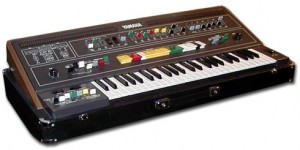
The CS-50 was released just one year before its famous big brothers, the CS-60 and CS-80. The CS-50 looks like a scaled-down version of the monstrous CS-80, and it is! This will benefit those who crave the famous classic Yamaha synth sound without the struggle of lugging around the 215 pound CS-80! The CS-50 weighs in at about 100 pounds. The CS-50 is also just 4-voice polyphonic, and lacks the quality weighted 61-note keyboard of the CS-80. The CS-50 has just a 49-note standard keyboard. It does feature pressure (aftertouch) sensitivity route-able to several destinations, however.
The CS-50’s sound is unmistakably related to other classic CS-series synthesizers. At just four voices with one osc. per voice and lacking warm filters (at just 12dB/oct) the CS-50’s sound can be thin. There are 13 preset sounds of various instruments and synth sounds but, unfortunately, no on-board memory storage for your edited presets. At its low street price, the CS-50 makes a great way to get your hands on these classic sounds without going broke! It’s too bad their tuning is just as unstable as the other CS-series synths. It’s housed in a built-in travel-case like the other (big) CS-synths.
Vintage Legends | Official trailer UVI©
Six brand-new soft synths with the brilliant depth and character of classic hardware. Instantly call up inspiration from : the Yamaha CS-70M, CS-40M and CS-20M, the crazy Italian Elka Synthex, the Rhodes Chroma, the king of FM – the Yamaha DX1, the rare DK Synergy and the classic K250 revisited.
From modern prog and pop to dance, electro, hip-hop and experimental, Vintage Legends is a deep and versatile sonic resource that’s sure to inspire artists working in any style.
Special introductory price : $299 instead of $349
❐ UVI Official Website : http://www.uvi.net
❐ Buy Vintage Legends : http://bit.ly/uvi_vintage-legends
———————————————————————————
Take 6 iconic vintage synthesizers, carefully restore them, create a massive array of presets and deeply multi-sample them, professionally process and master the sounds, infuse them into the industry proven UVI Engine — giving you endless sound shaping options, then wrap the results in immaculately prepared GUIs and you’ve got UVI Vintage Legends.
At UVI we’ve been producing sound for over 20 years and designing our own software for over 12.
We’ve found that virtual instruments with a foundation in sampling have a more defined character and distinct sound quality than those based on digital modeling. The trouble with sample-based instruments is that they’re typically lacking in expression and flexibility; one sample, one sound.
UVI hybrid instruments are more flexible than a conventional ROMpler and more authentic than a simulation, giving you the best of both worlds. Vintage Legends integrates over 30,000 samples from classic synths into the acclaimed UVI Engine, giving you the distinct character of hardware with the added control, convenience and power of a modern digital instrument.
Taking these classic tones into new sonic territory, the UVI Engine delivers massive unison spreads, abundant polyphony, thick-modeled filters, drive, reverbs, modulation, FX and much, much more. These instruments will never need to be serviced or go out of tune, and they’re far easier to lug around than hardware.
———————————————————————————
SIX POWERFUL VINTAGE MACHINES REVISITED
Vintage Legends comes packed with over 800 presets expertly crafted by our sound design team, giving you a huge library of unique sounds and textures.
Each instrument features an intuitive and evocative GUI with a versatile and easy-to-navigate control set helping you to quickly shape sounds to fit your needs, transform them for wild inspiration or crack open the unit and design your own.
Timeless sounds. Infinitely customizable. Compatible with everything.
◆ UVI CS-M – Vintage Japanese Power
◆ UVI SYNTHOX – The Real Italian Stallion
◆ UVI KROMA – Premier Analog Synth
◆ UVI FMX1 – The Gem of FM
◆ UVI U1250 – Dawn of the ROM Age
◆ UVI ENERGY – Additive Fury (bonus only available in Vintage Legends)
CS-M, SYNTHOX, KROMA, FMX1 and U1250 are available as individual instruments for $99 each.
More info & screenshots : http://bit.ly/uvi_vintage-legends
———————————————————————————
COMPATIBILITY
With the free UVI Workstation 2.0.8 (required version), UVI Vintage Legends can work:
• as a stand-alone instrument, compatible with Mac & PC
• as a VST, AudioUnit, RTAS and MAS plug-in.
With MachFive 3 – make the most of all editing features included!
———————————————————————————
* Yamaha, Elka, ARP, Rhodes, Kurzweil, D.K, CS70M, CS40M, CS20M, DX1, Synthex, Chroma, K250, K1000 and Synergy are trademarks of their respective owners and are not affiliated, endorsed, connected or sponsored in any way to UVI or any of our affiliate sites; therefore do not be confused between UVI and these brands.
Propellerheads announces the PX7 FM Synthesizer – Rack Extension
For more information: http://shop.propellerheads.se/product/px7-fm-synthesizer/
The PX7 FM Synthesizer is a six operator FM synth for the Reason rack. As a faithful recreation of the popular DX series keyboards, it provides a wealth of new sounds, ranging from classic 80’s bass and brass to modern textures, leads and growls.
Propellerhead has announced the immediate availability of PX7 FM Synthesizer, a new six operator FM synth for Propellerhead’s Rack Extension format. As a recreation of the popular DX series keyboards, PX7 provides a wealth of new sounds to the Reason rack, ranging from classic 80’s bass and brass to modern textures, leads and growls.
Propellerhead has improved on the original too, with macro controls for easy tweaking of sounds and stereo panning as notable new introductions. PX7 is fully integrated with the Reason rack, allowing users to create layered sounds, combining it with effects, and even control operator levels through CV.
Included with the Rack Extension is a set of new patches for PX7 and Reason’s Combinator, from “talking” bass sounds to evolving pads. Additionally, the PX7 FM Synthesizer is patch-compatible with the Yamaha DX7, and includes hundreds of patches originally created for the DX7. Propellerhead also provides an online patch converter that takes patches in Yamaha DX7 format and converts them to PX7 patches, giving users immediate access to tens of thousands of presets for PX7 covering all styles of music.
Features:
- Six operator classic FM synthesis for the Reason rack
- 32 selectable algorithms
- Advanced envelope generator
- Includes tons of classic and vintage presets, ranging from 80’s bass to keys and brass
- Comes with a set of new, exclusive patches for modern music productions
- PX7 does not require a full understanding of FM synthesis–the macro controls make tweaking sounds fast, easy and fun.
- Propellerhead’s online patch converter lets you convert any Yamaha DX7 patch to PX7 format.
- CV control of operator levels lets you apply modulation from any device in the Reason rack.
- Combine two PX7 synths with the Combinator to easily create layered sounds that never was possible with the hardware it’s based on
Pricing and Availability:
PX7 FM Synthesizer is available for immediate purchase in the Propellerhead Shop, at a price of USD $99/EUR €79. Reason and Reason Essentials users can download a free, fully functional trial version for 30 days to try PX7 FM Synthesizer in their music.
More information
Yamaha CS-50 demo featuring the Terminator main theme and Equinoxe 5
The CS-50 was released just one year before its famous big brothers, the CS-60 and CS-80. The CS-50 looks like a scaled-down version of the monstrous CS-80, and it is! This will benefit those who crave the famous classic Yamaha synth sound without the struggle of lugging around the 215 pound CS-80! The CS-50 weighs in at about 100 pounds. The CS-50 is also just 4-voice polyphonic, and lacks the quality weighted 61-note keyboard of the CS-80. The CS-50 has just a 49-note standard keyboard. It does feature pressure (aftertouch) sensitivity route-able to several destinations, however.

The CS-50’s sound is unmistakably related to other classic CS-series synthesizers. At just four voices with one osc. per voice and lacking warm filters (at just 12dB/oct) the CS-50’s sound can be thin. There are 13 preset sounds of various instruments and synth sounds but, unfortunately, no on-board memory storage for your edited presets. At its low street price, the CS-50 makes a great way to get your hands on these classic sounds without going broke! It’s too bad their tuning is just as unstable as the other CS-series synths. It’s housed in a built-in travel-case like the other (big) CS-synths
“Just got hold of a Yamaha CS-50 and was blown away. Although several live videos await editing, and I usually don’t do synth demo videos only, I couldn’t help myself. Just playing this thing brings back a lot of memories…
Recorded to computer with reverb & delay. No EQ or mastering processors. Quick and dirty.”
DATAMASKIN

