
Short Circuit Presents Mute – Daniel Miller Interview
My friend Tara Busch has made a great interview with Mute’s father Daniel Miller at the Short Circuit Festival.
In this video:
We (Tara Busch and Maf Lewis from AnalogSuicde.com) kick off our coverage of Short Circuit Presents Mute with Part One of our interview with Mute Records founder, Daniel Miller! Read the rest here:
http://analogsuicide.com/latest/2011/05/13/short-circuit-…f-mute-records.html
The Pleasure Principle – Gary Numan returns
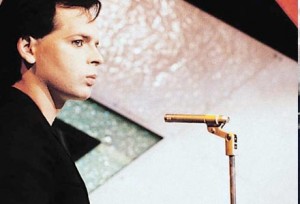
Under the Radar met up with electronic giant Gary Numan for a chat: Groundbreaking electronic artist Gary Numan is celebrating the 30th anniversary of his seminal album, The Pleasure Principle. As part of this revelry, he is returning to New Zealand for the first time in 31 years and UTR caught up with him to discuss how it feels to revisit an album three decades later, whether he knew the album was going to have the impact it has and what made him write such music in the first place.
You’re coming to New Zealand this month, are you looking forward to it?
Yes, it’s been 31 years since I was there last, so it’s very cool. I’m very very pleased to have the opportunity to come and do it again but I’m also very aware that a lot of time has passed and I don’t know what to expect really. So I’m very pleased that I’m coming I just not really confident, I have to say, I really don’t know how it’s going to go.
Is it crazy to think The Pleasure Principle came out over three decades ago?
It’s funny, actually. Sometimes it feels like it was yesterday and sometimes it feels like it was 130 years ago. So much has happened since I wrote that album that I feel like such a different person to what I was when I wrote it. It’s a little bit weird going back to it after such a long time and I have to say that I’m not really a fan of looking back into the past, I’m much more of a fan about what I’m doing tomorrow than yesterday.
When the 30th anniversary came along I didn’t want to make a big deal about it but I didn’t want to ignore it either, so I thought I’d just do one show in England and all the hardcore fans can come along to that. Then that sold out really quickly so it became four shows and then at that point the record company got interested and they wanted to do a special anniversary issue of the album with all these extra tracks they’d found in the archives, and so it turned into a much bigger tour. And then the Americans – it was quite a big album over there when we toured it there – got interested. So what started as a single gig has grown into this much bigger thing that I never planned.
I’ve enjoyed it more than I thought I would, because I’ve always found anything to do with nostalgia is sort of taking a few steps backwards, and I’m really not that interested in playing old songs so for me to do this is quite a big thing. Having said that it’s been really interesting to play the music I wrote when I was a boy.
The Pleasure Principle is what the tour is about, so what we’re doing is playing that album for the first 45 minutes but then we’ve got another 45 minutes or more which tends to be new stuff, and quite often we’ll do two or four songs that aren’t even released yet. For me it’s quite interesting to be playing things that are right from the beginning and things that are so new they haven’t been heard, all in one show. It’s a nice way of showing people something I’m proud of from when I started but also how it’s evolved into what we do now.
How does it feel to have an album that is still musically relevant three decades after it was released?
For a long long time I didn’t think much about it at all. Obviously when I made it I was keen to make it sound as good as I could and then out it went. Some people in the press liked it but most people didn’t – it generally got pretty bad reviews, especially in the UK. The press didn’t really go for it here, so it took a long time before people started to view it the way they do now.
A really interesting thing happened a while ago where the NME Magazine did a retrospective review of it and said how important it was and how innovative it was – all these really complimentary things – but when it came out they absolutely slagged it into the ground, they hated it. Since I’ve gone back and re-visisted it again, I do feel proud of it in a way that I never was before. I think when it first came out it was quite a quirky unusual record for the time and I appreciate it more now than I did then. It just sounded like a record that I’d made rather than anything that was particularly unusual or different so I’ve grown proud of it and I appreciate it now more that it was quite an unusual record for the time.
Interview: Daniel Miller – Head Of Mute Records
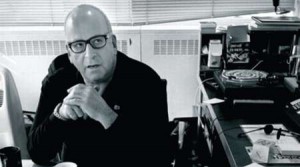
Over at Sonic State an interview with legendary boss of Mute Records can be found. Mute has several renowned bands on its listing such as Depeche Mode, Nitzer Ebb, Fad Gadget, Erasure to name but a few. Here is what Sonic State has to say about it:
Without Mute records and the acts they have nurtured in the 30+ years since they were formed by Daniel Miller in 1978 as a way to release his own tracks, a whole swathe of influential electronic pop music may never have made it to mainstream attention. Depeche Mode, Yazoo, Erasure, Moby, Goldfrapp and many others have benefitted from their unique, artist-centric focus and been able to flourish and have long term relevance in an industry which is so often driven by the flavour of the month.
With a two-day celebration of all things Mute at the Short Circuit event at the Roundhouse, London on May 13th and 14th looming, we caught up with the founder of Mute – Daniel Miller and talked synths, software and the relevence of todays record company.
Stereoklang talks to legendary EBM act Nitzer Ebb on music, gear and today´s synth scene
Nitzer Ebb needs no further introduction, but fact remains that Bon Harris and Douglas McCarthy with albums like, “That Total Age” and “Belief”, in the late 1980s set the scene for EBM going forward, with their devotion to pounding bass rhythms. Having toured with Depeche Mode few doubt their impact on electronic music and after a break in the 1990s the band finally reunited and went on tour again in 2006. Last year the critically acclaimed album Industrial Complex came out and as of right now they are on a long European tour together with Die Krupps. As a special treat for fans both bands play jointly on stage and an exclusive mini album called Rhythm of the Machines can be obtained on site. Stereoklang met up with the band backstage and had a long chat about gear, the synth/EBM scene of today, the shift of label and how they still maintain a enthusiastic crowd everywhere they go.
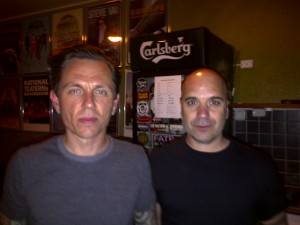
How has your new material been received and how did the collaboration with Die Krupps come about?
Well it is not technically all that much new material, but it has been laid out to fit our tour and the collaboration we have with Die Krupps. But we are of course pleased with the response we have received so far and our fans seems to like it. The idea of collaboration with die Krupps happened in November last year when we met each other in San Antonio, Texas. However we do have a long joint history together, so when Ralph contacted us in the studio with the idea of doing something jointly we were all for it.
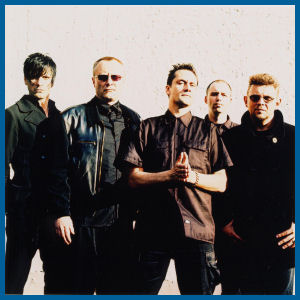
You are celebrating 30 years as a band next year, how do you work to continue excite existing and new fans?
The most important thing is honesty and be 100% true to what you do. We work hard to produce shows that match the expectations of our fans, but we are also very demanding on ourselves to deliver quality over quantity. You need to show on stage that – You mean it!
Michelle Moog-Koussa On The Potential Future Of The Moog Museum
We’re guessing the readers of these webpages are well familiar with the name Bob Moog, but the late, great inventor’s influences stretch far beyond the synth-geek rank and file. Though his DIY theremin kits of the 1950s and the creation of the Moog Synthesizer Bob Moog brought electronic music to the masses; in doing so he may have had more influence over the music of the latter half of the 20th century through the present than any other single human being.
Under the direction of Bob’s daughter, Michelle Moog-Koussa, the Bob Moog Foundation strives not only to sustain the good doctor’s legacy through archival functions, but also through educational efforts. To both ends the Moog foundation hopes to raise capital for building the Moogseum, a museum and educational center. To find out how you can become BFFs with the BMF, visit the Foundation’s website for donation information.
Moby and his obsession with Drum Machines
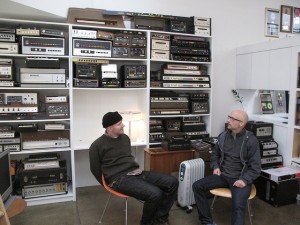
Excerpt:
Rick Moody: So when you say you obsessively collect drum machines, just how obsessively do you mean?
Moby: There are seven billion people on the planet, and I realize I will never ever be the best at anything. But I can potentially have the world’s largest collection of drum machines. So when I say obsessively, it’s obsession with a purpose. Ultimately, I want to have one of every drum machine made up until 1982. After 1982, they became more digital, and I sort of lose interest. But the old analog ones, I have always loved them.
Moody: What would the last one be, in 1982, the Roland 808?
Moby: The end point would be the very early digital drum machines, like the Linn Drum. So I collect the early digital ones like the DMX, which is an early hip-hop drum machine, and the 808 and the 909, but then, after that, the digital drum machines started to get a little too fancy, and a little too slick.
Moody: So when you collect all these things is it with the intention of actually using them in your own work or is this a collection just for the sake of a collection?
Moby: I love to use them in my own music. The great thing about a drum machine is that you just kind of turn it on, and it does quite a lot of the work for you. But the old drum machines were never that good. The drum machines post-1982, 1983, actually sort of tried to sound like drummers. But what I liked about the old drum machines is that they never sounded like a drummer, they sounded like a drum machine.
In the sixties and seventies, drum machines were just compared to other drum machines, they weren’t compared to real drummers. And they were never supposed to replace a real drummer. And then, in the eighties, with digital technology they could actually have drum programs that in a crummy sort of way tried to sound like a real drummer. That’s when I lost interest. I liked them when they sounded more synthetic and electronic. Also, nowadays, a lot of electronic music is produced exclusively on the computer, so there’s no physical sound production. So no one makes drum machines anymore.
I’m almost a custodian of these old drum machines that have been in church basements and lounges at Marriott hotels, somewhere in New Jersey. And a lot of them have notes written on them, like this one, I don’t know if it works or not, but someone at some point put masking tape on it, with a little note to himself. This one, down here, see, someone again, someone wrote their own little codes in pencil. Samba, here, they put a red X there, and wrote a note that says, “No.” Clearly, whoever it was hated the samba?
In the studio with John Foxx
“We went to visit John Foxx deep in the darkest depths of Shoreditch, East London, at the studio of his latest collaborator, Benge. The studio isn’t far from where Foxx’s infamous “The Garden” studio once laid (on top of multiple Roman graves no less) and it’s also the location where the duo cut Interplay, the latest album by John Foxx and the Maths.
The notoriously quiet man sat down with Jordan to wax nostalgic about Foxx’s time in Ultravox, synths (obviously) dub techniques, drinking and eccentric sex. Finally, John was kind enough to demonstrate his infamous drum machine and play us some of the patches from his highly influential first album, Metamatic.”
Shared by Motherboard
In Search of the Unsound, Part III
We present you with the third episode of the documentary “In Search Of The Unsound”. In the previous parts, within the frame of the Krakow Unsound festival, we explored terror, fear and tension in modern music with our guide, journalist Philip Sherburne. While the two first episodes were centred around Demdike Stare, Mordant Music and Kreng, it’s now time for Oni Ayhun and Australian musician Ben Frost, who has been based in Iceland for years now and is the creator of a kind of music where terrifying ambient, noise, drone and metal come together in a ball of energy of extremely high levels. At Unsound Krakow, Frost premiered his new work, “We Don’t Need Other Worlds, We Need Mirrors. Music For Solaris”, composed alongside Daníel Bjarnason, interpreted by an orchestra of 29 musicians and inspired by the classic science-fiction novel “Solaris”, by Stanislaw Lem, and adapted to film by Andrei Tarkovski. That same piece will be performed at Unsound NY on 6th April.
D.A.F. interview with Neuweltmusic
Nice interview with synth pioneers DAF:
D.A.F. interview with Neuwelt Music, featuring live footage from the show. Shot and cut by Duncan Catterall (http://www.clockworkamoeba.com) and interviewed by Jon the Goth and produced by Dani Kammler (http://www.neuweltmusic.com).
More from D.A.F. at: http://www.deutschamerikanischefreundschaft.de/
Dave Formula’s Custom Prodyssey
Dave Formula discusses his use of ARP Odyssey and comissioning a custom Creamware Prodyssey from Andy Robins for the Magazine tour in feb 09. more at www.myspace.com/magazineofficial
DATAMASKIN

