
How to Make a Noise: Analog, Frequency Modulation, and Sample-Based Synthesis
Three new books in the How to Make a Noise series have just been published. Each book focuses on different approaches to synthesizer sound creation so the musician can choose the right tool for the job.
How to Make a Noise: Analog Synthesis starts from the basic principle of taking a sound source and shaping it with a filter. This simple but powerful technique can be applied to any hardware or software synthesizer to create the warm, rich, energetic, and commanding sounds that are often associated with classic hardware synthesizers.
http://noisesculpture.com/analog
How to Make a Noise: Frequency Modulation Synthesis looks at frequency modulation (or FM) synthesis which works through a continuous and controllable interaction of two or more waves to give a broad spectrum of detailed, highly nuanced, bright, rich, shimmering, clean, metallic, and solid tones that can be used to create many musical (and non-musical) sounds.
How to Make a Noise: Sample-Based Synthesis looks at how to sample, create, and control sounds—from high fidelity realistic recreations of real instrument in their original environment, through creative warped tones, to drums and loops—and the tools and techniques that are available to help.
http://noisesculpture.com/sample
LinPlug relectro video
LinPlug – well known for outstanding software synthesizers like Albino, MorpOx and Octopus – have released their 1st FX plug in: relectro
If you’re looking for a new kind of beat/sound mangler you really should check out the manual or the description on their site. It sounds completely different than one would imagine. If you like hardcore, noise, glitch, power electronics, idm… this is a neat tool too kick the crap outa your ol’ drum loops!
There’s a demo (Mac and Windows): http://www.linplug.com/Instruments/relectro/relectro.htm
A Portrait of Rhythm Droid
Mini-documentary about Rhythm Droid. Directed and produced by Devin Curry of Grand Atrium. Explore what makes Rhythm Droid tick as he works in the studio and offers some of his perspectives on electronic music production.
Photography by: www.chroniquesautomatiques.com
Five tips on how to improve your recordings
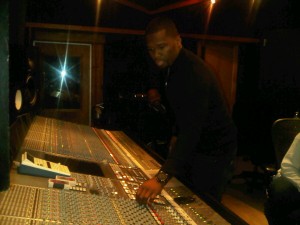
When learning to mix – sound is of paramount importance. Understanding the ins and outs, and how it all interacts is the building blocks from which any mix is made. However, once sound and the manipulation of sound is learned, there is a further and more important step: feel. People listen to music on laptop speakers, ear-buds, and in cars on the freeway with the windows down. They’re probably also listening to the mp3 version.
Under all these circumstances, the sound is clearly compromised. I’d venture that sound quality, is not really the be-all end-all of a record. Mind you, I do feel it’s important, but I don’t think that’s what people attach to and get hooked by when they listen to music.
When dealing with sound, we tend to think in terms of tone, timbre, balance, image, and punch. But why do these things even matter?
Punch is how the sound jumps out at you, image is the world the sound lives in, and balance allows the important elements to step forward. These all have emotional ramifications, and directly influence the feel of a record. So I would posit, that without “feel,” sound quality is essentially meaningless.
Here are some feel-related ideas for you to ruminate on:
1. Unbalanced Sounds – Sometimes when a certain element is unbalanced, stepping on other elements, it can feel really good. It might not sound so hot, but it can feel ever so good.
Sometimes it’s nice to momentarily unbalance a key element to build tension, and then return it to a balanced level as the release. It’s also a good way to direct the listener’s attention.
2. Groove is Everything – No matter what, at all costs, get the groove working. Whether this compromises the sound or not, groove is the innate part of music that we all feel with our body. It determines whether or not we like something before we even determine thoughtfully whether or not we like something.
Consider old Motown recordings. Any technological hurdle was superseded by incredible musicians playing with great feel. Consider this next time you’re obsessing over that hot new plugin bundle.
3. Transitions & Arrangement Dynamics – It’s very rare that a song that doesn’t vary much or have any solid transitions actually captivates people. Address and consider the points immediately before & after a song changes sections. Automate some dynamics between and during sections if necessary. [editor’s note: for transitions, check out these free cymbal swells from Joe Gilder of Home Studio Corner.]
4. Depth – That 3D image is an important part of the emotion of a song. As Jimmy Page said: “the emotion is in the room.” That can be interpreted both figuratively that the emotion is in the interchange between musicians working together in the same space, or literally that it’s the sound in the space that resonates emotionally. I think both are accurate.
5. Make the Moments Special – A song is a series of moments – if every moment is special, the song is always impactful. When recording, take the time to get the performance right. Like Edward J “UK” Nixon says, “keep working until the goosebumps come.”
Matthew Weiss records, mixes, and masters music in the Philadelphia, New York, and Boston areas. Find out more about him here.
Via PSW
Pure Analyzer Essential – See What You Feel!
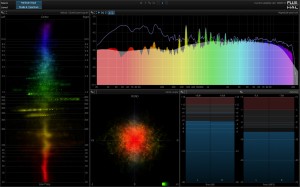
Flux has announced the release of Pure Analyzer System, a modular RTA-system providing an extensive range of analyzer options and metering standards, meeting the demands of any imaginable audio analysis and measurement applications within the fields of; Music Production, Audio Mastering, Live/Installation Sound, Broadcast and Post-Production.
The core of Pure Analyzer System is a standalone application presenting an unparalleled interface designed for ultra-rapid reactivity and intuitive instant user-interaction. The graphic analysis rendering is performed using a GPU-efficient OpenGL 2D/3D graphic engine, optimizing the audio to visual experience utilizing the GPU on a standard OpenGL graphics card.
Full I/O support through ASIO/Core Audio is provided, and for maximum flexibility and efficiency Pure Analyzer System present the option to separate the signal acquisition from the analysis utilizing SampleGrabber, a standard DAW plug-in (available in all common plug-in formats, VST, AU, RTAS as well as TDM for VENUE systems) to acquire the signal in any plug-in host environment and broadcast it through a local area network using the ZeroConf/Apple Bonjour protocol.
The Flux:: Pure Analyzer System presents a vast selection of analysis tools such as; Real-time Spectrum Analyzer, Vector Scope, Phase Meter, Oscilloscope, Real-time Metering History, Real-time and Offline Metering Statistics, furthermore, a wide range of enhanced metering options including the last EBU R128 loudness norm (PLOUD), ITU-R BS.1770, True Peak, K-System and all variants of PPM (BBC, EBU, Nordic etc.). A complete set of tools for System Analysis including; Multi-Channels reference support, Multi-Microphone support, Transfer Function, Coherence, Magnitude, Phase, Impulse Response, Delay Finder, Signal Generator and unlimited Snapshot with auto creation from Sweep and Average, is provided as well.
In addition to the extensive range of standard analysis options, Pure Analyzer System introduce a ground-breaking innovation: Flux:: Nebula Spatial Spectrogram and Surround Scope, presenting a unique representation of the audio material in terms of spectral content and localization in the stereo and/or surround space.
The Flux:: Nebula Spatial Spectrogram combines the functionality of a spectrum analyzer and a vector scope to provide a complete and detailed overview of the mix in order to literally be able to see what you hear and feel. The Flux:: Nebula Surround Scope presents a representation of how a surround signal’s various components are distributed in the surround environment.
The Pure Analyzer System is available for Windows, Mac and AVID VENUE, supporting up to 16 channels (for Multichannel/Surround and Multi-Microphone System Analysis) in up to 384 KHz.
Pricing and availability:
- Mandatory Base Version
- Pure Analyzer Essential 279 EUR / 399 USD
- Add on options (requires Pure Analyzer Essential)
- Pure Analyzer Metering 149 EUR / 219 USD
- Pure Analyzer Live 149 EUR / 219 USD
- Pure Analyzer Multichannel 149 EUR – 219 USD
How to get started with analogue synthesizers, modular systems, stepsequencers and more
“The Testsalon inside Rough Trade East in London is the showroom installed by Schneidersladen, Berlin with the latest news in electronic hardware devices. The Video gives you an overview on how to get started with analogue synthesizers, modular systems, stepsequencers, drummachines, or filters from independent manufacturers like Doepfer, Sherman, MFB, TomOberheim, Makenoise, Cwejman, SND, Vermona and many others. All is connected with each other via Midi or cv gate and you can make some music easily .. if you are around. “
The Sound of Harry Potter and the Deathly Hallows
After eight films over a 10-year span, the epic adventure of Harry Potter and his circle of wizard friends will close the last chapter of this celebrated series with Harry Potter and the Deathly Hallows – Part 2.
Director David Yates returns to direct his fourth Harry Potter film and returns with his talented sound team including Re-recording mixers Stuart Hilliker and Mike Dowson, Supervising Music Editor Gerard McCann, Supervising Sound Editor James Mather, and Sound Designer Dom Gibbs. Expecto Patronum!
For more exclusive videos check out SoundWorksCollection.com
Join the SoundWorks Collection Vimeo Channel: vimeo.com/channels/soundworkscollection
Hokusai – the free iOS audio editor
Developer Wooji Juice has introduced Hokusai – a free/commercial multitrack audio editor for iPhone or iPad.
Hokusai comes free with a set of basic tools such as fade in/out, normalise volume levels, reverse time, and basic synthesis. If you need more power, though, additional features are available through in-app upgrades.
Here’s what they have to say about Hokusai:
Record or import a track, and make it sound the way you want it to: not just trimming the ends, but full cut, copy, paste and delete, and a suite of filters and special effects available.
Edit many tracks side-by-side, mix them together, and export to wave or mp4 format — then transfer them to your computer via USB or Dropbox, or send them to another app on your device.
Hokusai is streamlined to give you a clean, clear view of your tracks. Use the familiar pinch and swipe gestures to zoom right in and fiddle with fine detail, or step back to see the big picture. And just like selecting text in other apps, you can select pieces of audio. Live “scrubbing” means you can hear the sound under your fingertip as you make your adjustments. And you needn’t fear a bad edit with our full undo/redo support: as many levels as space allows.
Upgrade options include:
- AudioCopy/AudioPaste
- grain synthesis
- noise gating
- time-stretching
- pitch-bending
- echo
- reverb
- modulation (AM & FM)
- resonance
- distortion
grunge - vocal levelling
- monster voice
- high/low/band-pass/notch-cut filter
Hokusai is a free app, but the app’s more advanced features require in-app upgrades.
Hokusai in the App Store
Home made – Digi synth with analog filter and LFO
Here’s some background info on the project:
Further progress on a digital synth project that I plan to start producing very soon. The synth will be reprogrammable from any computer and the code can be easily bent or created from scratch. It also has an LFO controlled analog resonant lowpass filter to fatten up the sound (also circuit bendable) . This project will be COMPLETELY open source (schematics, code, everything) once I get everything organized.
The Sound of Harry Potter
After eight films over a 10-year span, the epic adventure of Harry Potter and his circle of wizard friends will close the last chapter of this celebrated series with Harry Potter and the Deathly Hallows – Part 2.
Director David Yates returns to direct his fourth Harry Potter film and returns with his talented sound team including Re-recording mixers Stuart Hilliker and Mike Dawson, Supervising Music Editor Gerard McCann, Supervising Sound Editor James Mather, and Sound Designer Dom Gibbs. Expecto Patronum!
DATAMASKIN

