
Microtape 17 Marimba Nirvana from Tronsonic
Featuring new tape echo sequencer and FX section.
For full version of NI’s Kontakt 4.2.4 or 5.1.0 or later
www.tronsonic.com
Native Instruments Monark – Review
Monark is Native Instruments latest Reaktor built synth aims to emulate thew classic Mini Moog Model D.
MONARK captures the pure organic sound of the undisputed king of monophonic analog synthesizers. Years of meticulous research capture every nuance of the synth at the center of four decades of popular music. The first choice for bass and lead sounds from electronic and hip hop to indie rock and beyond, no other synth comes close to this combination of power, richness, and musical tone. Delivering the true sound of a synth as famous as the artists who used it, MONARK is the holy grail of analog modeling.
Model-A Prototype – Built in 1969. This version more closely resembles the modular Moog’s but in a very compact form. In its wood case, six Moog designed modules were internally hard-wired together and connected to a small keyboard. Many labels were typed out on paper and taped on to the front panel above the knobs.
Model-B Prototype – Built in 1970. In this version, the modular look was eliminated as the components were brought together by a pupose built front panel lay out. The three identical VCO sections were stacked on top of each other on the left. The right side held the Amplitude and Filter contour controls. The middle section held the Noise, Filter (cutoff, res) and master tuning controls. There was even a power switch on the front.
Model-C Prototype – Built in 1970. This version really begins to look like a Minimoog. The familiar left-to-right layout of Controllers, Oscillator Bank, Mixer, Modifiers and Output sections and the signature pop-up front panel had come to exist. The Model-C was photographed for the original Sales Flyer introducing the Minimoog, although in that flyer it was referred to as the Model-D.
Model-D Prototype – Built in 1970 almost immediately after the Model-C. A few more cosmetic tweaks to the front panel design brought about the last few final touches before readying for commercial production of the official Model-D.
Model-D – Built in 1971. A few more design tweaks (like adding some red rocker-switches and proper pitch-bend and mod wheels) and the Model-D was the Minimoog sold to the public. Interestingly, there are three versions of the Model-D, with some very minor and mainly cosmetic variations to each. Fortunately they can be distinguished from their name-plates.
Intro to NI Reaktor’s Resochord
Brebt Kallmer explores NI Reaktor’s Resochord from two different perspectives. In the video above :
Want to apply Native Instruments REAKTOR’s Resochord to a specific drum sound rather than the whole kit? This vid shows you how!
Add trippy textures and transition effects to your tracks using Native Instruments REAKTOR’s Resochord.
Traktor Cue Point Strategies: Reference and Performance
Back to basics! Ean goes through the basics of great cue point placement and usage in Traktor Pro. Read the full article here: http://bit.ly/10KXgIu
With 300 to 500 songs (minimum) in a digital DJ’s regular rotation, it’s nearly impossible to remember every song’s structure, but knowing your music remains one of the most important requirements for all DJs. Upon loading a new track, the most important things to know instantly about a song are:
- Where is the first beat?
- Where is the best place to start mixing?
- When does the vocal, bass line, or main part of the song begin?
Stated differently, where should I be done with the mix?- Where are the most natural mix out points in the song?
Fortunately most DJ software has a variety of cue points that can be used as flags to remind you of the critical places in a track. Traktor has a set of cue points which are different colors and serve different purposes, so these are best suited for flagging a track.
In-depth with Reaktor’s SPIRAL and Creative Sampling
Spiral sequencer, a generative MIDI sequencer developed by Lazyfish (Alexander Potekhin) for Animated Circuits. Spiral introduces a unique, intuitive approach to music, with concentric sequencing lanes and advanced algorithms that create fluctuating, kaleidoscopic melodies. Spiral is a MIDI instrument, so it doesn’t actually produce any sound but rather acts as a sequencer, triggering other instruments. Spiral features various algorithms to create patterns and many of its parameters can be controlled from KORE or KORE Player.
This is a quick video to demonstrate how to add your own samples to the Frame 3 creative sampler for Reaktor by dragging them into the sample map from the built-in Reaktor disk browser.
Frame 3 is available at
http://www.reaktortips.com/2013/05/fr…
Carl Craig remixes “My Machines” live on Maschine
Electro minimalist Carl Craig explores NIs Maschine
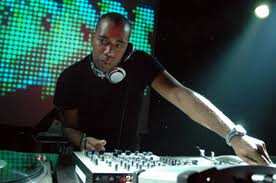
Visionary producer Carl Craig talks about how he uses Maschine to create remixes on the fly when performing live. More Maschine: http://www.native-instruments.com/mas…
We caught up with Carl in Amsterdam to talk in depth about his Maschine production techniques. Watch him in action performing his “69” techno classic “My Machines” live with Maschine at the center of his setup.
Learn why the world’s beat elite have made Maschine their tool of choice. http://www.native-instruments.com/mas…
The reasons are clear: Customize the Maschine hardware. Build grooves in record time. Pro time-stretching on board. Color tag all your sounds. Browse and load any Komplete Instrument and Effect directly from the hardware. And to top it all, the renowned Maschine workflow.
Funkagenda – How to create Dubstep bass sounds in Native Instruments Massive
DJ/Producer Funkagenda explains how to create from scratch that classic Dubstep bass sound using NI Massive synth.
NI’s Traktor DJ for iPhone hands on videos
Phil Morse of Digital DJ Tips gives a ten-minute talkthrough of all the main features of Traktor DJ for iPhone from Native Instruments, a groundbreaking DJ app for iPhone. Full review at: http://www.digitaldjtips.com/2013/05/…
The Verge’s Trent Wolbe is joined by Jim Mazur to show off the new Traktor DJ app for iPhone. Previously only available on the iPad, Traktor DJ allows you to mix music using an easy touchscreen interface.
Claviness and Wurlitsar instrument ensembles for Reaktor
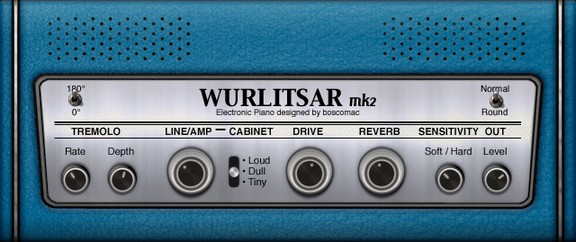
Boscomac has announced Mk2 versions of its Claviness and Wurlitsar instrument ensembles for Native Instruments Reaktor.
I announce that CLAVINESS and WURLITSAR are died … to be reborn better in their MK2 Version, Yeah ! Nothing is more difficult than doing a mk2 version that requires as much work as the creation of the instrument! But in the end, we get a better result, Yeah !
WURLITSAR is a Wurlitzer who has a warm et round sound! Now you can mix the direct signal with the amplified signal and get an interesting balance. You can also adjust the rate of distortion of the amplifier to get some “crunch” to the wurli. Vibrato has been replaced by the ability to adjust the tremolo on the panoramic. The instrument offers two types of sound, normal or round, and it has a nice little spring reverb …
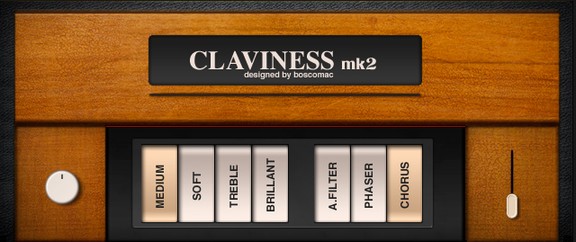
CLAVINESS is a clavinet with sensitive strings! More than MK2 version, it is a revisit to really approach the original instrument. The clavinet is an instrument that has a lot of feeling. Here, different tones are available with some very effective effects such as chorus, phaser and auto-filter and the ability to mute the strings. Ideal for the rhythmic players, it is almost impossible not to have the groove with such an instrument …
Both ensembles are available to download at no cost. Donations are appreciated.
In action the Elektron Analog Four + NI Maschine + MiniBrute
Sunday Night (Elektron Analog Four and NI Maschine Mikro Mk2)
Wiked Delusion (Elektron Analog 4 – Arturia Minibrute – Maschine)
DATAMASKIN

