
Beastie Boys on using Reason
It’s hard to fully comprehend the impact the Beastie Boys have had on popular music. In collaborations with Rick Rubin and The Dust Brothers, the Beastie Boys have birthed some of the most infectious and fun beats of the last 25 years. From the early 2000s, on a recommendation from band-mate Mike D, Adam Horovitz (Adrock) started making beats in Reason and instantly ditched his venerable SP1200. Reason has been at the heart of their beat laboratory ever since.
Steinberg is alive and kicking
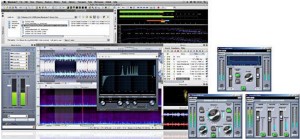
Steinberg is proud to announce the release of WaveLab’s latest incarnation, WaveLab 7. Adding new facilities to its previous versions for Windows, the seventh version now also sets a benchmark for audio editing and mastering under Mac OS X.
Its feature list includes the revamped graphical user interface which provides eminently convenient handling of audio material across multiple windows, montages and podcasts with an intelligent docking and scaling system. Brand-new VST3 plug-ins and restoration tools, the new, future-proof burning engine and its flexible multiprocessing capabilities are further highlights. WaveLab 7 is available as boxed version in the Steinberg Online Shop and from authorized Steinberg resellers for EUR 599*/GBP 497*. The stripped-down version, WaveLab Elements 7, is available as boxed and download version for EUR 99*/GBP 82*.
“By releasing WaveLab 7, Steinberg’s range of products now encompasses an A-to-Z solution on PC and Mac computers that offers industry-standard tools all the way from music creation, production and mixing right straight down to the final master,” comments Timo Wildenhain, Steinberg’s product marketing manager for WaveLab. “This milestone release reflects Steinberg’s commitment to cross-platform support, closing the circle to offer its current product range to both the Windows and Mac OS X platforms,” Wildenhain continues.
Reengineered from top to bottom, WaveLab 7 introduces several novelties to its user interface which makes working with audio much more intuitive as well as expediting workflows in audio editing and mastering with a convenient, completely customizable window and toolbar management system. WaveLab 7 also includes a restoration tool package encompassing specialized DeNoiser, DeBuzzer and DeClicker plug-ins by leading plug-in manufacturer Sonnox plus 30 new VST3 plug-ins for further processing, expanding the depth of WaveLab’s vast range of functionality. DDP support and the entirely new CD and DVD-A burning engine are features that round out the functional additions to WaveLab 7.
WaveLab 7 is the comprehensive audio editing and mastering software application which may be used to record, edit, restore and publish audio by hobbyists and professional mastering engineers alike.
Color chaser
Who wouldn’t want the color chaser
Colour Chaser detects and follows black line whilst it reads the colour and translate the colour RGB data into sound.
Invisible Limiter
A.O.M. (Alchemicallly Organized Music) has released version 1.2.2 of Invisible Limiter, a free limiter effect plug-in for Windows.

A.O.M. Invisible Limiter
The Invisible Limiter is a transparent look-ahead brickwall limiter with automatic attack/release-time optimization.
The Invisible Limiter’s limiting algorithm minimizes the difference between the original and the limited materials.
Invisible Limiter is available to download as a freeware VST effect plug-in for Windows PC.
More information: A.O.M. / Invisible Limiter
Semi-modular software synthesizer for Mac OS X
Madrona Labs introduced Aalto – a semi-modular software synthesizer for Mac OS X with a patchable UI, distinctive sounds, and “a charming personality”.
Aalto’s sound engine lets you create sounds that have been difficult or impossible to make with softsynths before now. The heart of Aalto is a Buchla-inspired complex oscillator, with FM, timbre and waveshape controls that enable a wide range of expressive sounds. These sounds are uniquely malleable and alive, in part because they are made with dynamic calculation, not static wavetables.
Aalto is designed as much for sequencing patterns as for playing individual notes. Each voice has a separate, built-in sequencer with a patchable, independently controllable rate and offset that make it easy to achieve evolving, chaotic textures.
Each voice also includes a lowpass gate module with a vactrol emulation in the control path. The vactrol equation slows down the response to incoming control signals through a complex nonlinear filter. You can turn the vactrol response down to instantaneous, or up to a pronounced ring.
Following the lowpass gate is a patchable waveguide / delay module with a waveshaper and a peaking EQ built into the feedback loop. Because it has such short and controllable delay times, unlike a typical analog delay, it can be used as an additional oscillator or waveguide.
Aalto’s filter is a state-variable topology with mixable simultaneous outputs, tuned to have a similar range to an Oberheim SEM filter. (Though I couldn’t resist turning up the resonance just a little more.)
Subjectively speaking, Aalto can make a wide range of sounds, from lush to edgy, including some very complicated ones, without sounding too thick in a mix. Aalto’s sounds are not hyped or confined, they are wide-range, open and natural. We hope our approach will appeal to experienced sound designers who have their own favorite EQs and limiters. And for those just getting into synthesis, Aalto is an accurate and honest tool for learning. We have tried to make Aalto a deep instrument that will reward lasting engagement.
Google music still in the clouds
The details of Google’s long-rumored music service are starting to leak out, setting the scene for the launch of a cloud-based storage locker that users could keep their music in and stream it from anywhere.

Billboard quotes “industry sources” who suggest that the first step would be a download store, which Google would operate in much the same way that iTunes and Amazon MP3 work. Alongside would sit a locker that songs and albums could be stored in, and then streamed or downloaded to any internet-connected device, likely including Android phones and the forthcoming Google TV.
When users buy tracks in the download store, they’re given the option to copy their purchase over to the storage locker automatically, meaning no download-then-upload hassles. Meanwhile, a desktop app would scan the user’s hard drive, quietly uploading any tracks recognized as music in the background, whatever their source.
However, the search giant could run into trouble when it comes to deals with the record labels. The same industry sources claim that the subscription fee for such a service would be around $25 (about £16) per year, and that revenues would be split 50:50 with the rights holders. Music publishers will also take a 10.5 percent share, but it’s not clear whose chunk that’ll be taken from.
That’s a large percentage for Google, and I’ll be surprised if the labels let the company get anywhere near that figure, especially as tracks sourced from filesharing sites would be streamable in the same way as legitimate ones. If they do acquiesce, it’ll no doubt be in exchange for concessions from Google, like removing sites associated with piracy from search results. That’s something that Google is unlikely to look favorably on.
One industry insider that Wired.co.uk spoke to, who didn’t want to be named, confirmed this, telling us: “I don’t see this ever working with the U.S. labels, especially not with a 50/50 split. Google has seriously overestimated their generosity.”
So in short, it seems like there’s still a very long way to go before agreements can be signed. Especially as Google will undoubtedly want to start in the USA where the major labels are at their most fuddy-duddy. A similar streaming service proposed by Spotify hasn’t managed to get off the ground there, despite gathering nearly 10 million users in Europe, supposedly due to objections from the labels.
Via W
Continuing to cover the Blipfest
Well the Blipfest inTokyo sure is over but the videos are keep coming:
Live remix using Ableton Live and the Novation Launch Pad
From Progtronica producer, Nigel Sifantus, this is a live remix of the song “Candle That Burns At Both Ends” using Ableton Live, the Novation Launchpad and ZeRO SL Mk II. There are absolutely no power cords used, just usb cables, the Mac’s battery, and a small boombox to hear the sound. Visit nigelsifantus.com for more information on Progtronica productions.
Doepfer goes alternative – nice EBM sequence
iPhone goes Theremine with the GyroSynth
GyroSynth is a music synthesizer for the iPhone 4, which takes full adventage of the gyroscope. You can play and modulate the sound by moving your hand through the air – just like the legendary Theremin instrument.
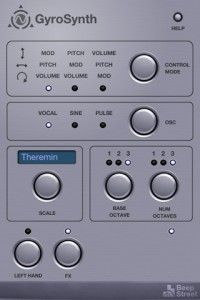
GyroSynth makes use of the gyroscope to measure true roll, pitch, and yaw and translates them to sound parameters like pitch, volume, modulation or filter cutoff. Thanks to phenomenal accuracy (2000 degrees), you can play melodies perfectly in tune.
FEATURES
– 3 types of oscillator: vocal (formant synthesizer), sine wave and square (PWM modulation)
– Several control modes
– Delay effect
– Included musical scales allow you to effortlessly play in several styles
DATAMASKIN

