
Toy Piano – new sample library for Native Instruments Kontakt
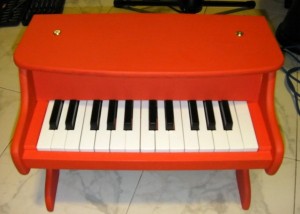
AudioThing has released Toy Piano, a sample library for Native Instruments Kontakt.
I always wanted a Toy Piano like Schroeder’s, from Peanuts. I finally got this lovely 2-octaves upright toy piano and I could not resist to sample it and start making sound design. The sound of the piano is produced by metal bars stroke by plastic hammers, almost like a glockenspiel but more deep and warm. The Toy Piano was sampled with the lid both closed and open and percussions samples have been recorded playing the wood case of the Toy Piano with hands, nylon brushes and rubber mallets. There are also two ambient/pad/drone instruments created using samples start/loop tricks and a bunch of effects, both with a custom, tweakable, GUI.
Toy Piano features
- 3 Round Robin samples for each key.
- 6 Random release samples.
- Two sample sets (closed or open lid).
- Size: 108 MB installed.
- Formats: Kontakt and .wav.
- Sample resolution: 44.1Khz / 24Bit.
- Custom performance view.
- Bonus percussion samples and sound designed instruments.
- Native Instruments Kontakt 3.5 full retail version is required.
AudioThing Toy Piano is available to purchase for $5 USD.
Finally !! Warp Records on Spotify
British electronic music label Warp Records have recently been adding a large chunk of their back catalog to Spotify. Boards of Canada will be a welcome addition for many, but as a long-time fan of the label there are several other new additions from the Warp archive that I think are well worth checking out.

Here are but a few examples as recommended by Spotify:
Boards of Canada – Geogaddi
Edinburgh’s finest IDM band Boards of Canada finally arrive on Spotify, with both Twoism and Geogaddi now available. They’re sometimes a bit too ambient and IDM for my tastes, but they’re one of Warp’s biggest bands and a group who’s absence from Spotify was often lamented.
Broadcast – The Noise Made By People
Broadcast are one of my favourite bands and this is perhaps their finest album. Available now for the first time on Spotify, The Noise Made By People is psychedelic sixties electro that’s at turns ethereal, haunting, timeless and retro-futurist.
I was so sad to hear that lead singer Trish Keenan had died after catching swine flu a few months ago. Her voice was quite unique and I’ll never tire of listening to this album in particular: it means a lot to me.
Red Snapper – Reeled and Skinned
Warp band Red Snapper added jazz and other “real” instruments to the electronic mix of Warp’s mid-90s sound. I’m no fan of jazz but I loved Reeled and Skinned when it came out, with its dirty sax and intricate drumming. You could say I was hooked 😉
The Sabres of Paradise – Haunted Dancehall
The Sabres of Paradise (and later Two Lone Swordsmen and The Aloof) were bands whose singles and albums I all eagerly bought back in the 1990s. The Sabresonic sound is dubbed-out dance music with a heavy dose of electro-experimentation; 1994′s Haunted Dancehall is probably their triptastic classic.
LFO – Frequencies (Stereoklang personal favorite)
The Low Frequency Oscillation kick-started the whole Warp success story, with the single LFO hitting the UK Top 20 back in 1990. It might sound a little dated in parts now, but just you wait for the forthcoming acid house and techno revivals…
Exclusive track with Necro Facility
Necro Facility – Do you feel the same (Henrik Bäckström Remix) by ProgressProductions
Exclusive version of Necro Facility “Do You Feel The Same” remixed by the lead vocalist Henrik Bäckström. A Brilliant clubsmasher….. Previously Unreleased …. until today!!! Enjoy…….
And don´t forget to order the new album “Wintermute”… Released 11 May in Scandinavia and 13th May in Rest Of Europe. (June in North America and July in Russia).
To celebrate the release of the “Wintermute” album by Necro Facility, Progress have decided to release an exclusive version of the track “Do You Feel The Same”.
8 Step CV Sequencer / Analog / Control Voltage
Here we have an 8 step analog sequencer that puts out control voltage. This thing mates up well with anything that takes CV.
Connect it to your Voice of Saturn synth / soundlab / Atari punk console / circuit bent projects….
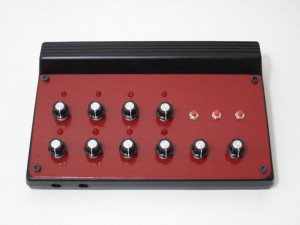
This unit is based on a 555 timer chip and a 4015 dual shift register.
The 4015 dual shift register allows you to “program” or introduce more than one step at a time, allowing you to mash up the pattern and get some pretty interesting results.
In the video:
Sonic Forest + a little delay and reverb / 2 diy 8 step sequencers / LZX Monolith / Electro Harmonix Memory BoyThe Sequencer puts out 0-6v DC.
9v DC power supply is included. (Universal power supply! It accepts 100-240v)
Features:
8 pitch control steps
Master pitch which allows you to raise or lower the entire sequence together in a linear fashion.
Tempo control
On / program button
Clear / remove steps button
Off button
2 CV outs
1 Clock in
Moog clone that might be worth checking out
Audio capabilities of the Manx MM+ vsti.
External reverb & delay is used in places
www.manxsynthersizers.com
CLUB OF THE KNOBS
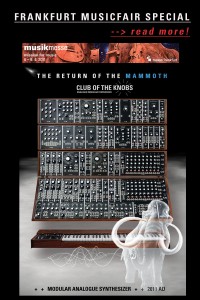
“The Return Of The Mammoth – CLUB OF THE KNOBS – Analogue Modular Synthesizer” at MUSIKMESSE FRANKFURT 2011, part 1: From Portugal to Frankfurt Music Fair.
Performing: Kazike, Axel Jungkunst and Georg Mahr.
Everything live recorded at booth D99 in hall 5.1! More informations on website cluboftheknobs.com.
As always it all began in Germany >>
8step analog sequencer+analog synth,kaoss pad quad
Recorded on 11/05/088step analog
8step sequencer+analog synth,kaoss pad quad – Captured Live on Ustream at http://www.ustream.tv/channel/b-t-live
Depeche Mode – Personal Jesus (The Stargate Mix)
Enjoy the new so called Stargate mix of the DM hit Personal Jesus.
Music video by Depeche Mode performing Personal Jesus (The Stargate Mix). (P) 2011 The copyright in this audiovisual recording is owned by Depeche Mode under exclusive licence to Mute Records Ltd
Background:
The song was inspired by the book Elvis and Me by Priscilla Presley. According to songwriter Martin Gore:
It’s a song about being a Jesus for somebody else, someone to give you hope and care. It’s about how Elvis was her man and her mentor and how often that happens in love relationships; how everybody’s heart is like a god in some way, and that’s not a very balanced view of someone, is it?
“Personal Jesus” is Depeche Mode’s 23rd UK single, released on August 29, 1989, and the first single from the album Violator. The single reached No. 13 on the UK Singles Chart and No. 28 on the Billboard Hot 100. Since then, the title song has been covered by numerous artists including Gravity Kills, Marilyn Manson, Jerry Williams, G&G, Lollipop Lust Kill and Johnny Cash.
In 2004, “Personal Jesus” was ranked #368 in Rolling Stone’s list of “The 500 Greatest Songs of All Time”,[3] and in September 2006 it was voted as one of the “100 Greatest Songs Ever” in Q magazine.
“Personal Jesus” will be re-released as a single on May 30, 2011 for the new Depeche Mode remix album Remixes 2: 81–11, with the leading remix by the production team Stargate.
Full mix down made with the legendary Roland System 100M
As reported in the interview we did with Nitzer Ebb the Roland System 100M was their absolute favorite. Now this video was released that gives a neat overview of its capabilities.

The System 100m is Roland’s contribution to professional analog modular synthesis. It was based on the more limited, semi-modular System 100, but is several steps of ahead of its predecessor. The System 100m offers over 20 modular components to pick and choose to design a custom modular set-up. The Main unit is the M-110 which has a single VCO oscillator, VCF, and VCA section. You can then build upon this system adding any number and configurations of the various other modules which include dual VCOs, ring modulators, dual VCFs, eq, dual VCAs, dual envelopes, LFOs, various effects, mixers, sequencers, and control interfaces including 3 different keyboard controllers.
Modules are assembled into racks. The System 100m has 3 rack sizes, the M-190 holds 3 modules, the M-191 and M-191J hold 5 modules. Each rack provides the necessary 8-pin DIN power connectors and internal CV/gate connections between the modules. You still need to do some external patching, however, to send your signal through the modules of your choice to create any sounds. As for sounds, the System is basically monophonic, unless you get several racks of them for lots and lots of money! Its sound is not as warm as the System 100 before it, but it offers much more capability, as seen in Hans Zimmer’s system below!
Hans Zimmer’s massive System 100m, image and info courtesy of Kevin Lightner. “It features 58 VCOs, 37 VCFs, 32 ENVs, 12 VC Phase shifters, 9 Sequencers, 1 Remote controlled 4-space rack-mount power supply (25′ away.), and 24 Trunk lines go to his large Moog synth across the room. The unit can link the “Keyboard” inputs for all the modules, and with this feature, all VCO’s can track one input with only one patch cord. The unit was built into 6 flight cases on casters with removable front and rear covers, then later encased in wood and built into his studio. “—-Kevin Lightner
System 100’s have been used by Orbital, Hans Zimmer, Vince Clarke, Depeche Mode, Heaven 17, Freddy Fresh, Luke Vibert, Meat Beat Manifesto, Electronic Dream Planet, Jamiroquai, Human League, and Peter Howell of the BBC Radiophonic Workshop.
After maaannnny years – new material from The Cars
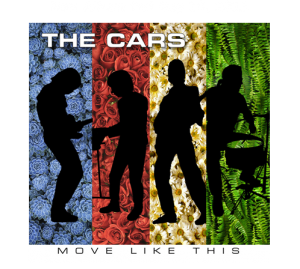
Legendary act The Cars has released a new album and if you are eager to listen in, check out the link below:
CoS recently made an interview with The Cars, the following is an excerpt: A day that many of us thought would never come is almost here: a new Cars album. On May 10th, their first record in 24 years revs its engines and peels onto the speedway. Synth-rock lovers rejoice. Move Like This is not just the return of the band, but the return of drummer, David Robinson, to the music scene altogether. After all this time, the band’s surprise reunion has pulled Robinson out of blissful retirement and once again into the madcap world of rock ‘n’ roll – a world that’s undergone a series of changes.
In the weeks before the album’s release, Consequence of Sound‘s Cap Blackard had a chance to speak with Robinson about his return to the sticks, continuing on without bassist and vocalist Benjamin Orr, what brought the band together after all these years, and the alien world of the modern recording studio.
In the weeks leading up to the album’s release, what’s life been like?
We’re getting ready to tour and I haven’t played drums since 1987. So what we’re doing is relearning everything and I’m practicing to relearn how to play, basically. Also, we are doing a lot of stuff electronically; we aren’t going to use a bass player, so we have to program either bass parts or keyboard parts to play on stage and that requires click tracks that I play along with and percussion tracks and stuff like that. So, it’s a lot of work.
DATAMASKIN

