
Listening in on the SCI Pro-One
Vintage synthesizer demo track featuring the Pro-One
all sounds: SCI Pro-One Analog Synthesizer (1981)
drums: LinnDrum (1982)
recording: multi-track without Midi
The Sequential Pro One is a wicked little monosynth! It comes from the same period and genre as the Roland SH-101 and Moog Prodigy. The Pro One was basically Sequential’s attempt at taking their legendary Prophet 5 poly-synth and packing it into a compact, inexpensive, monophonic analog synth! It has two VCOs, a great 4-pole lowpass filter, two ADSR envelopes (one for filter), and a compact three-octave keyboard. With a Pro-One, you can easily create punchy analog bass-lines and leads or quirky analog synth effects.
The Pro One is an extremely flexible synth with lots of modulation possibilities (ie: the filter, VCO B and LFO can modulate VCO A or B frequencies or pulse widths, or the VCF). There’s also an onboard sequencer, something common on many Sequential synths but not often found on other monosynths of the time. It is very basic, however, storing only two patterns and up to 40 notes max. Also, only pitch info is recorded (and in step time only); you can not assign a note duration to any notes. So it’s basically a short melodic sketch-pad…but useful. Also onboard is an arpeggiator which has UP and UP/DOWN patterns.
EQu for Spotify – first quality equalizer for Spotify
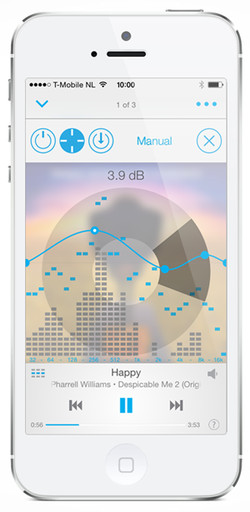
elephantcandy has announced the release of EQu for Spotify, the first quality equalizer for Spotify.
In 2010, audio software company Elephantcandy introduced audio equalizing for iPhone. With the EQu app, Elephantcandy created the famous equalizing curve that has become the standard in audio equalizing apps ever since. Now we take it to the next level with EQu for Spotify.
EQu for Spotify features
- Pounding bass and crispy highs — Equalizing is the key to get the perfect sound from your system. EQu for Spotify is the first iPhone app that allows premium Spotify users to equalize their Spotify music. Subtly adjusting the spectral balance makes it possible to optimize audio to your speakers, headphones and acoustic environment. Top-notch technology wrapped up in a user-friendly interface.
- FFT Equalizing — Whereas conventional equalizers allow you to amplify or attenuate predefined bands, Elephantcandy’s equalizer makes it possible to design an extremely precise and smooth frequency response by directly manipulating more than 1.000 discrete bands. EQu’s linear phase design also preserves all of the music’s fidelity and introduces no spatial distortion.
- Extra options — The standard version of EQu for Spotify is free. In-app purchases allow for more presets and offer a full version of the app, including extra precise tuning and the option to make and save personal presets.
EQu for Spotify is now available in the AppStore as a free download. The full version is available as an in-app purchase for $2.99 USD, and a presets pack is $0.99 USD.
Cold Specks – Absisto (Mute Records)
‘Absisto’ is taken from Cold Specks’ forthcoming album ‘Neuroplasticity’ – out on Mute on 25/26 August.
Pre-Order ‘Neuroplasticity’ here: iTunes: smarturl.it/NeuroPiTunes
CD: smarturl.it/NPCD
LP: smarturl.it/NPLP
Filmed on location in Canada, directed by Ian Pons Jewell.
Cold Specks online:
Website: coldspecks.com/
Facebook: facebook.com/ColdSpecks
Twitter: twitter.com/coldspecks
Youtube: youtube.com/user/ColdSpecks
Instagram: instagram.com/coldspecksofficial
Soundcloud: soundcloud.com/coldspecks
Roland TR-909 vs Korg-EMX “Spirits “
Roland TR-909 Roland vs Korg Electribe “Spirits”; live electronic music jam with drum machines.
Ninety – Rack Extension software emulation of a legendary 1970s phaser
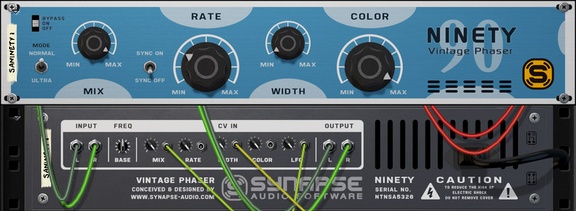
Synapse Audio has announced the release of Ninety, a Rack Extension software emulation of a legendary 1970s phaser.
What makes this phaser unique is the feedback path, which gives the sound a very distinctive character, unlike any other analog phaser. Our emulation employs a zero-delay feedback network, a technique popularized by recent synthesizers, and particularly well suited to emulate analog feedback loops.
The original unit is a mono-in mono-out device with only a Rate knob and a Color switch. The Ninety phaser adds stereo processing, a stereo LFO with adjustable spread and a dry/wet control. The color switch is replaced with a knob for increased versatility. The “Ultra” switch upgrades the network to a 6-stage phaser, allowing to create entirely new sounds not possible with the vintage original.
Ninety for Reason is available for purchase for 35 EUR.
Dave Smith Instruments has introduced the Pro 2 mono synth
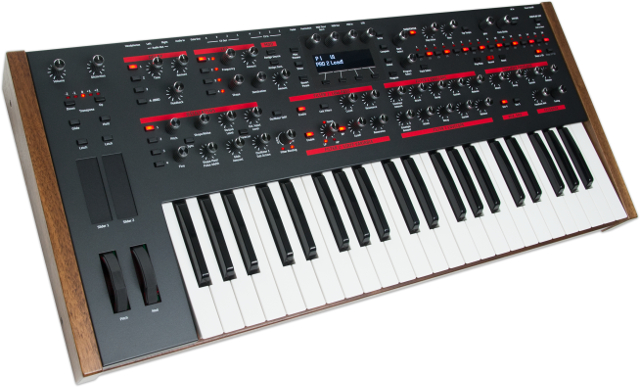
Dave Smith Instruments has introduced the Pro 2, an all-new, feature-rich monophonic synthesizer. “We really raised the bar with this one,” said Smith. “As synth geeks, we asked ourselves what our ultimate mono synth would be. Then we built it.”
A hybrid instrument, the Pro 2 features four digital oscillators (plus sub-oscillator) with superwaves and newly-designed, dual analog filters inspired by classic designs. The filters (one low-pass and one state-variable) can be run in series or parallel, with the state-variable filter providing low-pass, notch, high-pass, and band-pass modes. Oscillators can be routed in pairs to either filter for a variety of tonal possibilities. “Our new analog filter design gives the Pro 2 a depth and presence that’s immediately recognizable,” said Smith. “It has a sound all its own—distinctly different from our other instruments such as the Prophet 12.”
The full-featured multitrack step sequencer operates in 32 x 8, or 16 x 16 mode and allows real-time input. It can sync to external MIDI clock and can also be driven by an external audio input. Sequences can control not only oscillator pitch, but any parameter in the Pro 2’s extensive modulation matrix. It supports both rests and variable-length sequences.
Another notable feature of the Pro 2 is its 4 rear-panel control voltage inputs and outputs, which make it compatible with modular synths. The control voltages can be assigned and routed from within the modulation matrix and can run at audio rates for extreme modulation effects. “A primary goal was to make the Pro 2 as open-ended and flexible as possible,” said Smith. “The four control voltage ins and outs really open up a world of interfacing possibilities with other gear. You could almost call the Pro 2 our own mini-modular.”
Smith says that the surprises don’t end there: “A very cool bonus features is that even though we designed it primarily as a very powerful mono synth, it’s actually 4-voice paraphonic—you can play 4 notes simultaneously, if you want to. Add in the super saws, and you’ve got a very big sound.” In paraphonic operation, the 4 individual voices share a common filter and envelopes. Paraphony has gained popularity in recent years and was found in such vintage instruments as the ARP 2600 and ARP Odyssey, which were duophonic.
The feature set of the Pro 2 is rounded out with a multimode arpeggiator; 4 stereo, multi-tap delays with analog modeling; 4 LFOs; tuned feedback; analog distortion; Character controls with sound sculpting options such as Drive, Hack, Decimation, Girth, and Air; and extensive modulation possibilities. The LFOs, delay, and arpeggiator can be synced to either the internal clock or an external MIDI clock. Two programmable position- and pressure-sensitive touch sliders and pitch and mod wheels provide nuanced control over live performance.
“Right now there’s a trend of reissuing classic synths from the past. People have been asking for a reissue of the old Sequential Pro-One for quite a while. But as a synth designer, I’m happiest creating new instruments—synths that with every iteration put more power and better sounds into the hands of musicians. The Pro 2 is light years beyond the Pro-One in every way. It’s the most powerful mono synth I’ve ever made. You’ve got to keep moving forward.”
The Pro 2 will be available late July of 2014 with a US MAP of $1,999
Preview of Chip64 Rack Extension
Chip64 is a new synth Rack Extension for Reason. Chip64 emulates audio chip synthesis from early video game systems. This is a preview video. If you’d like to beta test, send an email to reinfo@ochenk.com with your Propellerhead ID.
New video from electro act SOLDOUT – To the Ocean
Brussels electronic duo Soldout releases a new video for their single “To the ocean”. “To the Ocean” is the second single taken from the soundtrack written by Soldout for the motion picture “Puppylove “(2014), and follows “More”, their previous album released in 2013.
Intro To Modular Synthesis
An introduction to modular synthesis by Youtube alias Somaaa.
In this video I go over various types and brands of modules and demonstrate how to connects them all together to create sounds. I demonstrate this using my Eurorack synthesizer.
I use brands like Doepfer, Analog Solutions, Pittsburg Modular and TipTop
Dave Smith teases us with new picture of their upcoming machine
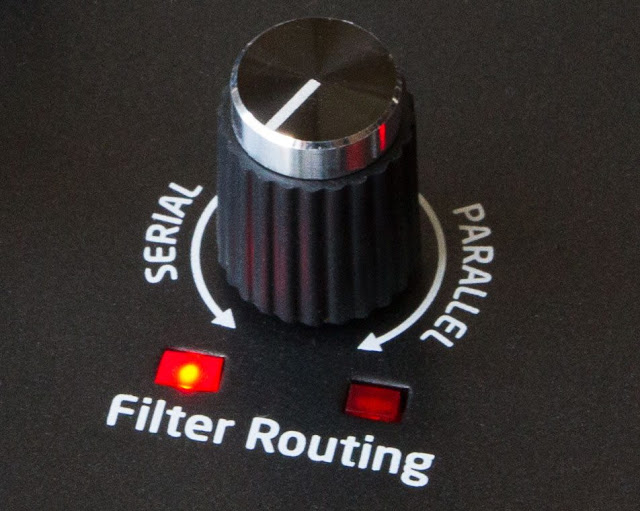
DSI picture text:
The big announcement is coming soon! Here’s one more photo to hold you over.
DATAMASKIN

