
Time machine: Sequential Circuits Pro-One
Vintage synthesizer demo track by RetroSound
“N°1”
all sounds: Sequential Circuits Pro-One Analog Synthesizer from the year 1981
drums: Roland TR-808 synced with the Pro-One Arpeggiator
recording: multi-track without midi
fx: a little bit delay and reverb
for me one of the best monophonic analog synths ever. perfect for basslines and fx sounds.
more info: http://www.retrosound.de
The Pro One was basically Sequential’s attempt at taking their legendary Prophet 5 poly-synth and packing it into a compact, inexpensive, monophonic analog synth! It has two VCOs, a great 4-pole lowpass filter, two ADSR envelopes (one for filter), and a compact three-octave keyboard. With a Pro-One, you can easily create punchy analog bass-lines and leads or quirky analog synth effects.
The Pro One is an extremely flexible synth with lots of modulation possibilities (ie: the filter, VCO B and LFO can modulate VCO A or B frequencies or pulse widths, or the VCF). There’s also an onboard sequencer, something common on many Sequential synths but not often found on other monosynths of the time. It is very basic, however, storing only two patterns and up to 40 notes max. Also, only pitch info is recorded (and in step time only); you can not assign a note duration to any notes. So it’s basically a short melodic sketch-pad…but useful. Also onboard is an arpeggiator which has UP and UP/DOWN patterns.
Analog synths reborn

Now when Moog and Korg have announced their new affordable all analog synthesizers with more or less vintage flavor I’m still avaiting someone to do a remake the ARP Odyssey and the ARP 2600.
Free vintage VST rhythm machine – RHYTHMUS
RHYTHMUS by ELECTROSTUDIO
A free vst plugin that is an emulations or inspired by of vintage classic rhythm machine and drum machines
for more information visit
http://www.elektrostudio.ovh.org/
http://www.elektrostudio.ovh.org/index2.php
Rhythmus is inspired by an old rhythm machine. There are ten buttons available, each button can play two different rhythm sections so essentially there are about 20 different rhythmic loops offered, such as samba, mambo, tango, waltz, rumba etc. When you click “open”, you can change the tune, volume, pan of each rhythm component such as snare, bongo, cowbell, hi-hat, etc. You can mix these rhythmic sections with Tambourine, Guiro, Quijada sounds.
New vintage electro theremin for iPad

Vintage Electro–Theremin, Onassis Martino style synth.
This app captures the magic of early classic slider controlled synthesisers such as the Ondes-Martenot (1928) Trautonium (1929) and Tannerin/electro-theremin (1950s)
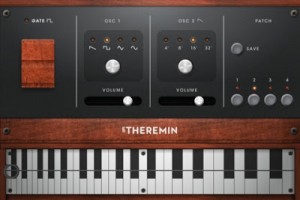
The E Theremin has three oscillators that generate a rich fat analogue tone, with a choice of 4 waveforms (saw, square, triangle and sine) octave shift and amp control. The E Theremin can achieve portamento, vibrato and quarter-tones with precise control. 4 presets allow you to store your sounds and jump quickly between them during performance.
– Ideal for professionals looking for an alternative to the keyboard controlled synth.
– Great for anyone interested in synthesizers, particularly early analogue.
In 1928 Maurice Martenot created one of the first electronic musical instruments, entitled; the Ondes-Martenot, the prerunner to the theremin, similar in sound but with a very different type of user interaction, an inspiring slider on a cord was used. Later in the 1950s Paul Tanner invented the Tannerin a.k.a. Electro Theremin. The Tannerin used the same slider controls as the Ondes-Martenot to control pitch. The Tannerin went on to play a large role in records such as The Beach Boys “Good Vibrations”.
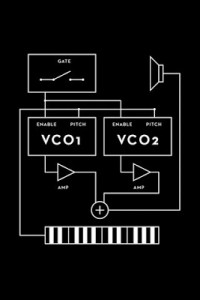
Summarized Features
- Three oscillators (osc2 unison)
- 4 waveforms
- 3 octave slide control
- Fat analogue sound
- Jump between 4 user presets
- Classic slider pitch control
- Retina GUI
Grab it before it goes up to regular price!
Roland VP-330 Vocoder Plus – “Vocode Me”
One of the coolest instruments out there. The vocoder shapes its envelope and filters by any sound source fed into it, your voice or even a drum loop can be used which is then applied to another sound source, typically a synth pad. This creates a very unique and famous robot-like sound.
Aside from the 10-band vocoder, the VP-330 added a string synth section, choir and a human-voice sound, both of which are quite excellent themselves. Its 3 sound sections offer a few different presets that can be slightly edited with de-tuning and vibrato. The VP-330 is one of the best Vocoder synths ever and although there are many other types of Vocoders, none sound as good as this!
Vintage keyboard demo track by RetroSound
“Vocode Me”
vocoder, human voice sounds & analog strings: Roland VP-330 Vocoder Plus Mk 2 from the year 1979
digital drums: Yamaha DD-50
recording: multi-track without midi
fx: a little bit delay and reverb
more info: http://www.retrosound.de
Vintage synths: Akai AX73 and Crumar Bit One / Bit 99 Sound demos
Akai AX73 Sounddemo (ohne externe Effekte)
Copyrights Volker Hein – 2013
Weitere Infos unter www.tastronauten.de
Crumar Bit One / Bit 99 Sounddemo (ohne externe Effekte)
Copyrights Volker Hein – 2012
Weitere Infos unter www.tastronauten.de
The Yamaha CS-50 – The Oscillator
Here is part 1 of a series of demonstrative videos regarding the Yamhaha CS-50. This is a demonstration of the oscillator section of the Yamaha CS-50.
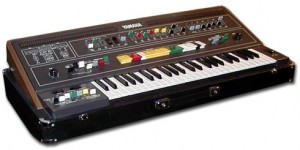
The CS-50 was released just one year before its famous big brothers, the CS-60 and CS-80. The CS-50 looks like a scaled-down version of the monstrous CS-80, and it is! This will benefit those who crave the famous classic Yamaha synth sound without the struggle of lugging around the 215 pound CS-80! The CS-50 weighs in at about 100 pounds. The CS-50 is also just 4-voice polyphonic, and lacks the quality weighted 61-note keyboard of the CS-80. The CS-50 has just a 49-note standard keyboard. It does feature pressure (aftertouch) sensitivity route-able to several destinations, however.
The CS-50’s sound is unmistakably related to other classic CS-series synthesizers. At just four voices with one osc. per voice and lacking warm filters (at just 12dB/oct) the CS-50’s sound can be thin. There are 13 preset sounds of various instruments and synth sounds but, unfortunately, no on-board memory storage for your edited presets. At its low street price, the CS-50 makes a great way to get your hands on these classic sounds without going broke! It’s too bad their tuning is just as unstable as the other CS-series synths. It’s housed in a built-in travel-case like the other (big) CS-synths.
Time machine – Exploring the Moog Taurus 1
A voyage into the heart of the Moog Taurus 1 bass pedal from the year 1976.
Exploration by Marko Ettlich (RetroSound)
analog bass pedal
2 VCOs, VCF, VCA
three basic preset sounds: Taurus, Bass, Tuba + Variable Sound
used by Genesis, The Police, Pink Floyd, Marillion, Saga, Jarre, Yes and many more
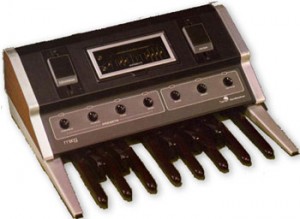
Inspired by organ pedal boards, Moog released the Taurus Pedal Synthesizer – a monophonic analog bass synthesizer you play with your feet (so you can play other instruments with your hands). Originally, the Taurus was going to be part of a larger ensemble system called the Constellation. It was to include two keyboard synthesizers, the Apollo (polyphonic) and the Lyra (monophonic), and the Taurus foot pedalboard synthesizer. The Constellation project never made it to production, but the Taurus was released on its own, while the Apollo keyboard went on to evolve in to the Polymoog.
The Taurus has three Preset sounds and one User programmable. The three preset sounds are Bass, Tuba and Taurus. Most users prefer the Variable preset which lets them synthesize their own sounds using the simple VCO, VCF and VCA controls. The shaping controls are hidden behind a plastic window to prevent accidental foot tweaking.
The Taurus is monophonic, with sound generation coming from a simple two-oscillator design that can be tuned across a 5-octave range. An Octave button lets you shift the pedal keyboard up or down an octave, the direction must be set using the Octave switch in the Variables section. There’s also a Glide (portamento) effect and a Decay effect. The amount of Glide and Decay are also set in the Variables section. Like any Moog, there is a 24 dB/oct lowpass filter with controls for Emphasis, Contour Amount/Attack/Decay and Cut-Off. Two gigantic foot-sliders flank the sides of the Taurus and they are used to adjust the Filter cut-off and VCA Loudness on the fly using your feet.
Sound of Science: The Great Vintage Synth Unpacking
Here’s Tom, one half of Sound of Science (soundofscience.org) unpacking some of the tools of the trade — all of which made their transatlantic journey without incident!
Synths for Studio A!
Gotta watch those peanuts…
ARP 2600
EML 200
EML 101
Studio Electronics MidiMii
Future Retro 777 modifications
This video shows off a few modifications to a FR-777 bass synth, performed by Jered at FR some 15 years ago. Shown are the Oscillator sync, Endless-drone, and LFO-to-cutoff mods, plus variations.
“Around 2:20, when I say “Envelope”, please substitute “LFO!”
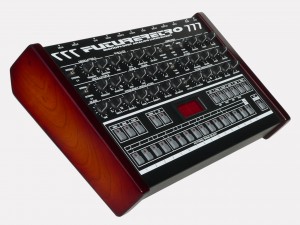
The Future Retro 777 is a monophonic analog synthesizer with a digital sequencer. The 777 is a sleek retro design that has realized the full potential of the monophonic pattern based synth. It’s not just another TB-303 emulator. It uses analog circuitry and has a lot of hands-on knobs for instant sound tweaking. And while the 777 has extensive editing and modulation abilities, the layout is as basic and intuitive as an old SH-101 or MC-202!
The 777 functions quite well as either a standalone bass sequencer or as a sound module in a MIDI environment. Two oscillators (A / B) produce a fat bass sound. Modulation abilities are quite complex, the oscillators themselves can modulate each other for example. The filter is very nice with switchable 3 or 7 pole slopes as well as other sound shaping controls for a wide range of tones. An external sound can be routed through the filter too. The sequencer, OSC B and the decay envelope can also modulate the filter cutoff. The 777 also employs a smart accent effect for that extra bit o’ kick in your bassline.
As a sequencer the 777 shines once again. Bear in mind that this sequencer accommodates a monophonic (single tone) instrument which normally has very basic sequencing needs. Notes are entered using the pseudo-keyboard buttons. Programming is different than other synth / grooveboxes of similar function but is relatively easy to master. Up to 256 patterns can be linked to form up to 16 songs all of which remain in memory. And of course all real-time editing can be recorded into your sequence and are also MIDI controllable. Final goodies include an internal MIDI to CV-gate converter, glide or portamento effects, distortion, chorus and phase effects and more!
DATAMASKIN

