
MusikMesse 2012 – Closer look at the new Roland Jupiter 50 and 80
Roland Jupiter-50 official information
With its unprecedented fusion of synthesis and acoustic instruments, the new-generation Roland JUPITER has changed the way we play, react to, andfeela keyboard. By combining the supreme expression of the JUPITER-80 with the portability of the JUNO series, the new JUPITER-50 brings SuperNATURAL sound and pro performance to every stage and studio.
- Stunning SuperNATURAL sounds powered by Roland’s most advanced sound engine
- Portable design, 76-note weighted keyboard
- Fast, friendly user interface with intuitive colour-coded buttons and sliders
- Registration function for saving and selecting sounds instantly
- Pro-quality multi-effects and high-quality reverb
- Expressive performance controllers, including D-Beam, pitch/mod lever, and control input jacks
- USB Song Player/Recorder
- USB audio/MIDI functionality; bundled with SONAR LE and JUPITER-50 Control Surface plug-in for SONAR
Alesis 4Ch iPad Record IOMix
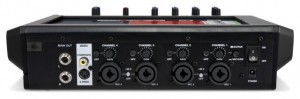
Alesis IOMIX – a new four channel audio dock interface Capable of recording up to four channels of audio into your iPad simultaneously – assuming that you can find the software for it.
Sara Yule takes us through.
More Information
CASIO XW-P1 – Directly from the MusikMesse 2012
CASIO XW-P1 Musik Messe 2012 by Rock oN Report
The XW-P1 is a synthesizer particularly designed for creating sounds and playing expressively in live performances. This model features 620 preset tones, including Solo Synthesizer presets that reproduce vintage analog synthesizer sounds, Hex Layer ensemble sounds that comprise as many as six tones, and Drawbar Organ presets that can be controlled using nine sliders functioning as drawbars. A wide array of sounds can be created using the preset tones and a wide range of internal waves. Moreover, the XW-P1 is loaded with various functions to give discerning performers more power of expression, including the Performance function that allows performance setups to be independently assigned for up to four designated keyboard zones.
Interview with Front 242’s Daniel B on synths and the new Nothing But Noise project
Steelberry Clones got an exclusive interview with Daniel B (Daniel Bressanutti) from Front 242. Daniel B talks passionately about analog synthesizers, the future of Front 242 and his latest project – Nothing But Noise, with a scheduled album release on April 16th. Front 242 hardly needs any major introduction, for 30 years they have been shaping, defining and exploring the genre that later became the foundation for electronic body music (EBM). Several bands have followed in their footsteps since then. Front 242 started in 1981 in Aarschot, near Brussels, Belgium, by Daniel and Dirk Bergen, who wanted to create music and graphic design using emerging electronic tools. The first single, “Principles”, was released in 1981. The front part of the name comes from the idea of an organized popular uprising. Patrick Codenys and Jean-Luc De Meyer had separately formed a group called Under Viewer at about the same time, and the two duos joined together in 1982. Bressanutti, Codenys and De Meyer took turns on vocals at first, until they settled on De Meyer as the lead vocalist. De Meyer came to write most of the lyrics and Valerie Jane Steele also wrote several tracks including “Don’t Crash”. They decided not to use the regular waveform settings on their synthesizers, arguing that creating the waveform for each note was part of the creative process.
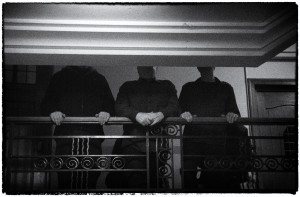
Dirk Bergen early on left the band to pursue other things, but Daniel tells us that they have remained friends for all of these years, and when the opportunity came up last year they decided to get back in the studio together with Erwin Jadot (a mutual friend) to bring us this new project called Nothing But Noise (NBN). The new NBN album that will be released on April 16th brings us a very different sound, then we are used to listening to Front 242. NBN, apart from being done entirely by machines, has very little in coming with Front 242 – it is a very complex sounding album with strong ambient influences, basically all instrumental and perhaps most importantly no drums. Daniel B tells us that this was a clear intent from the beginning – to do a full synthetic album with no drums in sight. Steelberry Clones has pre-listened to the entire album and we must say that it is an impressive sonic experience to listen to all these analog synths pushed into a dark ambient world – a cinematic experience. You can pre-listen to a couple of samples below on the NBN SoundCloud player below:
The members of Front 242 were heroes in the electronic underground scene all through the 80s and 90s, and have continued to record and tour to the present day. The band members has come and gone over the years but they all have one thing in common and that is their love for side-projects – all current members of Front 242 sport multiple side-projects spanning DJing, bands and film. Daniel B has produced a range of extra-curricular work over the years, including ‘Male or Female’ and ‘Speed Tribe’, a DVD and audio release based around the 2001 Le Mans motor race. Nothing But Noise, together with Dirk and Erwin, is Daniel’s latest and most anti-242 project and of course we here at Steelberry Clones needed to know more about this.
Can you tell us a little about the theme of the new NBN album
“For us it was like a new beginning, and although it had been a long time since we stopped working together, we always had in the plans that at one point in time we should do something together. So when the opportunity came we basically did not have any specific plans for the new album – we merely did for ourselves, not something revolutionary, but something we both liked.”
However, somewhere in the back of our heads we had two objectives; first we wanted to kind of explore where the music we all listened to when we were young (Tangerine Dreams, Krautrock, Kraftwerk, Stockhausen etc) would have been today if these acts had continued to produce material all the way to where we stand today. Secondly, we wanted to take on the challenge of not using any drums at all, especially considering our Front 242 background. “I would say that the only real parallel to Front 242 is the sole use of machines.”.
You have all been engaged in several side projects, along side Front 242, has this been a way to keep the creativity up
Not in relation to Front 242, I would say. Front 242 is actually more of a certain formula – you know what it is supposed to sound like, and in fact most of our fans (and the longer we keep going) want us to sound the same. At least speaking for myself – Front 242 is not my whole life. It’s the same thing with a guitar player who at points in time also wants to play the piano – there are so many things to explore, but of course all the things you do outside of Front 242 will influence the work in the band – cross-pollination in a sense. The “Male and Female” album has definitely influenced my way of making music and in general it is easier to be creative in a new format, like Nothing But Noise, to explore new things.
The announced break with Front 242, was that because of Nothing But Noise, or something else
“As you know we (Front 242) do not make any records anymore – so I have plenty of time to focus on other projects.” Front 242 still have some booked concerts that we will do, especially in countries where we have not toured a lot, so we will still do occasional shows going forward, and for how long depends a lot on inspiration. When it comes to Nothing But Noise it is easy to say that we have the time and music is our lives 
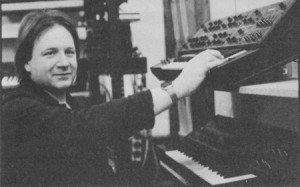
Was it hard to start working again with Dirk after all these years – did you have a plan on what you wanted to accomplish
“We talked about it a lot and we did not have a master plan what we wanted to do.”
Native Instruments REAKTOR’s Resochord – Part 1 – Intro & Overview
Embargo lifted: The Facebook-exclusive “Introduction to Resochord” is now available on YouTube! A glorious effects unit for NI REAKTOR, Resochord allows you to imprint harmonies onto any signal you feed into it. Let’s get rolling with an introduction and overview…
the evosizer – sound examples
Sit back and listen to some of the most interesting new sound examples of the evosizer, the synthesizer especially designed for the evo and its magic keys. In this video we will give you a short introduction followed by some sound examples. Basiclly it’s all about what the evosizer sounds like and how an evo affects your way of making music with the keys. For more information check out other Videos about the evosizer or just take a look at endeavour.de
Play Hatsune Miku Songs Live! With The Yamaha Vocaloid Keyboard
Play Hatsune Miku Songs Live! With The Yamaha Vocaloid Keyboard
The keyboard is made possible by the relative simplicity of Japanese phonology, with only fifty or so possible syllables in the language altogether. Syllables are selected by simultaneously pressing a Roman alphabet key with a D-pad-shape modifier for one of the five Japanese vowels — so, for example the “K” key with an “A” directional press would result in a “KA” consonant. This is all done with the left hand, with the right hand controlling each syllable’s pitch via a standard keyboard layout, and there’s an LED display to confirm character input. The interface seems simple and logical for Japanese speakers, though it will take some practice to get right — Yamaha says that several players so far have been able to play nursery rhymes after around three hours with the device.
DigInfo TV – http://diginfo.tv
17/3/2012 interaction 2012
Yamaha
VOCALOID Keyboard
The keyboard is still in development with no solid plans for a commercial release, and the prototype still looks pretty rough from a design standpoint. The company says it’s more likely that it would provide the sound chip inside for other companies to use in their own hardware. However, if a product ever sees the light of day it could well be the next step along the way to Vocaloid domination of J-pop.
Studio Electronics presents: Boomstar – Four New Analog Synths

“This new blazing brainchild of STUDIO ELECTRONICS represents the design collective ethos of circuit and software “Saseong” Tim Caswell, tactile layout and lead feature specialist Greg St. Regis, graphic and sound consultant Marc St. Regis, art design wizard of vector truth, John Greczula, cool-headed concept leader Geoff Farr and our relentless and wise feature and functionality consultant and “Whip”, Drew Neumann.” – studioelectronics.com
Studio Electronics today introduced the Boomstar family of synthesizers – four new analog synths, each priced at $799.
The four synths share a common 2-oscillator analog synth architecture. The synth is offered, though, with four different filter types:
- 4075-classic Arp 2600
- 5089-classic Moog 24db ladder
- SEM-classic Oberheim 12db
- 303-classic Roland TB.
Musikmesse 2012: Roland Jupiter 50 Synthesizer
Roland demonstrate their new Jupiter 50 Synthesizer at Musikmesse 2012.
As was announced yesterday – here’s a video of the Jupiter 50 in action
iO Mix – 4-Channel Mixer/Recorder for iPad
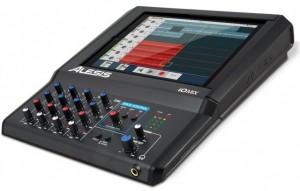
Alesis has introduced the iO Mix4-Channel Mixer/Recorder for iPad.
The Alesis iO Mix lets you mix and record four channels of audio directly into GarageBand or other compatible Core Audio apps, turning the iPad into a multitouch portable studio.
Features:
- The world’s first mixer/multi-channel interface for iPad
- Mix and record up to four channels, or a stereo mix into your iPad
- Works with mics, instruments, speakers, headphones, video monitors and projectors
- Four combo XLR-1/4? input channels, each with trim, channel gain, pan, and low & high EQ
- Switchable 48V phantom power for use with studio condenser microphones
- Guitar-direct (DI) switch for guitar recording without an amp
- Balanced, stereo 1/4? outputs and 1/4? headphone output with separate volume controls
- Direct Monitor switch for latency-free input monitoring while recording
- Switchable limiter for clip-free recordings
- Hinged door completely encloses and secures your iPad
- Core Audio-compliant: works with virtually any app in the App Store
- Video output for connection to TVs and projectors: perfect for presentations, meetings and VJs
- Mountable to a mic stand using the Alesis Module Mount (sold separately)
- Complete routing and signal-management controls
- Power supply also charges your iPad
iO Mix allows you to connect microphones, instruments, speakers, headphones and more to your iPad.
While it looks like an interesting option for people wanting to record straight to an iPad, others may miss support for MIDI and digital video connections.
Pricing and availability are TBA.
DATAMASKIN

