
In a Dublin taxi with Eskil Simonsson (Covenant)
Neuweltmusic talked to Eskil Simonsson from Covenant in a taxi, Dublin. September 3rd, 2011.
Shot & cut by Dani Kammler (http://www.neuweltmusic.com)
Special thanks to Fiona (Ministry of Agroculture Promotions Ireland)
Erasure: Interview with Vince and Andy
Find the videos here
What does the future sound like? – An exclusive interview with Andy McCluskey of OMD
Time for yet another synth-pop pioneer to enter the front stage, here at Stereoklang. I had the pleasure to talk to none other then Andy McCluskey, 50% of the legendary act Orchestral Manoeuvres in the Dark, OMD for short. Few other acts have had such an influential role in the development of the electronic pop music scene, with classic hits like Maid of Orleans, Enola Gay, Messages to name but a few. I wanted to ask Andy all about OMDs re-emergence on the music scene, their work in the studio, past and present, and of course their most recent album “History of Modern”.
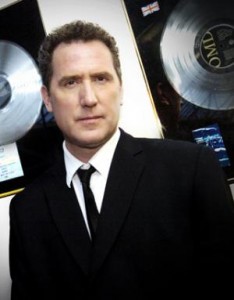
Looking back
For those growing up in the late 70’s and 80’s, OMD was as well-known to “synthpoppers” as any of the other leading acts at that time, i.e. Kraftwerk, Depeche Mode, Tears for Fears, Gary Numan, Yazoo to name but a few. I asked Andy how it all started. He lets us know that he and Paul started composing music when they were about 16, basically making music with what they had at hand (consider this was mid 1970s really primitive in other words). Andy was asked to join the band that Paul was involved in, but pretty quickly realized that they had much more in common and decided to go on their own. So in the very early days, what was later to become OMD, it all started as a pure hobby. Back in Liverpool it is easy to picture two young guys at home listening to Kraftwerk and dreaming of success. It was also in Liverpool that their first real gig came about, at a club called Eric’s. It was also at Eric’s that they saw other bands that were thinking along the same lines, like The Normal (featuring Daniel Miller) that made Andy and Paul realize that what they were doing had relevance on the music scene.
Steelberry Clones – “where did the band name come from?” Andy – “we were assigned to do a one off event and we really wanted to come up with the most preposterous name they could ever think of – Orchestral Manoeuvres in the Dark – having absolutely know meaning whatsoever”. “There were no master plan!”.
Biggest milestone
With a career covering decades I certainly thought that Andy would think of any of their great concerts or when any of their now legendary albums like the poetic “Architecture and Morality”, ecstatic “Junk Culture” or “Dazzle Ships” hit the shelves, selling millions of copies, being the obvious choice. But no, Andy tells me that the biggest milestone for him was when he, in his own hands, was holding their first ever 7” vinyl single “Electricity”. “This was a record by Paul and I!”, Andy says. This must truly have been a magic moment, as a any teenager at that time with a passion for music would browse through the import boxes in your local record shop as a weaken treat, finding rare issues of cool acts, imagine then to find your own piece of work.
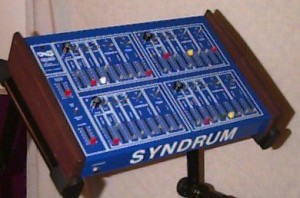
With the single in hand, gigs started to come and OMD played as warm up act to Joy Division. Then Gary Numan, who had just bought their single Electricity asked if they would like to perform with him. The following year OMD themselves were the main attraction. Andy also remembers that this was also the first time, when performing with Joy Division, that they saw a real Pollard Syndrum in live action. The Pollard Syndrum was one of the first electronic drums and was capable of many different sounds. The sound favored by most recording artists was a sine wave that pitch-bends down, most famously heard at the beginning of “Good Times Roll”, the opening track of the Cars’ 1978 debut album.
History of Modern
“History of Modern” represents a highly anticipated come back from one of the most influential electronic pop acts to date. Skeptics were questioning if they could re-invent themselves and why are they doing a retro-flirt. I kindly asked Andy about the retro-flirt and although Andy was not so keen on the term retro in relation to the new album he admits that if going back to your roots and re-discover that unique and distinctive OMD sound, ”then yes let us call it retro”. For Paul and Andy it was really important to get that “voice” of OMD back, that sound they left behind. “We spoke with our own authentic sound”, Andy says.
Starting to work on the new album it was important to OMD that it shouldn’t be a copy; they needed to have new and fresh ideas. According to Andy “there are too many bands of our generation that do not have anything more to say.”
Read the full interview here >>
Exclusive interview on its way – guess who?
Any day sooooon we will publish a new great interview with a leading synth pioneer, can you guess who?
Clue?
Hmmmm, they work by the mantra “What will the future sound like?”
Leave your guesses in the comments section 

BTW This is a KORG Micro Presets…..
Artist Interview: Kirsten Price talks about Reason
Here’s a new video from the Propellehead’s:
Her latest album title, Brixton to Brooklyn, is both a catchy alliteration but also a succinct bio on Producer/Songwriter Kirsten Price. Originally from London, Price has since made Brooklyn her home and her music reflects the eclectic blending of those transatlantic influences.
We met up with Kirsten Price at a studio in Los Angeles to check out one of her recent projects.
More info on Kirsten Price can be found here:
www.kirstenprice.com
More info on Reason is available at our website:
www.propellerheads.se
Take 5 interview with Diego Stocco, Composer
Background information:
Take 5 is a video web series published exclusively on the FIDMDigitalArts.com Blog by FIDM/Fashion Institute of Design & Merchandising at www.blog.fidmdigitalarts.com.
Take five on Take 5 to get inspired, to get motivated, to get inside the minds of creative professionals. Join FIDMDigitalArts.com as we take five minutes to interview film directors, graphic artists, composers, illustrators, 3-D modelers, creative directors, motion graphics designers, photographers and other intriguing industry pros. Learn what makes the creative pros “tick” on Take 5.
In the video above, meet composer/sound designer, Diego Stocco, who uses cutting-edge techniques and unorthodox instruments to develop music and sound for film, television, trailers and video performances.
For more episodes of Take 5, visit http://blog.fidmdigitalarts.com/take-5-video-channel
Moog talks synthesizers with Geoff Downes
Moog caught up with Geoff Downes during his 2011 tour with Yes to talk about synths and his ever-changing stage rig. Geoff Downes is the legendary keyboardist for Asia and the Buggles, and also holds the unofficial record for most keyboards on stage at a whopping 28.

Exclusive interview – Alan Wilder (ex-Depeche Mode/Recoil) talks on synths, music creation and his upcoming auction
Steelberry Clones got a talk with none other than the synth legend Alan Wilder (ex-member of Depeche Mode and now front man of the electro/synth experimental act Recoil). Few can match the track record of Alan Wilder and few have had such an impact on the synth scene for the past 30 years, or so. Alan Wilder´s Recoil continues this tradition into the 21st century exploring the boundaries of electronic music, and since Alan now is in full preparation of delivering probably the world´s biggest Depeche Mode memorabilia auction at the Zion Arts Centre, we simply had to pose some questions to him regarding his music creation legacy, gear and plans moving forward.
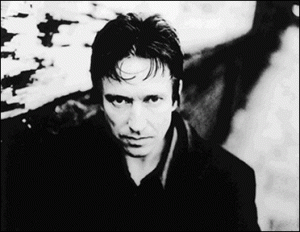
“Collected” is the name of Alan’s big auction on Saturday 3rd September, for detailed information on how to join please follow this link:
So in just a few weeks time, over 400 lots will go under the hammer as Alan Wilder sells a large selection of musical / studio equipment and memorabilia at auction. Many items are very collectable and hold special value having been used extensively in the recording sessions for classic Depeche Mode and Recoil albums, as well as live performances on the ‘Black Celebration’, ‘Music For The Masses’, ‘World Violation’ and ‘Devotional’ tours.
http://youtu.be/EHejxJ1KPxk
But for most synth/electro fans this is truly not just any ordinary auction, but a clear reason why we needed to pose some questions to Alan about the auction in general and about his music making legacy in particular.
Why are you running this auction? is it for charity, or something else?
It’s for the charity of Alan Wilder unfortunately. Let’s be honest, divorce is an ugly thing and the record business has been in crisis for some time now. I’m not over sentimental about retaining every little detail of my musical history. In fact I still have a large collection of essential items, all the releases I have played on, many photographs and unique personal things. But really, I need more space (and peace) in my life and this goes part of the way to achieving that. Indeed I found it an evocative and cathartic experience to sift through all the collectables – the actual sorting and cataloging process brought back great memories and I was able to re-live some key moments which I had inevitably forgotten about, reminding me of how lucky I have been to have enjoyed such a career, doing something I’m passionate about.
http://youtu.be/LiLyiDw6qeg
Will it not be hard to let go of many of these unique items – any particular items that are special to you, that we should keep an extra eye on at the auction?
Yes – many do hold wonderful memories of course but I don’t find myself actually using most of the equipment for example. One of my new year’s resolutions for 2011 was to start streamlining my set-up at The Thin Line Studios. My needs have altered since laptops, soft synths and plug-ins have come to the fore, and therefore passing on some vintage gear and historical items seemed like a good way to start. The Steinway grand piano and the ‘Devotional’ drum kit are two things I’m letting go with a heavy heart. Thankfully I have a second piano, and can’t really justify having two at the moment. And if I feel like picking up drumming again, I guess I can easily find myself another (cheaper) kit. As for something to keep an eye on in the auction, I think the unreleased box set known as DMBS 1-4 is likely to spark major interest. Known as the ‘Holy Grail’, these are the 4 extremely rare white labels from the Depeche Mode boxset that was never released. It was recalled at the last minute for unknown reasons. The Emulators with my own sound samples, the guitar used by Martin Gore for the ‘Devotional’ tour, and my touring wardrobe & stage clothing should all prove very popular. We have art proofs and one-off posters, and already we can see that album acetates are extremely desirable, being so rare. Only one or two are ever produced for a record release and I have quite a few of these iconic records. A few selected teaser items are currently on sale via eBay, and more will be added as we approach the auction. (http://shop.ebay.com/depechemodeatomegaauctions/m.html?_trksid=p4340.l2562)
Will you be joined at the event by any of your old band mates (DM)?
Not a chance:)
How can you part with your first synthesizer, the Minimoog?
I guess you could say that the mini-moog does hold particular value as it’s been with me for such a long time, throughout my career. It was the first synthesiser I bought around 1977, pre-Mode, when I was a member of Dafne & The Tenderspots. It was a big deal for us at the time as it was quite expensive and we couldn’t really afford it until we secured our record deal. It is still probably my all-time favourite synthesiser due to the famous fat 3-oscillator sound, and of course it’s an absolute classic. I continued to use it for many years on early Mode recordings such as ‘Construction Time Again’ and ‘Some Great Reward’ and even had a midi update added during the eighties. However, I also own a ‘midi’-moog, which is the rack-mount version of the original mini-moog. It pretty much sounds the same and serves my purpose in the studio. I found that I wasn’t using the original moog any more, and like many of these items, it has been sitting around gathering dust. Much better then that all these old synths should be cleaned, restored, repaired and passed on, to people who will dote on them, use them again – individuals who will fully appreciate their history and the symbolic (as well as practical) value they hold. And, the moog will no doubt increase in value, like most vintage gear. These synths are like old cars that need to be driven. The way I feel about most items in the auction is how I feel about the gold discs for instance – I never wanted to display them on my walls in some ostentatious way, and I think often the musicians themselves are not too bothered about those things. Gold discs mean a lot more to those who are more peripheral or outside of the original experience, but who are very passionate about what they represent.
Regarding the patch discs for the Emulator’s and Akai’s – have you made some backup of those sounds somehow?
Yes, of course, I have a copy of the sounds for myself.
The sequencer EDP Spider, was that your first sequencer? And does it work? It’s not clear on the web page – they are prone not to work.
I believe it does work but I didn’t have the unusual connecting cable to actually try it out. I guess it was my first and only non-computerised sequencer! Not that I used it much – although it was used to create the bass sequencer part for the Aggro mix of DM’s ‘Never Let Me Down Again’.
Conclusively, if you are Depeche Mode fan or collector of vintage synth gear this is the one event not to miss out on. Now moving on to the music creation side of things we wanted to ask Alan all those questions about his gear, music creation and plans for the future, that comes when having the opportunity to talk a guy that has been a part of shaping the modern synth scene.
Recoil has been on quite an extensive tour recently, can you let us know how it was received and what your forthcoming plans are?
The European shows went really well at the start of the tour, particularly in eastern parts and Germany, Hungary, Poland, France etc. The US shows were a bit up and down, but generally quite successful I would say. I do think USA is the most difficult territory to tour, and it was a bit of a relief to follow that down to South America where the fans are so passionate and the crowds always wild, excitable. It was quite an experience there.
burn studios interview with Richie Hawtin (Plastikman)
Burn Studios caught up with minimal tech legend Richie Hawtin during the Burn Studios summer program in Ibiza.
Background data:
Richard (Richie) Hawtin (born June 4, 1970, Banbury, Oxfordshire) is an English-Canadian electronic musician and DJ who was an influential part of Detroit techno’s second wave of artists in the early 1990s and a leading exponent of Minimal techno since the mid 1990s. He is best known for his abstract, minimal works under the alias Plastikman, a pseudonym he still uses today.
Hawtin is known for DJing minimal techno sets making use of laptop computers and digital mixing equipment. In May 1990, Hawtin and fellow second-waver John Acquaviva founded the Plus 8 record label, which they named after their turntable’s pitch adjust function. In 1998, Hawtin launched Minus records
Producer Thomas Penton – masterclass in loudness

A defining characteristic of current dance music is loudness. If it ain’t loud, it ain’t getting played. This stems from the fact that dance tracks are mixed into one another, so (on the most basic level) if the loudness of a track being mixed in is less than the previous track there will be an undesired drop in energy.
I know many people understandably think pushing a track to its limits can be a bad thing. But the truth of the matter is if you want to make any mainstream club music then it is essential knowledge. And even if you don’t, then it is still a key skill so you know how to get the most out of your sounds when you so wish. Whether you’re looking to make the next festival anthem or simply learn some hot techniques from a pro to apply to your underground sound, make sure you read on.
1. Your kicks are damn loud, what is the key to getting the kick to punch through the mix like you do?
First truncate the audio properly, then I usually insert the audio directly into the session (24bit) on the channel. I usually then insert Para E.Q., the Oxford Inflator (to give it a little punch) and sometimes the SX Limiter to give it extra snap (put the release to 10 & input around +6dB – this should really suck up the decay volume and still hold the sound at 0dB). I´ll take the kick audio track and duplicate it creating a copy. And then on the copied track, take the audio waveform of the kick and shorten it a lot until you only hear the snap/attack. Bring the volume of the limiter down around -4dB. And then play both tracks together, now the kick is sucked up loud as can be and the attack is more snapping in your face. And of course I sidechain most of the other audio tracks so nothing is hitting loud on the quarter notes of the kick, causing good separation.
DATAMASKIN

