
How to expand your modulation possibilities – Reason Sound Design
Propellerhead’s product specialist Mattias Häggström Gerdt shows you how to use the Combinator to access more modulation options in Reason’s synths and how you can control this with CV. More possibilities for making interesting, evolving sounds is just inside the Combinator!
In The Studio With Korg – microARRANGER
Join Rich Formidoni in the studio for an in-depth look at how you can quickly use the microARRANGER to transform basic chord progressions into a complete arrangement – with the backing band of your choice. For more information, please visit www.korg.com/microarranger.

Features & Highlights:
- Compact composing/performing keyboard that acts as your musical arranger
- 61-key Natural Touch mini keyboard; Velocity sensing
- Built-in stereo speaker system
- 4 Stereo Effect Processors with 89 effect programs.
- 304 Styles; each is a complete and interactive musical environment for capturing your inspirations
- Each Style includes Intros, Endings, Fills, and four Variations, all are completely editable
- Styles follow your chords, voice leading, and tempo settings – you are always in control!
- 660 Preset Sound Programs and 128 User Programs provide excellent Korg sounds
- 32 Drumkits; 64 User Drumkits;
- SD/SDHC card slot for data storage, importing Styles, sharing data with a computer DAW, etc.
Click here to hear audio demos of the microARRANGER
Interview with Front 242’s Daniel B on synths and the new Nothing But Noise project
Steelberry Clones got an exclusive interview with Daniel B (Daniel Bressanutti) from Front 242. Daniel B talks passionately about analog synthesizers, the future of Front 242 and his latest project – Nothing But Noise, with a scheduled album release on April 16th. Front 242 hardly needs any major introduction, for 30 years they have been shaping, defining and exploring the genre that later became the foundation for electronic body music (EBM). Several bands have followed in their footsteps since then. Front 242 started in 1981 in Aarschot, near Brussels, Belgium, by Daniel and Dirk Bergen, who wanted to create music and graphic design using emerging electronic tools. The first single, “Principles”, was released in 1981. The front part of the name comes from the idea of an organized popular uprising. Patrick Codenys and Jean-Luc De Meyer had separately formed a group called Under Viewer at about the same time, and the two duos joined together in 1982. Bressanutti, Codenys and De Meyer took turns on vocals at first, until they settled on De Meyer as the lead vocalist. De Meyer came to write most of the lyrics and Valerie Jane Steele also wrote several tracks including “Don’t Crash”. They decided not to use the regular waveform settings on their synthesizers, arguing that creating the waveform for each note was part of the creative process.
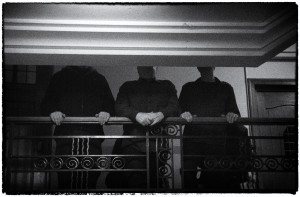
Dirk Bergen early on left the band to pursue other things, but Daniel tells us that they have remained friends for all of these years, and when the opportunity came up last year they decided to get back in the studio together with Erwin Jadot (a mutual friend) to bring us this new project called Nothing But Noise (NBN). The new NBN album that will be released on April 16th brings us a very different sound, then we are used to listening to Front 242. NBN, apart from being done entirely by machines, has very little in coming with Front 242 – it is a very complex sounding album with strong ambient influences, basically all instrumental and perhaps most importantly no drums. Daniel B tells us that this was a clear intent from the beginning – to do a full synthetic album with no drums in sight. Steelberry Clones has pre-listened to the entire album and we must say that it is an impressive sonic experience to listen to all these analog synths pushed into a dark ambient world – a cinematic experience. You can pre-listen to a couple of samples below on the NBN SoundCloud player below:
The members of Front 242 were heroes in the electronic underground scene all through the 80s and 90s, and have continued to record and tour to the present day. The band members has come and gone over the years but they all have one thing in common and that is their love for side-projects – all current members of Front 242 sport multiple side-projects spanning DJing, bands and film. Daniel B has produced a range of extra-curricular work over the years, including ‘Male or Female’ and ‘Speed Tribe’, a DVD and audio release based around the 2001 Le Mans motor race. Nothing But Noise, together with Dirk and Erwin, is Daniel’s latest and most anti-242 project and of course we here at Steelberry Clones needed to know more about this.
Can you tell us a little about the theme of the new NBN album
“For us it was like a new beginning, and although it had been a long time since we stopped working together, we always had in the plans that at one point in time we should do something together. So when the opportunity came we basically did not have any specific plans for the new album – we merely did for ourselves, not something revolutionary, but something we both liked.”
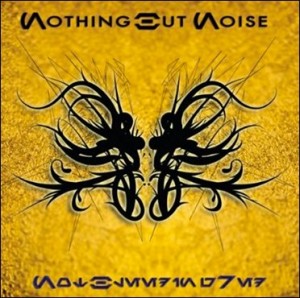
However, somewhere in the back of our heads we had two objectives; first we wanted to kind of explore where the music we all listened to when we were young (Tangerine Dreams, Krautrock, Kraftwerk, Stockhausen etc) would have been today if these acts had continued to produce material all the way to where we stand today. Secondly, we wanted to take on the challenge of not using any drums at all, especially considering our Front 242 background. “I would say that the only real parallel to Front 242 is the sole use of machines.”.
You have all been engaged in several side projects, along side Front 242, has this been a way to keep the creativity up
Not in relation to Front 242, I would say. Front 242 is actually more of a certain formula – you know what it is supposed to sound like, and in fact most of our fans (and the longer we keep going) want us to sound the same. At least speaking for myself – Front 242 is not my whole life. It’s the same thing with a guitar player who at points in time also wants to play the piano – there are so many things to explore, but of course all the things you do outside of Front 242 will influence the work in the band – cross-pollination in a sense. The “Male and Female” album has definitely influenced my way of making music and in general it is easier to be creative in a new format, like Nothing But Noise, to explore new things.
The announced break with Front 242, was that because of Nothing But Noise, or something else
“As you know we (Front 242) do not make any records anymore – so I have plenty of time to focus on other projects.” Front 242 still have some booked concerts that we will do, especially in countries where we have not toured a lot, so we will still do occasional shows going forward, and for how long depends a lot on inspiration. When it comes to Nothing But Noise it is easy to say that we have the time and music is our lives 
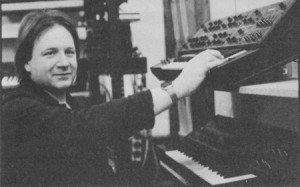
Was it hard to start working again with Dirk after all these years – did you have a plan on what you wanted to accomplish
“We talked about it a lot and we did not have a master plan what we wanted to do.”
Artists and ARTURIA #15 – Arnaud Rebotini
Arnaud Rebotini, the leading light of french electronic music is showing us how to make great techno tracks with Minibrute in an exclusive in-studio interview.
How to get your music in the game!
Shows how to rip a CD onto your console and get it into SSX software and a demonstration of RUMR remix features.
Ted Conley, Audio Director of EA Canada and the technical artist behind the RUMR (Realtime User Music Remix) system, has uploaded a video demonstrating how to utilize the custom soundtracks features of SSX, and the RUMR system. In the five minute video, Ted explains and demonstrates the various methods used to dynamically accentuate player performance, using runtime parameters, sampling, filters and a wide variety of DSP effects.
Every sound you hear in this song was made from human voices
Here are the details:
Every sound you hear in this song was made from human voices.
I wandered around with a little microphone at GDC San Francisco 2011 to record vocal sounds from anyone who was willing to make them. I wanted to make a song out of these noises. In fact, I wanted to make a complete song, using nothing but these vocal recordings.
This is that song.
People grunted, groaned, moaned, screeched, screamed, and sang into my little microphone and I used this source material to produce Voices of Devs.
Absolutely everything you hear in this track was made by manipulating these recordings using various sound design techniques. Every drum, lead, chord and effect was, at one point in time, a recording of somebody making noises with their mouth at GDC San Francisco 2011. No other samples, synths, instruments or recordings were used in this track. Whatsoever.
You can read more about how this was achieved right here: http://bit.ly/GDC-Song
Visit these places to purchase:
http://mickgordon.bandcamp.com/
Remember to subscribe!
Follow me on Twitter: http://twitter.com/Mick_Gordon
Like me on Facebook: http://facebook.com/MickGordonMusic
Visit my site: http://mick-gordon.com
Software used: Adobe Audition 3.1, FL Studio 10, Melodyne, Reaktor, Kontakt, PaulStretch, and stacks of plugins.
The Voices:
Jeff Ball, Sean Beeson, Alex Brandon, Nathaniel Chambers, Ben “Crossbones” Cooper, Charles Deenen, Brian DiDomencio, Morla Gorrondona, Joe Griffith, Lance Hayes, Kole Hicks, Jimmy Hinson, Thomas Kohl, Sam Hulick, Jake Kaufman, Kieran Lord, Kunal Majmudar, John Mazzei, Hazel Mckendrick, Ben Minto, Keith Moore, Lennie Moore, Jayson Napolitano, James Nixon, Dan Reynolds, Pontus Rufelt, Michael Schiciano, Paul Sivertsen, Jeremy Taylor, Hillary Thomas, Joe Thwaits, Steve Tushar, Mike Worth.
How to make electronic music – Part 4 the orgasmic filter sweep
A lot has been said about the engaging nature of synthesizer filter sweep sounds. But little study has been done on the subject. Part 4 of our series investigates the matter with DJ lace. Here we witness the direct impact of a sequential circuits prophet 600 filter.
Klanghelm – free audio compressor for Mac & WIndows
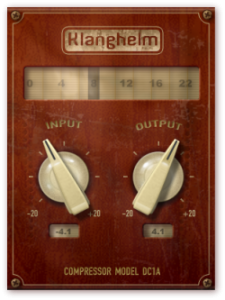
Klanghelm has released a free audio compressor for Mac & WIndows, DC1A.
Here’s what the developer has to say about it:
DC1A is the little brother of the compression monster DC8C. I’ve taken one of my favourite settings from DC8C and tried to make it work in a two control context. Soundwise it’s comparable to the PUNCH mode in DC8C. It’s kind of a mixture of classic opto and FET designs.
I’ve always wanted to do a compressor with just an input and output knob, a compressor that just works: gentle, faithful, from almost invisible, smooth leveling to heavy pumping with a nice crunchy saturation and punchy enough to treat drums with.
DC1A looks like a one trick pony. But don’t get fooled by lack of further controls. You may be suprised on how many different material this little thing works. DC1A is heavily program dependent, so is the saturation.
DC1A is available now as a free download for both Mac & WIndows (VST/AU).
Exclusive interview with Harald Karla – the Reason Refill maestro at Soundcells
Steelberry Clones got an exclusive talk with the critically acclaimed Reason Refill producer Harald Karla at Soundcells. Soundcells has been active for a long time in developing quality Refills for Propellerhead’s DAW Reason, many of which has been featured and reviewed on this blog. Soundcells’ Reason Refills covers most angles of electronic music – featuring everything from 8-bit / chip tune type sounds to high quality emulations of classic analog hardware synthesizers like Moog Source to the KORG MS-20, but also a vast amount of very complex ambient pads that would fit any sci-fi movie on the planet. We at Steelberry Clones are happy users ourselves of Soundcells ever growing library of Reason Refills and therefore we thought it about time to dive a little bit deeper into the minds of Soundcells by asking Harald Karla who founded the company in 2008 all those questions that make up the unique sounds of the Soundcells’ Refills. Harald Karla have worked as a successful freelance sound designer for quite some time but is now focusing on Soundcells full time.
You can visit Soundcells webshop via this link to find out more about the various Reason Refills of Soundcells or simply use the Soundcells banner in the right hand side column to explore further >>>>
You have been active making Reason Refills for a long time – where do you find your inspiration
First and foremost, Soundcells ReFills are products that meet my personal taste. And that is an inspiration and first of all motivation – not just to create a product that the market demands immediately, but to follow your own preferences. Since I prefer to be within Reason, I’m trying to do everything possible there, of course. Also this is the reason for the content of the ReFills. The more I can put in a single environment – the more energy, concentration and creativity remains for the music …
When producing the Refills you often stay true to the original analog synths, for example the MS-20, how do you go about re-creating these sounds
Well – actually that is not my intention to emulate certain classics – it’s more the intention to preserve the typical sound characteristics. “Analog Signature” for example is a ReFill, essential to sample those classics – which thus serve as a sound basis and shaping the sound of the ReFills. In this ReFill the analog sound-feeling is in the foreground, and therefore the sampling here was comparatively expensive: In order to have vibrant aesthetics of sound each individual note is played three times and recorded. The capabilities of the NNXT sampler can be heard by repeating a note played on the same sample twice in a row …
The result is a vivid sound that raises a very analog feeling. One should not forget that real analog sounds are not only created by “fluctuating” oscillators, but also generated by other components such as filters, envelopes, modulations of various kinds. And here some analog synthesizer sounds incredibly strong, which can not be done simply by multi-sampling individual notes … At this point, it simply ends the emulation. If you wanted to create the typical sound with all its inaccuracies of the original, it would ultimately imply sampling note for note – very expensive and a different topic …
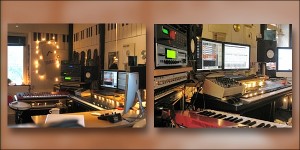
The Soundcells studio
We know of you as a high-end producer of Reason Refills and more, but can you tell us a little more about your musical background
A story of many – I had a very early interest in the creation of sounds, and in the beginning I did experiment with various instruments, but very early on I ended up focusing only on electronic instruments. From the time of the summer jobs I put all my money in (initially) keyboards, then synthesizers, drum machines, mixers, effects, etc.
I have never taken any lessons. The keyboard I’ve taught myself and I have always played by ear. Over the years I have dealt extensively with many types of music and electronic sounds, later on I started to create backing tracks to produce dance music with DJs, etc. … – And then finally spent all my time in music. Basically, the years were something of a “full study,” which continues to this day … : 0)
Read the full interview here >>
Mixed In Key Launches “Mashup” Audio Editor for Fast Mashup Creation
The software developer Mixed In Key, known for its popular Mixed in Key 5 harmonic mixing analysis tool, announce that it has released Mashup for Windows and Mac OS X.
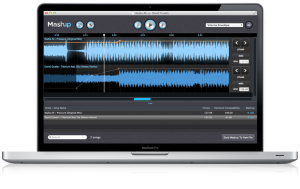
“Mashup” is a purpose-built audio editor that makes it significantly easier to do, you know, MASHUPS.
Mashup (available for $39 with free updates until Version 2.99) is a new audio editor designed to let DJs and music producers quickly and easily beatmatch two or more audio files, edit them, and then save their results to a new audio file. Mashup uses Mixed In Key 5’s harmonic algorithm to find compatible songs, making the process of mashup creation extremely simple.
According to Mixed In Key’s president Yakov Vorobyev, the company’s goal with Mashup was to allow users to create a mashup in five minutes or less, and to make the process easier than it currently is with Ableton Live.
Mashup’s user interface is intended to be streamlined and intuitive. When users import songs into Mashup, it will analyze them for key and tempo. Next, when a song is dragged into Mashup’s audio editor, its tempo will become the master for the project (or users can manually enter in a different master tempo).
Once a song is added, Mashup’s song browser will show users which other songs in their collection are 100% harmonically compatible with their original song. Then other songs can be dragged into the editor window, where they’re automatically beat-matched to the master tempo, using Mashup’s professional time-stretching algorithm.
From there, Mashup lets users graphically edit each song’s volume, as well as three bands of EQ, with breakpoint-style automation. The editor also allows users to select and silence portions of songs, adjust phase, slide them in time, and more.
When editing has been completed, the results can be exported to a 320kbps MP3 file or a 16-bit, 44.1kHz WAV file.
For users who have already installed Mixed In Key 5, Mashup will load its database and skip the analysis step. Mashup and Mixed In Key 5 work seamlessly with each other.
DATAMASKIN

