
Nord Factory Tour – Building a Nord Electro
Get a glimpse of the factory in Stockholm where all Nord keyboards are made…
Clavia have released a short video offering a glimpse inside their Stockholm factory where all Nord keyboards are handmade. The video shows the manufacturing process and stringent quality controls as a Nord Electro 4D is put together.
Highlighted are some of Nord’s unique practices and attention to detail throughout the manufacturing process. For example, one section of the video shows Nord’s heat room in which every Nord keyboard is placed once fully assembled. Each keyboard is tested for 48 hours running continuous CPU tests at 40 degrees centigrade to simulate the most challenging of stage environments.
Music by Federico Solazzo (http://www.federicosolazzo.com/).
All sounds except drums from the Nord Stage 2 and Nord Wave.
Thanks to Hasse & Lasse (http://www.hasseochlasse.se) for making the video!
Official Website:
http://www.nordkeyboards.com
Implant 4 Synth Store, Osaka
see this post for more info/address etc:
musicofsound.co.nz/blog/implant-4-osaka-synth-shop
While the Harajuku, Tokyo based Five G Synth store is very well known, it took me two attempts to locate Implant 4 in Osaka – the first time I was pushed for time and had an erroneous google maps link and visited an interesting part of the city… but this time I doubled checked the location with the map on their website, bookmarked the location on my iPad & set off feeling more confident…. If you happen to be in Osaka, save this location to your google map and you can’t go too far wrong! This is the street it is located on, find the pink slug sign & go up the stairs…
Experimental: Motion-driven Concatenative Synthesis of Cloth Sounds
Clothing sounds synthesized using the approach from our SIGGRAPH 2012 paper, and PhD thesis work by Steven S. An.
http://www.cs.cornell.edu/projects/Sound/cloth/
Steven S. An , Doug L. James, and Steve Marschner, Motion-driven Concatenative Synthesis of Cloth Sounds, ACM Transactions on Graphics (SIGGRAPH 2012), August 2012.
Abstract: We present a practical data-driven method for automatically synthesizing plausible soundtracks for physics-based cloth animations running at graphics rates. Given a cloth animation, we analyze the deformations and use motion events to drive crumpling and friction sound models estimated from cloth measurements. We synthesize a low-quality sound signal, which is then used as a target signal for a concatenative sound synthesis (CSS) process. CSS selects a sequence of microsound units, very short segments, from a database of recorded cloth sounds, which best match the synthesized target sound in a low-dimensional feature-space after applying a hand-tuned warping function. The selected microsound units are con- catenated together to produce the final cloth sound with minimal filtering. Our approach avoids expensive physics-based synthesis of cloth sound, instead relying on cloth recordings and our motion-driven CSS approach for realism. We demonstrate its effectiveness on a variety of cloth animations involving various materials and character motions, including first-person virtual clothing with binaural sound.
Review Of The Arturia Mini V
In this Video Neil takes a detailed look at the advanced features of the Arturia Mini V, An expanded software emulation of the classic MiniMoog Vintage Synthesizer.
JM Jarre’s “Oxygen II” – on Elka and Technics organs
Background information:
This is not intended as a 1-to-1 reproduction of Jean Michel Jarre’s famous classic. It is more like my shot at it using the instruments that I have.
It’s funny that just because JMJ used an Eminent U310 and later an Elka X-705 then these exact organ models sells for astronomical prices while most other organs can be bought for peanuts.
So therefore I have used Elka X-30 and Technics SX-C600 to play most of the arrangement. I don’t have a MiniPops 7 drum machine so I used a Rhythm Ace. One thing I did to make it more authentic was that I manually added the quijada sound to the rhythm. I synthesized it on my Roland JX-8P because I felt that it was vital for the mood of the melody. The sequence that runs through the first part was programmed on the little Korg Poly 800 and most of the sound effects was made on my Roland SH-2000. Finally I added the sound of my homebuild zimbelstern because I hadn’t got a clue on how to make the huithuithuithuithuit sounds of the EMS synthesizer that I assume Jarre used.
For once I had the sheet music. I found it at the public library – you know, the house with books made of real paper in it. But it’s not easy when the composer doesn’t follow his own notes on the recording he made!
I haven’t added many effects efter the sounds were recorded. Just some panning, reverb, and echo.
EMW-200 – The Time Tunnel video opening
Final version of this EMW-200 introductory video:
Opening for the EMW-200 Synthesizer videos. Computer Graphics by EMW – Soundtrack by Malte Steiner.
An introduction to EM through the eyes of a progger
A progger’s journey into electronic music
“For many years I have been active in progressive rock. But in the background I have always been fond of synthesizer music. Lately I found I was getting more interested in this genre, so I figured it was a good moment to add some EM to Live prog, to offer more diversity in music.
This special is my introduction to EM as experienced by a prog rock fan. It includes some short reviews of a few of my favourite EM albums, a lot of music and a nice video clip. It’s a bit of a long special, but I do hope you like it. There will be more EM on Live Prog soon!”
Musicians presented in this special:
Erik Norlander (www.eriknorlander.com)
Picture Palace Music (www.picture-palace-music.com)
Morpheusz
Ron Boots (www.ronboots.com)
Can Atilla (www.canatilla.com)
Synth.nl (www.synth.nl)
All samples used © their respective owners
This video special ©2010-2012 Live Prog
All righst reserved
In the studio with Adrian Utley (Portishead) – Synth Collection Tour
Earlier this week we saw Adrian trying out the Arturia MiniBrute now it is time to check out his own studio and large synth collection
Source visited Portishead’s Adrian Utley in his home studio to get his reactions to the Arturia MiniBrute analog synth. While we were there Adrian gave us a tour of his analogue synth collection (the stuff that was there, that is!).
Massive thanks go to Adrian Utley for kindly letting us visit, and for sharing his thoughts.
Information on the Arturia MiniBrute can be found here:
http://www.arturia.com/evolution/en/products/minibrute/intro.html
Find a UK Dealer to pre-order a MiniBrute:
http://sourcedistribution.co.uk/dealers/area.asp?item=arturia
For more on Portishead and Adrian Utley:
http://www.portishead.co.uk/
Simple Trance with hardware (Juno-60)
A quick tutorial on creating a simple Trance-type arpeggio sound with the Roland Juno-60.
Among the first in Roland’s amazing Juno family! Six analog voices of polyphony and patch memory storage!! The Juno-60 sounds great, however, like the Juno-6 it lacks MIDI control. The Juno-60 includes 56 patches of memory storage. The Juno-60 is still popular due in part to opinions that it sounds better (punchier) than the Juno-106. The Juno-6 and 60 are very rich sounding synthesizers and are great analog machines as long as you can withstand the absence of MIDI control. The JSQ-60 sequencer is an external sequencer controller for the Juno-60 and is usually worth acquiring.
Time machine: Exploring the classic Roland SH-101
A voyage into the heart of the Roland SH-101 from the year 1983. Exploration by Marko Ettlich monophonic analog synthesis 1 VCO I Saw, Square, PWM, Noise Filter – 24dB lowpass step sequencer, arpeggiator It has been used by The Prodigy, 808 State, Apollo 440, Devo, Aphex Twin, Astral Projection, Nitzer Ebb, Chemical Brothers, Boards of Canada and many more.
The SH-101 is very cool, especially for techno, drum&bass and ACID! It’s a monophonic bass synthesizer. Its sound lies somewhere between the TB-303 and a Juno bass sound. It has a lot of simple but cool features. You can control the VCF, pitch, LFO or all from the pitch bender. It has a white noise generator, arpeggiator with up, down and up/down patterns and a simple real-time sequencer. The LFO offers random, sine, square or noise waveforms. And normal or auto portamento effects give you that elastic bass sound. There are external clock inputs for the sequencer and arpeggiator, CV/GATE inputs and outputs and a CV hold pedal.
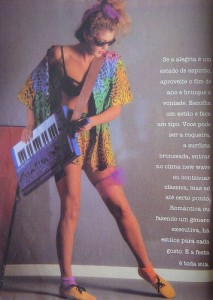
Unfortunately there is no patch memory storage and although it has no MIDI there are upgrades available for it from many analog service companies that will allow you to incorporate it into any MIDI studio environment. It can also be controlled by MIDI using a CV/MIDI converter. It’s great for bass sounds or bubbly analog effects. They come in three different flavors – gray, blue or red (there was a VERY rare white version too)! It can also be strapped on like a guitar for live performance using the optional Hand Grip.
DATAMASKIN

