
New stuff from AndOne
New, maybe is saying too much, but still 
And One have announced the release of Bodypop 1½, available on Out of Line January 30, 2009. The disc will feature nine live versions of 80’s synthpop tracks, new And One tracks “Und Wenn,” “Paddy Is My DJ” and “Love Is A Drug Abuser,” and new and unreleased versions of additional tracks. Follow the links for more information.
[youtube=http://www.youtube.com/watch?v=x-rMpu2uzGk&eurl=http://www.andone.de/&feature=player_embedded]
Steve Naghavi couldn’t help but noticing that large parts of today’s club crowds had no more knowledge of the ground breaking Synth Pop Hits of the Eighties – which awakened a missionary instinct in And One’s restless front man. Thus, the guys thoroughly naghavigated an illustrious collection of genre classics, from “Blue Monday” and “Big In Japan” to “The Sun Always Shines On TV.” A big tour through Germany’s biggest concert halls followed and now we can reap the fruits of this labour on CD, as well: “Bodypop 1 ½” features nine of the biggest classics of electronic Pop music in And One’s patented SuperDuperCoverLoverSound, with a whole lot of live flavour mingled in. But, don’t fret, the guys were also generous with material of their own and have included the new songs “Und Wenn”, “Paddy Is My DJ” and “Love Is A Drug Abuser” plus old and previously unreleased versions of “Love You To The End” (the song is now about Depeche Mode!) and “So klingt Liebe” (a six minute long version sporting a totally different mood!) “Bodypop 1 ½” – music education turned into a silver disc! Come join us in Naghavi-land – because life I.S.T. too short for bad music!
The problem of listening to music while working or studying
What is really the best music to listen to when working or studying? I know a lot of people who can sit with their headphones on listening to heavy pumping trance music or hard core rock music. For me this is impossible, I get totally un-concentrated and un-focused. First of all music at work has to be played in speakers (if OK by your fellow employees) so that the music will not be to intense right into your brain.
But the real problem is two folded; first the music you listen to has to be good enough to put you in a pleasant mode and hopefully excited about doing what you’re supposed to be doing (studying / working); secondly the music has to be bad enough not to have you listen more to the music than what you’re supposed to be doing – again work or study.
Lo-fi experimental electronic music is perfect for this and there are a couple of records that keep coming back to when studying AND the best thing is that they are both Japanese albums – having that great advantage that you do not understand all what they are singing about, and thus, you cannot sing along.
So please enjoy these two musician’s albums while working or studying, but make sure to listen to them in your speakers on a fairly low level and not in your headphones. Enjoy!
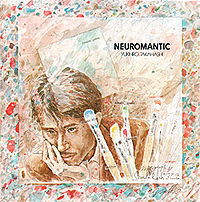
Yukihiro Takahashi (高橋幸宏 Takahashi Yukihiro, born June 6, 1952) is a Japanese musician, who is best known as the drummer and lead vocalist of the Yellow Magic Orchestra.Yukihiro Takahashi first came to prominence as the drummer of the Sadistic Mika Band, and became known to western audiences after this band (led by Kazuhiko Katoh, formerly of The Folk Crusaders) toured and recorded in the United Kingdom. After the Sadistic Mika Band disbanded, some of the members (including Takahashi) formed another band called The Sadistics, who released several albums. Finally Takahashi recorded his first solo album Saravah in 1977. In 1978, Takahashi joined Ryuichi Sakamoto and Haruomi Hosono to form the Yellow Magic Orchestra.
Takako Minekawa; as an accomplished all-around musician, Minekawa’s musical skills set her firmly outside of the J-Pop “idol” tradition: she writes and composes most of her material, singing quirky lyrics about subjects such as clouds, cats, and the color white (her personal favorite), with her love of Kraftwerk and French Pop Music also showing through her unique experimental sound. She often makes use of vintage Casio keyboards and analog Moog synthesizers, as well as vocoders and other electronic instruments.

Empire State Human announce remix competition
Dublin-based synthpop act Empire State Human have announced a remix competition hosted exclusively by Laptop Rockers. This is your chance to take part in remixing their new track, “Melancholic Afro,” featuring Wolfgang Flür (ex-Kraftwerk/Yamo).

Based in Dublin/Ireland, Empire State Human are vocalist Aidan Casserly and keyboard players Seán Barron and Lar Kiernan. They create a combination of analogue and digital synth sounds, mixed with driving rhythms and overlaid with strong pop vocal melodies. Electronic music with a retro electro edge. In 2004 they had a number one in the US iTunes dance charts and only recently they’ve finished their sixth studio album “Audio Gothic”, which is due out on CD in February.
Happy new bitpop year everyone :-)
[youtube=http://www.youtube.com/watch?v=NaWky0LWkdA]
Daniel Miller on the radio
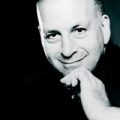
Daniel Miller needs no introduction, right? Producer of all early Depeche Mode albums, founder and Executive Chairman of Mute records, which signed artists like Fad Gadget, DAF, Cabaret Voltair, Yazoo, Erasure, Nitzer Ebb, Richie Hawtin, Miss Kitten, Sonic Youth, Nick Cave, Goldfrapp….. need I go on more…
If you want tap into what the man is into now go to the German Radio Eins home page and listen to Happy Miller Hour bi-monthly radio show.
If you ever been curious about what synthesizers Daniel Miller’s been using all those years, here’s an in-depth interview on that. http://www.soundonsound.com/sos/dec98/articles/daniel.624.htm
Early days of Human League pt. 2
I have to say I really respect Human Leagues consequent decision to only use synthesizers. At the time (late 70s) synthesizer was not considered proper instruments by many. No many bands was that hard core but Kraftwerk paved the way. Most new wave artists used guitars and drum in combination with synthesizers. All sounds on Reproduction and Travelogue are made by 3 synthesizers; Korg 770, Roland Jupiter 4 and Roland System 100 (not to be confused with Roland System 100M) and then vocals.
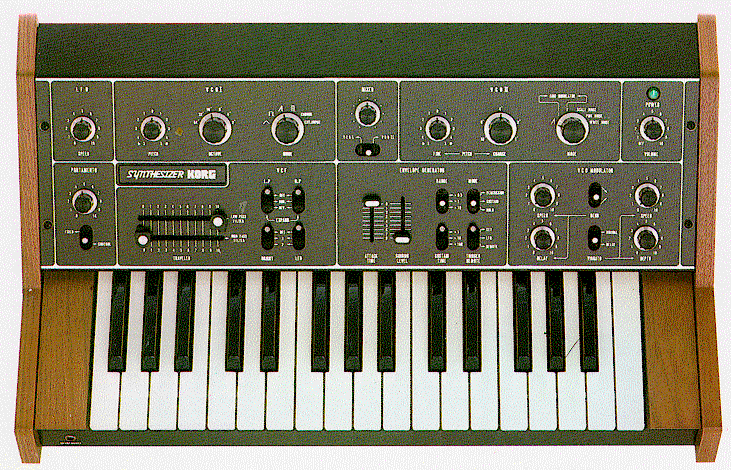


Listening through the two albums Reproduction and Travelogue there are many fat bass lines. How are they made?
Now you’ve might heard of Roland Jupiter 4 http://www.bluesynths.com/modules.php?name=Reviews&rop=showcontent&id=30 as the little brother of the mighty Roland Jupiter 8 http://www.arturia.com/evolution/en/products/jupiter-8v/intro.html. Looking at the spec of the Juniper 4 is appears to be very poorly equipped. It has ONE single oscillator per voice. No where near the Minimoogs 3 oscillators or the Prophet 5 two per voice. But all those fat basses are made by the Jupiter 4 set to unison mode! And the arpeggio is made to good use on several songs too. Also many melodies are played on the Juniper 4 as well in the polyphonic mode. For most drums and percussion the System 100 with it’s sequencer is used. Note that the sequencer is 2 times 12 steps but it can be chained up to 24 steps. Otherwise there would have been lots of waltzes on those albums…
Early days of Human League pt.1
I guess anyone even vaguely interested in electronic/synth-based pop music have heard of Human League. They had major hit songs like “Don’t you want me baby”, “The Lebanon” and many more in the 1980/90’s. But Human League had a life before their major hit album Dare released in 1981. In fact they made two albums, Reproduction and Travelogue.
The group was formed in 1977 and recorded their first album in 1979, Reproduction.
Reproduction never had an impact in the charts but Travelogue made it to no. 16 on the UK album chart. The relationship between Oakey and Ware had always been turbulent. The lack of success compared with the success of Gary Numan’s work at that time had brought matters to a head. Ware insisted the band maintain their pure electronic sound while Oakey wanted to emulate more successful pop groups. This led to Ware and Marsh leaving the band and forming Heaven 17.
What made them stand out a bit from other electro pop/new wave acts at the time like Gary Numan, YMO and Ultravox is that they just like Kraftwerk (after the Autobahn album) only used synthesizer instruments. No acoustic drum, electric guitars nor basses.
[youtube=http://uk.youtube.com/watch?v=e0YVOIKX0IQ]
[youtube=http://uk.youtube.com/watch?v=XYepvarTsVM&feature=related]
[youtube=http://uk.youtube.com/watch?v=CNrnmDmffRc&feature=related]
New album in January with Mobile Homes
It sure has been a while but now they are back
There new song below:
[youtube=http://www.youtube.com/watch?v=f2Nn54Rhv48&eurl=http://profile.myspace.com/index.cfm?fuseaction=user.viewprofile&friendID=153575698&feature=player_embedded]
Biography:
The Mobile Homes was formed 1984 by Andreas Brun, Patrik Brun, Hans Erkendal, and Per Liliefeldt.
At first there where many bands playing in the same premises, but later there where only a few left and they decided to form The Mobile Homes.
Early in their carreer Mobile Homes performed on both Laibach and Nitzer Ebb´s Scandinavian tour.
The band has been signed under many labels. It started with Papa Records, but that company where later no more so they had to search for a new label.
Mobile Homes contacted Christer Sandelin and signed under his label Alpha. At Alpha they released the single “I know I will die”, and after that they signed under Sonet.
Later they changed record company again, and this time they signed up with Hawk Records. At Hawk they released the albums “Hurt” remixed by Denniz Pop, “Nothing But Something” Produced by Christian Falk, “Test” Produced by Joolz Beeston (Ex Nitzer Ebb and “Meanwhile”.
After a long break they signed under the german company SPV GmbH and in Sweden under Arcade/CNR.
Together with the ex Kraftwerk member Karl Bartos they released the album “Mobile Homes” in 1998. The most radioplayed song on that album was “You make the sun shine” which was later the music in a commercial for the airline SAS.
In 1999 the record company Memento Materia released a best of Mobile Homes album called “There is no place like away”.
After the album “Mobile Homes” they signed under Sprinkler/Universal Records and released the single “It..s all for the best”. Then they left Sprinkler/Universal and signed under Subspace Communications.
At Subspace Comunications they released the album “The world will listen” and the singles “Nostalgia” and “The more i think the deeper i sink”. The world will listen is recorded in the “Polar” studio, the former ABBA studio.
In may 2003 Mobile Homes signed under BMG Sweden and they released an EP produced by Sami Sirviö from Kent and Stefan Boman. Soon they will release the new Album “Today is your lucky day” Produced by Sami Sirviö (Kent)
Want to know more about Bass?

Found this great blog poste on the subject, however if you are very concerned about lightly dressed women (it’s perfectly safe, but still) than remain here and get the summary
The double bass and the bass guitar have their use, but sine waves are absolutely crucial in bass science. Producers who don’t have them in their toolkit might as well pack up and leave. Here’s what they sound like
[youtube=http://www.youtube.com/watch?v=igGroIcga3g&eurl=http://dubshot.blogspot.com/2008/10/basswatch-3-cult-of-sine-wave-enter.html&feature=player_embedded]
Abstract:
 And here’s what a sine wave looks like. The original meaning of the word sinus in ancient Latin is bosom and the curves of the sine wave look feminine indeed. But times change. Nowadays when people hear a heavy bass they usually picture a big bottom.
  And what’s even more puzzling: while a low frequency sine wave may sound like a fat ass, a high frequency sine wave sounds thinner than the skinniest supermodel. That’s the mystery side of the sine wave i’ll try to explain here.
Camouflage to release new live DVD
DATAMASKIN

