
Holiday treat from Native – free synth – SKANNER
Xmas treat from Native Instruments 
SKANNER – our holiday gift for you: Stephan Schmitt’s raucous and exciting new synth is available for download now. SKANNER can be used either with the latest version (5.6.2) of the free REAKTOR 5 PLAYER, or REAKTOR 5.6.2.
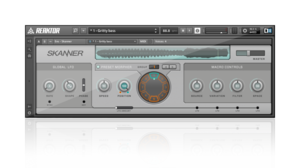
Play samples like a synth – SKANNER will rip through your holiday lethargy.
“Created by Stephan Schmitt, SKANNER is an innovative, unorthodox instrument with a unique raw edge. It takes samples as source material and generates breathtaking new sounds, ranging from simple sine waves to walls of noise. A must-have for adventurous producers and sound designers, SKANNER is also completely free. Runs in the latest version (5.6.2) of the free REAKTOR 5 PLAYER, or REAKTOR 5.6.2. Download it today!”
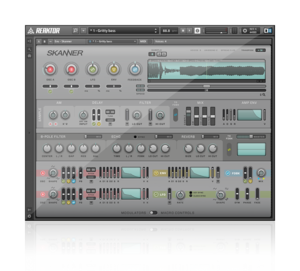
Despite the complex synthesis going on under the hood, SKANNER couldn’t be easier to use. Two views offer different levels of interaction: The ‘A’ view features four macro controls that are mapped to multiple parameters – even subtle tweaks can create dramatic changes.
If you want to dig deeper into the architecture of SKANNER, the ‘B’ view (pictured here) provides access to more detailed parameters. Use SKANNER with REAKTOR 5.6 and you can replace the included samples with your own – discover their sonic potential when they get skanned. At the heart of SKANNER’s creative potential is the versatile Preset Morpher – morph between eight different snapshots for evolving sounds that are unworldly and unusual. The controls include morphing speed and LFO modulation – jam and morph from one extreme to another, and capture your performance in your DAW.*
Free grand piano instrument for Native Instruments Kontakt
PrecisionSound has released a free grand piano instrument for Native Instruments Kontakt, Amore:

We recorded a Yamaha grand piano, close miked in stereo and kept it small, under 200 MB.
The 3 page GUI is intuitive and easy to understand with controls for decay, EQ, IR reverb, Delay and Keyboard response.
You need the full version of NI Kontakt version 3, 4 or 5 to use this SampleSet.
Download Amore from the PrecisionSound site.
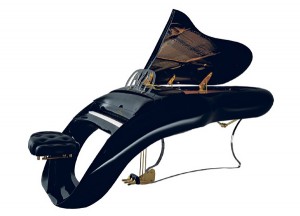
NOTE: This is only if you cannot afford one of these at home hehe
Tutorial: Sound Design with Vocal Samples
More info: http://bit.ly/sEqxOG
In this video tutorial, Dubspot Instructor Matt Cellitti offers tips and tricks for transforming and shaping ordinary sounds with Native Instruments Maschine’s high-performance sampler and and turning them into versatile sampled instruments. Cellitti is co-designer and developer of our Maschine program, along with our very own Heinrich Zwahlen. For those looking for high quality training on Maschine’s hardware/software combination, this is the program. The classes will be available in our school in New York City and at Dubspot Online this January.
Shō- Japanese Mouth organ with Native
Background information:
I made a recording of a Shō (japanese Mouth Organ) playing several chords.I processed the file using Absynth’s granular engine and envelopes.
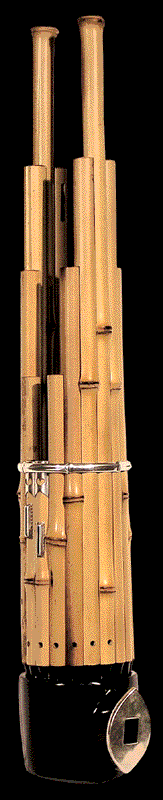
Sho and U
In the 8th century, a variety of Chinese sheng were introduced to the Japanese court. Some of these instruments, called u by the Japanese, are still preserved in the Shoso-In Imperial Treasure House in the ancient capital of Nara. The present day Japanese free-reed mouth organ, or sho, evolved from these instruments. Sho are traditionally used to produce a chordal texture in Gagaku, the music of the Japanese court.
The present day sho is much thinner than the sheng, although its design is similar, with the pipes arranged in a circular fashion extending from the top of a wooden wind chamber. It usually plays at least an octave higher in general, to the sheng. The sho is an extremely expensive instrument to purchase, as the pipes are usually constructed from blackened hundred year old (or more) bamboo that has been part of a thatched roof, directly above the kitchen in a traditional Japanese house. These houses are rare now, and as such, so are the pipes to make a sho.
Many contemporary composers, both in Japan and in the West, are writing for the sho, and sho virtuosi like Miyumi Miyata and Ko Ishikawa are performing these works internationally, on both the sho and modern reconstructions of the u.
Using Native Instruments’ Reaktor To Build Virtual Instruments
More info – http://bit.ly/vKrfPY
Dubspot Electronic Music Production and Sound Design Instructor Evan Sutton explains how to make basic connections and building a subtractive synthesizer using Native Instruments Reaktor’s Built In Modules in this new tutorial. There are many levels to Reaktor’s hierarchy. In the last tutorial, we spent most of our time on the Instrument level, making small changes and swapping out effects. If you missed the first tutorial, you can find it here: http://bit.ly/nxoNjs
In the second installment, we’ll go even deeper and build our own instrument from the ground up. We’ll be using Reaktor’s Built In Modules, which are tools that range from simple math to complex signal processors. Many of these modules are the basic tools used in modular synthesis. We’ll use these to build a simple synthesizer with one oscillator and an amplitude envelope. Remember to keep the volume down while you’re setting up your modules.
It’s important to explore basic signal flow in Reaktor. There are infinite possibilities for experimentation, but these concepts are the starting point for building larger and more complex ensembles.
DJ Unkut Demonstrates Traktor Native Scratch Technology
In this performance video, 2011 DMC Online Champion Unkut introduces the next step in Traktor Scratch performance: Native Scratch Technology.
All scratch products by Native Instruments now contain Native Scratch technology – delivering tight, accurate performance via MK2 timecode for fully authentic vinyl feel. Unkut employs advanced scratching and drumming techniques using Traktor Scratch Pro 2 with X1 and Maschine controllers, combining the best of turntablism and controllerism. He adds Traktor effects like Flanger and Gater, using the Gater similarly to the classic “transform” scratch.
More info about Native Scratch Technology and special offers: http://www.native-instruments.com/nativescratch
More on Native’s DAMAGE
Take a trip into the depths of the DAMAGE user interface.
Heavyocity talk about the recording process behind DAMAGE, their techniques, sound design and more, in an in-depth look behind-the-scenes.
“Dark, aggressive, thrilling and threatening — DAMAGE is breathtaking cinematic percussion with a tense, epic edge. DAMAGE gives you 30 GB of drama, fusing industrial sounds and orchestral drums into a devastating electro-acoustic barrage. Percussive Kits provide more than 200 deeply sampled percussion sources, and over 500 single-shot elements, recorded in up to seven velocity layers and with up to nine round-robins per drum. Over 700 beat-sliced loops come as menu-style loop suites or as single loops for detailed tweaking. Even the most complex sounds are instantly usable, and it’s all in hair-raising, big-screen quality.” – Native Instruments
For more info: native-instruments.com/powered-by-kontakt/damage
iMaschine Sampled Into Modular Circuit Bent Casio Sk-1
iMASCHINE is a professional instrument designed for beat producers of all levels – you don’t need to have experience with MASCHINE to create spontaneous beats. With its intuitive threshold-based pad sampling, note repeat, auto-loop length feature, on-board mixer with six handy effects and the unique audio recording function, iMASCHINE makes it easy to instantly create grooves whenever the mood hits.
Use the included drum kits and melodic sounds, all in professional WAV-format, or expand your library with the iMASCHINE EXPANSIONS – available directly from your device via the in-app store.
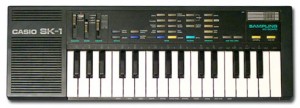
The SK-1 has been used by a few major recording artists for its simplicity and lo-fi sound. It became very popular in the late 1990s among the circuit bending crowd after the first guide to bending it was published by Reed Ghazala in Experimental Musical Instruments magazine, though the SK-1 was being modified as early as 1987 when Keyboard Magazine published an article on adding MIDI support[1]. The synthesizer was one of the first pieces of equipment that Autechre had when they began recording music. Musician and score composer Michael Andrews featured a circuit bent SK-1 heavily in the Me and You and Everyone We Know musical score. It was used by notable Jungle artist DJ Hype for his seminal production attempts, as written in book All Crews by Brian Belle-Fortune, and rapper and producer Large Professor used it in his early years of beat-making.
DAMAGE – breathtaking cinematic percussion for your DAW
All sounds and effects created exclusively with DAMAGE: http://www.native-instruments.com/damage
DAMAGE provides an arsenal of deeply sampled drums, crushing loops, and smashing one-shots, all recorded in brutal detail. From battered dumpsters and exploding cars to edgy electronics, the entire gamut of modern cinematic sound comes together in this uniquely playable and inspiring instrument. Deep, thrilling and intense — DAMAGE is epic redefined!
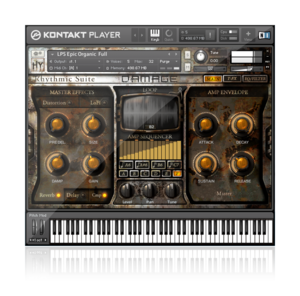
DAMAGE gives you 30 GB of drama, fusing industrial sounds and orchestral drums into a devastating electro-acoustic barrage. Percussive Kits provide more than 200 deeply sampled percussion sources, and over 500 single-shot elements, recorded in up to seven velocity layers and with up to nine round-robins per drum.
Over 700 beat-sliced loops come as menu-style loop suites or as single loops for detailed tweaking. Even the most complex sounds are instantly usable, and it’s all in hair-raising, big-screen quality.
Jamie Lidell performing with iMaschine
Jamie Lidell performs an iMaschine exclusive version of “A Little Bit More” from the album Multiply (2005, Warp) while relaxing in bed.
More info about iMaschine: http://www.native-instruments.com/imaschine
More info about Jamie Lidell: http://www.jamielidell.com
More info about “Multiply”: http://bit.ly/pjpoBX
Here’s a another video by Jamie:
Here lies the second music video from Jamie’s recently released album Compass.
Directed by Lindsey Rome.
DATAMASKIN

