
Bassnectar Explains Dubstep (in under 3 minutes)
Bassnectar laying out the dubstep musical family tree in an interview with MoBoogie (see original here: www.youtube.com/watch?v=BFLe3MEDwv4). My first try making kinetic typography (with some help from prezi).
Dubstep is a genre of electronic dance music that originated in south London, United Kingdom. Its overall sound has been described as “tightly coiled productions with overwhelming bass lines and reverberant drum patterns, clipped samples, and occasional vocals”.
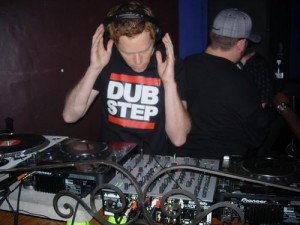
The earliest dubstep releases date back to 1998 and were darker, more experimental, instrumental dub remixes of 2-step garage tracks attempting to incorporate the funky elements of breakbeat, or the dark elements of drum and bass into 2-step, which featured B-sides of single releases. In 2001, this and other strains of dark garage music began to be showcased and promoted at London’s night club Plastic People, at the “Forward” night (sometimes stylized as FWD>>), which went on to be considerably influential to the development of dubstep. The term “dubstep” in reference to a genre of music began to be used by around 2002, by which time stylistic trends used in creating these remixes started to become more noticeable and distinct from 2-step and grime. It was labels Big Apple, Amunition and Tempa that began circulating the “dubstep” term.
Doepfer A-122 VCF3 Demonstration
Short Doepfer A-122 Demo by NetPierre
Starts with a sequenced bassline, generated by my Doepfer MAQ16/3 and Doepfer VCO A-110 (saw wave)
Slow LFO sinewave A-147 into QCV input
ADSR into VC2 input
Drums provided by an Elektron Machinedrum
More info on the A-100 and related stuff at http://PatchPierre.blogspot.com
Module A-122 (VCF 3) is a voltage-controlled low-pass filter, which filters out the higher parts of the sound spectrum, and lets lower frequencies pass through.
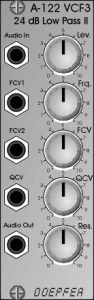
The cut-off frequency determines the point at which filtering takes effect. You can control this manually, or by voltage control (filter modulation, for instance by an LFO). Two CV inputs are available.
The cut-off slope is -24 dB/octave. The circuitry uses a Curtis chip, and is very similar to the classic Oberheim filter sound. Because of its different circuitry and controls, the A-122 has a considerably different sound to the A-120 ‘Moog-like’ filter, especially in the way the resonance behaves.
Voltage controlled resonance: on the VCF 3, resonance can be controlled not just manually, but by voltages as well, right up to self-oscillation. In this case, the filter behaves like a sine wave oscillator.
New exciting side project from Nitzer Ebb’s lead singer Douglas McCarthy
http://vimeo.com/34407936
Nitzer Ebb frontman Douglas McCarthy returns with a new solo project of which so far only a short video turned up online, “Untitled”. On douglasjmccarthy.com you only get the sentence “Life is sucking the life out of me”. A release and tour are scheduled for 2012 but no more news is known so far, we’ll keep you informed.
Voyage Into the Unknown – Andy Barrow – Minimoog Voyager XL – Korg Radias – Kawai K4
Background information on this video from Andy:
Hi All,
Better late than never. Having issues making anything stick, Fell upon this idea and just went with it…..Suggest a Decent pair of Headphones or Monitors – Turned up!!!
A piece of music that started out in Reason 5 using Dr Rex Loop player, I exported a couple of loops to use in my Cubase Project and worked up from there. This piece was recorded live into Cubase using a total of 8 Tracks of audio. I hope to add more tracks and make it last longer for better effect and pad this piece out with some extra sounds to add to the ambient effect (located somewhere in this track)
Some big Pad sounds from both Kawai and Radias – earning them their right to stay in the studio. The Minimoog giving me that nice deep growling bass I wanted for this music and taking full advantage of the Pitch and Mod Wheels. The Radias and the XL set the theme to start the Music off into the Voyage into the unknown
The main part of this video is of me (apparently struggling) unpacking the Voyager XL – Yes this is a heavy unit and one I did not want to drop, not that it would hurt the Moog, just probably crack the floor  Probably the sexiest looking synth ever – if you like the retro look and love analogue (digital is nice …But……)
The very last part of this video with the Drums and Moog – The stereo effect is direct from the Voyager XL by using the Touch Panel to effect change in EG and its Position in the Stereo image – This will form part of the continuation for this piece of Music – Not sure on what direction I am heading in yet with this, needless to say the Moog’s will be out to play
Hope you enjoy this as much as I did putting this together.
Many thanks for dropping by and watching
Andy
Classic concert from 1982 with Depeche Mode now on DVD
Depeche Mode’s classic concert at the Hammersmith Odeon (October 25, 1982) has been circulating on the Internet for a long time and various versions of bootlegs has also been available. The concert, or at least parts of it have also been sent in several TV channels around the world.
Now the production company Headliner imprint, which previously released live DVD’s, including U2, The Cure, Devo, Peter Gabriel and Massive Attack, has decided to release the concert on DVD titled “Feel You”.
The DVD will be released in NTSC (all regions) in 4:3 aspect ratio and audio tracks in Doly Digital 5.1 and 2.0. Setlist from the evening includes a selection of classic songs from the band’s first two albums’ Speak & Spell “(1981) and” A Broken Frame “(1982).

Whether the release of the factors is a pure bootleg remains to be seen, but many people have placed themselves puzzled as to why the release is not via the band’s record label Mute Records, where managers also contacted, as well as the distributor.
“Feel You”, released January 27 by Headliner Imprint.
Tracks on the DVD:
- My Secret Garden
- See You
- Satellite
- New Life
- Boys say Go!
- Tora! Tora! Tora!
- Nothing to fear
- Leave in Silence
- Shouldn’t have done that
- The Meaning of Love
- Just can’t get enough
- A Photograph of You
- The Sun and the Rainfall
Enjoy
Sneak preview of the new Moog Minitaur analog synth
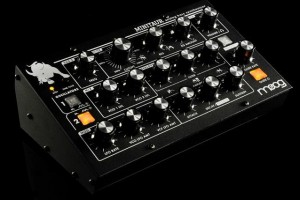
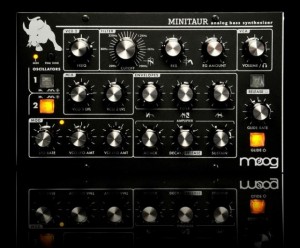
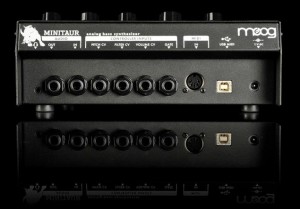
Winter NAMM appears to treat us with a nice analog surprise – a new synth called Minitaur from Moog. Here are the preliminary details:
- 100% analog audio signal path, based on Taurus I and Taurus III synthesizers.
- 2 Taurus VCOs with variable Glide amount
- Sawtooth (original Taurus) or Square waveform selection for both VCOs
- External Audio Input
- Headphone out
- 2 Mixer VCAs for setting the level of the VCOs
- 1 VCF Moog/Taurus-style Ladder Filter w/ VC Resonance
- 1 VCA
- Two Minimoog-style ADSR Envelope generators with the Decay and Release segments controlled by the Decay knob plus a Release On/Off switch
- 1 MIDI-syncable triangle wave LFO for modulating VCF/VCOs
- DIN MIDI In and MIDI over USB out
As of right now these are unofficial photos of Moog Minitaur Analog Bassline Synthesizer! It is said to retail at around 599USD.
The Minitaur is a compact tabletop monophonic MIDI-and-CV-controllable analog bass synthesizer module, based on the design of the Taurus 3bass synthesizer. The front panel of the Minitaur is designed for maximum tweakability, with a knob-per-function design. Schwing!. This isn’t a preset synth – but you can can create and manage patches via MIDI.
The Minitaur has several features added to the classic Taurus synth engine, including an external audio input.
More info will follow as soon as we get it
{cacophony} – sound installation
This sound installation depicts the possible problems of the flow of information. It tries to reflect the human misaudition, the lapse of information and the social problems which derive from these. The design is clear and it has a transparent structure. Using analog technology and ignoring complicated ones are all used to strenghten the expressiveness of installation.
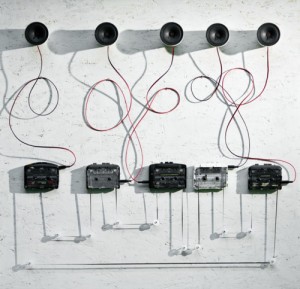
After turning on the wlakman the tape starts to move. Each walkman plays the sound, which is on the tape, in a different point. However, the sound is the same the constants are chaotic. The reading points are not the same distance from each other. Some walkmans are louder while others are quieter so the consonants are not homogeneous. If you bend closer to the walkmans you can easily notice where they are in the course of replay.
CNTRL:R Live Step Sequencer
CNTRL:R Live is a Sophisticated Max for Live sequencer designed by Livid Instruments and Richie Hawtin.
– Integrated with 16 pad Drum Racks in Live
– 16 steps per Drum Pad
– easily mute a whole sequence
– full envelope control for each Drum Pad sound
– control pitch, volume, pan, and filter for each step
– creative step variations for on-the fly editing
– 16th notes or triplets
– variable note value “repeat”
– create and recall up to 32 presets for each sequence
– full interactive control with CNTRL:R
Mogees – Gesture recognition with contact-microphones
In this video we show how it is possible to perform gesture recognition just with contact microphones and transform every surface into an interactive board.
Through gesture recognition techniques we detect different kind of fingers-touch and associate them with different sounds.
In the video we used two different audio synthesis techniques:
1- physic modelling, which consists in generating the sound by simulating physical laws;
2- concatenative synthesis (audio mosaicing), in which the sound of the contact microphone is associated with its closest frame present in a sound database.
The system can recognise both fingers-touches and objects that emit a sound, such as the coin shown in the video.
More details: www.brunozamborlin.com/mogees
Sneak preview – The MatriX sequencer for Ableton Live
This is only the teaser of a coming new sequencer for Ableton Live & Max for Live.
It provides a totally new way to make sequences directly inside Ableton Live.
It is poly & iso rhytmic.
It can trigger anything responding to standard MIDI Notes.
Stay tuned to our channels:
http://designthemedia.com/newsletter
http://twitter.com/designthemedia
http://facebook.com/designthemedia
DATAMASKIN

