
Depeche Mode ► Sea of Sin ▲ ► B-side ▲ World in your Eyes ►
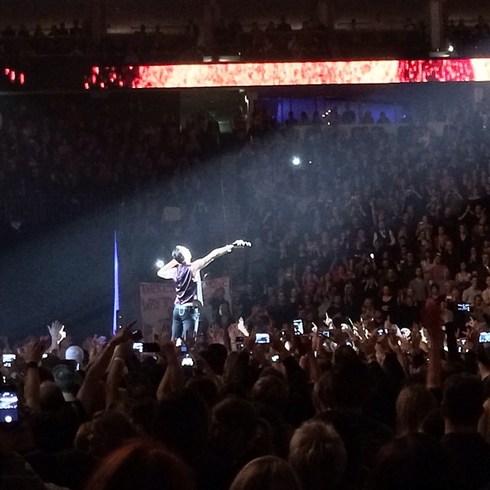
Can’t wait to see them live on December 9th 😀
Deeper Bass…. “Sea of Sin (Tonal Mix)” are the main 7″ versions. “Original” versions were never released, or rather, these mixes are the regular versions, according to interviews and the official website.
We’re all fans of Dorit Chrysler
‘The Swamp Behind My House’ is the closing track of Dorit Chryslers “Avalanche EP” on Trentemøller’s very own In My Room-label. A deep and cinematic slice of electronic grace, which along with the rest of the EP, is sure to win over a new audience to Dorit’s immense charms that is accompanied by truly intense pictures and quivering colours here.
Shot by Zack Richard feeling inspired by Dorit Chryslers work he approached her with this amazing short film right after it was shot. But let him explain his idea and inspiration in his own words.
“The idea came from an actress who I had worked with. She wrote a tweet saying she wished she had gone to model in Asia. I then had the idea of a model going abroad and using her beauty to taking advantage of local businessmen. Dorit’s song really brought the film to life and added a dark and surreal layer. I love her sound, its from the present and the past all at once. I am also trying to make films that are hard to pin-point exactly when they were made. I wanted to do a video that felt like a mixture of a Won Kar Wai and a Micheal Mann film.”
And so he did.
Enjoy 
After 8 years Kraftwerk returns to Walt Disney
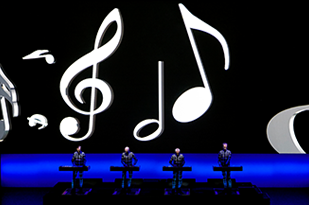
German electronic music pioneers Kraftwerk will play eight 3-D concerts at Walt Disney Concert Hall, March 18-21, 2014 to launch the LA Phil’s Minimalist Jukebox Festival. These will be their first L.A. dates since 2005.
They will perform eight of their albums, spread across eight performances.
KRAFTWERK – THE CATALOGUE 1 2 3 4 5 6 7 8 is a chronological exploration of their work. Starting with Autobahn, each performance will cover one of Kraftwerk’s studio albums in full and in order of their release:
- Autobahn (1974), Tuesday, March 18, 7:30 PM
- Radio-Activity (1975), Tuesday, March 18, 10:30 PM
- Trans Europe Express (1977), Wednesday, March 19, at 7:30 PM
- The Man-Machine (1978), Wednesday, March 19, at 10:30 PM
- Computer World (1981), Thursday, March 20, at 7:30 PM
- Techno Pop (1986), Thursday, March 20, 10:30 PM
- The Mix (1991), Friday, March 21, 7:30 PM
- Tour de France (2003), March 21, 10:30 PM
All the details on the new Elektron Analog Keys
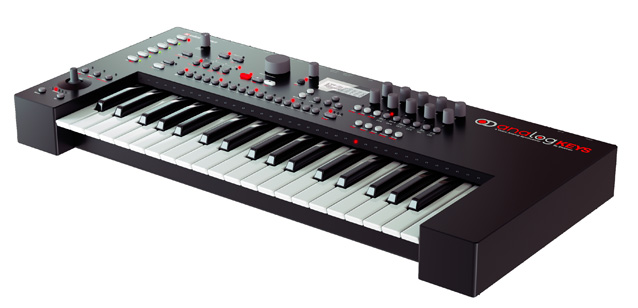
The Analog Keys is a four voice flagship analog synthesizer, conceived with the modern artist in mind. Fully analog signal path, digital controls, and unprecedented playability make it an instrument for the expressive musician.
Premium analog synthesizer
The Analog Keys is a four voice polyphonic analog synthesizer, capable of generating the finest basslines, chords, leads, and sounds imaginable. The warm and deep tone represents the pinnacle of analog synthesis and the acclaimed Elektron sequencer stands ready to arrange and warp the analog sounds in real-time. Complete the experience by treating the four voices with incredibly well-crafted master effects. A new world of sounds awaits.
Performance optimized
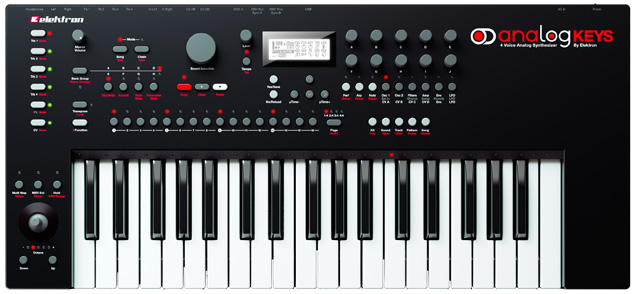
The Analog Keys is tailor-made for the stage. The 37 semi-weighted keys of the keyboard give instant fingertip control of the analog tones. The special performance mode offers direct access to user-defined parameters, and the joystick, capable of controlling up to fifteen parameters, allows for extreme morphing of sounds. Improvising when playing live has never been this easy.
Heart of the rig
Compatibility with other instruments is well catered for. Simply press a button to transform the Analog Keys into a MIDI keyboard, ready to control external MIDI gear. Thanks to the dedicated CV sequencer and the CV/Gate and DIN sync outputs, analog instruments of both today and yesteryear can be played, sequenced, and controlled with precision. Use the multitude of control options to breathe new life in vintage and modern rigs alike.
Highlights
*100% analog signal path
*Four voices, each with 2 analog oscillators, 2 sub-oscillators, dual analog filters, analog overdrive per voice
*37 key semi-weighted keyboard with aftertouch
*+Drive storage hosting up to 4096 Sounds (+Drive Sound Library)
*Elektron sequencer with CV/Gate sequencing
*Parameter assignable joystick
*Extensive modulation possibilities
*Supervoid Reverb, Saturator Delay, Wideshift Chorus send FX
*Polyphonic, multitimbral, unison modes
*Dedicated MIDI controller mode
*1x headphones output, 2X main outputs, 4x stereo separate track outputs
*2x audio inputs
*MIDI IN/OUT/THRU with Din sync out
*2x dual CV/Gate outputs
*USB 2.0 port
The Analog Keys goes on sale December 5. Shipping starts Dec 9. List price: 1849$/1749?/1449£
New Depeche Mode live DVD in the making
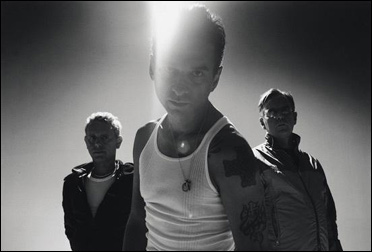
A new Depeche Mode live DVD is in the planning and it will be Anton Corbijn directing the whole thing. Both of the nights in Berlin will be shot to complete the DVD.

Spectral – new synthesizer instrument plugin from LinPlug
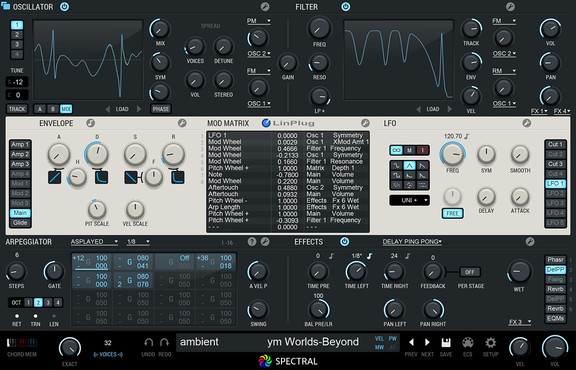
LinPlug has announced the release of Spectral, a new synthesizer instrument plugin for Windows and Mac.
If you are familiar with subtractive synthesis, you will feel right at home with the Spectral, because you can choose an oscillator waveform, choose a filter shape and go on from there.
But Spectral delivers far more options than you would expect from the well sorted user interface. Both Oscillator Waveform and Filter Shape can be edited in depth. The unique audio engine is capable of delivering many sounds never heard before.
Spectral features
- Four Oscillator and Filter modules with powerful yet detailed harmonics and filter band editing and modification functions.
- Extensive Oscillator and Filter audio rate cross-modulations..
- Versatile Arpeggiator with in depth editing of every step, including length, transpose, voice number and Glide.
- Each Oscillator and Filter with own dedicated envelope to control its volume or frequency respectively.
- Additional 3 freely assignable Modulation Envelopes..
- Five LFOs with various waveforms, up to 320 Hz, tempo-sync, poly-, mono- and one-shot-mode, unipolar and bipolar options, integrated delay-attack-envelope, phase, symmetry and smoothing adjustable.
- 15 slot Modulation Matrix with 35 sources and more than 100 destinations including all important parameters.
- Fully recognizes Velocity, Aftertouch, Pitch Bend , Modulation-Wheel and various other MIDI controllers.
- A sophisticated effects section containing 15 Effects including various Delays, Chorus, Phaser, Filter, Reverb, Flanger, Gator, Stereo Enhancer, Parametric EQ and Crusher.
- Glide / Portamento featuring mono/polyphonic operation, constant Time / Rate operation, Auto-Bend Modes and detailed options on where Glide takes place.
- 32-voice polyphony (CPU and sound program dependent) and adjustable voice limit.
- Supports AU and VST hosts on Mac OS X and Windows PC.
- Scaleable user interface on PC.
- Comes with 850 presets to get you started.
Spectral is available to purchase for the introductory price of $99 USD until December 31st, 2013 (regular $149 USD).
Tuesday morning electro shock from Funker Vogt, Neuroticfish and Neutral Lies
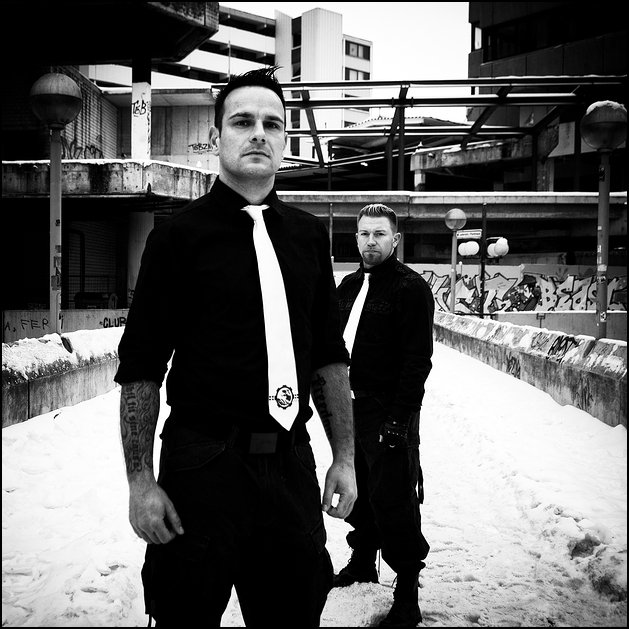
New album out from Funker Vogt
Tracklist
01. Columbine (03:43)
02. Mein Weg (04:05)
03. Religion (03:58)
04. Six Feet Under (03:24)
05. Kampf den Maschinen (03:14)
06. Gott noch nicht (03:48)
07. Kill on Command (03:17)
08. Our Life (04:42)
09. Kapitulation (03:57)
10. W.o.t.W (04:16)
11. The Firm (03:41)
12. Revolution (03:26)
13. Brüeder (05:23)
written and performed by Neuroticfish. Filmed, edited and directed by Judith Klein. (C)2013 Neuroticfish all rights reserved. Taken from the forthcoming album “A Sign Of Life”.
http://www.neuroticfish.com
https://www.facebook.com/OfficialNeur…
https://soundcloud.com/officialneurot…
A film by Dave Hoser
© Notable pictures
From the album Cryptex [BDMCD22] / BOREDOMproduct
Efterklang live in Zagreb (2013)
Watch EFTERKLANG perform “Frieda Found A Friend”, “Sedna” and “Between The Walls” live and in 1080p HD video at Electronic Beats Festival in Zagreb (08 November 2013) — Hashtag is #EBFest13
Find more live videos here: http://www.youtube.com/ElectronicBeat…
Read our review of the entire festival and see more pictures here: http://bit.ly/1iTBBme
Arturia Microbrute sequencing Minibrute and eurorack modular drums on Maschine Studio
Background video information:
Just messing around with the new toy. I will have more detailed info up soon over at Fluxwithit.com
Don’t forget to sighn up for the free Newsletter to get FREE Maschine packs.
Time machine: Juno-60 and Juno-106
Five demo clips of the Roland Juno-60 and Roland Juno-106, two classic DCO-based analog synths of the ’80s. LinnDrum – drums; Eventide H3000-D/SE = dual long delay
Clip 1: Juno-60: Bass; Juno-106: Brass — 00:10
Clip 2: Juno-60: Harp; Juno-106: Strings — 01:57
Clip 3: Juno-60: Syn Strings; Juno-106: Synth — 04:21
Clip 4: Juno-60: Strings; Juno-106: Bass — 07:09
Clip 5: Juno-60: Organ; Juno-106: Bass — 09:54
The Roland Juno-60 is a popular analogue 61-key polyphonic synthesizer introduced by Roland Corporation in 1982 and a successor to the slightly earlier Juno-6. Like its predecessor, the Juno-60 has some digital enhancements, used only for clocking the oscillators and for saving and loading patches. This instrument was succeeded by the Roland Juno-106 in 1984.
Roland was losing market share with the Juno-6 in competition against the Korg Polysix. Related in features and price-class, the Polysix featured external control and patch memory, which the Juno-6 lacked. These features were quickly added to the Juno-6’s design, which sonically and architecturally did not change notably between the two versions, and then released as the Juno-60.
The Juno-106 is a very common and widely used analog polysynth. It continues to be one of the most popular analog synths due to its great sound and easy programmability. It was the next major incarnation of the Juno-series, following the Juno-60. While it has virtually the same synth engine as the Juno-60, the 106 added extensive MIDI control making it one of Roland’s first MIDI-equipped synthesizers. There was also increased patch memory storage, up to 128 patches instead of the 56 patches available in the Juno-60. However, the Juno-60 is often said to have a slight sonic edge over the more advanced 106. The 60 had the ability to modulate oscillator pulse from its envelope and has a “punchier” sound quality.
The Juno-106 is a six-voice polyphonic and programable analog synth with one digitally controlled oscillator (DCO) per voice. While classic monophonic synths used two or three oscillators to create a fatter sound, the Juno-106 uses built-in Chorus to fatten up its sound to dramatic effect. The nature of its DCO meant it was stable and always in perfect tune but still warm and analog. There is an excellent 24dB/oct analog lowpass filter with plenty of resonance and self-oscillating possibilities and a non-resonant highpass filter. The programable pitch/mod bender can be assigned to control the DCO pitch, VCF cutoff, and LFO amount all at once or individually.
The Juno-106 was the first MIDI equipped Juno and its implementation is quite good. There are 16 MIDI channels available and MIDI SysEx data can be transmitted/received from all the sliders and buttons for total remote control and sequencing capability. A switch on the back of the keyboard, next to the MIDI ports allows the user to switch between three types of MIDI modes: Keyboard and Hold data only; Keyboard, Hold, Bender, Patch selection data; or All data (including SysEx). Most users simply set it to MIDI Function mode 3 and forget it.
This synth is incredibly straightforward and very powerful. It’s SH-series derived panel layout is easy to understand and very hands-on. Use it to generate lush pads, filter sweeps, and funky bass lines and leads. The Juno-106 is an awesome learning tool for anyone new to analog synthesis, as well as an electronic musician’s dream for its warm analog sounds coupled with modern features like MIDI and memory – all at a very reasonable price. And still the Juno-106 has an even cheaper alter-ego in the form of the HS-60 – a hobbyist version with built-in speakers.
DATAMASKIN

