
Jen SX3000 – new virtual instrument Native Instruments Kontakt
UK developer Synth Magic has released Jen SX3000, a virtual instrument Native Instruments Kontakt. Here’s what Synth Magic has to say about Jen SX3000:
The Graphical user interface has been designed by renowned GUI designer Anders Hedstrom(Flavours of Lime) who has done an amzing job creating the front panels and user interface. There are lots of great sounds from sound design guru Ingo Weidner who has made a batch of great sounds for the Jen sx3000-there are also sounds from Synth Magic. Over 130 presets plus random preset generator-Easily create new and exciting presets by pressing one button.
We sampled our Jen SX1000, every note, every octave to give half a Gigabyte of Jen samples(411MB zipped)and added a few twists ourselves such as interval generators, sub oscilators ,lots of effects and best of all we added our custom sequencer which has undergone a major revamp and can now store and read a number of patterns for instant playback. Sequencer can now store a number of patterns and recall them instantly,allowing you to build up your compositions. We also added random sequence generator-at the touch of a button a completly new pattern will be created and random cutoff and resonance patterns too-Very inspirational and the source of hours of fun and great patterns.
The synth section also has aftertouch to vibrato and aftertouch to filter cutoff to allow for some really great expressive sounds.
Event with Front 242 – How to build an EBM track
 On Friday 18 November Front 242’s Patrick Codenys presents workshop ‘How to build an EBM track’ in Lille (France). The workshop is part of the “Children Of EBM” event featuring a Front 242 DJ-set (BE), Suicide Commando (BE), The Hacker (FR) and Khimaira (JAP). Place to be: Gare Saint-Sauveur in Lille (France) at 8 PM and also at the Krak in Avelgem (Belgium) so it seems.
More info to come
ALESIS IO DOCK w iELECTRIBE midi from TENORI – EXPERIMENTAL NOISE INDUSTRIAL BEAT
Bring out the noise 
I think the creator of this video sums it up pretty nice:
BOOM BA BOOM BA CLASH BAMM BANG Bip… Ping… BOOOM
New synth video from Digital Factor – “I Have To Hit You”
The official videoclip to “I Have To Hit You” from the Digital Factor album “Trialog” released at Black Rain Records.
The sound of Soviet Science Fiction
Highway scene from Tarkovsky’s Solaris (1972)
Here’s a nice and inspiring article focusing on the vintage sci-fi music scene:
Eduard Artemiev first met Andrei Tarkovsky at a house party thrown by the painter, Mikhail Romadin, in the spring of 1970. The conversation somehow turned to the subject of electronic music and, to Artemiev’s surprise, the director soon invited himself to the electronic music studio in Moscow where the composer worked, keen to see the working methods behind the ANS synthesizer that was housed there.
Artemiev had been one of the first composers to work with the ANS, after its inventor, Yevgeny Murzin, posted a note up at the Moscow Conservatoire where Artemiev was a student, looking for composers interested in electronic music. This machine, the first Russian synthesizer, operated using a unique system of drawn sound synthesis. The composer would paint on a sheet of glass which was scanned by the synthesizer, becoming a kind of graphic score, allowing the composer to work like a painter, tinting and shading, forming textures and tone colours directly. Due to the similarities such a method conjured up with the colouristic music of Murzin’s idol, the Russian composer Alexander Nikolayevich Scriabin, the device was named after his initials.
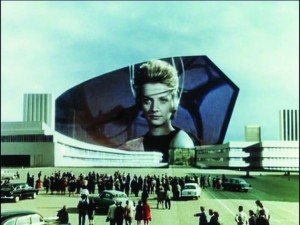
Tarkovsky was evidently impressed with what he saw at Artemiev’s studio for he soon asked him to compose all the music for a new science fiction film he was working on with Romadin, Solaris, having recently fallen out with regular musical collaborator, Vyacheslav Ovchinnikov. Tarkovsky gave Artemiev a completely free hand on Solaris, insisting on just one stipulation: that the film must include JS Bach’s Choral Prelude in F-minor, ‘Ich ruf zu Dir, Herr Jesus Christ’.
Though the soundtrack to Solaris uses both orchestral and electronic textures (from the ANS), Artemiev has said in interviews that in terms of its treatment, the orchestra “functioned like one giant synthesizer.” From the composer’s notes written before he started work on the film, we can see that he delineated five general areas: landscapes; personal sound perceptions; various transformations and distortions of the Bach theme; recollections of the Earth; and the sounds of the living ocean, Solaris, itself. Of this final category, Artemiev remarked, “It is, obviously, composed of the sounds of terrestrial life as if processed by the Ocean. . . The characters of the film hear (or are trying to hear) sounds either similar to terrestrial ones, or sounds which are kind of little cells or islands remaining from the Earth which they manage to identity out of the mass of strange and yet incomprehensible noises.”
As Tatiana Yegorova notes in her study of Artemiev’s “musical universe” (1), there is something strangely homely about the space station upon which much of the film is set, and Tarkovsky and art director Mikhail Romadin at one point considered basing the design for the interiors on that of an ordinary Moscow apartment. Artemiev’s score thus becomes one of the sole sources of the sense of the alien and exotic in the film. Characteristically, though, some of the most alarming music is reserved for a scene set on earth, as Henri Berton (played by Vladislav Dvorzhetsky) drives through a tagliatelli of motorway underpasses and flyovers (shot in Osaka and Tokyo). Here, the ‘natural’ sounds of the road and passing cars are swollen with feedback echoes and combined with coruscating electronic textures to create a maelstrom of sound, as if we were experiencing the Earth through the eyes – or rather ears – of the Solaris ocean itself. This scene exemplifies perfectly the Russian formalist Viktor Shklovsky’s notion of ‘otstranenie‘ – the experience of one’s own everyday lifeworld as observed by an alien being.
Read the full article by Rober Barry here >>
FT201- Analog State Variable Filter / 10 Step Sequencer
The KOMA FT201 intro: KOMA FT201, our voltage controlled vactrol state variable filter combined with a 10 step sequencer. As with all sweet spots you can approach it in two completely different ways: either you circle around it in a delicate manner, play with the overtones and resonant frequencies or you blast out the random function and let the madness begin! The FT201, a sweet lady, who brings sexy back into your overall sound. Kadeng! The FT201 comes standard with a solid footswitch, multiple outputs, an audio and control voltage patchbay and our new innovative expression controller.
Our buddy Gerald played around with two FT201’s (our Analog Filter / 10 Step Sequencer) and crappy but lovely old Moog Satellite synth. A little insight in the general sound, IR motion controller, filter and sequencer functions.
Dynamically Create Interfaces via OSC
This video shows how you can create interfaces on-the-fly via OSC messages sent to Control v1.3. Widgets can be added, removed and modified. Arbitrary Javascript can also be executed to manipulate multiple widgets simultaneously. So, if you’re looking to turn an Android phone or flashy, new Android tablet into a touch controller for music, you’ll be really glad to see OSC and MIDI controller Control.
Control enables users to create their own interfaces for controlling musical, artistic and virtual reality applications. It is built on top of the WebKit rendering engine and allows users to define their interfaces via JSON files. Features include:
– Outputs Open Sound Control (OSC). MIDI coming soon!
– Handles multitouch on capable devices
– Bi-directional communication: use Control to set values on your computer, use your computer to set values in Control
– Dynamically add and manipulate widgets via OSC messages
– Reads and outputs data from Accelerometer and Compass sensors (on applicable devices) with adjustable update rates
– The ability to script behaviors for widgets using JavaScript
– Auto-discovery of wireless networks via Bonjour
– Interfaces can be pushed to the phone via OSC or downloaded from the web
– Supports both portrait and landscape interface orientations
– Interfaces work on both phones and tablets (tested on Droid and Asus Transformer)
– Free
If you’ve never used wireless MIDI or OSC before, Control (and all other wireless MIDI / OSC apps) will have a little bit of a learning curve to get started. Please visit the Control support website!
Picatune 2 – the new free standalone synthesizer sequencer
Finally available for your home computer:
The ♥farbrausch♥ software synthesizer sequencer – programmed by Benjamin »BeRo« Rosseaux.

- many different oscillator waveforms, filters, distortions and a lot of other stuff
- Freeform sampleexact modulaton patternbased envelopes (the main reason why Picatune2 may use slightly more CPU time than other comparable synths)<
- Modular operator-based (like .werkkzeug)
- S3M/IT-like effect commands
- sample exact modulations
- sample support
- speech synthesizer
- PADsynth algorithm
- 10-band equalizer
Listen to it here:
BeRo – Power of age by Benjamin Rosseaux
BeRo feat freQvibez – La Femme immortelle by Benjamin Rosseaux
BeRo feat freQvibez – Pacemaker by Benjamin Rosseaux
Analogue Solutions Leipzig
Two nice videos prepared by a german synth mag
Space Music: The Alien Sounds of Richard Devine
Discovery has recently published a great interview with Richard Devine, the electronic musician with many labels:
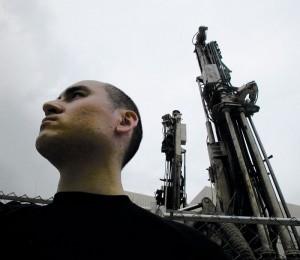
I recently had the chance to interview electronic musician Richard Devine for the Discovery News article “Is Electronic Music ‘Real Music?'” The man had loads to share about his own creative process and advice for aspiring artists, so I figured a Space Music post was the perfect place to share more.
For those of you who aren’t familiar with his work, Richard Devine creates the sort of electronic soundscapes that generally attract the label “intelligent dance music” or IDM. But as with most artists of talent, his work defies such labels. His music is at times melodic and ethereal, other times jarring and chaotic.
Let’s hit an example of his work before descending straight into the interview.
Galaxy Mesmer by RichardDevine
What experience are you looking for the listener of your music to have when they listen to your work?
RICHARD DEVINE: I like to put the listener in an unusual space and in an emotional space, as well. A lot of music that’s out typically touches on normal subject matter and emotions that people — common emotions like love and happiness and sadness. A lot of my compositions are a bit more abstract where I like to take the listener on a strange cerebral sonic adventure. It almost be like if you were trapped inside a H.R. Giger visceral world of corridors and spaces.
I’ve always been drawn more to the kind of music that takes me to places I’ve never been to before. I don’t know how to describe it. It’s just a collage of strange sounds and textures that make you feel a certain way. You can’t really put your finger on the emotion that you’re experiencing. Some of it can be unsettling; some of it can be just bizarre at times. Sometimes the outcome is pleasant or very unpleasant; I guess it goes to far extremes at either end of the spectrum.
SONOiO – Not Worth Remembering – Richard Devine-Remix by RichardDevine
How do you view the impact of electronic music production on human creativity?
When I first started making music, there were hardly any music programs available for the personal computer. Now applications like GarageBand and Reason offer full production environments for creating any type of music. Many of these applications come free with some of these operating systems. How that affects us, I think, is positive and negative. I think that, on one side of the coin, you have a lot of new music coming out. And the flip side of that is you get a lot of bad music, too, at the same time. It doesn’t necessarily mean the quantity equates to quality, but it does put everything kind of in a perspective where you see that thousands and thousands of people now can get opportunity to make music and it takes something that was very difficult to get into in the past and now make it more accessible for the masses.
But there’s almost too much electronic music coming out right now. I feel like it’s harder to stand out these days. There are so many people trying to emulate specific styles, so now you have hundreds and hundreds of people trying to sound a particular way. I find that there is less and less innovation in music, but more and more people creating it. So I think it’s harder for people to get discovered than it was ten years ago, when I was starting out and we were actually recording onto DAT tapes and releasing vinyl records. Now with digital distribution, anyone can just upload a track to Sound Cloud or any other site and promote it through social media networks. Now it’s a whole different animal all in itself. And I think it’s much harder to stand out and to get recognized now in the sea of millions.
DATAMASKIN

