
Korg Radias – ‘The Calling’
A piece sequenced and performed entirely on the Korg Radias and recorded live into Logic Pro 9. Added some Echo using the Delay designer. All other effects are on the Korg Radias – Stereo Phaser on both Bass and Pads. Drums and Bass Line Sequenced on the Radias, Arpeggiator also used on Arp Saws.
“Fashioned on one of my idols Jean Michele Jarre, just in case you were wondering. Bass Sequence and sound programmed by me, all other sounds are from the presets, with a tweak here and there.”
Octatrack Pro Tip – Single Cycle Waveform Pattern
Try it out for yourself! Download the Project files for this Pro-tip here:
http://files.elektron.se/pro-tip/PROTIP7.zip
By taking advantage of the flexible audio engine of the Octatrack, sounds can be radically reshaped. This is demonstrated in this video. The same single cycle waveform sample has been used as the basis for all the sounds of the pattern.
Sanshin – 涙そうそう / 夏川りみ – Electronic instrument for iOS
http://itunes.apple.com/app/sanshin/id328157378
iPhone向け楽器アプリ「Sanshin (三線)」デモ動画です。
Demo for iPhone app “Sanshin” simulating Okinawa / Japanese Traditional “Three Strings”
Electrix Warpfactory – Vocoder
Josh Tallman demos the vocoder – Electrix Warpfactory:
Designed for both DJs and Musicians, the Warp Factory is possibly the ultimate stand-alone Vocoder. With those great big knobs, the Warp Factory is designed for straight-forward hands-on use. It has an XLR Mic input (conveniently located on the front) and a quarter-inch line input for use as the Formant or carrier signals. Then there are two quarter-inch line-inputs and two RCA phono inputs for your stereo source sounds, either drum loops, mixes, songs, synth pads, etc…
The way it works is whatever Formant signal you have, say your voice, will be warped into taking on the characteristic of the Source signal you have, say a buzzy synth sound. This would in effect give you that Robot voice effect.
The Warp section is where you’ll find most of the knobs and cool features of the Warp. There is a low- and high-pass filtering switch. A ‘Gender’ knob adjusts the pitch of the Formant. ‘Q’ adjusts the width of the filtering. An ‘Order’ adjusts the filter resolution for clear to abstract vocoding effects. There is also Noise and a built-in oscillator Source signal whose pitch is adjusted by ‘Robot Pitch’. Various Bypass and Freeze switches and complete MIDI implementation make this the ultimate Vocoder for DJs, musicians and producers.
Taking a tour at Robotspeak
A circuit Vtech Tiny Tot Driver at Robotspeak in San Francisco.
For more info: http://www.wiretotheear.com/2012/08/24/robotspeak
Checking out the Doepfer Dark Time analog sequencer.
Mostly Robot: Tim Exile’s custom made Reaktor setup
Tim Exile takes you through his custom created NI Reaktor based setup used in the Mostly Robot show. He shows how he manipulates sounds and gives an exclusive performance showcasing his technique.
This is an excerpt of the full 40-minute exclusive Mostly Robot video available in the latest issue of Future Music Magazine.
Purchase this magazine from http://www.myfavouritemagazines.co.uk or purchase digitally from http://goo.gl/eITPa
New material from DE/VISION – Brotherhood Of Man
The new DE/VISION video of “Brotherhood Of Man” – the first single from the album “Rockets & Swords”. Released on 24th August 2012 – available on Amazon & iTunes
bx_stereomaker plug-in creates a virtual S signal with analog style filters
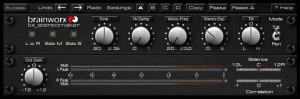
Make Any Mono Signal Stereo –
Brainworx lets us know that bx_stereomaker creates a virtual S signal with analog style filters using advanced digital science. They say that you can solo this virtual S signal and that bx_stereomaker will enhance any mono signal to stereo, while allowing you to balance the center of the stereo signal and paying attention to the frequency range of your signal.
A spokesperson told us, “We call this release a ‘public beta’ just like we do with all brand-new plugins. We always test our plugins internally, of course, but with almost countless different setups out there we cannot test every possible setup. This release is an unlimited fully functional version and can be tested and bought from now on.”
Pricing and Availability:
$95. ($129 after September 15)
More information:
EMW-200 & EMW-300 VIDEO
EMW-200 and EMW-300 demonstration. No external effects or processing of any kind on this video.
30 years has gone since Yazoo’s Upstairs at Eric’s hit the stores – Interview
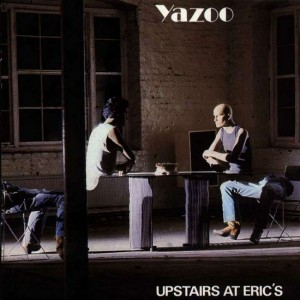
On the 30th anniversary of its release, Vince Clarke tells John Freeman how Yazoo’s groundbreaking debut album was all about “the singing and the tunes”.
Excerpt from the interview:
What were your first impressions of Alison?
Vince Clarke: By the time Alison and I started working together I did kind of know her. I’d seen her perform in a couple of local R&B bands and a punk band [The Vandals], so I knew she had a great voice. When I finally got to meet her I found her to be incredibly shy, which was opposite to her personality in this particular punk band.
What was it about Alison that made you want to work with her?
VC: Well, I only had one song, ‘Only You’, which I wanted to demo and that was the sole purpose of hooking up in the first place. I knew that she could sing with a lot of emotion and this particular track was a love ballad. I was looking for someone who could put that across.
What was that very first practice session like?
VC: It was great. We were using this tiny four-track tape recorder and I had the backing track already done. She came around to my flat in Basildon and just sang it in one or maybe two takes. The song wasn’t particularly challenging for someone of Alison’s abilities. But immediately in the recording there was this sense of seriousness and almost pathos – it was a really great performance.
You then played ‘Only You’ to Daniel Miller at Mute and he wasn’t immediately impressed. I’ve read that you were pretty close to quitting music at that point. Was that the case?
VC: Pretty much. When I first played the track to Daniel I had gone to his office and he was busy messing about with a synthesizer, as usual, and he didn’t seem to be particularly interested. I did think to myself that that was the end of my musical career and I’d need to get a proper job. But that the same evening, the publisher came into the office and he was with a load of other publisher associates and they heard the track and were really enthusiastic about it. That possibly influenced Daniel’s opinion.
As you began to create songs for Yazoo, did your songwriting change compared to how you’d written previously for Depeche Mode?
VC: No, I don’t think my writing changed. Hopefully my songwriting was getting better but I wasn’t writing songs for Alison’s voice per se, I was just writing what I thought at the time were quite good songs. I knew that Alison had some ideas for songs as well – she plays piano better than I do – so we just came together and it was a bit of a mish-mash really. There was no concept or theme running through the album; we were just messing about in the studio.
Part of the charm of that album is a naivety. There really wasn’t a profound concept that was running through the recording. I didn’t really know what I was doing in the studio and Alison hadn’t much experience of being in a recording studio, so everything was new. We’d make one sound and we’d think it was great and just stop there and wouldn’t make any more sounds. It wasn’t like we were continually honing or over producing songs because everything at the time sounded fresh. That’s why a lot of the tracks only have eight or nine elements to them.
The title of the album refers to the studio in which you used. What are your memories of the recording process?
VC: We were recording at Blackwing Studios where I recorded the first Depeche Mode album. It was the only studio we knew and the engineer, Eric Radcliffe, was – and is – fantastic. Back then, Blackwing was the studio that Mute were using for all their artists so Fad Gadget was recording his second album at the same time. He was doing the regular hours of 11 in the day until 11 in the evening and so we would get there at about five or six in the morning and just do that early shift.
Ouch.
DATAMASKIN

