
Simple Minds are back: Celebrate – The Greatest Hits – with 2 new tracks
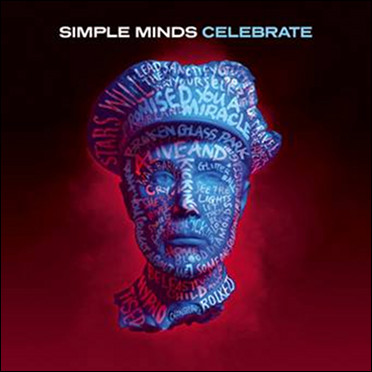
Out on March 25th via Virgin Records is the 2 and 3CD set “Simple Minds – Celebrate – The Greatest Hits” holding with 2 new tracks. The release comes following last year’s “X5” boxset and the “5 X 5” tour. The 2 new tracks on this comprehensive overview of 35 years of one of Britain’s most successful bands are “Broken Glass Park” and “Blood Diamonds”.
Jim Kerr has a rather own way to describe the band’s career: “One of the things I’m most proud of is that people say to me what Simple Minds are you talking about? The avant-garde, the art-rock, the pop, the ambient, the instrumental group, the political, the folk, the stadium band? We’ve been on one hell of a journey. To play all those different styles but at the same time be quintessentially Simple Minds is an amazing thing.”
Via SL
Deep House with Juno-60, M1, TR-909
A Deep House-inspired improvisation using Roland Juno-60, Korg M1, Roland TR-909
Derek Sherinian with the KORG Kronos Music Workstation and KingKorg Synthesizer
Long-time Korg endorsee Derek Sherinian (Black Country Communion, Dream Theater) performs at Korg’s Winter NAMM 2013 booth, showing off the Kronos Music Workstation along with the all-new KingKORG analog modeling synthesizer. For more information about the instruments, please visit www.korg.com/kingKORG and www.korg.com/kronos. For info on Derek, please visit www.dereksherinian.com.
QuNexus NAMM Demo
QuNexus was shown in the KMI booth at NAMM 2013. This video contains examples of the QuNexus NAMM demo:
– Channel Rotation (MIDI channel is assigned in the order that keys are pressed, allowing for poly-pitch bend).
– Hold Note function (useful for stacking chords or step sequencing).
– LED Arpeggiator Feedback (Ableton Live’s arpeggiator is used to remotely control each of QuNexus’ LEDs. Each of the 32 LEDs can be controlled by any MIDI device or DAW).
Closer look at Ableton Push
Dennis from Ableton goes over a few of the key features within their new DAW and performance controller, Ableton Push.
Atlanta’s own Tech Beats gives us a live demo using Ableton Push.
“Push is a new instrument that solves an old problem: how to make a song from scratch. With hands-on control of melody and harmony, beats, sounds, and song structure, Push puts the fundamental elements of music making at your fingertips – and it fits in a backpack alongside your laptop. 64 pads give you multiple ways to make beats. Play, step sequence, and navigate your loop – all at the same time.”
ARP Odyssey + Oberheim OB-Xa
Vintage synthesizer demo track by RetroSound
“Games”
bass and sequencer sounds: ARP Odyssey Mk III Analog Synthesizer from the year 1980, sequenced by the SCI Pro-One internal step sequencer
all other sounds: Oberheim OB-Xa Analog Synthesizer from the year 1981
drums: Roland TR-707
recording: multi-track without midi
fx: a little bit delay and reverb
more info: http://www.retrosound.de
Moog Sub Phatty Behind the Scenes w/ Bernie Worrell (P-Funk)
Cyril Lance, Chief Engineer at Moog, talks us through some of the choices made behind the scenes on the design of the new Moog Sub Phatty, accompanied by Bernie Worrell of Parliament/P-Funk noodling on the Sub Phatty and Voyager.
More info: http://www.moogmusic.com/products/subphatty
Find a UK Dealer and pre-order: http://sourcedistribution.co.uk/dealers/area.asp?item=moog
Enjoy
Two synth teasers: Code 64 – Accelerate and Orchestral Manoeuvres in the Dark – Atomic Ranch
A sneak preview from the new upcoming album from the Swedish EBM act Code 64
- Accelerate (Radio Edit)
- Accelerate (Apoptygma Berzerk vs Ok Minus Remix)
- Sd Sequence
- Accelerate (Henrick Bäckström Remix)
- Love Sees No Colour
The British new wave pioneers take a scenic drive through a futuristic utopia.
Bleep Labs Thingamagoop modulated by Arduino with accellerometer
Reactive Music Experiment.
Accelerometer on springy stalk flashing led to modulate sound from Thingamagoop .
The Thingamagoops are really just simple, analog type synthesizers that you control in a different way. The Thingamagoops have oscillators just like any synth. On analog synths the oscillator that creates the actual tone you hear is called a VCO or voltage controlled oscillator. The Bleeps work a little differently so we’ll just call it the main oscillator. Instead of using a keyboard, the main oscillator in the Thingamas is controlled by a photocell. Here’s what the waveform from the main oscillator looks like.
When there is a lot of light hitting it, the resistance across the photocell goes up and the oscillator yields a higher pitch. Less light lowers the resistance and pitch. When the switch on the right is up, the oscillator is in a high range and when it’s down it’s in a lower range. One neat thing about the photocell is that it reacts to different kinds of light. Florescent lamps and TV screens give the Thingamagoops a harsher tone while natural and incandescent light produce a cleaner one. Just like any analog synthesizer, the thing-a-ma-s have another oscillator that effects some variable. This is usually called a modulator or LFO. Here the modulator’s waveform is pretty close to a square wave.
The modulator’s frequency is controlled by the knob and the type of modulation is selected by the switch on the right. When the switch is up the modulator is effectively turning the output of the main oscillator on and off. This yields a simple beep beep beep at lower frequencies but at higher frequencies sidebands are created. Sidebands occur when the modulator is oscillating inside the audible range . This creates new frequencies that are multiples of the oscillator’s frequencies.
When the modulator switch is down, the modulator is changing a variable in the LEDacle’s circuit. Now you have some control over its rate of blinkatude. The LEDacle is a modulator too but instead of adjusting knobs and switches to change how it interacts with the main oscillator, you physically move it around to effect the sound. The light from the LEDacle can be pointed at the photocell to rhythmically change the pitch. Not only can you use the speaker inside the Thingamas to listen to crazy beeping nonsense, you can also use the 1/4inch ouput jack to plug it up to all kinds of things. Plug it into some guitar effects and an amp for some indescribable electronic madness.
Building Techno and House rhythms on the Roland TR-909
“I bought my 909 in the ’90s when it was at the peak of its popularity in Techno, House and Rave music. This old faithful has been to many raves and house parties back in the day, yet, amazingly, still works and more importantly, grooves like a fox on rollerblades.”
The Roland TR-909 Rhythm Composer is a partially analog, partially sample-based, drum machine introduced by the Japanese Roland Corporation in 1983. The brainchild of Tadao Kikumoto, the engineer behind the Roland TB-303, it features a 16-step step sequencer and a drum kit that aimed for realism and cost-effectiveness. It is fully programmable, and like its predecessor, the TR-808, it can store entire songs with multiple sections, as opposed to simply storing patterns. It was the first MIDI-equipped drum machine. Around 10,000 units were produced.
DATAMASKIN

