
NAMM 2009: New from Arturia – miniMOOG V
Updates to software instruments
 French physical-modelling company Arturia were showing updates to two of their software products at the NAMM show.
Hottest things at NAMM 2009
1. Ableton Live 8
The indications are that a new version of Ableton’s groundbreaking DAW could be shown in Anaheim.
2. The ‘producer product’ from Native Instruments
We already know that NI will be launching three new products at NAMM – a hunch is that it will be the biggest NI product innovation in years”.
3. Cubase 5
Steinberg’s revelation that its NAMM announcement will concern “the apex of many years of technology developed through our passion to help musicians, composers and producers realise their musical creativity” certainly points towards a Cubase update.
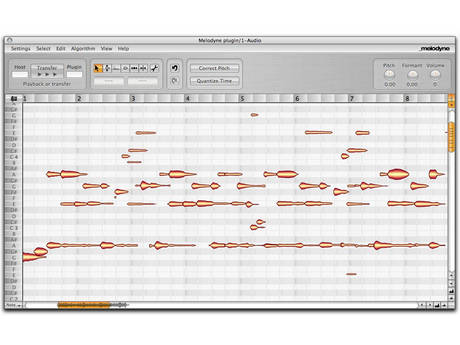
4. Melodyne Direct Note Access
Having had its release date delayed – it was originally supposed to be available in the fourth quarter of 2008 – we hear that it’s finally ready to go, and should be shown in its almost-finished form at NAMM.
5. AmpliTube 3?
IK Multimedia has plans to announce something, and a new version of AmpliTube seems like a logical launch for them.
6. NI new drum machine >> Maschine
Native Instruments will be introducing Maschine – a next generation groove production studio that combines hardware and software – at the 2009 NAMM Show.

Product feature: EVE

EVE stands for Electronic Vintage Ensemble, which suggests the design philosophy behind the instrument. EVE was made to recreate in the virtual world of softsynths the exciting and immediate experience of the early age of electronics in pop, rock and jazz music from the 1960’s and 1970’s.
During this creative period in music history, many musicians started to employ the innovative sounds of the ‘electric keyboards’ which were newly available for use on stage and in the studio: Rhodes electric pianos, Hammond and Vox organs, Hohner clavinets, strings machines such as the Arp Solina string ensemble, Moog synthesizers, and all those that are now considered ‘classics’.


EVE takes these vintage sounds and this early approach to ‘electronic’ music production as a starting point, bringing this general philosophy and sound into the modern virtual environment with an intuitive and powerful interface. At the core of the EVE approach to sound design is the basic structure of 3 sample-playing layers, 2 multi-effect racks, and a selected library of multisampled ‘electric keyboards’. This enables the blending of several waveforms and instruments into a vintage wall of sound, or alternatively, the use of the 3 layers multi-timbrally as a vintage workstation. These layers can then be further processed through EVE’s powerful multi-effect racks.
EVE 2 adds several enhancements and new synthesis features to the simple yet powerful EVE design. All the original functionality and ease of use is still there, with the following changes and additions –

• The original LP resonant filter per layer in EVE has been replaced by a multimode filter (LP, HP, BP, BR) with control over cut, resonance and envelope modulation, as well as a special ‘fractal’ modulation parameter. This expanded filter design provides further tools for balanced layering of sounds, and deep pads.

• FM/AM modulation capabilities per layer have been added via the ~FM switch matrix. FM and AM can be used to add interesting harmonic distortions to the original instruments, or to manipulate new sounds from the existing samples.

• The vintage multi-effect racks have been updated, with an expanded ECHO rack, and a new overdrive effect in the MODULATOR rack, as well as various enhancements to other effects.

• New routing options between the layers and the effects allow the MODULATOR rack to function in both ‘send’ and ‘insert’ modes.
• EVE 2 now supports the loading of WusikSND SoundSets, opening up a whole range of extra sample content that can be loaded into the EVE engine. Due to synth design differences, EVE 2 does not load Wusik presets (FXP, FXB, BNK or WusikPRST files). For EVE 2 to read WusikSND SoundSets, they must be installed into the ‘EVE Data’ directory in any subfolder.
The problem of listening to music while working or studying
What is really the best music to listen to when working or studying? I know a lot of people who can sit with their headphones on listening to heavy pumping trance music or hard core rock music. For me this is impossible, I get totally un-concentrated and un-focused. First of all music at work has to be played in speakers (if OK by your fellow employees) so that the music will not be to intense right into your brain.
But the real problem is two folded; first the music you listen to has to be good enough to put you in a pleasant mode and hopefully excited about doing what you’re supposed to be doing (studying / working); secondly the music has to be bad enough not to have you listen more to the music than what you’re supposed to be doing – again work or study.
Lo-fi experimental electronic music is perfect for this and there are a couple of records that keep coming back to when studying AND the best thing is that they are both Japanese albums – having that great advantage that you do not understand all what they are singing about, and thus, you cannot sing along.
So please enjoy these two musician’s albums while working or studying, but make sure to listen to them in your speakers on a fairly low level and not in your headphones. Enjoy!
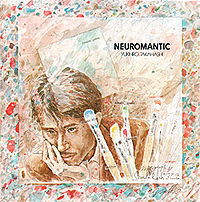
Yukihiro Takahashi (高橋幸宏 Takahashi Yukihiro, born June 6, 1952) is a Japanese musician, who is best known as the drummer and lead vocalist of the Yellow Magic Orchestra.Yukihiro Takahashi first came to prominence as the drummer of the Sadistic Mika Band, and became known to western audiences after this band (led by Kazuhiko Katoh, formerly of The Folk Crusaders) toured and recorded in the United Kingdom. After the Sadistic Mika Band disbanded, some of the members (including Takahashi) formed another band called The Sadistics, who released several albums. Finally Takahashi recorded his first solo album Saravah in 1977. In 1978, Takahashi joined Ryuichi Sakamoto and Haruomi Hosono to form the Yellow Magic Orchestra.
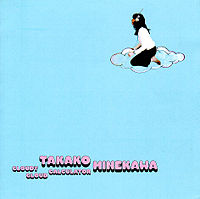
Takako Minekawa; as an accomplished all-around musician, Minekawa’s musical skills set her firmly outside of the J-Pop “idol” tradition: she writes and composes most of her material, singing quirky lyrics about subjects such as clouds, cats, and the color white (her personal favorite), with her love of Kraftwerk and French Pop Music also showing through her unique experimental sound. She often makes use of vintage Casio keyboards and analog Moog synthesizers, as well as vocoders and other electronic instruments.
STRUM ON YOUR KEYBOARD
Applied Acoustics Systems has revealed that it’ll be launching an electric version of its Strum Acoustic GS-1 plug-in at the 2009 Winter NAMM Show.

Full details are yet to be published, but AAS has confirmed that Strum Electric GS-1 will offer the same strumming and chord detection engines as its acoustic sibling, and will be playable from a MIDI keyboard.
However, the body has been replaced with pickups, and what’s described as a “flexible guitar rig” has also been added to the package. This will enable you to shape your tone, presumably.
<!–
Listen to some of Strum Acoustic’s playing techniques
–>Down- and up-strokes, slides and bends, hammer-ons and pull-offs, palm muting, muffled strings, and arpeggios are all part of Strum Acoustic’s playing technique vocabulary. Performing them is simply a matter of using the strumming keys or MIDI loops.

Strum Acoustic’s chord library contains basic and extended chords available in open, movable, or drop voicings. Play the chords you know and Strum Acoustic voices them as a guitarist would.

Empire State Human announce remix competition
Dublin-based synthpop act Empire State Human have announced a remix competition hosted exclusively by Laptop Rockers. This is your chance to take part in remixing their new track, “Melancholic Afro,” featuring Wolfgang Flür (ex-Kraftwerk/Yamo).

Based in Dublin/Ireland, Empire State Human are vocalist Aidan Casserly and keyboard players Seán Barron and Lar Kiernan. They create a combination of analogue and digital synth sounds, mixed with driving rhythms and overlaid with strong pop vocal melodies. Electronic music with a retro electro edge. In 2004 they had a number one in the US iTunes dance charts and only recently they’ve finished their sixth studio album “Audio Gothic”, which is due out on CD in February.
Buchla 200 Modular Synth
[youtube=http://www.youtube.com/watch?v=vCK–bs6FYY]
The original Buchla Music Box was the brainchild of Don Buchla and came from a commission by composers Ramon Sender and Morton Subotnick. First built in 1963, this synthesizer was composed of several “modules” that generated or modified a music event. Each box served a specific function: oscillator, filter, sample and hold, etc. This would have an effect on the pitch, timbre, amplitude and spacial location of the sound. The idea was to allow musicians and composers to create sounds suited to their own specifications. Previously, one had to utilize either discrete audio generators such as test oscillators or via musique concrete, recorded sounds from natural sources. Although it was a fresh and exciting idea and an excellent way to get new sounds, this was very time-consuming and arduous. The Buchla Box allowed musicians to bend and manipulate sound all in one device. This would lead to the many kinds of electronic instruments available today.
 The system features unusually high functional density, extended dynamic range, self-contained monitoring (preview) facilities, and unrestrained expandability. Interesting new techniques for polyphonic signal generation, dynamic spectral and timbral modification, complex pattern generation, and control of spatial location and movement are introduced. Organization is optimized for compactness, ease of access, and ready comprehension.
Connections within the system are made with color-coded patchcords, for maximum graphic visual feedback, zero crosstalk, optimal utilization of panel space, and unlimited flexibility and expandability. A clear and consistent distinction is maintained, both in modular function and in interconnection, between signals (the raw material of electronic music), control voltages (defining parametric structure, e.g. pitch, timbre, intensity, location), and timing pulses (defining event times and durations).
Working with loops in the 1960s
If you thought working with loops was invented by Ableton or maybe labourus reel-to-reel tape splicing of the past, check this out:[youtube=http://www.youtube.com/watch?v=yrXtmKGkSa4]
Mellotrons where all over the prog rock albums in the 60-70s but disappeard when the digital samplers came (Fairlight, Emulator, Synclavier etc) in the 80s. But Mellotron provided more than strings, flutes and organ presets. As shown in the video above loops with rythm tracks where also available.
IK Multimedias SampleTron includes also these loops if you’re into retro loops:  <a href=”http://www.ikmultimedia.com/sampletron/“>
Beginning of an end > Kraftwerk
Florian Schneider leaves Kraftwerk

Kraftwerk member Florian Schneider has left the group and ended his 40 year partnership with Ralf Hütter.
Kraftwerk’s tour of Central and South America in the Spring, with Radiohead, is still on.
From Kraftwerk’s fanpage:
This partnership has generated an incredible
music and huge advances in music technology.
Florian is a great musician, always seeking
the perfect sound through technology. Refined
and perfected sounds and vocoders to impossible
levels of perfection.
Our thanks for the state of art that led to
Kraftwerk’s music all these years.
And our wishes for success Florian’s new
projects as well as to this new Kraftwerk.
This you just must see – talkbox
Incredible 60s talkbox action from session musician ledgend and steel guitar whizz-kid, Pete Drake.
A talk box is an effects device that allows a musician to modify the sound of a musical instrument. The musician controls the modification by changing the shape of their mouth.

TalkBox
The effect can be used to shape the frequency content of the sound and to apply speech sounds (in the same way as singing) onto a musical instrument, typically a guitar (its non-guitar use is often confused with the vocoder) and keyboards.
A talk box is usually an effects pedal that sits on the floor and contains a speaker attached with an air tight connection to a plastic tube, however, it can come in other forms, such as the ‘Ghetto Talkbox’ (a homemade version which is usually crude) or higher quality custom made versions. The speaker is generally in the form of a horn driver, the sound generating part of a horn speaker with the horn replaced by the tube connection.
“According to an interview of Pete Drake “You play the notes on the guitar and it goes through the amplifier. I have a driver system so that you disconnect the speakers and the sound goes through the driver into a plastic tube. You put the tube in the side of your mouth then form the words with your mouth as you play them. You don’t actually say a word: The guitar is your vocal cords, and your mouth is the amplifier. It’s amplified by a microphone.”
[youtube=http://www.youtube.com/watch?v=t4h7mo2RRCo&eurl=http://www.futuremusic.co.uk/&feature=player_embedded]
DATAMASKIN

