
Arctic Keys soon to be released for iOS

One Red Dog Media has announced that their new virtual analog synthesizer for the iPad, Arctic Keys, has been submitted to Apple for approval.
Arctic Keys is a four-voice synth, offering extensive modulation capabilities, an arpeggiator, a sequencer and deep MIDI options.
Details:
Tweak. With all the synthesizer parameters immediately available on one page, you get instant feedback as you tweak.
The two LFOs each have three modulation destinations. Each LFO may also be free running or sync’ed to tempo and the timing rate adjusted.
The modulation matrix allows for deep routing between the Mod Wheel, aftertouch and 16 x 4 analog-style gated step-sequencer.
Perform. The classic arpeggiator is complimented by the 16 x 4 gated step-sequencer. Play a note to trigger the sequencer.
Step through a sequence to play short melodic lines or let it modulate the synthesiser. Each of the 4 tracks have an assignable modulation destination and loop point.
Adjust the velocity by tapping along the length of the key from top to bottom. Change the key mode to mono for retro lead lines.
Share. The live phrase recorder lets you save your performances as 44.1KHz 16-bit WAV files and as a Standard MIDI File.
The MIDI File includes all the knob’s control change information along with the notes you play.
Use Sonoma AudioCopy or Intua Audio Sharing to paste recorded audio directly into other apps.
E-mail the patches you make or share them over Wi-Fi
Pricing and availability are to come.
Specifications:
- Synthesis: analog modelling
- Polyphony: up to 4 voices
- Oscillators: 2 per voice, alias free, saw, triangle and square with pulse width, hard sync, ring mod, noise generator
- Filter: 1 multi-mode resonating filter with 4 filter types
- Envelopes: filter and amp ADSR envelopes
- Modulation: 2 LFOs with multiple wave shapes, sample and hold, 3 routable destinations per LFO
- Effects: master effect processors: 3-band EQ, Distortion, Chorus, Stereo Delay
- Arpeggiator: classic apreggiator with octave shift, MIDI-sync-able
- Sequencer: 16×4 gated step sequencer with multiple modulation destinations, MIDI-sync-able
- Keyboard: glissando, scroll, multi-touch poly pitch bend and aftertouch
Features:
- KORG WIST
- Sonoma AudioCopy
- MIDI Learn
- Live phrase recorder with audio and MIDI export
- File and patch sharing via iTunes File Sharing, e-mail and Wi-Fi
- Supports external MIDI in and out via CoreMIDI Networking and USB with the Camera Connection Kit
- Audio background operation
- Virtual MIDI cabling
- Open Music App Collaboration compliant
Check out the new electronic instrument – StringStation
Comprehensive look into a new musical instrument called the StringStation. The Stringstation is a custom 40-string music instrument designed to allow strings to advance future music in Surround Sound.

Here’s how they describe it:
StringStation incorporates the growing science of Digital Sound Modeling- allowing the entire expressive dynamics of human touch on strings to be the catalyst for any sound imaginable…It also introduces an intricate and truly amazing 3D resonance factor that reveals an atmospheric, dimensional soundfield never known before. Fingertips on strings instantly have a detailed nuance and dynamics allowing extreme expressiveness in music and sound creation- The StringStations 40-strings are programmed in distinct groups (bass, melody, rhythm, orchestration…) that when captured together with its innovative surround pickup matrix, pulls pure 3D tone resolution that delivers an ultra wide, exceptionally dimensional panorama. It captures in vivid 3D, a ‘fractal lattice of interpolations’. The powerful sonic force of its natural string tones layered with any sound imaginable via digital sound modeling and computer control are the beginning of an extreme level of surround music innovation…
THE SHRIMPS SHUFFLE (LIVE)
Shrimps performing their song “The Shrimps Shuffle”.
Shrimps on Facebook – facebook.com/5HR1MP5
rochesterchip.org/
Visuals by VJ PLZ ( facebook.com/PLZfollow )
This footage was shot by Jim Dewitt at Rochester Chip #11 and edited by Nick Maynard.
Theme Music by Nick Maynard.
СИГНАЛ / SIGNAL
| Full Screen recommended |
Written and Directed by: Maxim Zhestkov
Sound design: Marcelo Baldin / Combustion
CG: Ilya Nikolaev / Maxim Zhestkov
Editing / Compositing: Maxim Zhestkov
Five tips on how to improve your recordings
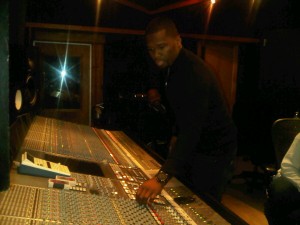
When learning to mix – sound is of paramount importance. Understanding the ins and outs, and how it all interacts is the building blocks from which any mix is made. However, once sound and the manipulation of sound is learned, there is a further and more important step: feel. People listen to music on laptop speakers, ear-buds, and in cars on the freeway with the windows down. They’re probably also listening to the mp3 version.
Under all these circumstances, the sound is clearly compromised. I’d venture that sound quality, is not really the be-all end-all of a record. Mind you, I do feel it’s important, but I don’t think that’s what people attach to and get hooked by when they listen to music.
When dealing with sound, we tend to think in terms of tone, timbre, balance, image, and punch. But why do these things even matter?
Punch is how the sound jumps out at you, image is the world the sound lives in, and balance allows the important elements to step forward. These all have emotional ramifications, and directly influence the feel of a record. So I would posit, that without “feel,” sound quality is essentially meaningless.
Here are some feel-related ideas for you to ruminate on:
1. Unbalanced Sounds – Sometimes when a certain element is unbalanced, stepping on other elements, it can feel really good. It might not sound so hot, but it can feel ever so good.
Sometimes it’s nice to momentarily unbalance a key element to build tension, and then return it to a balanced level as the release. It’s also a good way to direct the listener’s attention.
2. Groove is Everything – No matter what, at all costs, get the groove working. Whether this compromises the sound or not, groove is the innate part of music that we all feel with our body. It determines whether or not we like something before we even determine thoughtfully whether or not we like something.
Consider old Motown recordings. Any technological hurdle was superseded by incredible musicians playing with great feel. Consider this next time you’re obsessing over that hot new plugin bundle.
3. Transitions & Arrangement Dynamics – It’s very rare that a song that doesn’t vary much or have any solid transitions actually captivates people. Address and consider the points immediately before & after a song changes sections. Automate some dynamics between and during sections if necessary. [editor’s note: for transitions, check out these free cymbal swells from Joe Gilder of Home Studio Corner.]
4. Depth – That 3D image is an important part of the emotion of a song. As Jimmy Page said: “the emotion is in the room.” That can be interpreted both figuratively that the emotion is in the interchange between musicians working together in the same space, or literally that it’s the sound in the space that resonates emotionally. I think both are accurate.
5. Make the Moments Special – A song is a series of moments – if every moment is special, the song is always impactful. When recording, take the time to get the performance right. Like Edward J “UK” Nixon says, “keep working until the goosebumps come.”
Matthew Weiss records, mixes, and masters music in the Philadelphia, New York, and Boston areas. Find out more about him here.
Via PSW
Brian Eno – Remiix International Feel
Here’s a quick demo of the new interactive record for iPad/iPhone from International Feel available from Sept 27 2011. Featuring BPM & key matched tracks from Locussolus (DJ Harvey), Rocha, Hungry Ghost, Bubble Club & Coyote, it gives you the chance to make your own version of these tracks, or make a completely new track out of the component parts of all/any of them.
Buy Remiix International Feel on iTunes:
http://itunes.apple.com/us/app/remiix-international-feel/id463813127
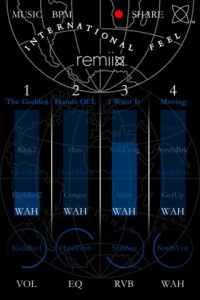
Product description:
To help celebrate their two year anniversary, remix the Balearic sounds of the mysterious label from Uruguay: International Feel. Combine instrumental loops, playful vocals, slo-mo drum & percussion loops and mercury infused basslines, straight from the shores of Vesuvius.
Remiix International Feel is an interactive record, a 2011 version of Brian Eno’s ‘Generative Music’. You mean you’re still listening to the same record over and over again?! It’s also a perfect DJ tool, containing six tracks (and their component parts) from the label’s roster, presented in an interactive format. The songs are all automatically beat-matched and repitched in key.
The range of sounds is tantalising, especially considering you can really isolate and pick out your favorite combinations. Some standouts include the bassline from “Next To You” – a long loop that turns around with syncopated leaps in the melody, the vocals from “Moving” – smooth house/disco loops that could add a sensual flavor to any mix, or the epic guitars from “Illuminations” – sitting comfortably between disco and early prog rock.
Remiix International Feel includes effects specially tailored to suit the sounds from the label. The first, RVB, simulates early analog plate reverb effects. The other is called the WAH and it lets you add subtle or drastic Leslie rotating speaker effects. You’ll recognise the sound as a throwback to the time of 70s disco and electric pianos.
Over the past 12 months International Feel has released tracks and remixes by DJ Harvey, Daniele Baldelli, Still Going, Greg Wilson, Joakim, Quiet Village and many others, as well as breaking new artists like Rocha and Hungry Ghost. This year has also seen acclaimed album releases from Gatto Fritto and DJ Harvey’s Locussolus project (from which two tracks are included on this version of Remiix).
Says label boss Mark B: “International Feel is based in Punta Del Este on Uruguay’s Atlantic Coast. The label came into existence to create a home for open minded music heads driven by 100% passion and perfection in everything we do. Whether it be the music itself or the vinyl cut… the artwork or the remixes, we strive to create pieces of music and artwork that play with expectations, never drop the quality and become desirable and collectable items of timeless beauty.”
Tracklist:
Hungry Ghost – Illuminations
Bubble Club – The Goddess
Rocha – Hands Of Love
Locussolus – Next To You
Coyote – Moving
Locussolus – I Want It
The yellow Mochika gets arpeggiator support
Nice update to this yellowish synth:
Hello world, we have added a gate arpegiator to the Mochika XL with 4 patterns. while playing you can switch between eight notes in real time tweaking a knob. The gate arpegiator can be synchronized by midi at four different sync rates, and also you can change the sync rate while playing in real time tweaking a knob.
Cube synth with wave oscillator
Here’s a little interesting cube, apparently capable of producing some really nice sounds judging by the demo:
“We at EMW, “Electronic Music Works” are almost ready to launch our new product, the WCS-1, a tiny synthesizer with a pretty solid sound.
We have been working for several years on this project with a new type of oscillator that we call Wave Composition Oscillator.
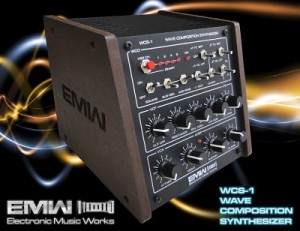
It utilizes digital technology to implement an additive waveform resource.
All other circuits use discrete analog technology.”
An improvisation in a Valerie Dore / Italo Disco style
An improvisation in a Valerie Dore / Italo Disco style circa 1984. Featuring the Orchestrator, Juno-60, LinnDrum and SH-101
Crumar Orchestrator: string machine
Roland SH-101: bass
Roland Juno-60: synth strings
Linn LinnDrum: drum machine
Reverb: built-in Roland M-10DX digital mixer
Delay on Linn claps: Boss DD-3 digital delay pedal
Hardware feature – Crumar Orchestrator:
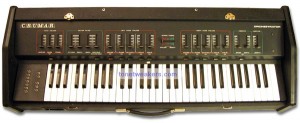
In 1977, Crumar introduced the Orchestrator (called the Multiman-S in Europe), a fully polyphonic orchestral string machine. It has five basic sounds: Brass, Piano, Clavichord, Cello and Violin. The keyboard is split in the middle allowing you to play one combination of instruments with the left hand, and another combination with the right.
All five sounds are available at all times, you simply adjust how much volume you want of each sound. Feature just a single instrument, or create your own orchestral ensemble—you are the Orchestrator! With the keyboard being split, there are five separate instrument volume sliders for the left hand (lower split) and another five for the right hand (upper split).
There is also a sixth sound: Bass. The Bass sound has its own volume slider as well, but it is assigned to only the bottom 27 notes of the keyboard. It is also not the greatest of Bass sounds either, and can sometimes muddy the sound.
There is a filter section but only for the Brass. It uses some pretty old-fashioned terminology: ‘Emphasis’ for resonance and ‘Contour’ for cutoff. There are also Attack and Decay controls for the filter. There is another filter for the Cello and Violin string sounds called ‘Timbre’ which can adjust between a ‘Mellow’ to ‘Bright’ sound—basically it’s a highpass filter. There is a ‘Vibrato’ effect section, basically the LFO, with ‘Speed’ and ‘Depth’ controls. The only global envelope control is a ‘Sustain’ length slider.
The Orchestrator’s best sounds are its Brass (probably because it is the sound with the VCF filter) and the Strings. In fact the Strings sound very similar to the famous ARP Solina. Unfortunately there are no built-in Ensemble effects to really sweeten them up…but that’s what outboard gear is for!
Like most synthesizers of its time, the Orchestrator was built with the performing musician in mind. It is its own flight-case! Its casing is very tough and durable, it has a handle and a cover/lid to keep it protected during transport. And if it looks heavy, it is! Additional options for the Orchestrator included an organ-like 13-note (G-G) Foot Pedal Board, Sustain Pedal, and a Foot Expression Pedal controller for the filter cutoff. There are no CV/Gate options, just connectors for the external pedal controllers.
About section via VSE
Reason Tips: Pulveriser’s Envelope Follower and CV
“Propellerhead product specialist Mattias Häggström Gerdt shows us some advanced CV wiring between Pulveriser and the Matrix Pattern sequencer. By using the envelope follower in Pulveriser, we can smooth out Matrix CV curves and introduce “lag” to the signal. It’s portamento for your CV signals and it’s COOL!”

Pulveriser brings together crunchy compression, dirty distortion, a multimode filter and flexible modulation in a single sound-crunching effect. Crush, mangle, and destroy your sounds. Apply careful parallel compression to bring out the details of a sample or recording. Use the envelope follower when recording live instruments for responsive, expressive filter effects.
DATAMASKIN

