
Teenage Engineering Interview, OP-1 and new OS
Here’s a nice new video with the guys from Teenage Engineering:
http://ohdratdigital.com We caught up with David from Teenage Engineering at NAMM2012 to learn about the Teenage Engineering design philosophy, take a look at the new operating system, and learn about how the guys approach creating a synthesiser instrument. We have the OP-1 in the studio right now for testing with the new OS, video coming soon!
MPV Synthex Interview
In this video, developer Jim Heintz (Way Out Ware) demos and explains his SynthX software synth for the iPad.
Heintz is also the creator of TimewARP 2600, KikAXXE and several other apps for desktop and iOS.
You can chose to play using the intuitive XY mode that automatically makes every touch tuned to the selected scale, grid mode where you explore harmonies in a fun new way, and the keys mode that provides a standard piano keyboard. Built using Way Out Ware’s award winning virtual analog technology and heavily optimized for the iOS operating system, SynthX delivers a great looking and sounding analog experience to the iPad.
A mathematically modeled synthesizer, SynthX contains no samples. As a result, it is very small in size, yet it has an extremely large and professionally design sound library. An effects chain including distortion, flanger, delay and limiter are included. Additionally, a separate identical effects chain is provided to process an external signal connected to the iPad’s audio input. SynthX has been designed from the beginning for the iPad and multi-touch. It has a comprehensive MIDI implementation using CoreMIDI including MIDI Note send and receive and MIDI Beat Clock LFO sync.
You can also record your performances within SynthX and use Sonoma Wireworks AudioCopy to share your performance with other iPad apps. It also supports iTunes file sharing which allows you to drag your performances in full quality into your favorite digital audio workstation.
New interview with synth pioneer Vangelis: A message of hope
The internationally celebrated Greek composer talks about the role of music in times of chaos, crisis and uncertainty.
Vangelis – conquest of paradise
Vangelis began his professional musical career working with several popular bands of the 1960s such as The Forminx and Aphrodite’s Child, with the latter’s album 666 going on to be recognized as a psychedelic “classic”. Throughout the 1970s, Vangelis composed music scores for several animal documentaries, including L’Apocalypse Des Animaux, La Fête sauvage and Opéra sauvage; the success of these scores brought him into the film scoring mainstream. In the early 1980s, Vangelis formed a musical partnership with Jon Anderson, the lead singer of progressive rock band Yes, and the duo went on to release several albums together as Jon & Vangelis. In 1981, he composed the score for the Oscar-winning film Chariots of Fire. The soundtrack’s single, “Titles”, won Vangelis the Academy Award for Best Original Music Score and also reached the top of the American Billboard.
In a career spanning over 50 years, writing and composing more than 52 albums, Vangelis is regarded by some music critics as one of the greatest composers of electronic music of all time
Interview – John Foxx: Mr. Yes
Here’s a new interview with John Foxx that was published by Resident Advisor:
In conversation with the synth pop pioneer and his current collaborator, Benge.
The final track on John Foxx’s 1981 single, Burning Car, was called “Mr. No.” And you’d be forgiven for thinking that it was the man’s theme song. Whether it be leaving a band at the exact moment they were primed for stardom (Ultravox) in the late ’70s, going it alone on legendary synth albums like Metamatic and The Garden or withdrawing from music altogether in the ’90s to pursue graphic design, Foxx has been more than willing to play Bartleby time and time again. Turn it around, though, and you have a guy who has had the courage to walk away. A guy who can’t help but hate to do the same thing twice. A guy you can also call Mr. Yes.
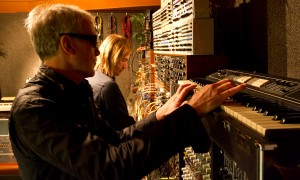
At this past year’s Unsound Festival, we talked to Foxx alongside his current collaborator Benge as part of RA’s Live Exchange series. The duo had recently put together an album, Interplay, that formed the basis for our conversation. Typically eloquent, Foxx was so engaging that we decided to edit and condense it for publication. Speaking with RA’s Todd L. Burns in front of a crowd, Foxx and Benge touched on their partnership, the creative process and the power of the bass drum.
The new record is a return to synth pop in a way for you. I am wondering why now? Why was this the right time to revisit this space?
John Foxx: It was an accident in many ways. Benge made a record called Twenty Systems, in which a lot of synthesizers sounded like themselves. What I mean by that is that they didn’t imitate any other instrument. I think it is a great sickness to try to imitate orchestras or bells or something specific. I think that this is a misuse of the instrument. What Benge was able to do was that he allowed them to make sounds that no other instruments could make, and therefore allow them to sound like themselves. When I heard that album, I wanted to work with him and to make some abstract music with him, but it didn’t quite work out.
At what point did you realize it was turning into a more “pop” project?
Benge: Halfway through the first track I think.
John Foxx: Once we had set up something on the Moog, we let it run by itself and produced a rhythmic loop, and we were able to produce a song immediately. You have the melody, you have rhythm and you have harmonic intervals that lend themselves to layering. So I instinctively started started to sing along with the machine, which is a lovely way to work: the machine leads. The machine takes precedence. All you do is listen to what the machine produces. Benge would set up things, and it was delightful to respond to it.
John, were there any lyrical themes that seemed to recur throughout the album?
John Foxx: Yeah, I always seem to write about the basic level; a man, a woman and a city. It’s because I am an urban creature most of the time. I think that’s increasingly relevant now because I think most people do live in cities and I think it is very interesting what happens in that environment. We alter ourselves constantly to live in it, to survive in it and that process has very poetic levels. I don’t want to sound pretentious, but it is very moving the way people accommodate each other and the city that they live in, and try to build this environment together. You almost have to dissolve yourself, re-incorporate yourself with the city in order to make it work on any level. All those tiny interactions and the major draws and minor draws that result from all that. I find it endlessly fascinating. I could sit in a cafe all day and some times I do. It’s like being part of a beautiful ocean that is constantly moving. A lot of what I sing about is trying to describe some of that process.
I’ve read you talking about the importance of acoustic space in your work. I was wondering how that came to play in this album if at all.
John Foxx: We weren’t so concerned with it because I think everything is artificial in some way.
Ableton Live Users Zürich – Interview with Ander
http://youtu.be/cpanACmN1Uo
The first shot of our new “Artist Series” of Ableton Live Users Zürich, Switzerland: An Interview with Ander who built his own controller to perform with Ableton Live. Further information at: http://www.facebook.com/abletonzuerich or http://www.ander.fm – Interview held by www.modul8tor.com – Go create some music!
Background:
Ander began his journey into techno after a fabulous new years eve party in Zurich. He got hooked on the beat and traded in his earlier career as solo flutist in a Jazz band for an existence in the dark and sweaty niches of the Swiss minimal scene. His starting idea was to directly influence all his musical output at any time in space, making every single of his appearances a unique experience. So he built his own controllers and made his own software for his very own kind of live performance.
Three years ago, Ander began working on the first ancestor of Station, as he calls his live performance controller. Today he reigns over 800 glowing knobs and blinking switches and a fast growing reputation in the minimal scenes of Germany and Switzerland. Among the places he rocked so far are names such as Schatzalp, Satisfactory, Hive, Schanzenfest and Formbar.
Some guy once called Ander’s sound dubby, but you will rather find elements of minimal and strange electronica in his livesets – the only constant is it moves your ears and feet, for hours.
More from Moog: Chick Corea on Analog Synths live
Chick Corea took a moment from his 2011 tour with Return to Forever IV to talk about the role of various analog synthesizers in his on-stage sound.
Armando Anthony “Chick” Corea (born June 12, 1941) is an American jazz pianist, keyboardist, and composer.
Many of his compositions are considered jazz standards. As a member of Miles Davis’ band in the 1960s, he participated in the birth of the electric jazz fusion movement. In the 1970s he formed Return to Forever. Along with Herbie Hancock, McCoy Tyner and Keith Jarrett, he has been described as one of the major jazz piano voices to emerge in the post-John Coltrane era.
His career has been driven by his will to operate as a free agent and compulsively explore different avenues of music making. This hunger has positioned him as an important catalyst in the world of serious, mainstream acoustic jazz, and he is one of the most influential and widely studied figures in the last 40 years.
Interview with Necro Facility at ElectriXmas 2011
We start of the live reporting from the Swedish electronic music fest ElectriXmas, that took place this weekend, with an exclusive interview with Necro Facility.
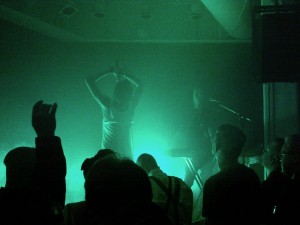
Necro Facility consists of Oscar Holter, who writes the music and plays all the instruments, the vocalist Henrik Bäckström, who also writes all the lyrics and finally Cristopher Hedström a session player. The band started in 2001 when both Oscar and Henrik were in the Swedish “Högstadie”, 14 and 15 years old. They released their first demo in february 2001. They released 2 more demos before getting signed to Progress productions. They released their debut “The black paintings” in 2005.
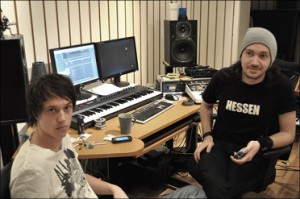
Make sure to follow our coming reports from ElectriXmas over the course of the next few days, including acts like Tyske Ludder and Hocico
We do apologies for the bad sound on the live on stage performance parts in this video
Find out more about ElectriXmas by clicking the logo below:
Artist Interview: Surkin
When a young Benoit Heitz saw a friend’s computer running Reason he had an epiphany: “His computer isn’t better than my parent’s computer. That means I could be making music.” He started out not knowing the first thing about drums or music in general. Three years later he was touring the world as an international DJ. Surkin had us over to check out his wild yet danceable cut-up sample work.
Benoit Heitz (born 1985), known by his stage name Surkin, is a French electro DJ and producer. He gained attention with his releases on the French Institubes music label as well as a remix for Teki Latex released on Virgin. In 2011 he launched the record label Marble along with Para One and Bobmo.
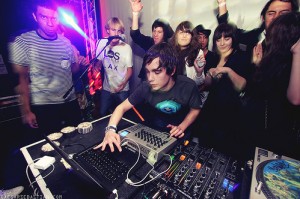
Heitz was born in southern France, and is now located in Paris.
The Choppertone – Custom MIDI Controller for Ableton Live + Nick Francis Interview
And here are the details:
More info: http://blog.dubspot.com/choppertone
Producer, programmer, radio broadcaster, music director and host of Quietmusic, Nick Francis recently stopped by Dubspot NYC for an inspiring interview and intimate live performance and demonstration on his own custom-built MIDI controller The Choppertone along with Ableton Live.
In this exclusive Dubspot video interview, Nick Francis talks about his musical evolution, from listening to rock and pop music of the 1960s and ’70s to delving into the world of jazz, experimental and electronic music (musical instruments and music technology); Francis embraced everything from Tangerine Dream, Kraftwerk, Brian Eno, Herbie Hancock and Weather Report to DJ Shadow, Moby, and Fatboy Slim. He has a strong appreciation for classic American soul and R&B and music of the 1940s and 1950s, but also pays attention to current music and recognizes the efforts of innovative electronic musicians and performers of the 21st century.
Interview with electro pop act Vive La Fête
Here’s a great tech-talk with Roel Van Espen via Side-Line magazine: We live in an era where music is produced on computers with programs as ProTools / Logic / Cubase / Reason / Ableton Live / … Some artists prefer analog synths above digital, some stay their whole career loyal to the same brand. Nowadays keyboards and technology became much more easy to use and cheaper for the masses.
Our interviewer DJ Wildhoney had an exclusive talk for Side-Line with some of the most important musicians of the electronic scene about the gear they use to compose songs and to perform live on stage. From today on we will publish every day a new interview with such bands as The Neon Judgement, Vomito Negro, Wumpscut, Pouppée Fabrikk, Monolith, Vive La Fete, Frozen Plasma, Haujobb, etc. Step with us into the studio of your idols and discover how your favorite tracks were produced and which equipment was used for it! How cool and interesting is that?
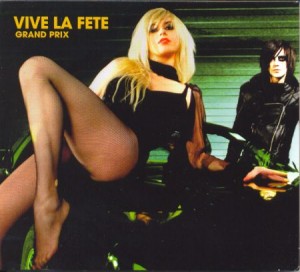
Roel Van Espen plays keyboards in Vive La Fête since 2006 and is also active in Raul D’Jam (as Raul de Jamonez), Zuppastar and Elysian. The “French touch electro-rock band” has built a new studio recently and is currently writing on a new album.
SL: How long ago did you buy your first keyboard ever? Which technology did it use and do you still own it?
RVE: The first keyboard I bought was a Korg Polysix, somewhere in the eighties. It was one of the first polyfone synths that were not too expensive in those days. I remember the “Ensemble”-effect was great fun and totally new for me. Those strings… waw! It’s a shame I don’t have this keyboard anymore… I once didn’t turn it off during the night, so the circuits inside melted! In those same years, my brother bought one of the first affordable samplers: an Ensoniq (Mirage, I think). It was a revelation for us: you could sample for even more than one second! My brother bought it second hand, so it had already a lot of nice samples inside. I remember the guitar sample from Yes (“Owner Of A Lonely Heart”), ugly but also kinda cool. I used the sample in almost every song I made in those days. It’s a good thing those 4-track tapes are buried deep under the ground now.
SL: Which computer(s) and software do you currently use in your (home)studio?
RVE: I use ProTools. I’m still obliged to do this on a pc, as I use FL Studio as a great plugin within ProTools (for drums, virtual synths, …). Until now, FL Studio is only available for pc. Hopefully it will be available for Mac soon (they are beta testing it right now), then I can finally switch to Apple. I already use Logic on my Mac, but that’s mostly for dj-stuff or as a backing track. For recording purposes, ProTools works fine for me. So why change?
DATAMASKIN

