
Interview – Synth-Aesthesia: Jean-Michel Jarre’s Favorite Keys

RedBull Music Academy has made an interview with Jean Michel Jarre where he in detail talks about his ten favorite synthesizers:
Ahead of his Academy lecture at the Les Nuits Sonores festival May 16 in Lyon, the synth pioneer Jean-Michel Jarre recounts ten of his favourite pieces of gear.
While, of course, numerous parties are to be praised for introducing synthetic music to the masses, it can be argued that the French composer and musician Jean-Michel Jarre was the first to really foment the electronic music revolution. Though the early successful pioneers like Wendy Carlos, Mort Garson, and Hot Butter primed the public’s ears, their output was mostly either novelty arrangements of pre-existing hits or just plain novelty. Jarre took a different tack and began composing original pop material to be played solely on synths. Selling over 80 million albums and singles thus far during his four decade career, he not only brought oscillators out of the realm of nerdery, his music also served as a late-night soundtrack of the future for music lovers the world over – and spawned a countless number of imitators as well (oftentimes poor). From his first collaborations with Patrick Juvet and Christophe to his epic synth solo albums like Oxygène and Equinoxe, Jarre’s sounds now show up as ghosts in the works of contemporary electronic experimenters as varied as Sébastien Tellier, Oneohtrix Point Never, Emeralds, and Daft Punk, to name a few.
And here is the complete list:
E.M.S VCS 3 (1969)
My first synth, Europe’s answer to the American Moog: a Mini versus a Cadillac. Post-war technology had led us to an European electronic sound which was very different to the American sound. The VCS3 was one of the first real synths to be developed from modular research, a technique with which I was already familiar, as it had resulted directly from the equipment that I was working with at the GRM (Le Groupe de Recherches Musicales or, in English, Musical Research Group) with Pierre Schaeffer. I’ve composed a lot of music with this synth, most notably on Oxygène and Equinoxe, although I’d already tried it out on Deserted Palace [one of Jarre’s first projects] and the music that I composed for the Parisian Opera.
ARP 2600 (1971)
This is an American synth which quickly became the best modular/semi-modular synth on the market – different to Moogs, which didn’t have pre-set sounds. When we switched the ARP 2600 on for the first time, we could instantly start to play and shift potentiometers. It cost much less than a Moog, but it was much bigger with an extremely rich sound. I used it a lot on Oxygène and Equinoxe as well as on the albums I made with Christophe such as Les Paradis Perdues (Lost Paradises) and Les Mots Bleus (Blue Words). ARPs are like the Stradivarius or the Steinways of electronic music. They were invented by craftsmen who, today, we’d place on the same level as the luthiers that built violins, clavichords, pianos – all of the acoustic instruments.
ARP 2500 (1969)
This is the big brother of the ARP 2600, created to compete with the modular Moog. Pete Townshend of The Who was one of the first musicians to use it in Europe. The ARP 2500 is the huge machine that we can hear in “Baba O’Reilly” playing that well-known sequence which would become so essential to The Who’s sound. It’s an electronic sound, not the sound of a guitar! I try to approach people with a similar rapport with synthesizers to my own, such as Pete Townshend or Peter Gabriel, both of whom were amongst the first musicians to possess a Fairlight, along with myself.
FAIRLIGHT CMI (1979)
The Fairlight was the first instrument that I worked with which was directly linked to the training I’d received at GRM under Pierre Schaeffer, electroacoustic music, or what we’d later call ‘sampling’. With the Fairlight, we could record and sample any sound – a natural, urban or domestic noise – play it on a piano and create percussion, a choir, the sounds of chords, a constructive element of music, improbable sounds of which we didn’t know the origin. It’s an instrument with a very lo-fi sound and with a lot of charm and warmth, a graininess that makes us think of the compositions of Bernard Herrmann or of the aesthetic that we find in films from the 30s like Metropolis. It was significant in determining the sound of Peter Gabriel and the sound of the Real World label, as well as my own. It can be heard throughout my back catalogue, on Champs Magnetiques (Magnetic Fields) but especially on Zoolook, which was made entirely on the Fairlight. Oxygène and Zoolook are two very different albums on the sonic map, because as we know, it’s the tool that defines the style and not the other way around.
Roland JD-800 (1991)
This was the next synth to follow the DX7 philosophy and the approach initiated by Japanese synths, which was going to financially sink all of the American makers. I included it in my list because it was one of the first polyphonic Japanese synths that managed to resemble an analogue synth, although what I hated about the DX7 was that it left you thinking that electronic music only aimed to imitate the sounds of acoustic instruments. With the JD-800, you could modify the sound, as you can on an ARP or a Moog, but with a Japanese sound quality, which in some respects, is more refined. I used this synth a lot on Chronology and Revolution. These are the albums which spoke to people the least, but which were important in my career as they marked a period of flux where I still had a foot in analogue and another in what would go on to become digital.
MEMORY MOOG (1982)
The first analogue polyphonic synth. Until then, modular synths such as the VCS3 and the ARP were monophonic. If you wanted a polyphonic effect, you had to play four different sounds at the same time. It’s a practice that’s lost today, which is a shame because it meant you had to compose in the same way that we’d write for a string quartet: violin, alto, cello, double bass. With the Memorymoog, and other synths that came out around the same time, in one fell swoop, we could make complete chords, and that changed everything. For better and for worse. As a result, we ceased to compose electronic music the classic way, as Wendy Carlos did. The Memorymoog was the 8 Moog in the same form but with a new and different attraction: we could store the sounds we created. Before, we had to get our pencil and paper out and write down all of the operations required to produce a sound, but it was never really possible to reproduce the original sound again from the notes we’d made. From this point onwards, you could re-find the sound in its original state, even a year after you’d made it.
RMI Keyboard Computer (1974)
This is an instrument that was created in the 70s and which was revolutionary as it was the first digital synth in a period where everything was analogue. In the electronic music world of the 70s, digital had no place at all. The RMI functioned according to the principle of additive synthesis, whereas the analogue synths were based on subtractive synthesis. To simplify, additive synthesis is like an organ, meaning that you can add frequencies to each other and add layers in the same way that on an organ, you can add 32 pedals, then 16, then 8, then 4, which are actually octaves, or thirds of octaves or quintets. It’s a technique that was used heavily on Deserted Palace and on the track “Oxygène 5”, where the entire sequence is made using the RMI. It created a very different sound to anything else that could be heard at the time, precisely because the digital edge added a certain coolness. This synth was to music what the film Tron was to cinema at the time.
EMINENT 310 (1970)
This synth defines my sound, from Les Mots Bleus by Christophe and the songs of Patrick Juvet, right up to Oxygène and Equinoxe, where I used it heavily. To this day, I still use it frequently. Along with the VCS3, this is one of the fundamental instruments of my music. It’s an organ developed by the Dutch who were the first to figure out how to create chords from electronic sounds. It was from this first string ensemble that the Solina emerged, which is nowadays better known than the Eminent, even if the Eminent is three Solinas together with a notably richer sound. The Eminent can be heard on Oxygène and Equinoxe, adding that gliding, phased feel. The background story to this sound is that it’s the VCS3 and the Eminent passed through a Smalltone, a phase pedal for guitars, which created this very opulent sound similar to that of chords, but of course much more electro.
Teenage Engineering OP-1 (2011)
A little new one that came out less than a year ago and was invented in Sweden [by Teenage Engineering, a company founded by 2003 Academy pariticpant David Eriksson]. It’s a synth which doesn’t even seem like a synth at all – it’s tiny and looks like a Casio toy, but hidden inside is a very sophisticated machine, created using military technology. It’s 100% digital, but defines something completely new in its size and transportability. It’s been a long time since I’ve seen something as interesting, flexible and creative as this. And importantly, its inventors have reintroduced a notion which had been desperately lacking: humour. We have to remember that Moogs, ARPs and all of the first synths had been created by raging madmen, who created completely unreasonable and financially hazardous instruments. The inventors of this synth sold their OP-1 in drips and drabs on the internet, and the instructions are in Japanese to throw us off the scent. I met them after my tour in Sweden – the whole team came backstage and we jammed together. I chose this synth to show that any instrument, from no matter what time, can have a completely timeless value. I’m sure that musicians will still be using the OP-1 in 50 years.
MELLOTRON (1963)
This is another mythical instrument from the electroacoustic scene, since it was one of the first samplers well ahead of the Fairlight. What was interesting with the Mellotron was that it was conceived at a time (the 60s) when the philosophy of sampling wasn’t on the agenda at all. It was, once again, the idea of a luminary who asked himself how to play chords electronically. The principal is to record a choir in a studio onto tape and then to install all sorts of little tape recorders with tapes that last seven seconds to create the notes on a piano. The Mellotron is a kind of small piano which, when you press a key, places the stylus against the tape, releasing a tape which will be read by the head during the seven seconds. That allows you to have a whole range of sounds. When you play a Mellotron, you feel like you’re listening to soundtracks from silent films from the 30s, as there’s this whining contortion that would go on to define the sound of loads of Beatles, Moody Blues and Procol Harum tracks. In fact, pop and rock in the 60s would use this instrument to record choirs with a vintage, retro feel. It’s the sound of the 40s adapted for the music of the 60s.
The original RedBull article can be found here >>
Karl Bartos and the voice of technology: An exclusive interview with Karl Bartos
Some of weeks ago Karl Bartos toured a couple of cities in Sweden and Steelberry Clones, got an exclusive interview with the synth pop pioneer. Karl, being one of the four members of the classic Kraftwerk line-up and with several legendary compositions on his track record, i.e. Computer World, The Man Machine, Electric Café. To recap some of the more important activities it is worth mentioning that Karl founded the group Elektric Music in 1992, releasing the album Esperanto, and he have collaborations along the way with Bernad Sumner, Johnny Marr and Andy McCluskey. And since Steelberry Clones are in fact based out of Sweden it is worth mentioning his guest appearance with Swedish synthpop act Mobile Homes. After leaving Kraftwerk, some 25 years ago, the music that he and the rest of the band created is still a great inspirational source across numerous musical genres.
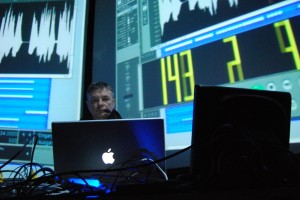
Karl has ventured into many different fields since the Kraftwerk days and has delivered highly acclaimed albums along the way, such as Communication – featuring such songs as “I’m the Message,” “The Camera,” and “Ultraviolet.
In awaiting his new album, due early next year, we wanted to dig a little deeper into the mind of Karl, by asking him about the music creation side of things.
The new album in the works
Karl is now producing a new album, but working in the studio is being like a scientist, tweaking and tuning – composing is the pleasure part! The production process involves starting with beta versions and then continues to work with the songs, improving them and making new versions – even though all twelve songs where set at demo stage. Here Karl adds a remark that stems from his German and Kraftwerk roots – “I go into the studio 8 hours every day”. Producing your own work requires making final decision, fighting yourself.
Being a director and the use of computers
Composing is being like a director of drama – there are roles and dialogue. Making electronic music is like making and acoustic film. For Karl melody and harmony are key ingredients. And while composing the sound is and integral part of the composition. Working with synthesizers for more than thirty years Karl has built up a pallet of sounds in his head which he uses as basis while composing. Whilst there are infinite sound possibilities using electronic instruments – “there are so many sounds, I can’t listen to all of them”, only adding new sounds occasionally. Regarding electronic instruments Karl hasn’t sold any of the his synthesizers and still prefers the old analogs. But just like computers – they are only tools. Like a craftsman that needs different screwdrivers but then he doesn’t love them – “computers are just eating my time”. Many musicians today turn to analog gear as they miss the tactile experience while creating but for Karl the important composing process is done in his head – not turning knobs or clicking on computers. That said the computers are used heavily during production of audio and video, sampling sounds.
Regarding computers, Computer World, the eights studio album to come out of the Kling Klang studio, in these Twitter days we can assume that all these sound bytes like “It’s more fun to compute” would make efficient and highly acclaimed Twitter posts today :-). However, what is more interesting to know is that at the time of the making of the Computer World album Karl and the others had never actually owned or used a computer themselves. “During the making of Computer World we had a closer look at those incredibly smart machines at the IBM affiliate in Düsseldorf”. Remember that the PC was just launched and home computers was if not science fiction very exotic at the time.
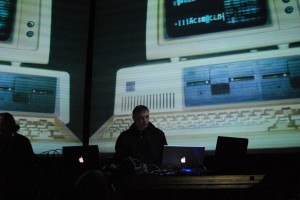
I robovox
The robot voices are a trademark of Bartos music and appears on all his albums where he uses both vocoders and synthetic made voices. They are used for the dramaturgic effect – as “the voice of technology it self, or like the voice God”. The robot voices are then not him self singing and can be used just like the narrator in a film. The voice technology has advanced tremenously the last years with products like Antares Auto Tune, Melodyne, Vocaloid etc and they are used in numerous pop hits, but few has put them as permanent tool on their artistic palette.
Audio information : Kraftwerk’s World Tour 1981
Live at Nagoya Shi Koukai Do, Nagoya, Japan, 13/09/1981
Read the full interview here >>
Interview with Kraftwerk’s Ralf Hütter following their shows in NYC
New interview with the remaining original member of Kraftwerk – where Ralf among other things let’s know a new album is in the making and will be released soon:
Last week Ralf Hütter, the singer and founder of the pioneering German electronic band Kraftwerk, recalled the first time the band came to New York City: in 1975, for an American tour to promote “Autobahn,” an unlikely hit sung in German and backed by electronics. The group members were carrying, he said, a few suitcases, some synthesizers in padded boxes they had built themselves and, for visuals, a slide projector.
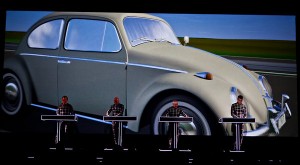
Things have changed. For Retrospective 1 2 3 4 5 6 7 8 at the Museum of Modern Art — eight sold-out concerts that conclude Tuesday, with Kraftwerk playing through each of its eight studio albums from 1974 to 2003 — Kraftwerk deploys 3-D video projectors that send images leaping forward from the stage, along with a custom surround-sound installation including overhead speakers and a sleekly concealed wall of woofers at the front of the stage. (A multimedia exhibition at MoMA PS1 continues through May 14.)
Yet after three-and-a-half decades of tech upgrades Kraftwerk probably sounds less futuristic than it did on first exposure. That’s because Kraftwerk’s future became pop’s present. The group’s avant-garde ideas — making music inseparable from new technology, building songs from synthetic sounds and electronic rhythms, using repetition and robotic voices — have taken over much of mainstream pop. Its deadpan lyrics about transportation, media and ubiquitous technology are still tersely prescient. Back when it made its 1981 album “Computer World,” Kraftwerk didn’t own computers. “It was all done on analog sequencers,” Mr. Hütter said.
Kraftwerk, which bills itself as the Man-Machine, doesn’t show its human side very often. Through the years the band has largely shunned pop’s cult of personality. Onstage Kraftwerk’s four members perform standing behind mysterious matching consoles, their faces impassive. The band members call themselves operators, not musicians; one of them, Stefan Pfaffe, actually operates videos, not sounds, from his console. (Mr. Hütter said he provides vocals and keyboard lines onstage, while Henning Schmitz controls bass lines and equalization, and Fritz Hilpert controls rhythms and percussive sounds.)
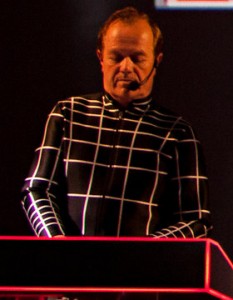
Offstage Kraftwerk rarely participates in promotion and publicity. But every once in a while Mr. Hütter, the band’s sole remaining original member, grants an interview, as he did on Friday afternoon in an office at MoMA. He was accompanied and occasionally translated by the curator of the museum’s events, Klaus Biesenbach.
Mr. Hütter, 65, is trim and energetic; he’s a dedicated cyclist, regularly making 125-mile excursions. “You have to find your tempo,” he said. He was sometimes affable, sometimes wary. He bristled at the suggestion that Kraftwerk had pop ambitions, although songs like “Autobahn” and “The Model” were international hits.
“We are fine when the idea comes to a clear statement,” he said. “It could be short, it could be long. We also have structure that’s very minimal, so it’s not drama. It’s more modular, minimal. It’s components, it’s conceptual. There’s development, gradual. Whereas in classical music there is drama. That’s not our thing.”
Kraftwerk is usually translated as “power plant,” but Mr. Hütter said the band’s name can also be pulled apart for meanings: “kraft” is energy and dynamics, “werk” is simply work, or labor, and also (as “werke”) an artist’s oeuvre. Kraftwerk records on its own open-ended schedule; it hasn’t released a new studio album since “Tour de France” in 2003. It has, however, been touring and frequently revamping its older songs with newer technology and ideas.
“Kraftwerk is a living organism,” Mr. Hütter added. “Music is never finished. It starts again tomorrow. The record is just a record, but for us it’s nearly boring. We like better the programs that we can operate with. So we are operating, we are upgrading, we are updating continuously. There’s continuous reprogramming going on, and composition and new concepts are also coming.”
Read the rest of the article here >>
Via: The New York Times
u-he DIVA Virtual Analog Synthesizer
Urs Heckman discusses his new synth at MusikMesse. This virtual instrument incorporates multiple elements from vintage analog synths. It draws a lot of CPU, but it sounds really good – the video tells how to get a free trial version.
Interview with Front 242’s Daniel B on synths and the new Nothing But Noise project
Steelberry Clones got an exclusive interview with Daniel B (Daniel Bressanutti) from Front 242. Daniel B talks passionately about analog synthesizers, the future of Front 242 and his latest project – Nothing But Noise, with a scheduled album release on April 16th. Front 242 hardly needs any major introduction, for 30 years they have been shaping, defining and exploring the genre that later became the foundation for electronic body music (EBM). Several bands have followed in their footsteps since then. Front 242 started in 1981 in Aarschot, near Brussels, Belgium, by Daniel and Dirk Bergen, who wanted to create music and graphic design using emerging electronic tools. The first single, “Principles”, was released in 1981. The front part of the name comes from the idea of an organized popular uprising. Patrick Codenys and Jean-Luc De Meyer had separately formed a group called Under Viewer at about the same time, and the two duos joined together in 1982. Bressanutti, Codenys and De Meyer took turns on vocals at first, until they settled on De Meyer as the lead vocalist. De Meyer came to write most of the lyrics and Valerie Jane Steele also wrote several tracks including “Don’t Crash”. They decided not to use the regular waveform settings on their synthesizers, arguing that creating the waveform for each note was part of the creative process.
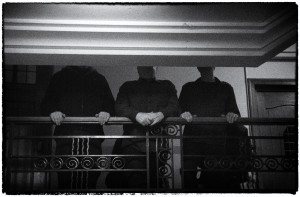
Dirk Bergen early on left the band to pursue other things, but Daniel tells us that they have remained friends for all of these years, and when the opportunity came up last year they decided to get back in the studio together with Erwin Jadot (a mutual friend) to bring us this new project called Nothing But Noise (NBN). The new NBN album that will be released on April 16th brings us a very different sound, then we are used to listening to Front 242. NBN, apart from being done entirely by machines, has very little in coming with Front 242 – it is a very complex sounding album with strong ambient influences, basically all instrumental and perhaps most importantly no drums. Daniel B tells us that this was a clear intent from the beginning – to do a full synthetic album with no drums in sight. Steelberry Clones has pre-listened to the entire album and we must say that it is an impressive sonic experience to listen to all these analog synths pushed into a dark ambient world – a cinematic experience. You can pre-listen to a couple of samples below on the NBN SoundCloud player below:
The members of Front 242 were heroes in the electronic underground scene all through the 80s and 90s, and have continued to record and tour to the present day. The band members has come and gone over the years but they all have one thing in common and that is their love for side-projects – all current members of Front 242 sport multiple side-projects spanning DJing, bands and film. Daniel B has produced a range of extra-curricular work over the years, including ‘Male or Female’ and ‘Speed Tribe’, a DVD and audio release based around the 2001 Le Mans motor race. Nothing But Noise, together with Dirk and Erwin, is Daniel’s latest and most anti-242 project and of course we here at Steelberry Clones needed to know more about this.
Can you tell us a little about the theme of the new NBN album
“For us it was like a new beginning, and although it had been a long time since we stopped working together, we always had in the plans that at one point in time we should do something together. So when the opportunity came we basically did not have any specific plans for the new album – we merely did for ourselves, not something revolutionary, but something we both liked.”
However, somewhere in the back of our heads we had two objectives; first we wanted to kind of explore where the music we all listened to when we were young (Tangerine Dreams, Krautrock, Kraftwerk, Stockhausen etc) would have been today if these acts had continued to produce material all the way to where we stand today. Secondly, we wanted to take on the challenge of not using any drums at all, especially considering our Front 242 background. “I would say that the only real parallel to Front 242 is the sole use of machines.”.
You have all been engaged in several side projects, along side Front 242, has this been a way to keep the creativity up
Not in relation to Front 242, I would say. Front 242 is actually more of a certain formula – you know what it is supposed to sound like, and in fact most of our fans (and the longer we keep going) want us to sound the same. At least speaking for myself – Front 242 is not my whole life. It’s the same thing with a guitar player who at points in time also wants to play the piano – there are so many things to explore, but of course all the things you do outside of Front 242 will influence the work in the band – cross-pollination in a sense. The “Male and Female” album has definitely influenced my way of making music and in general it is easier to be creative in a new format, like Nothing But Noise, to explore new things.
The announced break with Front 242, was that because of Nothing But Noise, or something else
“As you know we (Front 242) do not make any records anymore – so I have plenty of time to focus on other projects.” Front 242 still have some booked concerts that we will do, especially in countries where we have not toured a lot, so we will still do occasional shows going forward, and for how long depends a lot on inspiration. When it comes to Nothing But Noise it is easy to say that we have the time and music is our lives 
Was it hard to start working again with Dirk after all these years – did you have a plan on what you wanted to accomplish
“We talked about it a lot and we did not have a master plan what we wanted to do.”
Rack Extensions for Reason Interview with the CEO of Propellerheads + their new iOS app
The CEO of Propellerheads tells us all about the big news from the House of Propellerheads and why they decided to develop a completely new technology, with the manufacturer to create the devices for the Reason rack.
Reason has for a long time resisted plug-in formats as a way of extending its production environment. At the moment, plug-ins have been dominate largely by Avid (RTAS), Apple (AU), and Steinberg (VST), as open source alternatives have failed to gain wide commercial traction. Those formats apparently didn’t make the cut with Reason.
That changed officially tonight. Reason’s rack is open to third parties, via something called Rack Extensions, previewed and available by summer for all Reason users. What you’re getting is not so much a new plug-in format as a new set of ideas about what a plug-in should be, in the form of a way of making add-ons for Reason alone.
The ability to get more out of Reason’s rack will clearly mean more for lovers of Reason, who at last will get some favorite sonic toys and tools without switching hosts.
But there is more – here’s a new iOS from Propellerhead’s:
I Dream of Wires – Extended Interview Series: Drumcell
In January 2012, the I Dream of Wires team stopped by the studio of techno producer Drumcell, to discuss his evolution from producing with hardware, to software, and now back to hardware again, with a focus on eurorack modular synthesis. The interview was conducted for inclusion in “I Dream of Wires: the Modular Synthesizer Documentary.” Drumcell is also the founder of Droid Recordings, and co-founder of Droid Behavior, one of LA’s longest running techno event promotion companies, standing at the centre of the West Coast techno community for nearly a decade.
I DREAM OF WIRES is a forthcoming documentary film about the history and resurgence of modular synthesizers. The film is currently in production. This is the 3rd in a series of extended interviews, which will be produced and released in various formats throughout the production, and following the release, of the film. I DREAM OF WIRES extended interview segments are sponsored by MATRIXSYNTH (m.matrixsynth.com).
For more info on Drumcell, visit:
soundcloud.com/drumcell
droidbehavior.com/blog/artists-team/drumcell
For info on the film: idreamofwires.org
Peter Vogel and Thomas Dolby on the Impact of the Fairlight CMI
A one hour interview focusing on the classic Fairlight CMI
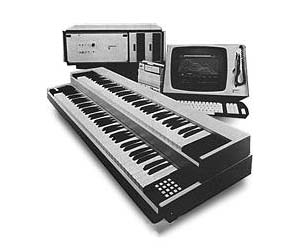
The Australian Fairlight Computer Music Instrument (CMI) is a vintage but state-of-the-art Synthesizer/Sampler workstation. An incredible sampler with 28 megabytes or more of memory! One or two full 73 note velocity sensitive keyboards! Complete synthesis and editing of digitally sampled sounds. Three different on-board SMPTE Sequencers and storage to various disk mediums. The processor itself is housed in a 24″ module. It was also the first digital sampler to hit the market back in 1979 and has endured throughout the eighties and nineties.
From 1979 to 1985 several versions of the Fairlight were produced, with the Series III being the last of them. Each new series added updates to the Fairlight as technology developed through the early eighties. The Fairlight 1 and 2 had only 16 kByte of Memory per voice, and only eight voices but expanded to several megabytes and double the polyphony by the Fairlight III. The IIx was the first Fairlight to offer MIDI. The Series III added aftertouch capability to the keyboard. They all had pitch/mod wheels, an 82-key alphanumeric keyboard, 15 function keys, a Graphics Tablet for drawing sounds and a Video Monitor for seeing what you’re doing while editing.
The sampler is the heart of the Fairlight. It’s a 16-bit resolution digital sampler with variable sample-rates up to 100kHz! Original Fairlight models used two standard 8 bit 6800 processors, updated to the more powerful 16 bit 68000 chips in later versions (the IIx had updated 6809 processors, which is what designated it a IIx over a II, and raised the sampling resolution to 32kHz, from the I & II’s 24kHz). In the Fairlight III, sample memory (RAM) comes in 28MB chunks per 16 voices of polyphony – wow! That’s plenty of room for creating stereo or mono samples. Edit them using various hi-tech functions and at a ‘microscopic’ level using the large Monitor screen. Samples can be looped, mixed and re-sampled with processing for sweetening. As for synthesis, create your own waveforms by sampling and applying Fast Fourier Transform and Waveform editing functions. Storing samples and synthesized waveforms can be done to Hard Disk or 8″ floppy disks.
As for sequencing, there are three sophisticated methods. There’s CAPS (Composer, Arranger, Performer Sequencer), an 80-track polyphonic sequencer. The complicated MCL (Music Composition Language) is like a text-based step time sequencer. And finally the Rhythm Sequencer which functions like a classic drum-machine style sequencer. All sequencer’s are SMPTE syncable.
The Fairlight is a horribly expensive Music Production Center and is rivalled only by the NED Synclavier. Although current samplers, sequencers and synths can blow away the Fairlight at a fraction of the cost – the Fairlight is an historical, prized piece of Vintage Digital Synthesizer and Sampler technology. It still holds up today, over twenty years later and is still a high quality and professional instrument. The facilities provided by it benefit hardcore synth programmers, wealthy musicians, sound designers, film composers and wealthy Vintage Synth collectors.
Exclusive interview with Harald Karla – the Reason Refill maestro at Soundcells
Steelberry Clones got an exclusive talk with the critically acclaimed Reason Refill producer Harald Karla at Soundcells. Soundcells has been active for a long time in developing quality Refills for Propellerhead’s DAW Reason, many of which has been featured and reviewed on this blog. Soundcells’ Reason Refills covers most angles of electronic music – featuring everything from 8-bit / chip tune type sounds to high quality emulations of classic analog hardware synthesizers like Moog Source to the KORG MS-20, but also a vast amount of very complex ambient pads that would fit any sci-fi movie on the planet. We at Steelberry Clones are happy users ourselves of Soundcells ever growing library of Reason Refills and therefore we thought it about time to dive a little bit deeper into the minds of Soundcells by asking Harald Karla who founded the company in 2008 all those questions that make up the unique sounds of the Soundcells’ Refills. Harald Karla have worked as a successful freelance sound designer for quite some time but is now focusing on Soundcells full time.
You can visit Soundcells webshop via this link to find out more about the various Reason Refills of Soundcells or simply use the Soundcells banner in the right hand side column to explore further >>>>
You have been active making Reason Refills for a long time – where do you find your inspiration
First and foremost, Soundcells ReFills are products that meet my personal taste. And that is an inspiration and first of all motivation – not just to create a product that the market demands immediately, but to follow your own preferences. Since I prefer to be within Reason, I’m trying to do everything possible there, of course. Also this is the reason for the content of the ReFills. The more I can put in a single environment – the more energy, concentration and creativity remains for the music …
When producing the Refills you often stay true to the original analog synths, for example the MS-20, how do you go about re-creating these sounds
Well – actually that is not my intention to emulate certain classics – it’s more the intention to preserve the typical sound characteristics. “Analog Signature” for example is a ReFill, essential to sample those classics – which thus serve as a sound basis and shaping the sound of the ReFills. In this ReFill the analog sound-feeling is in the foreground, and therefore the sampling here was comparatively expensive: In order to have vibrant aesthetics of sound each individual note is played three times and recorded. The capabilities of the NNXT sampler can be heard by repeating a note played on the same sample twice in a row …
The result is a vivid sound that raises a very analog feeling. One should not forget that real analog sounds are not only created by “fluctuating” oscillators, but also generated by other components such as filters, envelopes, modulations of various kinds. And here some analog synthesizer sounds incredibly strong, which can not be done simply by multi-sampling individual notes … At this point, it simply ends the emulation. If you wanted to create the typical sound with all its inaccuracies of the original, it would ultimately imply sampling note for note – very expensive and a different topic …
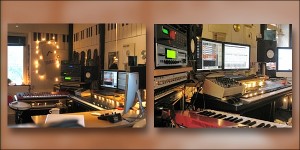
The Soundcells studio
We know of you as a high-end producer of Reason Refills and more, but can you tell us a little more about your musical background
A story of many – I had a very early interest in the creation of sounds, and in the beginning I did experiment with various instruments, but very early on I ended up focusing only on electronic instruments. From the time of the summer jobs I put all my money in (initially) keyboards, then synthesizers, drum machines, mixers, effects, etc.
I have never taken any lessons. The keyboard I’ve taught myself and I have always played by ear. Over the years I have dealt extensively with many types of music and electronic sounds, later on I started to create backing tracks to produce dance music with DJs, etc. … – And then finally spent all my time in music. Basically, the years were something of a “full study,” which continues to this day … : 0)
Read the full interview here >>
Synth spotting in Solvent´s studio
Veteran Canadian producer and hardware lover, Solvent, gave StudioFeed an inside look at his Bloor-West home studio set-up, as well as discussed everything from why he makes music to the story behind his recent RDJ-CS5 EP. Jason touched on many topics involving music in this lengthy interview, including what it’s like to have a fifteen-year career and to still be considered a “relatively obscure” musician. In addition to making music, Solvent is also involved in a documentary on modular synthesizers called “I Dream of Wires” that is expected to be released later in 2012.
DATAMASKIN

