
Tom Oberheim discusses his classic Two Voice synth
Tom Oberheim’s lecture at Cal State Monterey Bay about synthesizers, particularly a little demo on his Two-Voice Synth

Oberheim’s first synthesizer was a single-voice mini-module called a SEM (Synthesizer Expander Module). However, in 1975, Oberheim created their first compact, programmable and polyphonic synthesizer by coupling two SEM modules to a 37-note keyboard and a simple analog sequencer. This was what became the Two Voice. Oberheim achieved a polyphonic sound not yet seen in ARP and Moog gear at the time by hard-wiring the two monophonic SEMs into the compact keyboard design.
In 1976 Oberheim came out with another module, the Polyphonic Synthesizer Programmer. This could memorize the control voltages of many parameters for up to eight SEM modules. When these were added to the Two Voice, Oberheim finally had one of the earliest programmable and polyphonic instruments! Released alongside the Two Voice also came the Four Voice which had four SEMs installed, and a larger 49-note keyboard. And later, in 1977, a second tier was added above the four SEMs on the Four Voice to add yet another four SEMS, making the Eight Voice.
Two voices was great in 1975, and eight voices was pretty monstrous in the later seventies. But, a major drawback to these first Oberheim synths was that polyphony was achieved by having multiple modules. This meant that each voice had to be independently programmed. This also means that each voice has its own filter, making real-time filter sweeps of all your voices more than a handful! Fortunately the sequencer comes in handy for controlling each voice/module independently.
Synth spotting in Solvent´s studio
Veteran Canadian producer and hardware lover, Solvent, gave StudioFeed an inside look at his Bloor-West home studio set-up, as well as discussed everything from why he makes music to the story behind his recent RDJ-CS5 EP. Jason touched on many topics involving music in this lengthy interview, including what it’s like to have a fifteen-year career and to still be considered a “relatively obscure” musician. In addition to making music, Solvent is also involved in a documentary on modular synthesizers called “I Dream of Wires” that is expected to be released later in 2012.
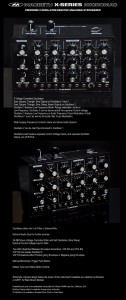
Checking out the MacBeth MicroMac
“We caught up with Ken MacBeth from MacBeth Studio Systemsfor a look at his new machines – coming real soon. Ken makes some awesome synthesizers and is exploring the desktop format with his new MicroMac and dot com format machines.
The new Dot Com format synth has a realy cool dual glide feature and features a normalized signal path with full patching too.”
More Information
More info on the two new synths from Casio: XW-G1 and XW-P1
Casio has introduced two new keyboard synthesizers at the Winter NAMM, the XW-G1 Groove Synthesizer and the XW-P1 Performance Synthesizer, here are the full specs for both of them:
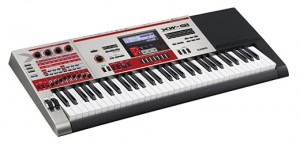
The Casio XW-G1 is a ‘groove synthesizer’ equipped with a keyboard and designed to offer the various kinds of digital equipment used by club DJs, including the ability to create and play back a variety of rhythm patterns and musical phrases.
Features:
- Step Sequencer
- 100 different rhythm patterns are available for playback in the preset sequences
- Up to 100 original rhythm patterns can be recorded as user sequences
- Users can improvise using the set of 16 buttons while playing back rhythm patterns
- Multiple rhythm patterns—as many as 99—can be connected in a sequence and played as loops using the Chains function
- Phrase Sequencer
- 100 musical phrases can be readily played back using the preset phrases
- Up to 100 musical phrases spontaneously played on the keyboard can be stored in memory as user phrases
- Live performance functions
- A multifunction keys enables users to assign essential functions for DJ performances to keys
- 420 preset tones including Solo Synthesizer and PCM tones can be quickly accessed in keyboard performances
- The Arpeggio function can automatically play arpeggios just by pressing keys
- Sample Looper
- Sounds performed on the synthesizer as well as sounds input from external source can be sampled and played back in loops of up to 19 seconds long, allowing overdubbing
- Sampled sounds that are saved as user tones can be played in keyboard performances
- Other features
- Wide variety of preset tones or internal PCM and Synth waves to create sounds
- Various input and output terminals enable connection of audio equipment and MIDI-compatible devices, such a DJ gear and musical instruments
- Portable MIDI devices or audio equipment can be placed on the designated rubber holding space
Specifications are available at the Casio site.
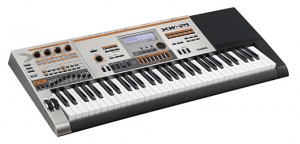
The XW-P1 is designed to be a true performance synthesizer that allows users to create a wide array of sounds from many preset tones, including Solo Synthesizer, Hex Layer, and Drawbar Organ tones, as well as numerous types of internal PCM and Synth waves.
Features:
- Wide selection of preset tones ensures quick access in performances
- 100 Solo Synthesizer presets can reproduce vintage analog synthesizer sounds
- 50 Hex Layer presets layer as many as six tones for ensemble sounds
- 50 Drawbar Organ presets can reproduce traditional Drawbar Organ sounds
- A total of 420 PCM Melody and PCM Drum presets have been produced from samples of various instrument sounds including pianos, guitars, and drums
- Synth features
- A total of 311 internal Synth waves reproduce vintage analog synthesizer sounds
- A total of 2,158 PCM waves are built in, including wave data from the CZ series, Casio’s best-selling digital synthesizers of the 1980s
- Users can create integrated sounds by layering analog synthesizer waves and PCM waves
- Users can produce original Hex Layer sounds by combining as many as six preset tones
- Users can create their own Drawbar Organ sounds by using the nine sliders
- Variety of functions useful for live performances
- Users can assign performance setups for up to four designated keyboard zones by using the Performance function
- The Phrase Sequencer lets users create and play back musical phrases to enhance their performances
- The Step Sequencer allows users to create and play back a variety of rhythm patterns
- The Arpeggio function can automatically play arpeggios just by pressing keys
- Useful features for applications ranging from performance to music production
- SMF data or audio data saved on an SD card can be played back while playing the keyboard
- MIDI devices, microphones, audio players, and other equipment can be connected using the various input and output terminals
- Portable audio equipment or MIDI devices can be placed on the designated rubber holding space
Specifications for the XW-P1 are available at the Casio site.
NAMM teaser pics – more pics of the new NORD synth/drum machine
Here you go, just spotted on their homepage:


All or no more info can be found here >>
The huge, mega-classic Jupiter-8 brass
The huge, mega-classic Jupiter-8 brass, often used in Italo in the early/mid ’80s.
Jupiter-8, Juno-60, TR-909 & SH-101 Italo ditty
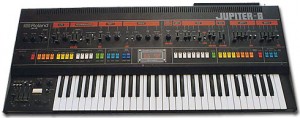
The Jupiter 8 was Roland’s first truly professional analog synthesizer. The Jupiter 8 features 16 rich analog oscillators at 2 per voice, eight voice polyphony and easy programming! At eight voices you can get some pretty thick analog sounds. Easy and intuitive programming via front panel sliders, knobs and buttons for all your tweaking needs. The legacy of the Jupiter synthesizers is due to their unique voice architecture and design, creating sounds that were so unreal and amazing that they have to be heard! No other synths in the world can create analog sounds as cool and authentic as these.
The Jupiter 8 was the biggest and fattest of them all (Jupiters and Junos)! It was one of the first synths to allow its keyboard to be split and layered – it’s eight voices of trance heaven! Cross-mod, oscillator sync, a great LFO and a classic arpeggiator are also on-board. There’s also two killer resonant analog 24dB/oct filters with 2-pole and 4-pole settings as well as low- and high-pass filtering methods. Unfortunately for the earlier models, tuning was very unstable but that seemed to be resolved in later models. Unlike its smaller counterpart, the Jupiter 6, the Jup 8 does not feature MIDI, only Roland’s DCB sync can be found on some models. However, MIDI retro-kit’s are available from various companies. Patch presets can store keyboard splits, arpeggiator settings, voice assign mode, hold, portamento and modulation settings.
9/8 Synth ABC
Friday morning synth spotting, here’s what’s included:
Arp Odyssey
Buchla System #1
Crumar Spirit
Akai MFC 42 Mixer
Maestro Ringmodulator
Make Noise Format Jumper
Moog CP 251
Simmons Clap Trap
Roland EF 303 Sequencer to
Logic to Kenton Pro 2000 (Arp) & Pro Solo (Spirit) and Buchla
9/8 odd time
Ableton releases Puremagnetik Retro Synths 1980s

Ableton has released Retro Synths 1980s, a new Partner Instrument by Puremagnetik.
In the 1980s, analog synthesis entered a new stage, with the debut of classics like the polyphonic Roland Jupiter series and the revolutionary frequency modulating Yamaha DX7. Puremagnetik has meticulously multisampled these synths to create a brand new Partner Instrument: Retro Synths 1980s. Packed with 39 Instrument Racks made up of nearly 2,000 samples, this is an essential collection.
The originals from the 1980s don’t come cheap (or, in many cases, easy to program), but Puremagnetik has captured the fire in these classics, and made it available in Retro Synths 1980s. Featuring the cream of the crop of Puremagnetik’s library, Retro Synths 1980s boasts meticulously multisampled synthesizers that behave like the originals. With 38 Instrument Racks and one Drum Rack, made up of nearly 2,000 samples total, this is an essential collection indeed.
Retro Synths 1980s features
- Juniper — a rich collection of expertly crafted instruments based on Roland’s legendary Jupiter series of analog synthesizers.
- SixVoice — classic pure analog patches from the Korg PolySix synthesizer.
- Vespine — finely tailored instruments that fully capture the charm of the EDP Wasp synthesizer.
- DeeEx — instant 80s FM synthesis based on the famous Yamaha DX7.
- Phazeform Vol. 2 — the captivating sounds of the Casio CZ-1 and its unique phase distortion synthesis.
Retro Synths 1980s for Ableton is available to purchase for 29 EUR until January 15, 2012 (25% off regular price of 39 EUR).
DXi FM synthesizer version 3.1.0 on iPad
DXi is a FM synthesizer application inspired by 80’s most popular synthesizer. Enjoy making music and creating sound by FM synthesis engine easily.
The movie show you the new great features about DXi version 3.1.0.
Please visit the URL for more information: http://itunes.apple.com/app/dxi-fm-synthesizer/id370138065?mt=8
FM synthesizer is still popular among many people by its unique tone. We carefully selected parameters from original synthesizer so you will be enjoy editing tone with them easily. You need to know some technique to tweak the tone, but you will be able to get DXi’s special tone and effects while having some fun!
Creating sound effects is another idea to enjoy DXi.
We loaded 16 step loop sequencer as a bonus feature!
If you remember the days of FM synthesizers, try creating the tone you remember from them.
If you have no experience with any FM synthesizer, we are sure you will be enjoying the unique tone world!
* 4 operators FM synthesizer
* Anti-ailiased oscillator
* 8 algorithms
* Envelope, frequency (Ratio or Fixed) can be set each operators.
* Feedback control on operator number 4.
* 2 master effects (LPF with Resonance and Delay)
* Import/Export function to save the tone you created. (URL schema text string format)
* Audio recording function. And you can transport recorded audio file, .wav, onto Mac/PC via iTunes file sharing.
* Clipboard audio sharing support. You can export recorded waveform to other application via clipboard. It’s compatible with Intua’s clipboard.
* Supports external MIDI keyboards via Core MIDI USB adapters. iPad users can use Camera Connection Kit. And iPhone/iPod touch users can use Yamaha i-MX1.
About the original – Yamaha DX7:
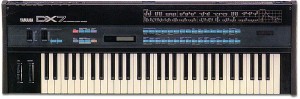
One of the most popular digital synths ever was the DX7 from Yamaha, released in 1983. It featured a whole new type of synthesis called FM (Frequency Modulation). It certainly is not analog and it is difficult to program but can result in some excellent sounds! It is difficult because it is non-analog and thus, a whole new set of parameters are available for tweaking, many of which seemed counter-intuitive and unfamiliar. And programming had to be accomplished via membrane buttons, one data slider and a small LCD screen.
Still the sounds it shipped with and that many users did manage to create were more complex and unique than anything before it. Percussive and metallic but thick as analog at times, the DX-7 was known for generating unique sounds still popular to this day. The DX-7 was also a truly affordable programmable synth when it was first released. Almost every keyboardist bought one at the time making the DX-7 one of the best selling synths of all time! It also came with MIDI which was brand new at the time – Sequential had already released the first MIDI synth, the Prophet 600. Roland had just released the JX-3P with very basic MIDI implementation, and wouldn’t get around to adding full MIDI for another year with the Juno-106, and it would be three years before Roland can counter the popularity of the DX7 with a digital synth of their own, the D-50.
Synth music – Music for the Mind
THE CENTURY’S ENTRANCE – This is the third song to Craig Padilla’s February 2000 “Music for the Mind” performance at the historical State Theater in Red Bluff, CA. Padilla uses a variety of older synthesizers in this performance.
Craig Padilla is an American ambient musician and film score composer, actor, and video producer from Redding, California. Since the mid-90’s he has released more than a dozen albums with music primarily inspired by the Berlin School of electronic music and space music on the labels Space For Music, Spotted Peccary Music, Lotuspike and Groove Unlimited, and contributed to numerous compilations, including a tribute album to Michael Garrison.
He also edits and produces videos for local television commercials, infomercials, corporate events, and music videos (he recently created the new video for Bruce Turgon’s and Philip Bardowell’s new collaborative project PLACES OF POWER) through his production company known as Craig Padilla Creative Video and Sound Productions.
DATAMASKIN

