
The basics of sampling: Live 9 Tutorial: The Simpler Sampler
Additional videos for this title: http://j.mp/13WCNiF
Live 9 201: The Simpler Sampler by Laura Escudé
Video 1 of 19 for Live 9 201: The Simpler Sampler
So what is sampling and how does Abletons Simpler sampler work? Well, let Laura Escud show you!
In this sampling-for-beginners tutorial renowned violinist and electronic music performer Laura Escud takes you through the very basics of sampling using Ableton Lives stock sampler, Simpler. She starts you off with an overview detailing the history of audio sampling from its nascent beginnings with the famous Fairlight CMI through to software samplers of the present day.
From there youre off to a zoomed-in, zoomed-out look at the Simpler Plugin that is included with every copy of Live. Laura takes you through all of Simplers parameters from envelopes to LFOs showing you how they work and how she uses them in her music. She discusses the differences between Simpler and Lives premium instrument, Sampler … and also shows you how they work together!
Finally, Laura, includes a few workshops where she divulges the arcana behind her Cello Wobble sound and how to use Simpler in an Instrument Rack. Laura then puts it all together with a triptych of videos showing how she uses Simpler in her live performances.
So if youre new to sampling and want to know how to use Simpler – or if your just want to learn some cool sample playback techniques – sample this tutorial by Laura Escud: Lives Simpler Sampler!
More info on this title: http://j.mp/13WCNiF
Alicia Keys talks about her Native Instruments Plug-In
Soul sensation Alicia Keys discusses her new virtual piano plug-in “Alicia’s Keys” with editor-at-large Jon Regen in this June 2010 interview.
What is it:
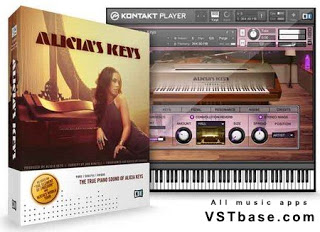
The instrument samples of Native Instruments Alicia’s Keys come from Alicia Keys’ very own Yamaha C3 Neo grand piano. This unique and highly-sought after instrument was built to celebrate Yamaha’s 100th anniversary in 2002 and represents the very top of the Conservatory Collection line.
The exquisite and unique sound of the C3 Neo were painstakingly captured by Thomas Skarbye, Kontakt script wizard Nils Liberg, and Grammy-award winning engineer Ann Mincieli – making this exclusive instrument available to everyone.
Using vintage microphones and preamps and through detailed analysis of Alicia’s playing, the team succeeded in capturing the warm, soulful and inspiring sound of the C3 Neo all the way down to the finest nuances.
Experimental: SOLAR SYNTH – demo
Here’s the SOLAR SYNTH in full sunlight, the shade & indoors. It’s the mini synth for all seasons and never needs batteries or external power! Get yours only @ chamberofsounds.com
Marcomm pitch type description below:
Since the beginning of time, mankind has been trying to harness the sun’s energy, and process it into something exponentially larger. Centuries later, in the year 2013, COS brings you, synthesis created entirely by the sun, handheld synthesis, that will never require a battery or external power of any kind, a sound device that will carry you through anywhere, even when the grid goes down, and the zombie apocalypse begins. Introducing the SOLAR SYNTH!
Harness the power of the sun and surroundings to generate ambient drones and cosmic waves. Tune the three oscillators at just the right frequency, and interact with nature. Flip on the photocell, and use light to filter the pulsating waves of sound. Communicate with animals and aliens alike, outdoors or indoors.
SOLAR SYNTH works with any incoming light, even surprisingly low levels, which makes for some tasty, power-starved sounds. The LED displays how much power your light source is generating.
Go green with the revolutionary SOLAR SYNTH, make batteries a thing of the past and experience the freedom of handheld synthesis. There’ll only be a limited number of these beasts, so don’t miss out.
Features:
• oscillators: 3
• power: 9V solar panel
• trigger: momentary-latching
• range: many, many octaves
• output: 1/4″
• function: to take your sound anywhere & interact with nature
Price: $225
Teaser from upcoming Goldfrapp album – Tales Of Us
Goldfrapp have announced that they’ll be releasing their sixth album Tales Of Us on September 9.

Information on their website tells that the band have “taken a turn for the noir” and are pursuing a more acoustic direction, with Alison Goldfrapp saying: “I’m drawn more and more to the intimacy and simplicity of the voice & guitar.”
She adds: “When you’re relaxed and confident you can excavate places you may not have dared go before […] I am interested in horror, psychologically. Not blood and guts. That’s too literal. I like the horror of the mind.”
Pre-order here:
iTunes: http://smarturl.it/talesofusitunes
Direct: (including the exclusive Deluxe Box set): http://goldfrapp.sandbaghq.com
CD: http://smarturl.it/talesofusCD
LP: http://smarturl.it/talesofusLP
Dataline Live Elektron Session at Beatport, Berlin
Download full set at: http://dataline.bandcamp.com/album/da…
Analog Four, Octatrack, Machinedrum and Monomachine in action.
More info: http://www.elektron.se/
https://www.facebook.com/Project.Data…
https://soundcloud.com/dataline
Kraftwerk’s Ralf Hütter confirms new album in the making
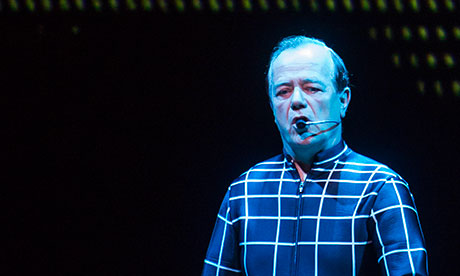
Ralf gave one of his rare interviews when on tour in Australia:
The Catalogue has been more than just a tour, though. Hütter also suggests that it’s drawn a line under the band’s past.
“Now this is done, one to eight,” he smiles. “Now we can concentrate on number nine.”
So the long-awaited – and much discussed – new Kraftwerk album, the first in a decade, is definitely on its way?
“Oh yes.”
Is there a timeline? Hütter smiles broadly.
“Of course. It’s music non stop!”
Excerpt from the interview:
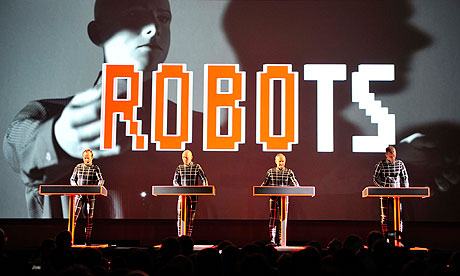
“Nowadays basically Kraftwerk is a space lab: we can land anywhere as long as we have the projectors and the screens.” Ralf Hütter, Kraftwerk’s co-founder and sole remaining original member, is welcoming me into his dressing room at the Sydney Opera House on the eve of the band’s final two performances of their eight show series based around 2009’s box set, The Catalogue.
It would be easy to assume that the man behind such cold, precise music would be standoffish in person, yet Hütter is a genial host. His eyes sparkle as he speaks, even as he pauses to find the exact right English word to explain his artistic philosophies. He also looks a good decade and a half younger than his 66 years – a testament to his band’s long-time advocacy of cycling, which inspired the 2003 Tour de France Soundtracks.
Tour de France is the most recent album featured in both box set and show, which cover the bands eight album output. Performing in just a handful of other cities – New York, London, their hometown of Dusseldorf – each album, from 1974’s Autobahn onwards, has been presented from start to finish and accompanied by with eye-popping 3D projections and surround sound. The response has been rapturous.
The ultra-portable Traktor Kontrol Z1
Traktor Kontrol Z1 is coming soon – the ultra-compact, pro-grade 2-channel mixer, controller, and soundcard for Traktor DJ and Traktor Pro 2. Pre-order now. http://www.native-instruments.com/tra…
Hook it up to your iPad or iPhone for a fully-functional Traktor DJ rig, complete with track headphone cueing, super-intuitive control, and premium, club-ready sound. Or combine it with Traktor Kontrol X1 or F1 controllers for the ultimate mobile Traktor Pro 2 setup.
More on Traktor DJ:
http://www.native-instruments.com/tra…
The track in this video is ‘Dilated’ by XLII. Visit XLII on Facebook:
https://www.facebook.com/XLIImusic
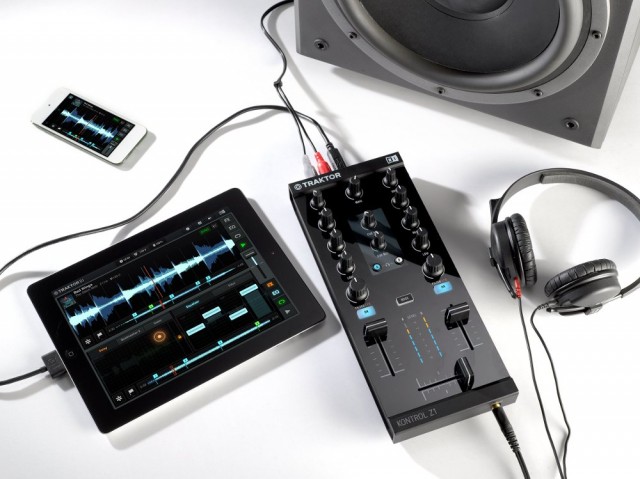
TRAKTOR KONTROL Z1 is the ultra-portable, professional DJ mixing controller forTRAKTOR DJ andTRAKTOR PRO 2. Its cue section lets you monitor and mix tracks with pro precision. Dedicated controls for two channels give you intuitive, tactile control over volume, EQ, filters, and effects. And the built-in audio interface delivers powerful, club-ready sound. Get total control and professional sound in a go-anywhere package – it’s pro on the go.
Want to deliver floor-shaking DJ sets with TRAKTOR DJ? Connect your iPad or iPhone to the Z1 and get a complete two-deck DJ setup with ultimate tactile control. Cue up the next track in your headphones while the current track still plays for the crowd. Mix and EQ with pro-grade faders, knobs, and buttons. Apply filters and effects with the ultra-intuitive one sweep knob. The Z1 even charges your iOS device while you play, so you never have to worry about battery life when your set hits its peak.
TRAKTOR KONTROL Z1 works perfectly with TRAKTOR PRO 2 – plug in and instantly start mixing with hands-on control and premium, club-ready sound. You can also expand your mobile rig with additional creative possibilities: Add TRAKTOR KONTROL X1 to control effects, loops and transport functions like play and sync, and TRAKTOR KONTROL F1 for creative Remix Deck™ magic. Whatever your style, build your setup around TRAKTOR KONTROL Z1 and rock the club or the after-party with the most compact, portable TRAKTOR system ever.
Time machine: Exploring the PPG wave 2.2
The German made PPG (Palm Products GmbH) Wave 2 series of synthesizers are incredibly great sounding analog/digital hybrid vintage synths. They use digital samples of wavetables and feature analog VCA envelope and VCF (filter) sections for a classic and warm sound. The Wave 2.2 has oscillators that can generate over 2,000 different single-cycle 8-bit digital waveforms! Covered by knobs, the Wave still looks analog and this comprises the “Analog Control Panel”. More complex and new-wave editing of the wavetables and samples is covered by the “Digital Control Panel” where there are several key-pad buttons and an LCD screen. Another familiar treat to analog junkies is the inclusion of an 8-track sequencer which features automation of pitch, loudness, filter cutoff, waveforms and more. A cool feature – its onboard sequencer will also record any filtering and wave changes, in real-time!!
The more commonly encountered Wave 2.3 (pictured) followed the 2.2 and had enhanced sample-playback capabilities. The sampler was pretty full-featured for its time and included upgraded 12-bit digital waveforms, Fourier analysis and linear playback of samples. The 2.3 model also featured 8-parts multitimbrality and MIDI implementation. The PPG Waves are know to create excellent pads, brass and bass sounds.
In fact it was Tangerine Dream who helped the company and the Wave develop. 1978 saw the development of the PPG Wave Computer 360. But the Wave Computer sounded harsh and tinny. In 1981, the PPG Wave 2 was released which added analog VCF and VCA filter and envelopes to warm the digital sound. The original Wave 2 had 8-voice polyphony, like the 2.2 and 2.3, but it had only one oscillator per voice. The 2.2 offered two oscillators per voice which opened up a whole new realm of sonic possibilities because two separate wavetable sounds could now be combined.
Vintage synthesizer track by RetroSound
“Miami Nights”
all synthesizer sounds: PPG wave 2.2 Wavetable Synthesizer (1982)
drums: Roland TR-707
sequencing: internal sequencer
recording: multi-tracking without midi
fx: a bit reverb and delay
more info: http://www.retrosound.de
FL Studio Guru | Sidechain Inputs and VocALign
Enter the Giveaway – http://synchroarts.us7.list-manage.co…
Setting up the VocALign plugin from Synchroarts. http://www.synchroarts.com/
Moog interview with Thomas Dolby
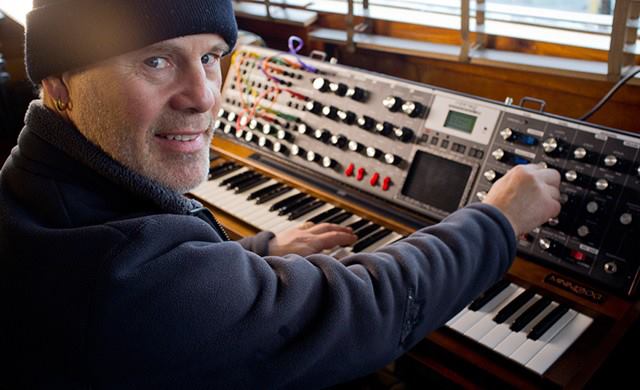
Moog had the pleasure to sit down with Thomas Dolby last week in England to deliver his custom Minimoog Voyager XL. Dolby talked with us about his experiences with Moog synthesizers, his musical process, and his history with many different musicians.
When were your first experiences with Moogs? When did you first get the opportunity to experiment and play with them?
There tended to be Minimoogs lying around professional studios round-about the end of the 70’s – 76-77-ish when I first got into studios. And when the Micromoog came out I picked one up second hand out of the back of Melody Maker. And that was the first off-the-shelf synth I’d owned. Before that the only synth I’d owned was a Transcendent 2000.
Ah, that’s the DIY one isn’t it?
Yeah. And I didn’t have a keyboard for it. So I could sort of generate tones but that was about it. I remember hooking it up to the keyboard from an ARP.
That’s very old school – in the sense of using it as an oscillator bank.
Yeah. So I was familiar with Minimoog but the Micro was the first one I could afford. And the next one was the Source. And for a while I had a three piece band, and I was basically playing the Micro and the bass player was using the Source.
And so I’ve used Mini’s a lot over the years but never owned one. The first serious recording I did with one was on the Foreigner “4” album. I remember Mutt Lange had left for the night, and left me for the night like a kid locked up in a toy shop. And I had six tracks and had to make an intro for “Waiting for a Girl Like You”.
DATAMASKIN

