
The Deathlehem Machine portable edition
http://youtu.be/S-IecUvThXk
Background description for this video by Richarius Molindarius:
This is a very short video to give you a rough idea of what my latest noise machine can do! 😀 This one’s a little different though! Not only is he PORTABLE and will be running on a pair of 9V batteries, but he also has STEREO speakers built into him and will have 2 stereo outputs as well! 😀
This is the prototype of my idea that I originally had for my 4th Deathlehem Machine that I built in the mid 90’s. This guy though blows that one away, as this one is operating on 4 x Voltage Controlled Low Frequency Oscillators! 😀 (2 of them USED to be 1V/oct. VCOs in my modular. The other 2 x VCLFOs were taken from the same place.)
The 2 x former VCOs can play then entire audio range as well as drop down to almost pausing speed VCLFOs with the triangle waveform. They can also modulate the other VCLFOs with squarewaves
The 2 x VCLFOs can operate from almost pausing speed up the midrange of audio with either triangle or squarewaves.
Operationally:
Each of the 4 x VCLFOs have the following controls:
– Coarse tuning
– Fine tuning
– Control Voltage #1 amount
– Control Voltage #2 amount
– Triangle or Squarewave
– a speed LED
– a volume control
Each of the 4 x VCLFO’s can modulate 2 others. The connections are:
VCLFO #1 is hardwired to modulate VCLFO #2 and VCLFO #3
VCLFO #2 is hardwired to modulate VCLFO #3 and VCLFO #4
VCLFO #3 is hardwired to modulate VCLFO #4 and VCLFO #1
VCLFO #4 is hardwired to modulate VCLFO #1 and VCLFO #2
There be some huge amounts of modulation potential in this guy as well as audio screaming that’ll scare not one but BOTH of your grandmas! 😀 Lol.
I’m seriously debating putting this prototype up for sale on e-Bay once he’s completed. I only have a couple of small things to do now to finish it up in a nice carry-around portable package.
Lemme know what you think he would be worth to anyone out there he gets a kick out of making sounds that you wont find everyday in your nearest CD store! 😀
Thanks for any input! 
Bye buy boys and girl! 😉
Unkle Ryk
Speech by Mute’s Daniel Miller after being honored with Pioneer Award at AIM Awards 2012
Yesterday evening Mute label boss Daniel Miller was honored with the Pioneer Award at the AIM Awards 2012. AIM (short for Association of Independent Music) is a trade body established in 1999 to provide a collective voice for the UK’s independent music industry, each year they offer 15 awards.
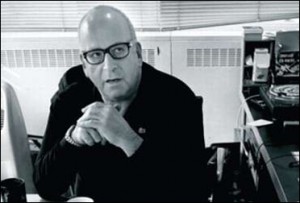
With the Pioneer Award the AIM wants to recognize the visionary independent label founder. This year’s ceremony was be held at The Brewery in the heart of East London. The awards was hosted by BBC Radio 1’s Huw Stephens and 6Music’s Steve Lamacq.
Nebulophone Synthesizer – the tiny synth trend continues
Nebulophone synthesizer built from parts kit.
There appears to be a trend to do micro synths right now – the Nebulopone is one example, another one is the one we showcased earlier this week, watch below:
Steelberry Clones had the opportunity to try out one of only 50 copies of the unique micro synth Travel Weevil at a Bug Brand hosted modular synth meet up in Sweden, on October 29th
Off Topic: A NEW STAR WARS IS COMING IN 2015

OK, we know this is slightly off topic, but on the other hand hown many genuine synthesizer music fans out there are not also big fans of science fiction and space – so this had to be posted 😀
Disney just bought Lucasfilm for $4 billion. Announcing the news, Disney also said it will release a new Star Wars movie in 2015. The movie is currently titled Star Wars: Episode 7. That means it will take place after Return Of The Jedi.
From a press release: “Star Wars Episode 7 is targeted for release in 2015, with more feature films expected to continue the Star Wars saga and grow the franchise well into the future.” Traditionalists are going to scream in horror at this news, but there is a silver lining. The new films will not be produced by George Lucas – who lost his touch a long time ago. Disney executive Kathleen Kennedy will be executive producer of all new Star Wars films. Lucas will serve as a mere “creative consultant.”
“With the acquisition, Disney will acquire Lucasfilm’s live action production business, along with its Industrial Light & Magic effects business, its Skywalker Sound audio operation and its consumer products unit, among other things.”
Pro Tools 10 Tutorial – Using Björk’s Biophilia as a Midi Controller
This tutorial demonstrates how to use Bjork’s ‘Biophilia’ App as a creative music production tool in Pro Tools. Utilising the WI-FI options on the iphone/ipad and a computer, users can lean how to create a connection between both devices, and compose or produce sound in Pro Tools using the Biophilia app. In the Composition and Music Production department at AIM, students can utilise this process to produce and create their own sound and music.

Biophilia is the musical project and overall eighth full-length studio album by Icelandic recording artist Björk. The album was released on 10 October 2011, over four years after her previous studio album, Volta (2007). The album is “partly recorded” on an iPad and, as well as a standard CD release, was released in the form of a series of apps. Biophilia is the world’s “first app album” in collaboration with Apple. Björk has described the project as a multimedia collection “encompassing music, apps, Internet, installations, and live shows”. Material from the album debuted during a concert series which was held in the summer of 2011 at the Manchester International Festival.
Check out our Website, http://www.aim.edu.au/
Audiobus Demo at the London Mobile Music Makers meet
A brief video of part of the demo from tonight’s demo of audiobus.
What’s the difference between Audiobus and Virtual MIDI?
Virtual MIDI is a local communications channel for passing around MIDI messages like “C# 1, Velocity 127“, or “Modulation, 50” – simple messages that control how a synthesizer should generate audio. Audiobus is a communications channel for sending live audio, like the audible output of a synthesizer app, or the output of a guitar amp effects app, for example.
Time machine: ROLAND JUNO-6 Analog Synthesizer 1982
“This is the Roland Juno-6 (or: who stole the programmer on my Juno-60?). The sound and the sound architecture is identical to the Juno-60. But the highpass filter of the Juno-6 is infinitely variable, whereas on the Juno-60 you can choose from 4 settings.
I played the Juno-6 dry without any additional effects.”
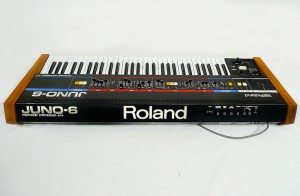
The first in a series of amazingly affordable quality synthesizers from Roland’s amazing Juno family! The Juno-6 is a six voice polyphonic analog synthesizer! It’s a very stable synth thanks to its digitally controlled analog oscillators. The Juno-6 sounds great, however it lacks basic necessities like MIDI control and patch memory storage.
The next generation Juno-60 version added 56 patches of memory storage. Both of these synths sound virtually the same and are considered by many to sound better (punchier) than the popular follow up, the Juno-106. The Juno-6 and 60 are very rich sounding synthesizers and are great analog machines as long as you can overlook the absence of MIDI control. Of course nobody can deny that the wooden side panel look is a true sign of Vintage status!
Time machine: PPG wave 2.2 synthesizer – “Dark Voices”
all sounds self-programmed: PPG wave 2.2 Wavetable Synthesizer from the year 1982
recording: multi-track without midi
fx: a little bit delay and reverb
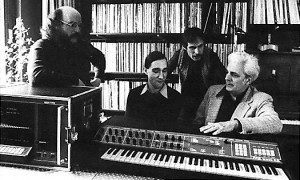
The German made PPG (Palm Products GmbH) Wave 2 series of synthesizers are incredibly great sounding analog/digital hybrid vintage synths. They use digital samples of wavetables and feature analog VCA envelope and VCF (filter) sections for a classic and warm sound. The Wave 2.2 has oscillators that can generate over 2,000 different single-cycle 8-bit digital waveforms! Covered by knobs, the Wave still looks analog and this comprises the “Analog Control Panel”. More complex and new-wave editing of the wavetables and samples is covered by the “Digital Control Panel” where there are several key-pad buttons and an LCD screen. Another familiar treat to analog junkies is the inclusion of an 8-track sequencer which features automation of pitch, loudness, filter cutoff, waveforms and more. A cool feature – its onboard sequencer will also record any filtering and wave changes, in real-time!!
The more commonly encountered Wave 2.3 followed the 2.2 and had enhanced sample-playback capabilities. The sampler was pretty full-featured for its time and included upgraded 12-bit digital waveforms, Fourier analysis and linear playback of samples. The 2.3 model also featured 8-parts multitimbrality and MIDI implementation. The PPG Waves are know to create excellent pads, brass and bass sounds.
In fact it was Tangerine Dream who helped the company and the Wave develop. 1978 saw the development of the PPG Wave Computer 360. But the Wave Computer sounded harsh and tinny. In 1981, the PPG Wave 2 was released which added analog VCF and VCA filter and envelopes to warm the digital sound. The original Wave 2 had 8-voice polyphony, like the 2.2 and 2.3, but it had only one oscillator per voice. The 2.2 offered two oscillators per voice which opened up a whole new realm of sonic possibilities because two separate wavetable sounds could now be combined.
more info: http://www.retrosound.de
Ladytron member Helen Marnie to release Marnie solo album
Helen Marnie, main vocalist of the electronic band Ladytron, has made a solo album. Recorded in Reykjavik, Iceland the album is untitled so far. Expect an electronic album with more of a pop element and ‘pristine’ vocals.
The release will be out via Pledge Music.

Note that it seems that Marnie has taken the occasion to hold a real boot sale as the packages hold several things which you wouldn’t really expect when buying an album. Or what did you think of getting a designer dress or a bikini she wore, or … a Rover Mini Cooper from 1998. The latter is yours for 5000 UK Pound.
FL Studio Mobile 2 | What’s New?
More info here – http://www.image-line.com/documents/news.php?entry_id=1348098765&title=fl…
Features include:
Audio tracks – Import WAV/MP3/AAC/AudioPaste & iPod library.
Wave editor – Cut, trim, normalize, reverse, fade in/out
Multi-tracking – Up to 8 track simultaneous recording
FL Studio Mobile HD – Now a Universal App
iPad retina display – Supported
Dropbox – Export to Dropbox. Import from Dropbox App.
Library – Amped Guitar & Bass pack in the shop
ZIP – Export improved to include all custom instruments, audio recordings and the project
NOTE: To load an FL Mobile 2 projects in FL Studio for Windows you will need FL Studio 10.8 or higher. In addition to use the Amped expansion you will need to delete the existing FL Mobile Samples folder, from the Shared Data folder (C:\Program Files\Image-Line\Shared\Data\FL Mobile Samples) then re-download it from the content library.
Where’s ANDROID will it EVER happen?! Yes. see here…
DATAMASKIN

